
To find the best whiteboard for magnetic letters, look for a board with a high-density, steel-backed magnetic receptive surface, superior ghosting resistance, and robust child-safety features. While standard dry-erase boards work well for writing, many struggle to hold chunky educational magnets. Choosing the right surface material and format ensures that early spelling, phonics, and fine motor activities remain engaging, safe, and frustration-free for young learners.
What Makes a Whiteboard Ideal for Magnetic Letters and Kids?
Magnetic surface strength
The core issue when pairing whiteboards with educational toys is the thickness and quality of the steel backing behind the write-on surface. Cheap whiteboards use a very thin sheet of iron foil or even magnetic paint over cardboard. While small, lightweight office magnets might cling to these, bulky plastic educational letters have a much higher weight-to-magnet ratio. These letters often contain small, recessed ferrite magnets that sit slightly away from the board’s surface. If the board’s metal backing is too thin, the magnetic pull is insufficient, causing the letters to slide down, spin upside down, or fall off entirely.
In contrast, glass whiteboards are highly unsuitable for early childhood magnetic letters. While glass boards look modern and clean easily, the thick tempered glass layer creates too much distance between the magnet and the steel backing plate. Standard educational magnets cannot bridge this gap. To stick to glass, you need exceptionally strong neodymium (rare-earth) magnets. These tiny, powerful magnets are a severe safety hazard in homes and preschools; if swallowed, they can cause life-threatening intestinal damage. Therefore, a steel-backed whiteboard is the only safe and functional option for young children.
Products mentioned in this guide
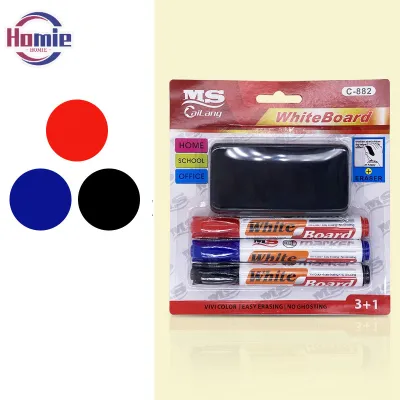
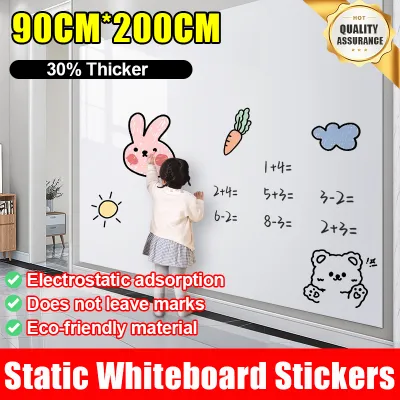
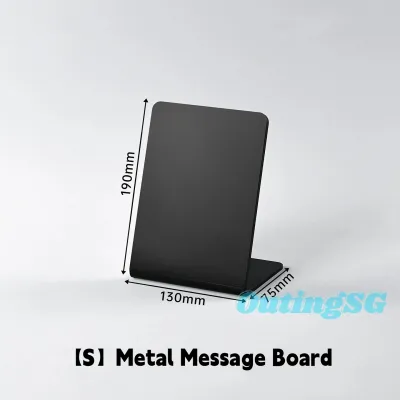
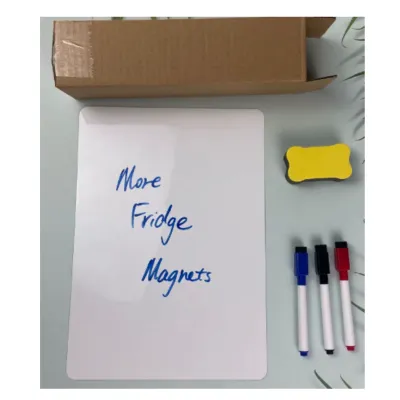
Prices are valid at publication and may change. Please refer to the product page for the latest price.
Surface coating and erasability
The dry-erase surface must withstand constant writing and erasing without wearing down. In Singapore’s humid tropical climate, low-quality board coatings like basic melamine can degrade rapidly. Melamine is essentially resin-impregnated paper over particleboard; it is porous and absorbs moisture and marker solvents over time, leading to “ghosting” (permanent ink stains). For a board that stays clean, choose painted steel (where a polyester or acrylic lacquer is baked onto steel) or porcelain-on-steel (also known as ceramic or vitreous enamel). Ceramic surfaces are completely non-porous, highly scratch-resistant, and impervious to humidity, ensuring that dry-erase markers wipe away cleanly even after days of sitting on the board.
Size and ergonomics
A child’s physical development dictates the ideal board size. For a toddler or preschooler, a board that is too small limits their ability to arrange letters in a logical left-to-right sequence, which is critical for early literacy. Conversely, an oversized board can overwhelm them if they cannot reach the top. A horizontal (landscape) layout of at least 60 cm by 90 cm provides ample room to line up the alphabet along the top or bottom while leaving the center open for spelling exercises. This setup respects the child’s natural arm reach and eye level, encouraging comfortable, independent play.
Safety and build quality
Early childhood environments demand durable, hazard-free construction. Avoid boards with sharp, exposed aluminum frames or thin plastic edges that can crack and leave jagged shards. Look for whiteboards with rounded, impact-resistant plastic corner caps. The frame should be securely bonded to the backing material to prevent warping. Additionally, ensure the core materials are non-toxic and free from off-gassing adhesives, creating a safe breathing environment for children spending hours near the board.
Best Whiteboard Formats for Different Learning Spaces
Singapore’s residential layouts, such as compact HDB flats and condominiums, require smart space management. The ideal whiteboard format depends on whether you have a dedicated playroom, a multi-purpose living area, or need a highly portable tool for individual tutoring. Matching the format to your living space ensures the board is used frequently without cluttering your home.

Wall-Mounted Boards for Dedicated Learning Zones
Wall-mounted whiteboards are the gold standard for dedicated learning spaces. By securing the board directly to the wall, you eliminate floor clutter and create a stable, non-shifting surface. This stability is excellent for young children who may press hard on the board or lean on it while arranging letters. Standing at a wall-mounted board also encourages gross motor development, shoulder stability, and wrist extension, which are essential physical precursors to learning how to write.
However, these boards require permanent installation and cannot be easily moved once mounted. You must carefully calculate the mounting height so the board remains usable as your child grows over the years. In smaller rooms, a permanent wall fixture also means that wall space cannot be easily repurposed for other furniture or storage.
Freestanding Easels for Flexible and Multi-Purpose Rooms
For homes without spare wall space, freestanding easels or A-frame whiteboards offer great flexibility. These units can be set up in the middle of a living room for a lesson and then folded flat to be stored behind a sofa or inside a utility closet. Many educational easels are double-sided, featuring a magnetic whiteboard on one side and a traditional chalkboard or felt board on the other, providing multiple sensory learning mediums.
The primary trade-off is stability. Active toddlers can easily push, pull, or lean on a freestanding easel, presenting a tipping hazard. It is vital to choose a model with a wide, stable base, non-slip rubber feet, or locking caster wheels, and always supervise children during use.
Tabletop and Lap Boards for Close-Up Guided Practice
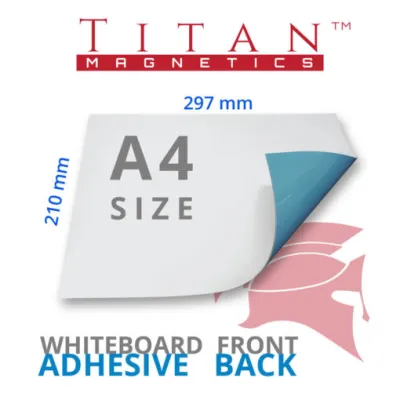
Tabletop and lap-sized magnetic whiteboards are perfect for close-up, highly focused learning sessions. Typically measuring around A4 or A3 size, these compact boards are ideal for sitting together at a dining table or taking on car trips. They allow parents to guide children through specific, short spelling tasks, such as building three-letter consonant-vowel-consonant (CVC) words like “cat” or “map.” Because they are lightweight, children can easily manipulate them, which helps build confidence.
However, their small surface area is a major limitation. You cannot display a full set of alphabet letters on the board while simultaneously spelling words, meaning you will need a separate container or tray nearby to hold the unused letters. They are best suited for supplemental, one-on-one practice rather than whole-group instruction.
How to Test Magnetic Strength and Surface Quality Before Use
The "slide test" for magnetic letters
To verify if a newly purchased whiteboard has sufficient magnetic strength, perform a simple slide test. Take a few of your heaviest educational magnetic letters—typically the wider letters like ‘M’, ‘W’, or ‘G’, which contain more plastic weight. Place them on the vertical surface of the board. Gently tap the side of the frame or the back of the board. If the letters slide downward, spin upside down, or fall off, the board’s steel backing is too thin or the protective dry-erase laminate is too thick. A high-quality board will hold the letters firmly in place without any movement, even when the board is lightly jarred.
Inspecting for surface defects
Before mounting or using your board, inspect the surface under bright, direct light. Hold the board at an angle to catch the light across its flat plane. Look closely for any micro-indentations, bubbling, ripples, or warping. Even minor surface unevenness can compromise the magnetic pull, as it prevents the flat backing of the magnetic letters from making flush contact with the board. Surface defects also cause dry-erase markers to skip, leaving uneven ink lines that are difficult to erase cleanly.
Marker compatibility check
Test the erasability of the board’s coating before regular use. Draw several thick lines using a standard dry-erase marker in an inconspicuous corner of the board. Let the ink dry completely for at least ten minutes. In Singapore’s warm, humid climate, dry-erase inks can sometimes cure faster or bond differently to low-grade surfaces. Wipe the lines away using a clean, dry microfiber cloth or a felt eraser. The ink should turn to dry powder and wipe away completely with minimal pressure, leaving no gray haze, smudges, or faint outlines. If you notice persistent staining, the board’s surface coating is porous and will quickly degrade under daily classroom use.
Reading product specifications
When shopping online or in retail stores, look past generic marketing claims like “super magnetic” or “heavy-duty.” Instead, search for technical specifications detailing the board’s construction. Look for terms such as “lacquered steel,” “painted steel,” or “porcelain-on-steel” (sometimes listed as “vitreous enamel”). These terms guarantee that a physical sheet of steel is integrated directly behind the writing surface. Avoid boards that list “magnetic foil,” “magnetic sheet,” or “magnetic film” as their primary material, as these flexible materials have a significantly weaker magnetic pull that cannot support heavy plastic educational letters.
Safe Installation and Daily Maintenance for Toddler-Friendly Boards
Safe mounting practices
Installing a wall-mounted whiteboard in a Singapore home typically involves drilling into concrete or brick walls common in HDB flats and condominiums. Do not rely on double-sided foam tape, adhesive strips, or lightweight picture hangers. The weight of a steel-backed board, combined with the dynamic downward pulling force exerted by a child removing magnetic letters, will eventually cause adhesive mounts to fail. Use a rotary hammer drill to create precise holes, insert high-quality plastic wall plugs (anchors), and secure the board firmly with heavy-duty screws. Ensure the board sits completely flush against the wall so children cannot grip the edges or try to pull themselves up on the frame.
Managing choking hazards
While magnetic letters are fantastic educational tools, they present serious safety risks if managed poorly. Small magnets embedded in the back of cheap plastic letters can occasionally detach and become severe choking or ingestion hazards. Always inspect the back of each letter regularly to ensure the magnet is securely glued in place and shows no signs of loosening. Choose letters that feature fully encased or large, flat magnetic backings rather than tiny, exposed button magnets. Keep a strict count of your letter set, and store them in a secure, latching container high out of reach when lessons are over. Never allow unsupervised play with magnetic letters, especially if younger siblings under the age of three are in the household.
Safe cleaning routines
To maintain the dry-erase surface and preserve its smooth, non-porous finish, establish a gentle cleaning routine. Never use abrasive scrubbing sponges, steel wool, or harsh household chemical cleaners like bleach, window sprays, or acetone. These harsh chemicals strip away the microscopic silicone or lacquer coating that makes the board dry-erase, leaving the surface permanently damaged and prone to severe ghosting. Instead, wipe the board daily with a clean, dry microfiber cloth. For deeper cleaning, use a soft cloth lightly dampened with water or a dedicated, non-toxic whiteboard cleaning spray. If a stubborn stain persists, apply a few drops of isopropyl alcohol to a soft cloth, wipe gently, and immediately dry the area with a clean cloth.
Marker and accessory storage
Proper storage of writing tools and accessories extends their lifespan and keeps your learning space safe. Store dry-erase markers horizontally in a tray or drawer; storing them vertically can cause the ink to settle away from the tip or pool excessively, resulting in faint lines or messy leaks. Keep all markers, erasers, and cleaning sprays stored on a high shelf or in a locked cabinet when not in active use. This prevents curious toddlers from drawing on walls, furniture, or accidentally putting marker tips in their mouths, ensuring that the whiteboard remains a positive, structured tool for guided learning.
Frequently Asked Questions (FAQ)
Can I use regular fridge magnets on a standard whiteboard?
Regular novelty fridge magnets often fail to stick to standard whiteboards. Refrigerator doors are made of thick, heavy-gauge steel that provides a powerful magnetic connection. In contrast, magnetic whiteboards use a much thinner sheet of steel behind the writing surface to keep the board lightweight. While flat, lightweight rubber sheet magnets or lightweight plastic educational letters will stick well, heavy ceramic or resin fridge magnets will slide down or fall off. For the best results, stick to magnets specifically designed for whiteboard use.
How do I remove permanent marker stains from a magnetic whiteboard?
If a child accidentally writes on your whiteboard with a permanent marker, do not panic or use abrasive scrubbers. The safest, most effective solution is the dry-erase marker trick. Simply color directly over the permanent marker lines with a fresh, dark-colored dry-erase marker, ensuring you cover the stain completely. The solvents present in the dry-erase ink will naturally dissolve the permanent marker’s binding polymers. Wipe the area immediately with a clean microfiber cloth or felt eraser. For any remaining residue, wipe gently with a soft cloth dampened with a small amount of isopropyl alcohol, then wipe dry.
What is the best height to mount a whiteboard for a preschooler?
For optimal ergonomics and safety, mount the whiteboard so that the lower third of the writing surface is aligned with your child’s chest height when standing. For a typical three-to-four-year-old child in Singapore, this means the bottom edge of the board should sit approximately 50 cm to 60 cm above the floor. This height allows the child to comfortably reach the middle and upper sections of the board to arrange magnetic letters and practice writing without having to stretch excessively, strain their neck, or stand on unsafe step stools.

Community discussion
Share your experience or ask a question. Comments are reviewed before publication.