
While many stationery and office brands produce wall calendars, there is no single best brand for daily planning. The ideal choice depends on whether your note-taking requires large monthly grids, vertical daily columns, or premium paper that handles heavy ink. This guide compares the main categories of wall calendar brands and layouts to help you select the right functional design for your workflow.
Selecting a wall calendar requires looking past cover designs and focusing on structural specifications. A calendar that looks beautiful but feathers when written on with a gel pen quickly becomes a source of frustration. By evaluating paper quality, layout efficiency, and physical construction, you can find a tool that actively supports your daily organization.
Core Criteria for Evaluating Wall Calendars
Paper weight and finish are the most critical factors for any calendar used for daily note-taking. Most standard calendars use paper ranging from 80 GSM to 120 GSM (grams per square meter). If you prefer using gel pens, fountain pens, or liquid ink rollers, look for calendars featuring at least 140 GSM paper to prevent ghosting and bleed-through. Uncoated paper is highly absorbent and allows ink to dry quickly, which minimizes smudging for left-handed writers. Conversely, coated or glossy paper finishes offer vibrant color reproduction but require oil-based ballpoint pens or permanent markers to avoid smearing.
Products mentioned in this guide
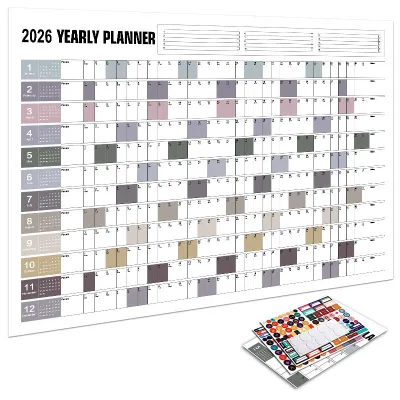
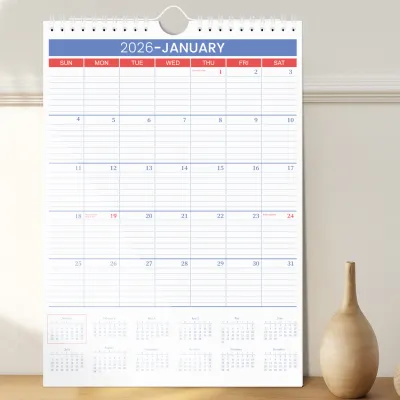
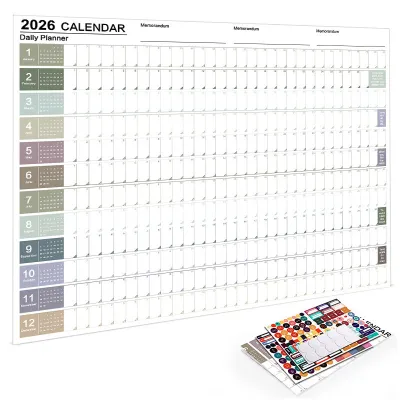
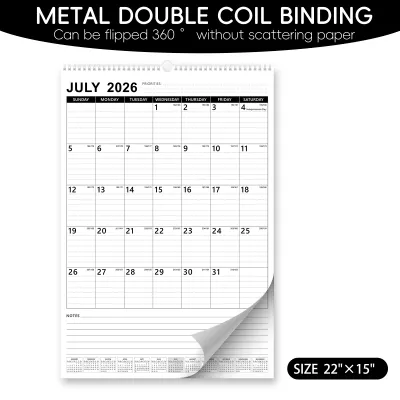

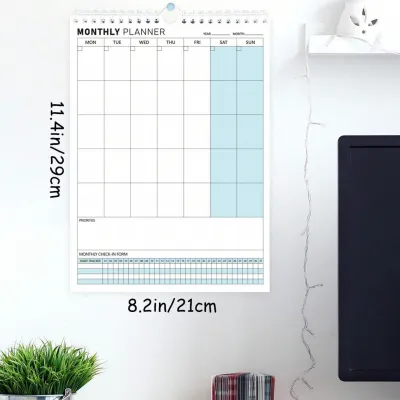

Prices are valid at publication and may change. Please refer to the product page for the latest price.
Grid size and layout determine how much information you can realistically record each day. When evaluating a calendar, measure the actual writing area of the daily blocks rather than the overall dimensions of the page. A functional planning block should provide at least 3 cm by 4 cm of blank space, free from large pre-printed holiday text or decorative elements. Some brands sacrifice writing space for larger illustrations or border designs, which limits their utility for busy schedules. Look for clean, minimalist layouts that maximize the usable grid area.
Binding and hanging mechanisms affect how easily you can write on the calendar while it remains on the wall. Twin-wire binding is the most reliable option for daily planners because it allows the calendar to lay completely flat against the wall. It also enables you to flip pages over at the end of the month without tearing them. Stapled or glued bindings often bow outward, creating an uneven writing surface that makes neat note-taking difficult. Additionally, a sturdy metal hanging loop is preferable to a simple punched hole, as heavy paper can tear under its own weight over twelve months of use.
Comparing Calendar Layouts for Different Planning Styles
Standard monthly grids are the most common layout and work best for high-level tracking, appointments, and short daily reminders. This format provides a comprehensive bird’s-eye view of the entire month, making it easy to spot busy weeks and upcoming deadlines. It is highly effective for shared household schedules or small office teams where multiple people need to coordinate events at a glance. However, the limited space within each daily block means this layout is not suitable for detailed step-by-step task lists or extensive journaling.

Vertical column or weekly wall formats are ideal for detailed daily task lists, time-blocking, and extensive notes. Instead of a traditional grid, these layouts divide the page into vertical columns for each day of the week, often providing hourly lines for precise scheduling. This structure is highly beneficial for individuals managing complex project phases or families tracking multiple parallel schedules side-by-side. Because these formats focus on a single week or two-week spread per page, they offer significantly more writing space than a standard monthly view.
Blank space and margins are often overlooked but are essential for comprehensive planning. A well-designed wall calendar should include dedicated notes sections, either as a sidebar or a wide margin at the bottom of the page. This space allows you to record monthly goals, ongoing tasks without fixed dates, and reminders for the upcoming month. Having a designated area for miscellaneous notes prevents you from cluttering the daily grid blocks with non-date-specific information, keeping your main schedule clean and legible.
Decision Framework: Choosing the Right Calendar Brand Category
Office-supply brands are the best choice if you prioritize maximum grid space, utilitarian layouts, and high page counts. These brands focus entirely on functionality, offering large, unadorned grids with high-contrast black text on white paper. They are highly cost-effective and often include useful reference tools like Julian dates and previous/next month previews on every page. However, they typically use thinner paper (around 80 to 100 GSM) and simple wire bindings, meaning you will need to stick to standard ballpoint pens to avoid ink bleeding through to the next month.
Boutique stationery brands are ideal if you value aesthetic motivation, premium paper finishes, and minimalist designs. These brands treat the wall calendar as a piece of functional home decor, utilizing custom typography, heavy textured paper (often 150 GSM or higher), and elegant color palettes. The high-quality paper handles fountain pens and fine-liners beautifully without feathering. The trade-off is often a slightly smaller daily grid size, as these designs frequently allocate more page space to margins, illustrations, or artistic layouts.
Planner-hybrid brands are designed for users who need built-in productivity tools alongside a standard calendar. These products bridge the gap between a personal planner and a wall display, incorporating dedicated sections for habit tracking, weekly goal setting, and project milestones. They are excellent for individuals working on long-term personal or professional goals who want their progress visible at all times. These calendars often feature specialized layouts that require a bit of time to set up but offer unmatched organizational depth.
If you find that none of these categories provide enough space for your daily writing needs, a standard wall calendar may not be the right tool. If you need to write down dozens of tasks or manage hourly time-blocking, a large desk blotter planner placed flat on your workspace is a better alternative. Alternatively, a magnetic dry-erase whiteboard calendar offers unlimited writing and erasing capabilities, making it highly adaptable for rapidly changing schedules.
Practical Tips for Maximizing Your Wall Calendar Space
Selecting the right pens is crucial for maintaining a clean and legible wall calendar. For calendars with glossy or coated paper, use quick-drying ballpoint pens or fine-tip permanent markers to prevent smudging. For uncoated, high-GSM paper, gel pens and water-based felt tips offer smooth writing and crisp lines. Always perform a small scratch test on an unused back page or corner of the calendar to check the drying speed and verify that the ink does not bleed through to the next month’s page.
Using a consistent symbol or color-coding system helps separate tasks, appointments, and personal notes without cluttering the page. Assign a specific color to each family member, work project, or category of task using highlighters or colored fine-liners. Implement simple symbols, such as a square for tasks, a circle for events, and an exclamation mark for urgent deadlines. This visual hierarchy allows you to scan the calendar and understand your schedule in seconds without reading every word.
Positioning and lighting play a major role in how consistently you use your wall calendar. Hang the calendar at eye level in a high-traffic, well-lit area, such as near your desk, in the kitchen, or by the entryway. If the calendar is hung too high or in a dark corner, writing on it becomes inconvenient, leading to neglected planning. Ensure there is adequate natural or overhead light so you can read and write notes comfortably without having to unhook the calendar from the wall.
Frequently Asked Questions (FAQ)
Can I use marker pens on standard wall calendars without bleeding through?
Whether marker pens will bleed through depends entirely on the paper weight and the type of ink used. Standard water-based markers and highlighters generally require paper that is at least 120 GSM to prevent ghosting on the reverse side. Alcohol-based permanent markers will bleed through almost any standard paper weight, including heavy cardstock. To prevent damage to the calendar pages or the wall behind it, always test your markers on a corner or an unused back page first. If you must use markers on thinner paper, place a protective backing sheet, such as a piece of heavy cardstock or a plastic sheet, directly behind the active page.
How do I keep a wall calendar flat against the wall when writing?
A calendar that swings or bows outward makes neat writing difficult and can lead to messy notes. To stabilize your calendar, use small pieces of removable adhesive putty or double-sided painter’s tape on the bottom corners of the backing board to secure it flat against the wall. Ensure the hanging wire or loop is taut and centered on the hook to prevent the calendar from tilting as you write. If your wall has a highly textured surface, place a rigid clipboard or a piece of heavy cardboard behind the active calendar page to provide a smooth, solid writing surface. Writing with a light, consistent touch also helps prevent the pages from tearing or pulling away from the binding.
Is a wall calendar better than a desk planner for daily task management?
The choice between a wall calendar and a desk planner depends on your visibility needs and writing volume. Wall calendars offer high visibility and are excellent for shared spaces, allowing multiple people to coordinate schedules, track monthly deadlines, and view upcoming events at a glance. However, they offer limited writing space for detailed daily tasks. Desk planners provide significantly more writing space per day, better privacy, and portability, making them ideal for detailed task management and personal time-blocking. For complex workflows, many users find success using both: a wall calendar for high-level public scheduling and a desk planner for private, detailed daily task lists.

Community discussion
Share your experience or ask a question. Comments are reviewed before publication.