
Beginners stepping into the world of knitting or crochet often find that chunky yarn is the most rewarding material to start with. In Singapore, finding the right brand means balancing quality, ease of use, and local availability. High-quality thick yarns allow you to see your stitches clearly, complete projects rapidly, and easily correct mistakes along the way.
For those starting out, established brands like Bernat (particularly the Blanket series) and Lion Brand (specifically Wool-Ease Thick & Quick) offer the best combination of structural integrity and forgiving textures. These brands are widely accessible through local craft retailers and specialized online platforms, making them excellent starting points for your crafting journey.
What Makes Chunky Yarn Beginner-Friendly?
Understanding the technical specifications of thick yarn helps you select a skein that minimizes frustration. Yarn weight is categorized by a standard numbering system. For beginner projects, you will typically look for Weight 5 (Bulky), Weight 6 (Super Bulky), or Weight 7 (Jumbo). These thick profiles speed up your crafting time significantly, allowing you to finish a project in a fraction of the time required for finer yarns.
Products mentioned in this guide
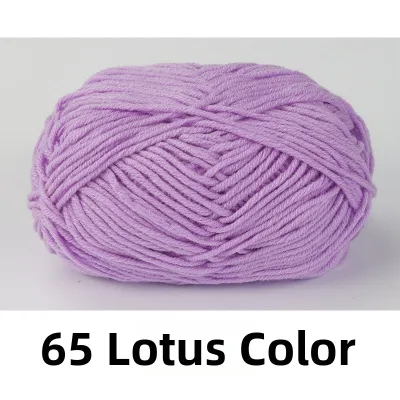
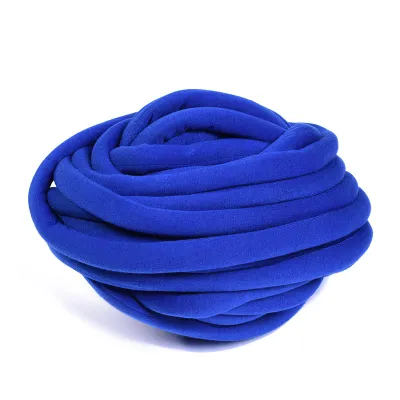
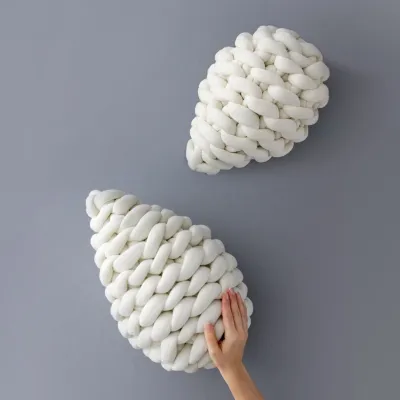
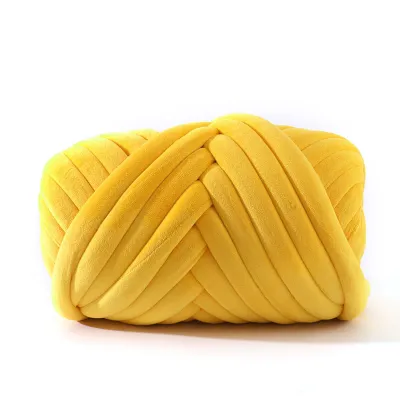
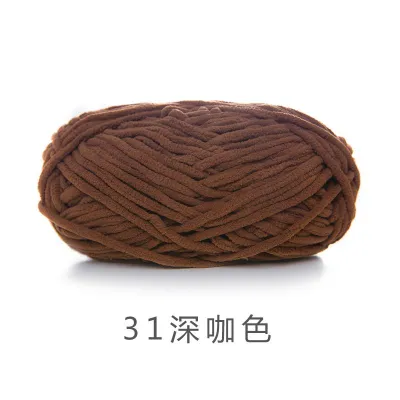
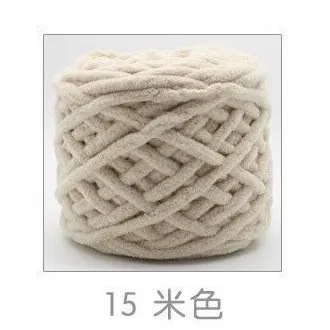
![[SG Ship] Ice Stripe Thick Roving Yarn Soft Crochet Knitting Milk Cotton 冰条粗毛线 钩针针织围巾牛奶棉线](https://img.lazcdn.com/g/p/26232ca0b924437da79b1f1bb6f07dd4.jpg_400x400q80.jpg_.webp)
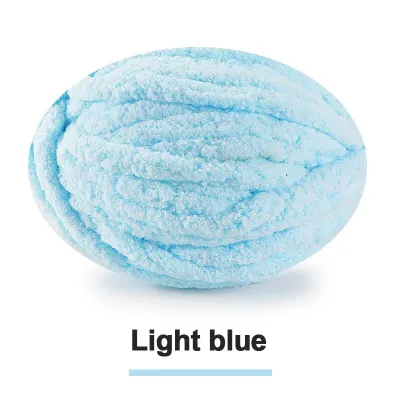
Prices are valid at publication and may change. Please refer to the product page for the latest price.
Fiber content is another critical factor for novices. Acrylic and acrylic-blend yarns are highly recommended for beginners because they are affordable, durable, and exceptionally forgiving. Unlike pure wool, which can felt or shrink if handled too roughly, acrylic blends can withstand being unraveled and re-knit multiple times as you perfect your tension. They are also easy to maintain and generally machine-washable, which is ideal for home decor items.
The ply structure of the yarn determines how well the strands hold together. Plied yarns consist of multiple strands twisted around one another, which provides excellent structural stability. Beginners should generally avoid single-ply or “roving” yarns. While roving yarn looks incredibly soft and fluffy, it lacks a twisted structure, making it highly prone to splitting, snagging, and shedding under uneven beginner tension.
Finally, the texture of the yarn plays a major role in your learning curve. A smooth, uniform yarn allows you to easily identify the “V” shape of your stitches, count your rows, and spot mistakes. Novelty yarns, such as eyelash, boucle, or highly textured options, obscure stitch definition entirely. Working with these complex textures makes it incredibly difficult to see where to insert your hook or needle, leading to dropped stitches and uneven edges.
Recommended Chunky Yarn Brands for Beginners in Singapore
Bernat (Focus on Blanket Series)
Bernat Blanket is a widely recognized Weight 6 (Super Bulky) yarn made of 100% polyester. It features a unique chenille-style texture that is incredibly plush, soft, and lightweight despite its thickness. This yarn glides smoothly over needles and hooks, making it a favorite for those who want a tactile, cozy crafting experience.

- Why It Works for Beginners: The ultra-thick structure allows projects to grow rapidly, providing quick gratification. Because the plush chenille fibers expand slightly, this yarn naturally hides minor inconsistencies in your tension. It is also structurally bound, meaning it virtually never splits while you are working.
- Limitations to Consider: The fuzzy chenille texture can make it slightly difficult to see individual stitch loops in low lighting. Additionally, when you cut this yarn, the ends can shed loose fuzz, so you must secure your tails quickly to prevent fraying.
- Best For: Large throw blankets, plush floor pillows, cozy seat cushions, and quick weekend home decor projects.
Lion Brand (Focus on Wool-Ease Thick & Quick)
Lion Brand Wool-Ease Thick & Quick is a classic Weight 6 (Super Bulky) yarn featuring a blend of 80% acrylic and 20% wool. This composition provides the warmth, bounce, and premium feel of natural wool while retaining the durability and easy-care benefits of synthetic acrylic fibers.
- Why It Works for Beginners: This yarn offers outstanding stitch definition, making it incredibly easy to see exactly where your needle or hook needs to go. It has a tight, reliable ply that resists splitting, and it is highly resilient to "frogging" (unraveling your work to correct a mistake) without losing its structure.
- Limitations to Consider: It is slightly less squishy than pure polyester chenille and can feel firmer on your hands during long sessions. Due to the 20% wool content, finished items require gentler washing care to prevent shrinkage and surface fuzzing.
- Best For: Structured winter wear like heavy scarves, beanies, cowls, and highly textured, cabled blankets.
Yarn Bee and Store Brands
Many large-format craft retailers in Singapore, such as Spotlight, offer their own exclusive store brands alongside popular imports. These include lines like Yarn Bee or various house-branded chunky acrylics and velvet yarns. They are designed to offer a balance of softness and affordability for everyday crafters.
- Why It Works for Beginners: These store brands provide a highly accessible, low-risk entry point. Because they are priced lower than premium imported brands, you can purchase multiple skeins to practice new stitches and techniques without making a significant financial commitment.
- Limitations to Consider: Stock levels and color consistency can vary between store visits, meaning you might struggle to find matching skeins if you run out mid-project. Some budget lines may also experience faster pilling or shedding over time compared to premium options.
- Best For: Practice swatches, simple baby blankets, and high-volume projects where budget management is a primary concern.
Budget Practice Options from Variety Stores
For absolute beginners who want to learn the basic mechanics of knitting or crochet before investing in project-sized quantities, local variety stores like Daiso or neighborhood haberdasheries are excellent resources. These stores frequently stock small, budget-friendly skeins of bulky acrylic yarn.
- Why It Works for Beginners: At highly affordable prices (often just S$2 to S$3 per small skeins), these yarns remove all financial pressure from the learning process. They are perfect for practicing basic techniques like casting on, binding off, and maintaining a consistent grip on your tools.
- Limitations to Consider: These budget yarns often have a rougher texture, a higher tendency to split, and less consistency in strand thickness. The packaging is often minimal, sometimes lacking detailed care instructions or standardized weight symbols.
- Best For: Initial stitch practice, testing your gauge, and completing small, low-stakes swatches before moving on to high-quality project yarn.
Where to Buy and How to Verify Stock in Singapore
When shopping for chunky yarn in Singapore, visiting a physical store offers significant advantages. Retailers like Spotlight (located at Plaza Singapura and Westgate) and independent local yarn boutiques allow you to physically feel the fiber’s texture and weight. Seeing the yarn in person also ensures you verify the true color under natural or bright retail lighting, which can look vastly different on a phone or computer screen.
If you prefer online shopping, you can access official brand distributors, local craft websites, and general e-commerce platforms. When buying online, always read recent customer reviews and verify seller ratings to ensure you are purchasing authentic, high-quality brands rather than cheap, mislabeled counterfeits. Be mindful of shipping times, as imported yarns can take several weeks to arrive in Singapore.
Regardless of where you purchase, learning to read the yarn label is essential. The label contains vital information: the standardized yarn weight symbol, the exact fiber composition, recommended needle and hook sizes, and care instructions. Most importantly, locate the “dye lot” or “lot” number. Yarn dyed in different batches can have subtle color variations that are invisible in the skein but show up as highly visible, distracting bands across your finished project.
To prevent this, always calculate your project requirements beforehand and purchase all your yarn at once, making sure every single skein shares the exact same dye lot number. It is highly recommended to buy one extra skein as insurance. Keep your receipt and check the store’s return policy, as many local retailers will accept returns on unused, unopened skeins within a specific timeframe.
Essential Tools and Setup for Chunky Yarn Projects
To work comfortably with chunky and super bulky yarns, you must pair them with the correct supporting tools. Using tools that are too small will result in stiff, dense fabric and immense physical strain on your hands. Chunky yarns typically require needle or hook sizes ranging from 8.0 mm (US 11) up to 15.0 mm (US 19) or larger. Always cross-reference the recommended size printed on your yarn label before beginning.
For large-scale projects like blankets or throws, circular knitting needles are highly recommended, even if you are knitting flat back and forth. Circular needles feature two needle tips connected by a flexible plastic cable. This design allows the massive weight of your growing project to rest comfortably in your lap rather than on the ends of straight needles, which significantly reduces wrist fatigue and joint strain.
Another indispensable tool for beginners is a set of locking stitch markers. Because chunky yarn creates large, thick stitches, it can sometimes be surprisingly easy to lose track of where a row begins or where a pattern repeat changes. Locking markers can be clipped directly onto individual stitches and moved easily as you progress, helping you keep an accurate count without guesswork.
Finally, consider investing in a few simple accessories to keep your workspace organized. A wide-mouthed yarn bowl or a clean, heavy basket will prevent large, round skeins from rolling across the floor, catching on furniture, or collecting dust. Additionally, keep a pair of sharp, heavy-duty craft scissors nearby; standard office scissors often struggle to cut cleanly through thick, multi-ply chunky fibers, leaving messy, frayed ends.
Frequently Asked Questions (FAQ)
How many skeins of chunky yarn do I need for a standard blanket?
The exact number of skeins depends heavily on the dimensions of the blanket, the stitch pattern you choose, and your individual tension. For a standard throw blanket (approximately 120 cm by 150 cm) using a Weight 6 Super Bulky yarn like Bernat Blanket, you will typically need about 5 to 7 large skeins (approx. 220 meters each). Always check the total yardage or meterage on the label rather than relying on weight alone, and purchase 10% to 20% extra to account for gauge variations.
Is chunky yarn suitable for making everyday clothing?
While chunky yarn is excellent for heavy outerwear like thick cardigans, winter beanies, and cozy cowls, it is generally impractical for everyday indoor clothing in Singapore’s tropical climate. Garments made from super bulky yarn are highly insulating and can feel excessively heavy. Additionally, large garments made from thick yarn can lose their shape and stretch out over time due to their own weight, unless they are constructed with tight stitches and strong, supportive seams.
How do I minimize shedding and pilling in finished projects?
Shedding and pilling are natural results of friction on soft, loosely spun fibers like acrylic and chenille. To minimize this, wash your finished items only when necessary, using a gentle hand wash or a delicate machine cycle with cold water inside a large mesh laundry bag. Always lay the item completely flat on a towel to dry rather than hanging it. If pills do form over time, remove them carefully using a dedicated fabric shaver or a sweater stone, taking care not to cut the main structural strands of your yarn.

Community discussion
Share your experience or ask a question. Comments are reviewed before publication.