
Securing items for transit in Singapore requires packaging materials that can withstand both physical shocks and the challenges of a humid, tropical climate. Whether you are packing household goods for a residential move across town, running a boutique e-commerce shop from home, or managing high-volume industrial shipping from a warehouse in Tuas, selecting the right wrapping bubble plastic is critical to preventing costly product damage and returns. While many generic options exist, understanding how to evaluate brand specifications, material compositions, and sourcing channels ensures your items remain fully protected from the moment they are packed until they reach their final destination.
To make an informed decision, you must look beyond basic price points and analyze the structural integrity of the bubble wrap. High-quality brands engineer their packaging materials to retain air under pressure, resist punctures, and handle specific environmental conditions. By matching the correct material specifications to your items, you can optimize your packaging workflow, reduce material waste, and guarantee that your goods arrive intact.
How to Evaluate Wrapping Bubble Plastic Brands for Your Needs
Selecting the right wrapping bubble plastic requires an understanding of several technical dimensions that directly impact protective performance. The first critical factor is bubble size, which dictates the level of cushioning and space-filling capability. Small bubbles, typically measuring 3/16-inch (approximately 10mm in diameter), are designed for surface protection, scratch prevention, and wrapping lightweight items such as glassware, ceramics, and cosmetics. Large bubbles, measuring 1/2-inch (approximately 25mm in diameter), offer superior shock absorption and serve as excellent void fill for heavy, bulky, or highly fragile items like home appliances, electronics, and framed artwork.
Products mentioned in this guide
![[SG SELLER] Heavy Duty Bubble Wrap Roll Foam Wrap Air Cushion Packaging Stretch Film Shrink Wrap Protection Material](https://img.lazcdn.com/g/p/044501857b9d7b93587e94cbbcbac682.png_400x400q80.png_.webp)
Prices are valid at publication and may change. Please refer to the product page for the latest price.
Film thickness, measured in microns, is another essential specification that determines the durability of the plastic. Standard-grade bubble wrap typically features a thickness of 40 to 50 microns, which is suitable for light to medium domestic shipping. For industrial applications or sharp-edged items, heavy-duty brands offer films ranging from 70 to over 100 microns, providing the necessary puncture resistance to prevent the bubbles from popping when compressed against hard corners. Roll dimensions must also be matched to your storage capacity and usage rate, with standard widths ranging from 300mm for small items to 1000mm or more for large-scale industrial wrapping.
Air retention is a key differentiator between premium and budget packaging brands. Cheap, single-layer polyethylene bubble wrap tends to lose air quickly when subjected to constant pressure, leaving your items vulnerable during prolonged storage or long-distance shipping. High-performance brands utilize co-extruded barrier layers—often incorporating a thin layer of nylon between the polyethylene sheets—which locks the air inside the bubbles and maintains cushioning integrity over time. When evaluating brands, check for specifications detailing these barrier technologies to ensure long-term reliability.
Finally, practical usability features can significantly improve packing efficiency. Look for rolls with pre-perforated sheets, typically spaced every 30cm or 50cm, which allow packers to tear off precise amounts quickly without needing scissors or utility knives. Coreless rolls are another excellent option for home businesses and compact workspaces, as they eliminate the bulky cardboard center tube, maximizing the actual length of usable plastic on the roll while reducing the overall storage footprint in tight Singaporean apartments or offices.
Reliable Brand Profiles for Home and Small Business Use
For residential moves, occasional shipping, and small-scale e-commerce operations, the priority is finding accessible, user-friendly wrapping bubble plastic that balances cost with dependable protection. Sealed Air, the original creator of Bubble Wrap, remains the global benchmark for air retention and cushioning performance. Their proprietary barrier-sealed technology prevents air loss under load, making their rolls highly reliable for safeguarding family heirlooms during a move or high-value items sold online. While premium in price, their products offer peace of mind that generic alternatives rarely match.

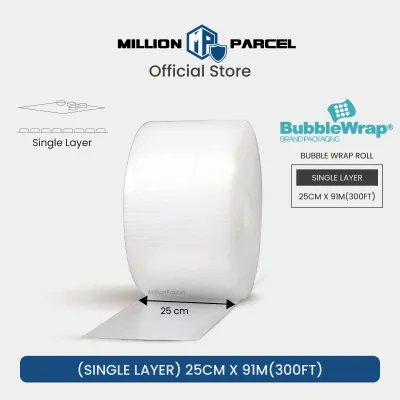
In the local Singapore market, small businesses and home shippers often turn to established packaging distributors that supply their own high-quality, branded rolls. Companies such as PackEverything and Million Parcel have become trusted household names by providing consistent, retail-ready packaging materials. These local supplier brands offer highly accessible options, including compact roll sizes (such as 300mm width by 10m or 50m length) that are easy to handle in a home office or spare bedroom without requiring specialized industrial dispensing equipment.
When sourcing from local suppliers, it is important to identify reliable products by checking for consistent bubble inflation and clear material labeling. A high-quality roll should have uniform, fully inflated bubbles across its entire surface, with no flat sections or weak seals along the edges. Reliable brands clearly label their materials, indicating whether the plastic is made from low-density polyethylene (LDPE), which is widely recyclable, and whether it meets basic safety standards for non-toxic handling.
Before committing to a large bulk purchase for your business, always order a single trial roll to test the material’s performance under real-world conditions. Conduct a simple manual compression test by squeezing several bubbles between your fingers; high-quality wrapping bubble plastic should resist popping under moderate pressure and feel robust rather than thin or brittle. Additionally, wrap a sample item and perform a controlled drop test from table height to verify that the cushioning layer successfully absorbs the impact without compressing flat.
Heavy-Duty and Commercial Brand Options for Business Shipping
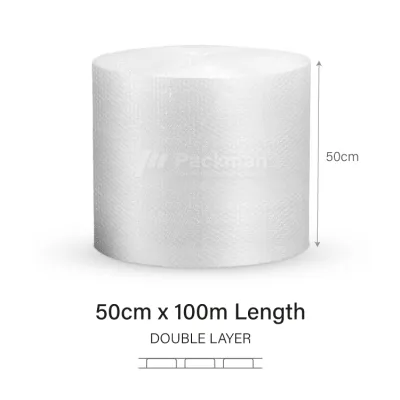
Medium-to-large businesses and industrial exporters operating out of Singapore’s commercial hubs require heavy-duty packaging brands that can withstand the rigors of global supply chains. Commercial-grade brands, such as those manufactured by Dynapack or specialized industrial packaging fabricators, focus on bulk consistency, high-micron durability, and compatibility with automated packaging machinery. These brands provide rolls in extended lengths (often 100 meters or more) and wider formats (up to 1.5 meters) to accommodate large-scale manufacturing and warehousing operations.
For businesses shipping sensitive electronics, standard wrapping bubble plastic poses a significant risk due to the generation of static electricity. Standard plastic films can build up electrostatic charges through friction during transit, which can easily discharge and destroy bare circuit boards, computer components, and delicate microchips. To mitigate this risk, commercial suppliers provide specialized anti-static bubble wrap, easily identified by its pink color. This material is treated with an antistatic additive that dissipates electrical charges, ensuring that high-value electronic components remain completely safe from electrostatic discharge (ESD) damage.
When evaluating commercial B2B suppliers in Singapore, businesses must look beyond the physical product and assess the supplier’s logistics capabilities. Key considerations include minimum order quantities (MOQs), volume-based pricing structures, and the reliability of delivery services to industrial areas such as Jurong, Tuas, and Woodlands. A dependable commercial partner should offer palletized delivery options, structured lead times, and consistent stock availability to prevent costly packaging shortages that could halt your fulfillment pipeline.
To optimize efficiency in a busy warehouse environment, commercial-grade bubble wrap should be paired with professional dispensing systems. Heavy-duty, non-perforated bulk rolls are best managed using heavy-duty metal dispensers equipped with integrated slitter blades. These systems allow warehouse staff to pull and cut custom lengths of wrapping bubble plastic quickly and cleanly, minimizing physical strain, reducing material waste from uneven tears, and maintaining a high-speed packing flow.
Quick Comparison of Bubble Wrap Material Types
To help you select the most appropriate material for your specific packaging application, the table below outlines the primary variants of wrapping bubble plastic available in the market, along with their ideal use cases and key structural features.
| Material Type | Best Use Case | Typical Bubble Size | Key Feature | Item Compatibility |
|---|---|---|---|---|
| Standard | General cushioning and surface protection | Small (10mm) | Lightweight, highly flexible, and cost-effective | Glassware, ceramics, cosmetics, and books |
| Anti-Static | Shipping sensitive electronic components | Small (10mm) to Large (25mm) | Pink color, dissipates electrostatic charges (ESD) | Bare PCBs, hard drives, laptops, and motherboards |
| Eco-Friendly | Sustainable retail and e-commerce packaging | Small (10mm) | Made from recycled plastics, green or clear | Non-fragile consumer goods, apparel, and organic products |
| Heavy-Duty | Industrial shipping and heavy-duty shock absorption | Large (25mm) | High micron thickness, superior puncture resistance | Metal parts, heavy machinery, automotive components, and large appliances |
For maximum protection of highly valuable or complex items, packaging professionals often combine these material types within a single shipment. For example, when shipping a delicate electronic instrument, you should first wrap the device in a layer of pink anti-static bubble wrap to protect the internal circuitry from static damage. Once the static-sensitive areas are secured, wrap the exterior in a layer of heavy-duty standard bubble wrap to provide robust physical shock absorption against drops and vibrations during transit.
Sourcing Channels and Storage Best Practices in Singapore
In Singapore, wrapping bubble plastic can be sourced through several convenient channels depending on your volume requirements. For small residential needs or immediate packing projects, local neighborhood stationery shops, hardware stores, and home improvement centers stock convenient, short-length retail rolls. For e-commerce businesses and home shippers, local packaging supply stores and online marketplaces offer a wider selection of sizes, pre-perforated options, and competitive pricing without requiring massive minimum orders. Large enterprises and warehouses should establish direct relationships with industrial B2B packaging distributors to secure bulk wholesale pricing, customized roll dimensions, and scheduled pallet deliveries.
Once you have procured your packaging materials, proper storage is essential to maintaining the physical integrity of the plastic and the inflation of the bubbles. Singapore’s tropical climate, characterized by high relative humidity and elevated ambient temperatures, can accelerate the degradation of low-density polyethylene films. Store your bubble wrap rolls in a cool, dry indoor environment, completely shielded from direct sunlight and extreme heat sources, as prolonged UV exposure can make the plastic brittle and cause the air inside the bubbles to expand and leak.
Additionally, always store large rolls of wrapping bubble plastic upright on their ends or place them on dedicated horizontal racking systems. Avoid stacking heavy boxes or other packaging materials directly on top of horizontally laid rolls, as the continuous downward pressure can slowly crush the bubbles on the bottom layers. By storing your rolls correctly, you ensure that the material retains its full cushioning capability and provides maximum protection when it is finally deployed to wrap your valuable goods.
Frequently Asked Questions (FAQ)
Can I reuse deflated wrapping bubble plastic?
While slightly deflated wrapping bubble plastic can be reused for light cushioning, wrapping non-fragile items, or acting as loose void fill inside shipping boxes, it should not be relied upon as the primary shock-absorption layer for highly fragile or heavy goods. Before reusing any bubble wrap for valuable items, carefully inspect the sheet to ensure that a significant majority of the bubbles remain fully inflated and sealed. If the bubbles are flat or easily pop under light finger pressure, the material has lost its structural integrity and should be recycled or replaced to ensure adequate protection.
Is standard bubble wrap safe for packing bare electronics?
Standard wrapping bubble plastic is not safe for packing bare electronic components, such as computer motherboards, graphics cards, hard drives, or bare circuit boards. The friction generated by standard plastic during handling and transit creates electrostatic charges that can easily discharge into the sensitive microchips, causing permanent, invisible electrical damage. For all bare electronic items, you must use specifically labeled pink anti-static bubble wrap, which is chemically treated to prevent the buildup of static electricity and safely dissipate any charges.

Community discussion
Share your experience or ask a question. Comments are reviewed before publication.