
Selecting the correct bubble wrap bag is a critical decision for e-commerce merchants, office administrators, and individual shippers across Singapore. With the rapid growth of local courier networks and door-to-door delivery services, ensuring that your items arrive at their destination undamaged is essential for maintaining customer satisfaction, reducing costly return rates, and protecting your brand’s reputation. The journey a parcel takes from a local sorting hub to a residential estate involves multiple touchpoints, mechanical sorting belts, and exposure to various physical forces.
In Singapore’s unique logistics environment, packaging materials must perform under demanding conditions. The high relative humidity and sudden tropical downpours present distinct challenges that can compromise inferior packaging materials. Therefore, the “best” bubble wrap bag is not a single, universally applicable product. Instead, it is the specific configuration of material, bubble size, and dimensions that perfectly matches the fragility, weight, and environmental sensitivity of the item you are shipping.
To make an informed choice, you must understand the technical specifications of the packaging materials available. By evaluating your products against key criteria such as impact resistance, moisture protection, and structural integrity, you can optimize your shipping workflow. This guide provides a comprehensive framework to help you select, verify, and utilize the ideal bubble wrap bags for your specific shipping needs.
Products mentioned in this guide
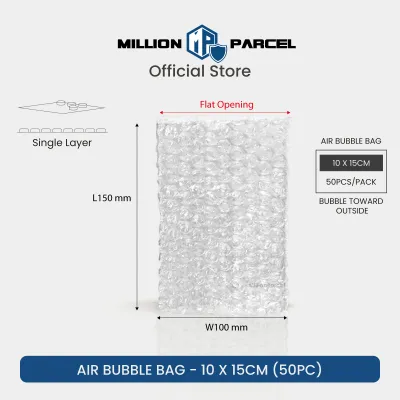
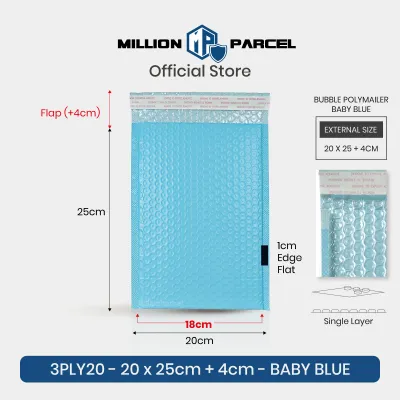
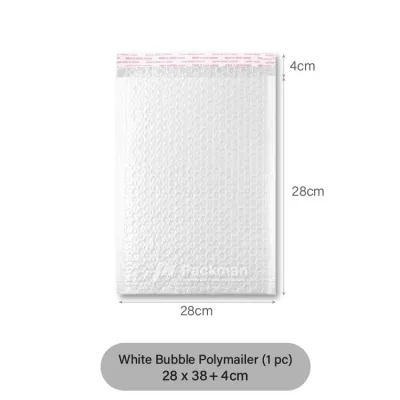
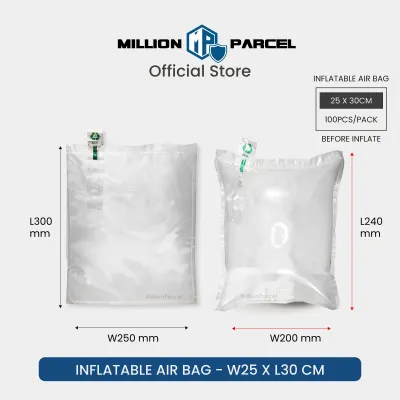
Prices are valid at publication and may change. Please refer to the product page for the latest price.
Key Factors to Consider When Buying Bubble Wrap Bags
Bubble Size and Thickness
The protective capability of a bubble wrap bag relies heavily on the size of its air bubbles and the thickness of the plastic film. Standard small bubbles, typically measuring 3/16 inch (approximately 4.8 mm) in height, are designed primarily for surface protection, scratch prevention, and light shock absorption. They are ideal for flat, lightweight items that do not exert high localized pressure. In contrast, large bubbles, measuring 1/2 inch (approximately 12.7 mm) in height, provide a much thicker cushion of air, making them engineered for heavy shock absorption and filling empty space around fragile, heavier items.
The durability of the bag is also determined by the film thickness, which is commonly measured in microns (µm) or mils (1 mil = 25.4 microns). Standard utility bubble mailers generally feature an outer film thickness of 50 to 60 microns, which is suitable for non-abrasive, lightweight goods. For items with sharp edges, high weight density, or those undergoing international transit, look for heavy-duty options with a film thickness of 80 to 100 microns or more. Thicker films offer significantly higher puncture resistance, ensuring the bubbles do not deflate prematurely under compression.
Outer Material
The choice of outer material determines how well the bubble wrap bag resists environmental hazards, tears, and handling stress. Kraft paper exteriors, available in natural brown or bleached white, offer a classic, professional appearance that is highly writable. They allow you to write addresses directly on the surface with standard marker pens, apply stamps, or stick paper labels securely. However, Kraft paper is naturally porous and absorbs moisture, which can weaken the mailer’s structure during Singapore’s wet seasons if the package is exposed to rain during transit.
Polyethylene (poly) exteriors are highly durable, water-resistant, and virtually tear-proof. These co-extruded plastic films provide an excellent barrier against moisture, humidity, and dirt, ensuring the contents remain entirely dry. The smooth, non-porous surface of poly mailers is highly compatible with self-adhesive thermal shipping labels, preventing them from peeling off during sorting. However, writing directly on poly mailers requires specialized permanent markers to prevent smudging, making them less convenient for manual labeling.
Sealing Mechanism
Efficient packing workflows rely on reliable sealing mechanisms that secure the contents without requiring excessive manual labor. Self-sealing bubble wrap bags feature an integrated adhesive strip protected by a peel-off release liner. Once the liner is removed and the flap is folded over, the pressure-sensitive hot-melt adhesive creates a permanent, tamper-evident bond. When selecting self-sealing bags, verify that the adhesive is formulated to withstand tropical storage conditions, as low-grade adhesives can soften, slide, or lose tackiness in hot, non-air-conditioned warehouses.
For industrial or high-volume packaging operations, non-adhesive bubble bags that require heat-sealing or manual taping are also common. Heat-sealing uses an impulse sealer to melt the plastic edges together, creating an airtight and exceptionally strong weld. While this method requires specialized equipment and adds an extra step to the packing process, it eliminates the risk of adhesive failure and is often more cost-effective when purchasing bulk quantities of open-ended bubble sleeves.
Size and Dimensions
One of the most common mistakes when purchasing bubble wrap bags is confusing external dimensions with internal usable space. The nominal size listed by manufacturers almost always refers to the outer boundaries of the flat bag. The physical thickness of the bubble lining on both sides reduces the internal width and length. For instance, a standard small bubble lining typically reduces the usable interior width by at least 10 mm to 20 mm, while large bubble linings can reduce it by 30 mm or more.
Furthermore, when you insert a three-dimensional object into a flat bag, the thickness of the item pulls the front and back panels together. This displacement significantly reduces the effective width and length of the bag. To avoid purchasing undersized packaging, you must always calculate the required internal dimensions based on your product’s three-dimensional volume, adding a safety margin for the top flap closure.
Recommended Bubble Wrap Bag Types by Use Case
Kraft Bubble Mailers for Documents, Books, and Light Goods
Kraft bubble mailers are an excellent choice for shipping flat, semi-rigid, or non-fragile items that require basic cushioning and a professional presentation. Books, catalogs, certificates, calendars, and cosmetic compacts fit perfectly into these structured mailers. The stiffness of the Kraft paper exterior provides a degree of bending resistance, which helps keep documents and flat items from creasing during handling. Additionally, the clean paper surface allows businesses to easily apply custom branding stamps, logos, or handwritten notes, enhancing the unboxing experience.

However, because Kraft paper is susceptible to water absorption, these mailers should be used with caution for moisture-sensitive items. If you are shipping high-value paper goods or electronics in Kraft mailers, it is highly recommended to first seal the items inside a waterproof plastic sleeve before placing them into the mailer. This dual-layer approach combines the structural rigidity of the paper exterior with the moisture protection of an inner plastic barrier, safeguarding your shipments against unexpected weather conditions.
Poly Bubble Mailers for Moisture-Prone and Apparel Shipments
For apparel, textiles, soft toys, and boxed goods, poly bubble mailers offer the most reliable and cost-effective packaging solution. The polyethylene exterior is completely waterproof, ensuring that high humidity and heavy rain do not affect the contents inside. Poly mailers are also highly elastic, allowing them to stretch slightly to accommodate overstuffed or irregularly shaped soft goods without tearing or bursting at the seams. This flexibility makes them incredibly versatile for daily e-commerce operations.
Furthermore, poly mailers provide excellent security and privacy. High-quality co-extruded poly mailers feature an opaque gray or black inner layer, which prevents light from passing through and keeps the contents completely invisible from the outside. The strong adhesive on the self-seal flap bonds instantly to the poly film, making it impossible to open the bag without visibly damaging the packaging. This tamper-evident feature is highly beneficial for shipping high-value lifestyle products, cosmetics, and accessories.
Anti-Static Bubble Bags for Electronics and Sensitive Components
Electrostatic discharge (ESD) is a hidden hazard that can permanently damage sensitive electronic components during transit. Standard plastic materials easily generate static electricity through friction as they rub against other surfaces during sorting and transport. To protect items such as printed circuit boards (PCBs), computer memory modules, graphics cards, and delicate sensors, you must use anti-static bubble bags. These specialized bags are treated with antistatic agents that prevent the accumulation of static charges on the surface of the plastic.
Easily recognizable by their distinct pink or light red color, anti-static bubble bags work by keeping the electrostatic surface resistivity within a safe range (typically between 10^9 and 10^11 ohms per square). It is important to note that pink anti-static bags do not shield components from external electrostatic fields; rather, they ensure that the packaging itself does not generate a charge. For complete protection of highly sensitive electronics, components should first be placed inside a metallic static shielding bag, which can then be inserted into an anti-static bubble bag for physical cushioning.
Heavy-Duty and Gusseted Bubble Bags for Bulky or Fragile Items
Standard flat bubble bags are often inadequate for bulky, heavy, or highly fragile items like ceramic mugs, glassware, small household appliances, or industrial spare parts. When a thick, three-dimensional object is forced into a flat bag, the seams are subjected to extreme tension, and the bubbles are compressed flat against the item’s surface, losing their cushioning properties. Gusseted bubble bags solve this problem by incorporating expandable side or bottom folds that allow the bag to open into a structured, box-like shape.
This expandable design ensures that the bubble lining remains fully lofted around the entire perimeter of the item, providing uniform shock absorption. Heavy-duty gusseted bags are often manufactured with multi-layer laminated films and larger bubble profiles to withstand high compression forces. When shipping fragile items that are heavy or irregularly shaped, utilizing a heavy-duty gusseted bubble bag provides the necessary physical buffer to survive accidental drops and rough handling in sorting facilities.
Packaging Best Practices for Maximum Protection
Proper Sizing Execution
Achieving maximum protection begins with selecting the correct bag size for your product. A bubble wrap bag that is too tight will stretch the plastic film, pre-compressing the bubbles and significantly reducing their ability to absorb impacts. It also puts continuous stress on the side seams, making the bag highly susceptible to splitting open if dropped. Conversely, a bag that is too loose allows the item to shift and slide during transit, which can generate momentum and lead to internal damage or puncture the outer wall.
To ensure a perfect fit, aim for a clearance of approximately 10 mm to 20 mm around the entire perimeter of your product. This space allows the item to slide in easily without friction, while keeping it snug enough to prevent excessive movement. If you must use a larger bag for a smaller item, fill the remaining void with lightweight packing tissue or loose bubble wrap to immobilize the product securely within the mailer.
Edge and Corner Protection
Sharp edges and pointed corners on items such as hardback books, metal frames, acrylic sheets, or boxed products represent a major packaging vulnerability. Under the pressure of stacked parcels during transit, these sharp points can easily puncture both the inner bubble lining and the outer film of the bag. Once the packaging is breached, the item is exposed to moisture, dirt, and direct impact, while the structural integrity of the mailer is compromised.
To prevent internal punctures, always reinforce sharp edges and corners before placing the item into the bubble wrap bag. You can wrap the corners with a small piece of corrugated cardboard, apply molded foam corner protectors, or wrap the entire item in an extra layer of standard bubble wrap. This simple step distributes the localized pressure over a wider surface area, ensuring that the outer mailer remains intact throughout its journey.
Sealing and Reinforcing
An improperly sealed bubble wrap bag is a common cause of transit damage and lost items. When using self-sealing bags, ensure that the sealing area is completely free of dust, paper fibers, and moisture. Remove the release liner and fold the flap over smoothly, pressing firmly from the center outward along the entire length of the adhesive strip. Allow a few moments for the pressure-sensitive adhesive to establish a full bond with the outer film before stacking or moving the package.
For heavy, dense, or bulky shipments, the weight of the item can exert significant outward pressure on the sealed flap during handling. To prevent accidental blowouts, reinforce the closure by applying a strip of high-quality, heavy-duty acrylic or hot-melt packaging tape over the sealed flap. Extend the tape at least 50 mm down the sides of the mailer to secure the seams. This reinforcement adds an extra layer of mechanical security, ensuring the bag remains tightly sealed even under extreme stress.
Labeling and Handling
Proper placement of shipping and tracking labels is essential for smooth logistics processing. Always apply your thermal or paper shipping labels to the flattest, most stable surface of the bubble wrap bag. Avoid placing labels over the self-seal flap, seams, or highly curved edges, as this can cause the printed barcode to warp or crease. Automated sorting machines at courier hubs rely on flat, clear barcodes; a warped label can lead to scanning failures, manual sorting delays, or misrouting.
It is also important to manage expectations regarding handling instructions. While applying “Fragile” or “Handle with Care” stickers to your bubble mailers can serve as a helpful visual cue for courier staff, it does not guarantee gentle handling. Automated sorting conveyor belts and stacking systems cannot read these labels. Therefore, your physical packaging must always be robust enough to protect the contents from standard drops, vibrations, and compression, independent of any external warning stickers.
Sourcing and Purchasing Bubble Wrap Bags in Singapore
Local Packaging Suppliers vs. Online Marketplaces
When sourcing bubble wrap bags in Singapore, buyers can choose between specialized local packaging suppliers and general online marketplaces. Local packaging suppliers and distributors are the ideal choice for established businesses, high-volume shippers, and those requiring consistent quality. These suppliers offer bulk wholesale pricing, reliable stock levels, and the ability to purchase in large carton quantities. They also provide options for custom-sized manufacturing and personalized brand printing, which helps elevate your professional presentation.
For startups, home-based sellers, or those who ship infrequently, online marketplaces offer unparalleled convenience. They allow you to purchase smaller quantities, such as packs of 10 or 50 pieces, which is highly beneficial for managing storage space and cash flow. Marketplaces also make it easy to compare prices across multiple sellers and access a wide variety of sizes instantly. However, the quality of products on these platforms can vary, making careful evaluation necessary.
Evaluating Sellers and Quality
To ensure you receive high-quality bubble wrap bags that meet your protective standards, you must carefully evaluate potential sellers. When purchasing from online marketplaces, read customer reviews thoroughly, looking for specific feedback regarding bubble fullness, film thickness, and adhesive strength. Be cautious of listings that only display generic product photos; instead, look for sellers who provide detailed close-up images of the actual product seams and the interior bubble lining.
Before committing to a large bulk order from any supplier, it is highly recommended to request or purchase a small sample pack. Use these samples to conduct simple, observable quality checks. Test the adhesive strip by sealing a sample and attempting to pull it open after ten minutes; the film should tear rather than the adhesive peeling away cleanly. Press several bubbles firmly to ensure they do not pop too easily, which indicates poor air retention. Finally, measure the actual internal dimensions of the sample with your product inside to verify the fit.
Storage Considerations
Singapore’s tropical climate, characterized by high temperatures and relative humidity levels that frequently exceed 80%, can degrade packaging materials over time if they are stored incorrectly. Prolonged exposure to heat and humidity can cause the hot-melt adhesive on self-sealing flaps to soften, bleed through the liner, or lose its bonding strength entirely. Additionally, high humidity can soften Kraft paper mailers, making them limp and reducing their structural rigidity before they are even used.
To preserve the quality of your bubble wrap bags, store your inventory in a cool, dry, and well-ventilated indoor space. Keep the bags in their original carton packaging or sealed plastic bags to protect them from ambient moisture and dust. Avoid storing them in direct sunlight, near heat-emitting appliances, or directly on concrete floors where moisture can seep up. Stack the cartons neatly without overloading them, as excessive weight can compress and deflate the bubbles at the bottom of the stack over time.
Frequently Asked Questions (FAQ)
Are bubble wrap bags recyclable in Singapore?
Standard bubble wrap bags, including Kraft paper bubble mailers and co-extruded poly bubble mailers, are generally not accepted in Singapore’s household blue recycling bins. Kraft bubble mailers are made by laminating plastic bubble wrap directly to an outer layer of paper. Because these two materials are permanently fused, they cannot be easily separated at local recycling facilities, making them a contaminant in the paper recycling stream. Poly bubble mailers, while made of low-density polyethylene (LDPE), are frequently contaminated with non-recyclable paper shipping labels and strong adhesives, which clogs recycling machinery. To minimize environmental impact, encourage your customers to carefully open and reuse the mailers for their own shipping needs, or look for specialized local commercial recycling programs that accept clean, label-free soft plastics.
How do I calculate the correct internal dimensions for a bubble mailer?
To calculate the minimum internal dimensions required for your product, you must account for the item’s width, length, and thickness. Do not rely on the external dimensions listed by the manufacturer. You can use the following practical formulas to determine the minimum internal space needed:
- Minimum Internal Width = Item Width + Item Thickness + 20 mm (clearance)
- Minimum Internal Length = Item Length + Item Thickness + 30 mm (flap fold and clearance)
For example, if you are shipping a rectangular box that measures 150 mm in width, 200 mm in length, and 30 mm in thickness, your minimum internal width should be at least 200 mm (150 + 30 + 20), and your minimum internal length should be at least 260 mm (200 + 30 + 30). Always compare these calculated values against the manufacturer’s specified internal dimensions to ensure a safe, comfortable fit that does not stretch the bubble lining.

Community discussion
Share your experience or ask a question. Comments are reviewed before publication.