
Selecting your first mini watercolor set is a balancing act between physical portability and pigment performance. For a beginner, the ideal set is not necessarily the most expensive professional kit, nor is it the cheapest toy-grade palette. Instead, it is a highly functional, compact system that teaches you how pigments behave, how colors mix, and how to control water on paper without causing frustration. By focusing on key specifications like pigment grade, pan configuration, and palette design, you can find a reliable travel companion that supports your learning curve rather than hindering it.
A compact watercolor setup allows you to practice consistently, whether you are sketching at a local cafe, painting in a park, or working at a small desk at home. However, the market is filled with options ranging from professional-grade pocket tins to low-quality scholastic sets. Understanding how to evaluate these products based on their physical and chemical properties will ensure you invest in a tool that helps you build genuine painting skills.
What Defines a Beginner-Friendly Mini Watercolor Set
To choose the right mini watercolor set, you must first understand the difference between student-grade, professional-grade, and scholastic paints. Scholastic or toy-grade paints are designed for children and prioritize low cost and easy cleanup over artistic performance. These sets often use cheap dyes and heavy chalky fillers instead of actual pigments, bound together with inexpensive synthetic binders. When you paint with scholastic sets, the colors often look dull, dry to a chalky finish, and turn muddy almost instantly when mixed.
Products mentioned in this guide
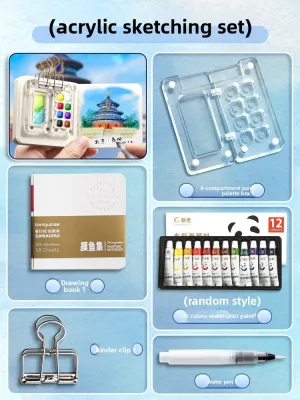
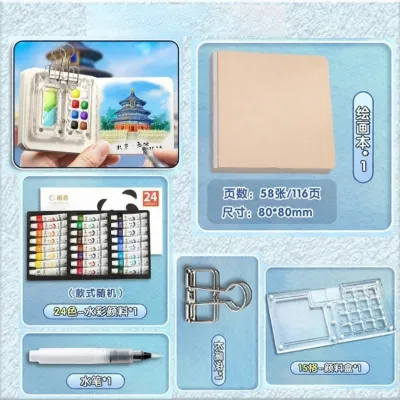
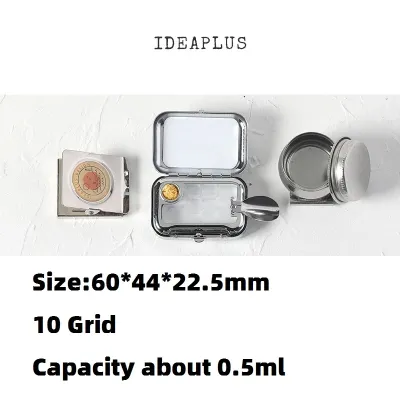
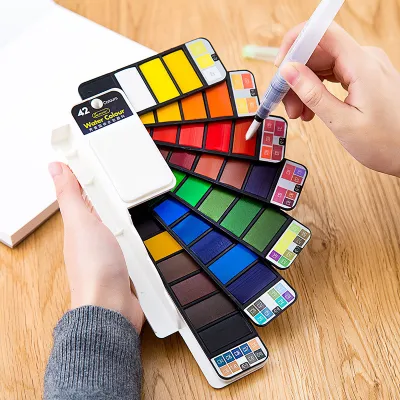
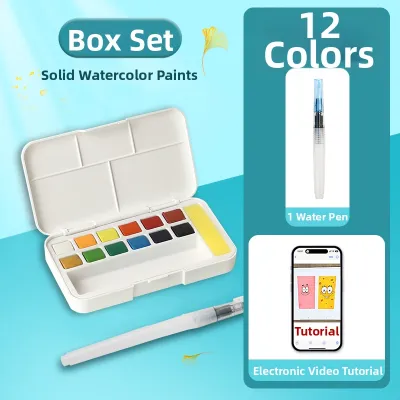
Prices are valid at publication and may change. Please refer to the product page for the latest price.
Student-grade watercolors represent the ideal entry point for beginners. These paints use reliable, safe pigments—often utilizing synthetic alternatives or “hues” to replace rare, expensive minerals—and are bound with quality binders like gum arabic. This formulation ensures that the paint flows smoothly, mixes predictably, and retains its vibrancy when dry. Professional-grade paints offer the highest pigment concentration and exceptional lightfastness, but their high cost and complex handling characteristics are rarely necessary for someone just starting out.
Portability must be balanced with usability when evaluating a mini set’s physical design. A truly functional mini watercolor set should feature a well-thought-out layout that includes dedicated mixing areas. Look for cases that unfold to reveal deep, white-enameled or white plastic wells. These mixing areas are essential because they allow you to dilute your paint and mix custom shades without the colors bleeding into one another. A metal tin with a fold-out metal flap or a plastic case with a detachable palette lid provides the best balance of compact storage and functional workspace.
The number of colors in a beginner set should be carefully curated to prevent decision fatigue. While it is tempting to purchase a set with 36 or 48 different shades, a smaller palette of 12 to 18 colors is far more beneficial for a beginner. A limited palette forces you to learn basic color theory and master the art of color mixing. By working with a warm and cool variant of each primary color (red, yellow, and blue), along with a few essential earth tones, you will develop a deep understanding of how to create clean, vibrant secondary and tertiary colors on your own.
Essential Specifications to Verify Before Buying
Before purchasing any mini watercolor set, it is crucial to inspect the product packaging or online specifications for lightfastness ratings. Lightfastness refers to a pigment’s ability to resist fading or changing color when exposed to light over time. Reliable brands use standardized rating systems, such as the ASTM International standards (where Category I is excellent and Category II is very good) or the Blue Wool Scale (where ratings of 6 to 8 indicate high resistance). Checking for these ratings ensures that your practice pieces and finished artwork will not fade away within a few months of exposure to indoor light.

Another critical detail to verify is the presence of pigment codes versus generic color names. High-quality student-grade sets will list the specific pigment codes used in each pan, such as PB29 for Ultramarine Blue or PY150 for Nickel Azo Yellow. If a set only lists vague names like “sky blue” or “lemon yellow” without any pigment codes, it is highly likely that the paint relies on cheap, fugitive dyes. Dyes lack the structural stability of mineral or synthetic pigments, leading to rapid fading and unpredictable mixing behaviors.
The physical size of the paint pans in a mini set directly impacts your painting workflow. Mini sets typically utilize half-pans, which measure approximately 1.5cm by 1.9cm, rather than full pans, which are twice that size. Half-pans are excellent for keeping the overall set pocket-sized, but they require you to use smaller brushes—typically size 6 round brushes or smaller—to avoid accidentally picking up paint from adjacent pans. If you prefer using large, thirsty mop brushes for broad washes, you may need to look for a slightly larger travel set that accommodates full pans, or practice loading your brush with precise, controlled strokes.
The quality of the included brush can make or break your initial painting experience. Many mini sets come with a small, collapsible travel brush or a water brush pen. A water brush pen features a plastic handle that acts as a water reservoir, feeding water directly to the synthetic bristles. While incredibly convenient for quick outdoor sketching where carrying a water cup is impractical, water brush pens can make water control difficult for beginners because the water flows continuously. A traditional, short-handled synthetic round brush offers much better control over the water-to-paint ratio, which is essential for mastering foundational techniques like flat washes and wet-on-wet painting.
How to Evaluate Different Brand Categories
When exploring the market, you will encounter distinct brand categories, each with its own design philosophy and material characteristics. Japanese portable watercolor sets are highly popular and are often designed with illustration, manga, and journaling in mind. These sets frequently feature highly vibrant, semi-moist pans that dissolve instantly upon contact with a wet brush. Many Japanese formulations utilize traditional gansai recipes or dye-based pigments, which offer intense, glowing colors. However, gansai paints can behave differently than traditional Western watercolors; they tend to be more opaque, do not lift as easily once dry, and can feel slightly glossy due to different binding agents.
Traditional Western student-grade mini sets, originating from European and North American manufacturers, are built around classical watercolor techniques. These brands prioritize predictable color mixing and transparent layers. Their 12-pan configurations are typically structured around a split-primary system, allowing you to practice traditional glazing and color theory. The binders used are almost exclusively high-quality gum arabic, which allows the paint to rewet easily and lift cleanly from the paper when you need to correct mistakes. For beginners focused on learning classical watercolor painting, these Western-style sets offer a highly predictable and educational experience.
The rise of online marketplaces has introduced a vast array of budget-friendly, emerging brands. While some of these sets offer surprising value, they require careful verification before purchase. Always check the packaging for safety certifications, such as the AP (Approved Product) seal from the Art and Creative Materials Institute (ACMI) or the European EN71 standard for toy safety. Additionally, visit the manufacturer’s website to see if they publish a comprehensive pigment chart. A reputable budget brand will openly share their pigment ingredients and lightfastness ratings, whereas low-quality manufacturers will hide behind generic marketing claims of “professional quality” without providing any technical data.
Aligning Your Choice with Your Painting Environment
Your physical painting environment should play a significant role in determining which mini watercolor set is right for you. If you plan to engage in outdoor sketching or urban sketching—a highly popular activity in Singapore’s vibrant urban landscapes—portability and physical security are paramount. In warm, humid tropical climates, watercolor pans can remain slightly tacky or slow to dry completely. Look for a mini set with a secure, airtight locking mechanism to prevent semi-wet paint from leaking into your bag. The individual pans should snap firmly into the tray so they do not dislodge if the palette is tilted or dropped while you are painting on the go.
For indoor desk practice, where you have a stable flat surface, extreme compactness can be traded for increased mixing space and ease of cleaning. A slightly larger mini set that unfolds to reveal multiple mixing wells is highly advantageous. Metal tins are particularly popular for desk use because they lie completely flat and are incredibly durable. The white-enameled interior of a metal tin provides an excellent surface for mixing colors, as it allows you to see the true hue and value of your paint mixture before applying it to paper. Plastic palettes can sometimes cause wet paint to bead up, making it harder to judge the exact color mix.
Regardless of where you paint, your mini watercolor set’s performance is deeply dependent on the paper you choose. Student-grade paints contain slightly more binders and fillers than professional paints, which can cause them to look chalky or sit unevenly on low-quality paper. To get the best results from your mini set, pair it with a dedicated watercolor sketchbook or pad containing at least 300 gsm (grams per square meter) paper. Cold-pressed paper, which has a textured surface, is highly forgiving for beginners because it slows down the drying process and holds water beautifully. Hot-pressed paper is smooth and excellent for detailed pen-and-wash work, but it requires precise water control as the paint dries much faster on its surface.
Common Purchasing Mistakes to Avoid
One of the most common mistakes beginners make is falling into the “more is better” trap. It is incredibly tempting to purchase a massive, inexpensive 48-color plastic palette from a general online marketplace. However, these sets almost always sacrifice pigment concentration and binder quality to keep the price low. You will likely find yourself struggling to lift the paint from the pans, requiring constant scrubbing that damages your brush bristles. The resulting washes will often look dull, streaky, and chalky, which can be highly discouraging for a new artist. Investing S$20 to S$40 in a high-quality 12-color student-grade set will yield far better results than spending the same amount on a low-grade mega-set.
Another frequent error is neglecting the quality of your paper while focusing entirely on the paint. Many beginners assume that expensive paint will make up for cheap paper, but the opposite is often true. Standard drawing paper, cartridge paper, or cheap sketchbooks will warp, pill, and bleed when exposed to water, making it impossible to practice basic watercolor techniques like washes or blending. Even the highest-quality paint will perform poorly on inadequate paper. Ensure you allocate a portion of your budget to purchasing a small pad of 100% cotton or high-quality wood-pulp watercolor paper.
Finally, avoid purchasing uncertified, unbranded sets from general e-commerce platforms. These products often bypass rigorous safety and quality control standards. They may contain harmful preservatives, heavy metals, or toxic binders that are unsafe for prolonged skin contact. Furthermore, these unbranded sets rarely provide lightfastness information, meaning your hard work could fade or discolor within just a few weeks of display. Stick to established art supply brands that carry recognized non-toxic certifications and publish transparent material safety data sheets.
Frequently Asked Questions (FAQ)
Can I refill the pans in a mini watercolor set?
Yes, most high-quality mini watercolor sets are designed to be easily refilled. Many of these sets use standard-sized plastic half-pans that slide into metal tracks or snap into plastic slots, allowing you to replace individual colors as they run out. Alternatively, you can purchase watercolor paint in tubes, which is highly cost-effective. Simply squeeze the tube paint directly into the empty half-pans of your mini set and let it dry completely in a warm, dry place for a few days. Once dry, the paint will behave exactly like a pre-poured pan, allowing you to customize your palette with your favorite colors over time.
Do I need to buy extra brushes for a mini set?
While the pocket brush or water brush pen included with most mini sets is sufficient for quick sketches and on-the-go journaling, investing in at least one dedicated brush will greatly improve your painting experience. The brushes included in travel sets are often very small (typically size 2 or 4) and have limited water-holding capacity, making it difficult to lay down smooth, even washes over larger areas. Purchasing a single, high-quality size 6 or size 8 round synthetic watercolor brush will provide a much better balance of water control, spring, and point precision, allowing you to practice a wider variety of foundational techniques.

Community discussion
Share your experience or ask a question. Comments are reviewed before publication.