
Selecting the right crochet hook is just as important as choosing the perfect yarn for your project. There is no single “best” crochet hook material for every project; the ideal choice depends on the friction of your yarn, your personal tension, and your comfort needs. Aluminium hooks generally offer a smooth glide for sticky or fuzzy fibers, bamboo provides surface grip for slippery yarns, and plastic serves as a lightweight, versatile middle ground. To make the right decision, you must match the hook’s surface texture and weight to the specific characteristics of your yarn and verify the combination with a test swatch before starting a large project.
How Hook Material Affects Your Crochet Experience
The physical properties of your crochet hook directly influence how smoothly your stitches form, how quickly you can work, and how your hands feel after hours of crafting. The most significant difference lies in surface friction. Polished metal hooks, typically made of anodised aluminium, have an incredibly slick surface that allows yarn to slide with minimal resistance. In contrast, natural bamboo hooks possess a microscopic wood grain that creates gentle friction, holding the yarn in place. Molded plastic hooks fall somewhere in between, though their surface texture can vary depending on the manufacturing quality and the presence of molded seams.
Weight distribution, flexibility, and thermal conductivity also play crucial roles in your comfort. Aluminium hooks are rigid and durable, but they can feel cold to the touch when you first pick them up, gradually warming to your body temperature as you work. Bamboo is exceptionally lightweight and naturally warm, making it a favorite for crafters who experience joint stiffness. Plastic hooks are the lightest of all and offer a degree of flexibility, especially in smaller sizes, which can reduce the impact on your hands but may feel less stable under tight tension.
Products mentioned in this guide
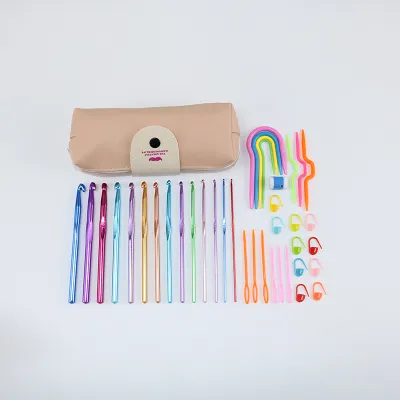
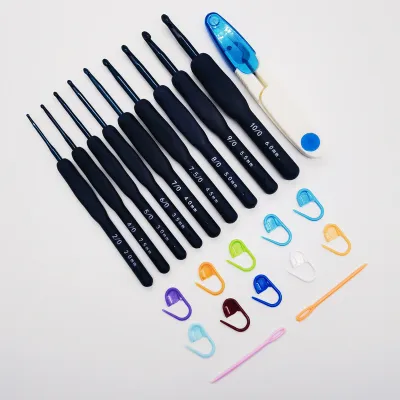
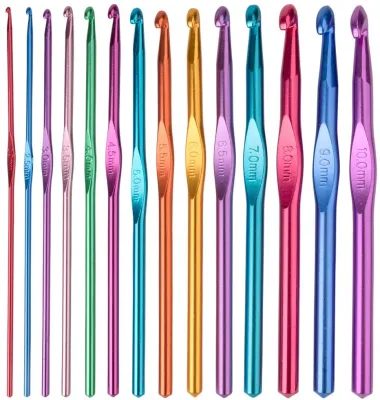
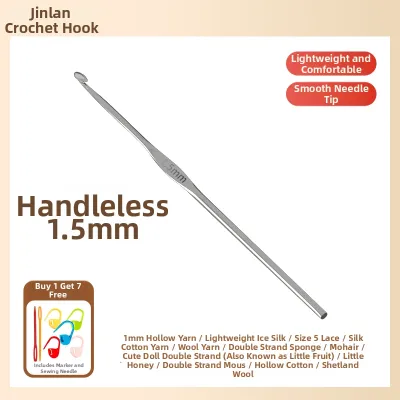
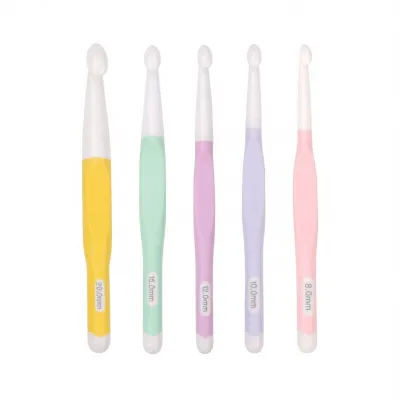
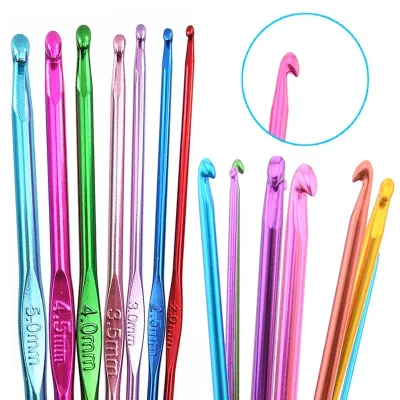
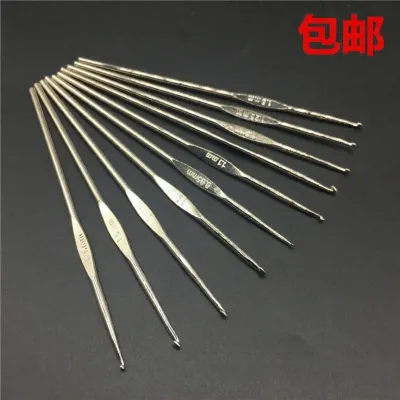
Prices are valid at publication and may change. Please refer to the product page for the latest price.
Durability limits are another key consideration. While aluminium hooks are virtually indestructible and resist wear, they can develop fine scratches if stored carelessly. Bamboo hooks are biodegradable and comfortable, but they are susceptible to splintering, chipping at the tip, or warping if exposed to high humidity. Plastic hooks are highly affordable but can become brittle over time, bend under heavy tension, or develop rough edges along their seams that can snag delicate fibers.
Matching Hook Materials to Yarn Fibers
To achieve a smooth crafting rhythm, you should pair your hook material with your yarn based on the principle of contrasting textures. As a general rule, smooth, low-friction hooks work best with grippy, high-friction yarns, while textured, high-friction hooks are ideal for slippery, low-friction yarns. This balance prevents the yarn from either sliding off the hook too quickly or sticking to the shaft and slowing down your progress.

Before starting any project, take a moment to evaluate your yarn’s physical characteristics. Look closely at the halo—the fuzzy fibers extending from the main strand—as well as the ply structure and the overall surface friction. Loosely plied yarns are prone to splitting if your hook catches the individual strands, while highly textured or fuzzy yarns will cling to themselves and to rougher hook surfaces. Identifying these traits early allows you to select a tool that minimizes drag and prevents splitting.
Smooth and Slippery Yarns (Cotton, Silk, Viscose)
Plant-based fibers like cotton, linen, and bamboo, as well as luxury materials like silk and viscose, have smooth surfaces with very little natural grip. When worked with a highly polished aluminium hook, these slippery yarns can easily slide off the throat or head of the hook before you complete a stitch. This lack of control often leads to dropped stitches, uneven tension, and hand fatigue from gripping the hook too tightly.
Using a higher-friction material like bamboo provides the necessary surface resistance to keep smooth fibers secure. The natural grain of the bamboo gently grips the yarn, allowing you to maintain consistent tension without having to overcompensate with hand pressure. This combination is particularly helpful for beginners who are still developing their stitch rhythm.
When working with fine, tightly plied cotton or silk, always check the hook throat and head for microscopic snags. Run your fingertip gently over the surface of your bamboo hook to ensure there are no rough spots or splinters. Even a tiny imperfection can catch on fine plies, causing the yarn to fray or split, which ruins the clean definition of your stitches.
Fuzzy and Grippy Yarns (Wool, Alpaca, Mohair)
Animal fibers such as wool, alpaca, and mohair naturally possess a high degree of surface friction due to their microscopic scales and fuzzy halos. If you attempt to use a bamboo hook with these grippy yarns, the fibers will cling to the hook’s surface, creating excessive drag. This resistance forces you to push and pull each stitch with extra effort, quickly leading to wrist fatigue.
Highly polished materials like anodised aluminium are the ideal choice for fuzzy yarns. The slick metal surface allows sticky animal fibers and dense halos to glide effortlessly over the hook shaft. This smooth movement prevents the hook from catching on the fuzzy fibers, allowing you to maintain a fast, comfortable pace.
As you begin your project, closely observe how the yarn behaves during the first few stitches. If you notice the yarn splitting or the hook catching on the halo, it is a clear sign of excessive friction. Adjusting to a polished metal hook or switching to a slightly larger hook size can immediately reduce drag and allow the fibers to glide smoothly.
Standard Synthetics and Blends (Acrylic, Polyester)
Synthetic fibers like acrylic and polyester are highly uniform, widely available, and used for a vast range of everyday projects. Because these fibers have a moderate amount of natural friction, they perform well with both plastic and standard aluminium hooks. Plastic hooks, in particular, are a popular and budget-friendly option for large synthetic projects like blankets, where a lightweight tool is essential.
However, synthetic yarns can sometimes present unique challenges, such as static buildup or excessive squeaking. This is especially common when using plastic hooks in dry, air-conditioned rooms. The friction between the plastic hook and the synthetic yarn can create static electricity, causing the yarn to cling awkwardly to the hook.
If you experience squeaking or static drag, monitor the hook’s surface for any residue or oils from your hands. You can resolve this by wiping the hook with a clean, damp cloth. If the squeaking persists and disrupts your rhythm, switching to an aluminium hook will usually eliminate the static and restore a smooth glide.
Verifying Grip, Speed, and Comfort in Your Projects
Before committing to a large project, conduct a 10×10 cm test swatch using your chosen hook and yarn combination. This simple step allows you to observe how the materials interact in real-time. Pay close attention to your stitch consistency, whether the yarn splits when you insert the hook, and how easily you can maintain your desired tension. A test swatch will quickly reveal if your hook is too slippery or too grippy for the fiber.
In addition to stitch quality, use the swatching process to assess your physical comfort. Take note of any hand strain, joint fatigue, or temperature discomfort. For instance, if you find that cold metal hooks cause your fingers to stiffen in air-conditioned spaces, switching to a warm bamboo hook or a lightweight plastic hook may provide immediate relief. Pay attention to how the weight of the hook distributes in your hand during extended crocheting sessions.
It is essential to identify clear stop conditions to protect both your project and your physical health. If you experience persistent wrist or finger pain, if the yarn splits on almost every stitch, or if the hook surface continuously snags the fiber, do not try to push through. These are clear signs that the hook-and-yarn combination is not working, and you should abandon the current material in favor of a different hook type or an ergonomic handle.
Decision Framework: Choosing Your Crochet Hook Material
To simplify your selection process, use this conditional framework based on your yarn type, project goals, and hand comfort:
Choose aluminium hooks if you prioritize speed, are working with fuzzy or sticky yarns (such as wool, alpaca, or mohair), or prefer a rigid, cool-to-the-touch tool that will last a lifetime. Aluminium is also excellent for achieving crisp stitch definition in highly textured patterns.
Choose bamboo hooks if you need extra grip to control slippery yarns (such as cotton, silk, or viscose), prefer a warm, lightweight, and natural feel, or tend to have a very loose natural tension that requires more surface resistance to keep stitches uniform.
Choose plastic hooks if you are looking for an affordable, lightweight, and slightly flexible option for large projects using standard acrylics or medium-weight synthetic blends. They are excellent for travel and budget-friendly crafting, with basic options often costing under S$3 to S$5 at local craft shops.
Always verify your comfort first if you experience hand fatigue, joint stiffness, or arthritis. In these cases, the material of the hook tip is secondary to the handle design. Look for hooks that feature ergonomic elastomer, silicone, or soft clay handles, which provide a larger grip area and reduce the muscular effort required to hold the tool, regardless of whether the hook itself is made of aluminium, bamboo, or plastic.
Frequently Asked Questions (FAQ)
Can I use the same crochet hook material for all my yarns?
While you can technically use a single hook material—such as polished aluminium—for almost any project, it is not always the most comfortable or efficient approach. Using a highly polished hook with a very slippery silk yarn can lead to dropped stitches and frustration, while using a high-friction bamboo hook with sticky wool will slow you down and cause hand strain. For casual, multi-yarn crafters, a high-quality plastic hook or an aluminium hook with an ergonomic grip serves as the most versatile middle ground, but matching the material to the fiber will always yield the best results.
How should I clean and store aluminium, bamboo, and plastic hooks?
To preserve the surface integrity of your hooks, use gentle cleaning methods. Wipe aluminium and plastic hooks with a soft, damp cloth to remove hand oils, and dry them thoroughly. For bamboo hooks, use a dry or barely damp cloth to avoid stripping the natural oils or causing the wood to swell. Store your hooks in a dry, organized case away from extreme humidity—which is especially important in tropical climates to prevent bamboo from warping or molding. Keep plastic hooks out of direct sunlight to prevent them from becoming brittle, and immediately discard any hook that develops deep scratches, cracks, or splinters.

Community discussion
Share your experience or ask a question. Comments are reviewed before publication.