
Choosing the right embroidery cloth is the most critical decision you make before pulling your first thread, as the fabric determines not only the ease of your stitching but also the final texture, appearance, and durability of your work. The three most common options—Aida, Evenweave, and linen—each offer distinct structural properties that cater to different skill levels, design complexities, and aesthetic preferences. By understanding how these fabrics differ in their weave, thread count, and handling, you can confidently select the perfect foundation that matches your project goals and ensures your stitches lay beautifully.
Key Structural Differences That Affect Your Stitching
To make an informed choice, you must first understand how the physical construction of each fabric influences your needlework. The primary differentiator is the weave structure, which dictates how easily you can identify where to insert your needle. Some fabrics group threads into distinct blocks, while others feature single, woven threads that require a different counting method.
Thread count, typically measured in holes per inch (HPI) or threads per inch (TPI), directly impacts the scale and detail of your finished design. A higher thread count means more stitches can fit into a smaller area, allowing for intricate details and smoother curves. Conversely, a lower thread count results in larger, more prominent stitches that are easier to see and execute, making it ideal for bolder patterns.
Products mentioned in this guide
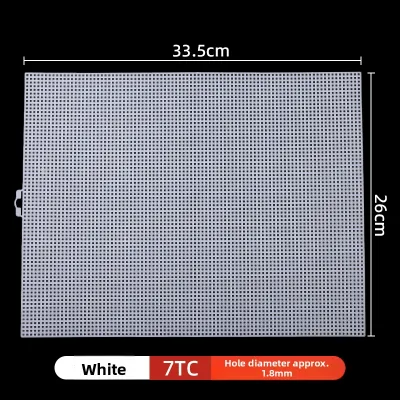
Prices are valid at publication and may change. Please refer to the product page for the latest price.
Fabric stiffness and drape also play a significant role in your stitching experience. Some embroidery cloths are heavily treated with sizing—a starch-like substance applied during manufacturing—to make them stiff and self-supporting, which can be helpful if you prefer stitching without a hoop. Other fabrics are naturally soft and pliable, offering a graceful drape that is perfect for finished items like table linens or clothing, though they require consistent tensioning during the stitching process.
The fiber content of the fabric also influences its texture, sheen, and durability. Cotton, rayon, and flax (linen) fibers react differently to moisture, tension, and wear. Understanding these material characteristics allows you to choose a fabric that not only looks beautiful when completed but also withstands the test of time, whether it is framed on a wall or used as a functional household textile.
The physical strain of stitching is another practical factor to consider when comparing these fabrics. Working on high-count fabrics with tiny, closely spaced holes requires excellent lighting and, in many cases, magnification tools to prevent eye strain. Beginners or those with limited dexterity often find that the larger, clearly defined blocks of low-count fabrics allow for a much more comfortable and relaxing stitching session, especially during long crafting periods.
Aida Cloth: The Beginner-Friendly Foundation
Aida cloth is widely recognized as the standard starting point for cross-stitch and counted thread embroidery due to its highly structured, easy-to-read grid. Woven from 100% cotton, Aida features groups of threads bundled together to form clear, square blocks with visible holes at each corner. This distinct block weave eliminates the guesswork of where to insert your needle, allowing you to maintain uniform stitch size and tension with minimal effort.

Because the grid is so pronounced, counting stitches on Aida is straightforward, making it highly effective for beginners, children, or anyone working on projects with large blocks of solid color. It is commonly available in counts ranging from 11 to 18 HPI, with 14-count being the most popular standard. The stiffness of Aida also provides excellent stability, often allowing stitchers to work comfortably without the aid of an embroidery hoop or frame.
However, the very block structure that makes Aida beginner-friendly also presents limitations for advanced techniques. Executing fractional stitches—such as quarter or three-quarter stitches—requires piercing through the middle of a thread block rather than passing through an existing hole, which can be physically difficult and may result in distorted stitches. Additionally, the empty background spaces of Aida retain a distinct, grid-like texture that some stitchers find less appealing for designs with large areas of unstitched fabric.
For projects where the entire surface is covered in stitches (known as full-coverage designs), Aida remains an excellent and practical choice. The fabric’s texture is completely hidden by the embroidery floss, allowing you to benefit from the ease of the grid without worrying about the appearance of the background. It is also highly durable, making it suitable for items that may experience light handling, such as decorative pillows or book covers.
In modern craft stores, you will also find specialty variations of Aida designed to simplify or enhance your projects. Some options feature pre-printed background scenes or temporary grid lines that dissolve completely when washed, which can be incredibly helpful for keeping your place in complex patterns. Other variations incorporate metallic threads or dyed effects, offering a decorative backdrop that adds visual interest to your finished piece without requiring extra stitching.
Evenweave: The Versatile Step Up for Detailed Designs
Evenweave fabrics represent a versatile middle ground, offering a refined appearance while maintaining a consistent, predictable grid. Unlike Aida, Evenweave is woven with single threads of uniform thickness in both the horizontal and vertical directions. This single-thread construction creates a smooth, fabric-like surface where the holes are smaller and more subtle, yet still perfectly aligned.
When working on Evenweave, stitchers typically stitch “over two” threads, meaning each cross-stitch spans two horizontal and two vertical threads. This technique effectively halves the thread count of the fabric; for example, a 28-count Evenweave stitched over two results in a design size identical to a 14-count Aida. Stitching over two threads makes executing fractional stitches incredibly easy, as you can simply anchor your needle in the central intersection of the two-by-two thread block without piercing the fabric fibers.
Evenweave is highly favored for detailed portraits, complex patterns, and designs with significant unstitched background areas, as the exposed fabric looks like high-quality linen rather than a utility grid. It is commonly made from cotton, rayon, or synthetic blends, which provide a soft drape and a consistent texture free of natural irregularities. While it requires more concentration to count single threads than Aida blocks, the uniform weave ensures that your stitches remain perfectly square and even.
The flexibility of Evenweave also allows you to stitch “over one” thread when you want to create extremely fine, miniature details within a larger design. This versatility makes it a favorite among intermediate and advanced stitchers who want to elevate the quality of their work without dealing with the uneven thread thicknesses found in natural linen. The fabric is soft to the touch and drapes beautifully, making it excellent for wearable items and delicate home decor.
When shopping for Evenweave, you will encounter different fiber compositions that affect the fabric’s physical properties. A 100% cotton evenweave tends to be slightly stiffer and holds its shape well, making it easier to handle. Blended evenweaves, which often combine cotton with modal or viscose, offer a silkier feel, a subtle sheen, and a softer drape that resists wrinkling, making them highly desirable for high-end decorative items.
Linen: The Traditional Choice for Heirloom and Surface Embroidery
Linen is the traditional, premium choice for embroidery, prized for its natural elegance, durability, and classic texture. Made from flax fibers, linen features a single-thread weave similar to Evenweave, but with a key difference: the threads are naturally irregular. These irregularities, known as slubs, are thicker sections of thread that occur randomly throughout the weave, giving the fabric its characteristic rustic charm.
Because of these natural variations in thread thickness, counting stitches on linen requires a higher level of skill and patience. The distance between holes can vary slightly, meaning stitches may not be perfectly uniform in size, which is why linen is often reserved for experienced stitchers who appreciate a hand-crafted, organic look. Like Evenweave, linen is typically stitched “over two” threads for counted work, but it is also the absolute standard for surface embroidery, crewel work, and hardanger, where the needle moves freely across the fabric without following a strict grid.
Working with linen requires careful preparation, as natural flax fibers are prone to fraying and can shrink significantly when washed. The fabric has a soft, fluid drape that feels luxurious to the touch, but this pliability means you must use an embroidery hoop or scroll frame to maintain even tension while stitching. Despite these challenges, the longevity and classic beauty of linen make it the preferred choice for heirloom pieces, sampler reproductions, and decorative home textiles.
The natural luster of linen fibers also reflects light differently than cotton or synthetic blends, giving your finished embroidery a subtle, sophisticated sheen. Over time and with proper care, linen actually becomes softer and more beautiful, ensuring that your handiwork can be passed down through generations as a cherished family heirloom.
When browsing linen options, you will often see specific names associated with different thread counts, such as 28-count, 32-count, or 36-count. These names are industry standards that help stitchers quickly identify the density of the weave. Because linen is a natural product, different manufacturers may produce fabrics with varying degrees of stiffness and slub frequency, so physically touching the fabric or reading detailed product descriptions is highly recommended before making a purchase.
Decision Framework: Matching Fabric to Your Skill and Project
Selecting the right embroidery cloth involves balancing your personal skill level, the complexity of your pattern, and the desired look of the finished piece. To simplify your decision, you can apply a few conditional rules based on your project requirements.
Choose Aida if you are a beginner, working on a simple cross-stitch pattern, or prefer a stiff fabric that is easy to handle without a hoop. It is also the most cost-effective option and is widely available in standard craft kits.
Choose Evenweave if your design features many fractional stitches, intricate details, or large unstitched background areas, and you want a smooth, uniform finish without the challenges of natural fiber irregularities.
Choose Linen if you are an experienced stitcher creating an heirloom piece, working on traditional surface embroidery, or specifically desire the rustic, organic texture of natural flax fibers.
Before purchasing, verify the fabric’s fiber content, thread count, and care instructions on the manufacturer’s label. It is also wise to check the current availability and pricing at your local fabric stores or online craft shops, as specialty linens and high-count Evenweaves may require visiting a dedicated needlework retailer.
| Fabric Type | Weave Structure | Recommended Skill Level | Best Project Applications |
|---|---|---|---|
| Aida | Block weave (bundled threads) | Beginner | Simple cross-stitch, geometric patterns, beginner kits |
| Evenweave | Uniform single-thread weave | Intermediate | Detailed cross-stitch, fractional stitches, portraits |
| Linen | Irregular single-thread weave (slubs) | Advanced | Heirloom samplers, surface embroidery, hardanger |
Frequently Asked Questions (FAQ)
Do I need to wash Aida, Evenweave, or linen before stitching?
Pre-washing your embroidery fabric depends on the fiber content and how you plan to use the finished piece. Natural linen is highly prone to shrinkage, so pre-washing is strongly recommended if the finished item will be laundered, such as clothing or table linens. For Aida and Evenweave, pre-washing is generally unnecessary and can actually make stitching more difficult, as washing removes the sizing that gives the fabric its helpful stiffness. If you do choose to wash your fabric beforehand, secure the raw edges with a zigzag stitch or fabric sealant to prevent severe fraying in the water.
Can I use the same needle and thread across all three fabrics?
You cannot use the same needle and thread configuration across all fabrics, as they must be carefully matched to the fabric’s thread count and hole size. A needle that is too large will stretch the holes and leave unsightly gaps, while a needle that is too small will cause the embroidery floss to shred as it passes through the fabric. Generally, lower thread counts (like 11-count or 14-count Aida) require larger tapestry needles and more strands of floss for full coverage, whereas higher thread counts (like 28-count Evenweave or 32-count linen) require finer needles and fewer strands. Always check the manufacturer’s guidelines on your pattern or fabric label to determine the optimal needle size and strand count for your specific project.

Community discussion
Share your experience or ask a question. Comments are reviewed before publication.