
The ideal paper for your A5 ring binder depends entirely on the ink volume, drying time, and nib type of your specific writing instruments. As a general rule, standard ballpoints and quick-dry gel pens perform reliably on 80–100 GSM uncoated paper, while fountain pens, heavy gel pens, and markers require 100 GSM or higher with smooth or treated finishes to prevent bleed-through and feathering. Selecting the right combination ensures your notes remain legible and your binder pages stay clean.
Finding the optimal balance requires looking closely at how paper density and surface treatments interact with different ink types. When you use an A5 ring binder, you also face physical space constraints that do not apply to bound books. Thicker pages mean fewer sheets can fit inside the rings, making your choice of paper weight a direct compromise between writing quality and storage capacity. By understanding these technical specifications, you can customize your binder setup to match your daily writing tools.
Understanding Paper Weight (GSM) and Pen Compatibility
Paper weight is measured globally in grams per square meter, commonly abbreviated as GSM. This measurement indicates the density and weight of a single sheet of paper measuring one square meter, which directly correlates with the paper’s physical thickness and opacity. In an A5 ring binder, where pages are turned frequently and subjected to mechanical stress around the punched holes, understanding GSM is essential for selecting refills that will endure daily use.
Products mentioned in this guide
![[SG Stock] Centre A5 2-Ring File | A5 Ring Binder| Voucher File | Assorted Colours](https://img.lazcdn.com/g/p/a225e7d4c362e9d5001617ff1e5013e4.jpg_400x400q80.jpg_.webp)
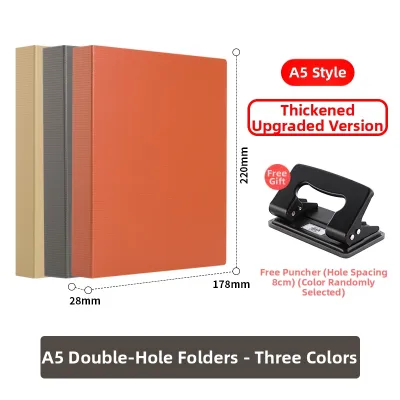
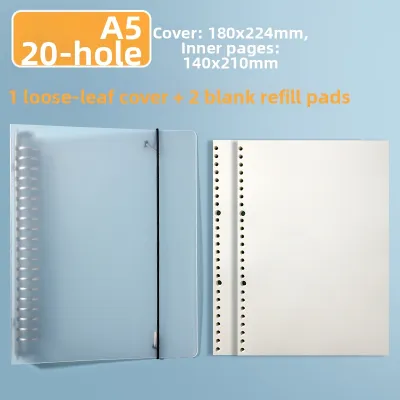
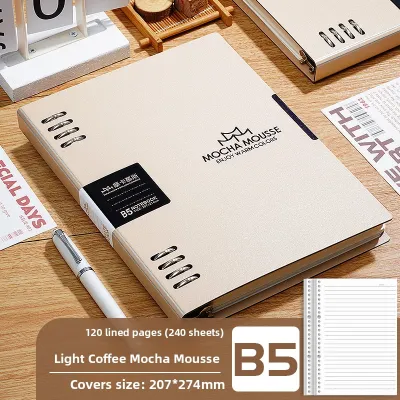
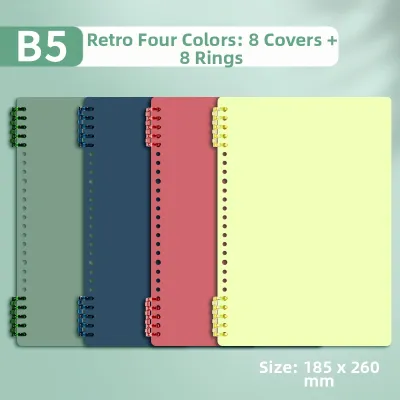
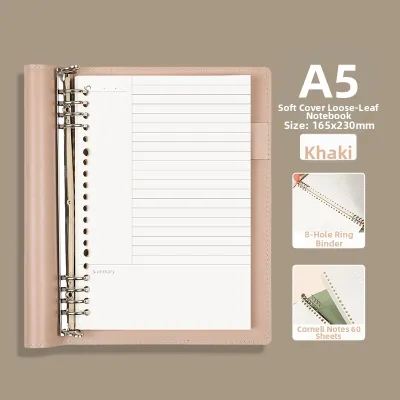
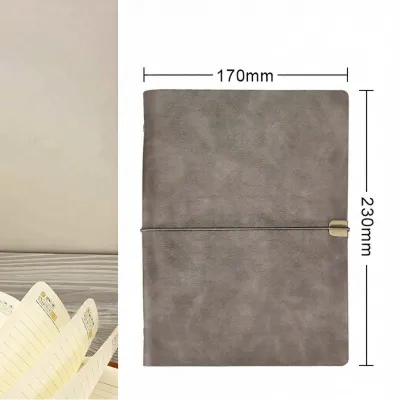
Prices are valid at publication and may change. Please refer to the product page for the latest price.
Standard everyday printer paper and budget loose-leaf refills typically fall within the 70 to 80 GSM range. This weight is highly economical and works exceptionally well for dry writing instruments such as standard ballpoint pens, pencils, and light colored pencils. Because these tools deposit very little liquid onto the page, the relatively thin barrier of 70 to 80 GSM paper is sufficient to prevent the writing from showing through on the reverse side.
When you transition to wet writing instruments, such as liquid gel pens, rollerballs, fine-liners, and fountain pens, standard paper often falls short. These pens deposit a larger volume of liquid ink, which quickly saturates thin fibers and causes the ink to spread horizontally or seep through to the other side. For these tools, medium to heavy paper weights ranging from 100 to 120 GSM or higher are necessary to provide a thick enough physical barrier to absorb the liquid without ruining the reverse page.
However, choosing heavier paper introduces a distinct physical trade-off within an A5 ring binder system. Because binder rings have a fixed internal diameter, thicker sheets naturally occupy more physical space. A binder filled with 120 GSM paper will hold significantly fewer pages than one filled with 80 GSM paper, which directly impacts how much information you can carry in a single organizer. Additionally, heavier sheets put more physical leverage on the punched holes, meaning you must turn pages carefully to avoid tearing the margins.
Paper Finishes and Coatings: Choosing the Right Surface
Beyond the physical weight of the paper, the surface finish plays a critical role in how ink behaves when it leaves your pen tip. Uncoated, natural finishes feature a relatively open fiber structure that acts like a sponge. When ink hits an uncoated surface, the paper fibers quickly draw the liquid downward and outward, which helps the ink dry almost instantly. This fast drying time is highly beneficial for left-handed writers or anyone taking rapid notes who cannot afford to wait for the page to dry.

The downside of highly absorbent uncoated paper is its tendency to cause feathering and show-through. Feathering occurs when ink spreads along the paper fibers, turning sharp, clean lines into fuzzy, distorted shapes. If you use wet gel pens or fountain pens on uncoated paper, you will likely notice that your fine lines look much thicker and less defined. Furthermore, because the ink is drawn deep into the paper structure, it is much more likely to show through on the back of the page, even if the paper has a decent GSM rating.
Smooth, coated, or treated finishes offer a completely different writing experience. Many premium binder refills undergo a process called internal sizing, where water-resistant agents are added to the paper pulp, or they receive a light surface coating that limits ink absorption. These treatments keep the ink sitting on top of the paper surface rather than soaking into it immediately. As a result, lines remain incredibly crisp, colors appear more vibrant, and feathering is virtually eliminated, making this finish a common choice for fountain pen enthusiasts.
The primary trade-off with smooth, treated paper is a significantly longer drying time. Because the ink must dry via evaporation rather than absorption, you must be careful not to touch your writing immediately after putting pen to paper. If you close your A5 binder too quickly, the wet ink can easily transfer to the facing page, causing unsightly smudges. Additionally, highly textured or laid finishes, which feature visible parallel lines from the manufacturing process, provide excellent tactile feedback but can cause fine-liners to skip or catch on the uneven surface.
Matching Your Pens to the Right Paper Specifications
To build a highly functional A5 ring binder setup, you should match your primary writing instruments to a specific set of paper characteristics. If your daily writing relies almost exclusively on standard ballpoint pens, mechanical pencils, or quick-dry gel pens, a standard uncoated paper of 80 GSM is highly practical. This combination allows you to maximize the sheet capacity of your binder, ensures your notes dry instantly, and provides a reliable, everyday writing surface that is highly cost-effective.
For those who prefer the smooth flow of liquid gel pens, rollerballs, or moderate fine-liners, a medium-weight paper of 90 to 100 GSM with a smooth, lightly sized finish is ideal. This specification provides enough density to prevent the liquid ink from bleeding through to the back of the page, while still maintaining a reasonable drying speed. It strikes an excellent balance, allowing you to write on both sides of the sheet without sacrificing too much binder capacity.
If your writing routine involves fountain pens, broad calligraphy nibs, or heavy art markers, you should look for paper that is specifically treated and rated at 100 GSM to 120 GSM or higher. These wet mediums require a highly sized, smooth surface that resists ink penetration. While this setup will limit the total number of pages you can store in your A5 binder, it ensures that your ink shading, sheen, and line crispness are preserved beautifully without any bleed-through.
Many binder users are hybrid writers who switch between different pens depending on the task at hand. If you fall into this category, you can create a mixed-page setup within your A5 ring binder by using index dividers to separate different paper types. Keep a section of lightweight 80 GSM paper for quick ballpoint brainstorming sessions, and reserve a section of premium 100+ GSM treated paper for detailed journaling or fountain pen work. When shopping for refills, look for functional labels such as “fountain pen friendly,” “ink-proof,” or “bleed-resistant” on the packaging, as these terms indicate the paper has received the necessary surface treatments to handle wet inks.
How to Test and Verify Paper Performance Before Buying
Because paper manufacturing processes vary widely, relying solely on the GSM number printed on a package is not always enough to guarantee compatibility with your pens. Before committing to a bulk purchase of A5 binder refills, it is highly recommended to buy a small sample pack or a single notebook of the same paper line to conduct a physical test. This small initial step can save you from investing in a large stack of paper that causes your favorite pens to feather or bleed.
To perform a reliable at-home test, select the heaviest, wettest pen in your collection and write a series of lines, loops, and solid blocks on a sample sheet. Allow the ink to dry completely, noting how long the process takes, and then inspect the page closely. Look for feathering along the edges of the lines, and flip the sheet over to distinguish between shadowing—where you can see the outline of the writing through the paper—and actual bleed-through, where the ink has physically penetrated to the other side.
Finally, you must verify how your chosen paper weight interacts with your specific A5 binder hardware. Measure the internal diameter of your binder rings, which typically range from 15mm to 30mm, to calculate your realistic page capacity. A binder with 15mm rings may only comfortably hold about 80 to 100 sheets of heavy 120 GSM paper before page turning becomes difficult, whereas it could easily hold 150 sheets of 80 GSM paper. Ensure that your loaded binder leaves enough physical clearance around the rings so that the pages can turn smoothly without catching or tearing at the punched holes.
Frequently Asked Questions (FAQ)
Does higher GSM paper always guarantee no bleed-through?
No, a higher GSM rating does not automatically guarantee that paper will resist bleed-through. While a thicker sheet provides a larger physical barrier, the surface treatment and internal sizing of the paper are often far more critical when using wet inks. A well-sized 80 GSM paper designed specifically for fountain pens can easily outperform an unsized, highly absorbent 100 GSM paper, which may still allow liquid ink to soak straight through to the reverse side.
Will thick paper damage the rings of my A5 binder?
Thick paper will not directly damage metal binder rings, but it can put excessive physical stress on the binder mechanism and the paper itself if the rings are overloaded. When you fill a binder past its comfortable capacity with heavy paper, the sheets cannot slide smoothly along the curve of the rings, which can lead to torn punched holes and misaligned ring prongs. Always leave a small amount of clearance inside the rings to ensure smooth page turning and prolong the life of your binder.

Community discussion
Share your experience or ask a question. Comments are reviewed before publication.