
When shopping for office supplies, you will frequently encounter terms like “70 GSM,” “80 GSM,” or “100 GSM” on reams of standard copier paper, which is often searched for or labeled as 4a paper. Understanding what these numbers mean is the key to achieving crisp prints, avoiding frustrating paper jams, and managing your printing budget effectively.
GSM stands for Grams per Square Meter. This metric measures the weight of a single sheet of paper cut to a one-square-meter dimension. While it is easy to assume that a higher GSM directly translates to a thicker sheet of paper, GSM actually measures density rather than physical thickness alone. Two different brands of 80 GSM paper might have slightly different physical thicknesses depending on how the wood fibers are pressed and finished during manufacturing, but both will weigh exactly the same per square meter.
A common misconception is that a higher GSM is always the superior choice. In reality, the ideal paper weight depends entirely on your specific printing task and your machine’s hardware capabilities. Using premium, heavy paper for a 500-page draft is an unnecessary expense, while using ultra-thin paper for a double-sided corporate presentation will result in messy ink bleed-through.
Products mentioned in this guide
![[SG]Perfect Print A4 Size 70gsm White Copier Paper [Evergreen Stationery] (5 Reams per Carton) | MAX 2 CARTONS/ORDER](https://img.lazcdn.com/g/p/5b68d91431474af3ae7b65825324d08d.png_400x400q80.png_.webp)
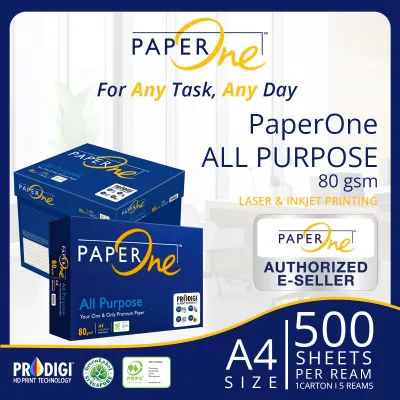
![PaperOne A4 Printing Paper - All Purpose Paper 80gsm [Available in Single Ream / Box]](https://img.lazcdn.com/g/p/27dcdcd07b80cf8dfb582f4178a0997b.png_400x400q80.png_.webp)
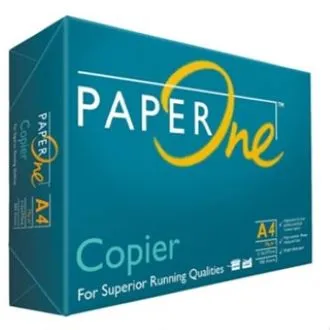
![PaperOne™ Copier Paper 70gsm / 75gsm Copy Paper A4 [1 Box]](https://img.lazcdn.com/g/p/62f961291078a3b12171dd45eea2a9a4.jpg_400x400q80.jpg_.webp)
Prices are valid at publication and may change. Please refer to the product page for the latest price.
70 GSM vs. 80 GSM vs. 100 GSM: Which One Do You Need?
Choosing the right weight for your paper involves balancing three main factors: cost, opacity, and printer compatibility. While there are specialty weights available, 70 GSM, 80 GSM, and 100 GSM cover roughly 95% of all daily office and home printing requirements.
70 GSM: Best for High-Volume, Everyday Drafts
At 70 GSM, the paper is relatively thin and lightweight. This makes it the most economical choice for high-volume, single-sided printing tasks where presentation value is secondary. It is ideal for printing internal office memos, rough drafts, packing slips, and temporary reference sheets that will eventually be discarded or recycled.
However, 70 GSM paper has distinct physical limitations. Because the paper is thin, it lacks structural stiffness. This can make it more prone to crumpling or jamming in high-speed office copier feed mechanisms, which are often calibrated for slightly heavier sheets. Additionally, 70 GSM paper has low opacity. If you attempt to print double-sided documents or use high-saturation ink, you will experience severe bleed-through, making the text on the reverse side difficult to read.
80 GSM: The Standard for Daily Office and Home Use
For the vast majority of households and offices, 80 GSM is the absolute standard. If you walk into a local retail store or order standard copier paper online, this is the default weight you will receive. It is highly versatile and designed to handle everyday documents, school essays, standard business letters, and routine office reports.
The popularity of 80 GSM paper stems from its balance. It offers sufficient stiffness to glide smoothly through almost any standard inkjet or laser printer without causing frequent multi-sheet feeds or jams. It also provides reasonable opacity, meaning standard black text printed on one side will not easily show through to the other, making it a reliable and cost-effective option for light double-sided printing.
100 GSM: Ideal for Double-Sided Printing and Professional Documents
When you need to make a strong impression, 100 GSM paper is the preferred choice. This weight feels noticeably thicker, smoother, and more substantial to the touch. It is the ideal medium for client-facing proposals, formal contracts, resumes, certificates, and presentation handouts.
Beyond its premium tactile feel, 100 GSM paper offers high opacity. This makes it the standard choice for double-sided documents that contain color charts, graphics, or bold headings, as it prevents distracting show-through. However, before purchasing 100 GSM paper in bulk, you must verify your printer’s specifications. Some compact home printers or older office machines have tight feed paths and weaker rollers that struggle to pull and bend heavier sheets, which can lead to persistent feeding errors.
How Paper Weight Affects Your Printer and Print Quality
Your printer’s internal mechanisms are finely tuned to handle specific ranges of paper thickness and flexibility. If you feed paper that falls outside these parameters, you risk causing mechanical issues. Extremely thin paper, like 70 GSM or lower, can easily static-cling together, causing the printer’s pickup rollers to grab multiple sheets at once. Conversely, paper that is too thick can fail to bend around the internal drum or rollers, resulting in stubborn paper jams.

Print quality is also heavily influenced by how the paper absorbs ink. Inkjet printers spray liquid ink onto the page, which can cause thin paper fibers to saturate, swell, and buckle. This leads to “feathering,” where the ink spreads outward along the fibers, blurring your text. Heavier papers like 100 GSM have denser fiber structures that hold liquid ink better, maintaining sharp edges and vibrant colors.
In high-humidity environments like Singapore, managing paper storage is crucial. Paper is highly hygroscopic, meaning it readily absorbs moisture from the air. In tropical climates, loose paper left in an open tray will quickly absorb humidity, causing the edges to curl and the fibers to soften. This moisture absorption dramatically increases the likelihood of paper jams and ink smudging. To prevent this, always store your paper in its original, moisture-resistant wrapper until you are ready to load it into the printer, and only load as much paper as you expect to use within a few days. Always check your printer’s user manual to confirm its supported GSM range before experimenting with heavy media.
Quick Decision Guide for Buying 4a Paper
When purchasing 4a paper for your home or office, you can simplify your decision by matching your primary task to these three categories:
- Choose 70 GSM if: You are focused on minimizing costs, print in high volumes, only print on one side of the sheet, and primarily print text-only drafts or internal records.
- Choose 80 GSM if: You need a reliable, hassle-free, all-purpose paper for standard daily printing, schoolwork, and general office documents that may occasionally require light double-sided printing.
- Choose 100 GSM if: You are printing professional presentations, resumes, or marketing materials, require heavy ink or color graphics, and want a premium tactile feel with zero show-through on double-sided prints.
Keep in mind that GSM only measures the weight of the paper, not its color quality or contrast. If you require highly vibrant color prints, you should also look at the paper’s brightness rating, typically measured in CIE or ISO brightness. A higher brightness rating (such as 100+ CIE) will reflect more light, making your colors pop and your black text look sharper, regardless of whether you choose 80 GSM or 100 GSM paper.
Frequently Asked Questions (FAQ)
Can I use 100 GSM paper in any standard home printer?
Most modern home and office printers can comfortably handle paper weights up to 100 GSM or even 120 GSM. However, compact, entry-level, or older printer models may have tighter paper paths that struggle with the stiffness of 100 GSM sheets, leading to feed errors. To avoid wasting paper, always consult your printer’s official user manual to verify its maximum supported paper weight before buying a large quantity.
Is 80 GSM paper thick enough for double-sided printing?
Yes, 80 GSM paper is generally thick enough for standard, text-only double-sided printing, such as school reports or basic office documents. However, if your document features heavy ink coverage, dark images, or colorful graphics, the ink will likely show through to the other side. For documents with significant visual elements, upgrading to 100 GSM paper is highly recommended to ensure clean, professional-looking double-sided prints.

Community discussion
Share your experience or ask a question. Comments are reviewed before publication.