
Finding the ideal A4 size notebook for wet-ink writing instruments like fountain pens and high-flow gel pens is not as simple as picking a highly rated brand off the shelf. True compatibility depends on the physical characteristics of the paper—specifically its sizing, weight, and surface finish—rather than a brand name alone. Because paper manufacturing batches can vary, and because different nib sizes and ink formulations interact uniquely with paper fibers, there is no single universal notebook that works perfectly for every writer. To secure a smooth writing experience without frustrating bleed-through or feathering, you must learn to evaluate paper specifications and perform practical, observable tests. This guide outlines how to analyze paper categories, compare common notebook constructions, and verify performance to find the perfect match for your writing tools.
Key Paper Specifications to Check Before Buying
When browsing for an A4 size notebook in Singapore, the first technical specification you will encounter is GSM, or grams per square meter. While GSM measures the weight and density of the paper, a higher number does not automatically guarantee that the sheet will resist ink bleeding. For example, a heavy 100 GSM sketch paper might absorb wet fountain pen ink like a sponge if it lacks proper sizing, whereas a highly treated 68 GSM paper can handle wet inks beautifully. Sizing is the chemical treatment applied during manufacturing—either internally in the pulp or on the paper’s surface—to control how much liquid the paper absorbs. Without adequate sizing, wet inks will sink deep into the sheet, causing the lines to spread and show through on the reverse side.
The surface finish of the paper also plays a critical role in how your pen behaves. Smooth finishes, often referred to as satin or calendared surfaces, allow pen tips to glide effortlessly with minimal friction. This smoothness keeps the ink sitting on top of the page, which preserves crisp lines but typically extends the drying time. Vellum finishes offer a slight tooth or texture, providing more tactile feedback that some writers prefer, though they may cause slightly more ink absorption. Laid paper features a textured pattern of parallel lines from the manufacturing mold, which can create a vintage aesthetic but may cause fine fountain pen nibs to catch or skip.
Products mentioned in this guide
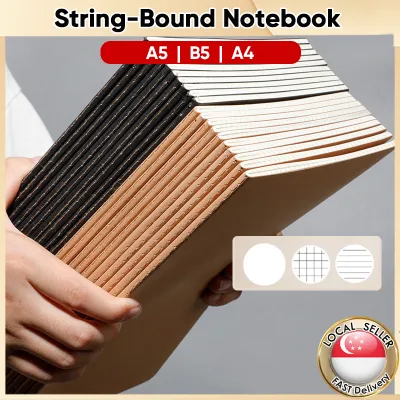
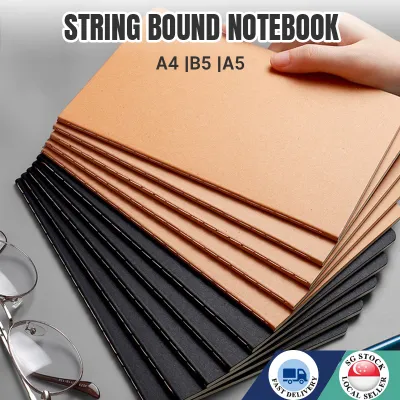
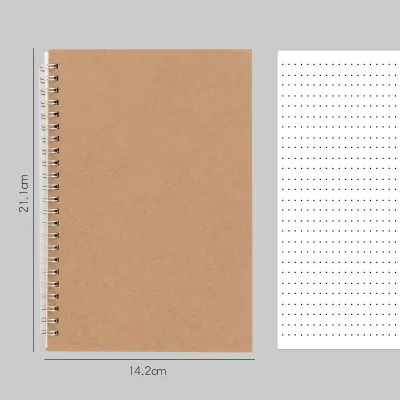
![[SG] Azone A4/A5/B5 Team Ring Notebook [Evergreen Stationery]](https://img.lazcdn.com/g/p/d46716d1b7f895416bbf9bb36cd8fee7.jpg_400x400q80.jpg_.webp)
Prices are valid at publication and may change. Please refer to the product page for the latest price.
To narrow down your choices, look closely at the manufacturer’s packaging or product descriptions for specific quality indicators. Labels such as “acid-free” or “archival” indicate that the paper is chemically stable and will not yellow or degrade over time, which is essential if you plan to keep your journals or notes for years. Some premium notebooks explicitly state “fountain pen friendly” or “suitable for wet inks” on their bands. While these labels are helpful starting points, they should always be verified against your specific pen and ink combinations, as a paper labeled friendly for a fine-point gel pen might still struggle under a broad fountain pen nib carrying highly saturated ink.
Comparing Paper Categories Across Popular Notebook Brands
To make an informed decision, it helps to understand the three primary categories of paper used by notebook manufacturers. The first category consists of mass-market office notebooks, which typically feature standard wood-pulp paper ranging from 70 GSM to 80 GSM. These notebooks are designed for high-volume, everyday utility and are highly accessible in local Singapore stationery shops. While they generally handle standard ballpoint pens and fine-point gel pens adequately, they often struggle with the heavy flow of fountain pens. The highly absorbent, untreated fibers in mass-market paper tend to pull wet ink rapidly, resulting in significant feathering and bleed-through that can render the back of the page unusable.

The second category comprises premium stationery brands that utilize high-GSM or specially milled paper, usually ranging from 80 GSM to 120 GSM. These manufacturers focus on creating a balanced writing surface by using high-quality cellulose fibers and precise surface sizing. Notebooks in this tier are engineered to minimize feathering, allowing both gel pens and fountain pens to maintain sharp, clean lines. However, because the paper is designed to resist rapid absorption to prevent bleeding, you will notice that wet inks take longer to dry on these surfaces. This requires a bit of patience or the use of blotting paper to avoid accidental smudging when you turn the page.
The third category involves specialty or coated paper options, which are highly treated to create an almost impervious barrier to ink penetration. These papers are often lighter in weight—sometimes as thin as 52 GSM to 68 GSM—yet they offer exceptional resistance to bleed-through because the ink remains entirely on the surface. This surface-retention property makes them highly favored by calligraphy enthusiasts and those who use fountain pens with shading or sheening inks. The trade-off is a significantly extended drying time, sometimes taking several minutes to dry completely. If you write quickly or use your A4 size notebook for rapid note-taking during meetings, these coated papers may lead to frequent smudging unless paired with fast-drying inks.
How to Test and Verify Paper Performance In-Store or at Home
Because marketing claims can be subjective, the most reliable way to evaluate an A4 size notebook is through hands-on testing. If you are shopping at a physical stationery store that provides sample sheets, or if you have just purchased a new notebook, start with a simple “swab and dry” test. Use your wettest fountain pen or a bold gel pen to draw a thick line or apply a small swab of ink in an inconspicuous area, such as the back page. Note how long it takes for the ink to become completely smudge-proof when lightly touched with a clean finger. This test gives you a practical baseline for how the paper handles your specific writing speed and ink flow.
Next, examine the reverse side of the page under direct, bright light to check for bleed-through and ghosting. Bleed-through occurs when the ink physically penetrates the paper fibers and appears as spots or blotches on the back of the sheet, making it impossible to write on both sides. Ghosting, or show-through, is when the shadow of the writing is visible through the paper without the ink actually breaking through the surface. While ghosting is largely an aesthetic preference and does not ruin the paper, severe bleed-through indicates that the paper lacks the necessary sizing or thickness for your chosen writing instrument.
Finally, inspect the edges of your written lines very closely, ideally under a magnifying glass or using your phone’s camera zoom. Look for feathering, which appears as tiny, spider-web-like branches spreading outward from the main ink line. If the edges remain sharp and crisp, the paper fibers are successfully resisting the liquid spread. If the lines look fuzzy or blurred, the paper is too absorbent for that particular pen and ink combination. Performing these quick, observable checks ensures you do not commit to a full notebook that fails to support your writing style.
Decision Framework: Matching Paper to Your Pen and Ink Setup
Selecting the right A4 size notebook ultimately depends on matching the paper’s physical properties to your primary writing tools. If your daily setup involves wet, broad-nib fountain pens or high-flow liquid inks, your priority must be strict bleed-through prevention. For these tools, look for notebooks featuring heavily sized, premium paper or specialized coated sheets. These options ensure that your ink remains crisp and vibrant on the page, though you should be prepared to manage the longer drying times by keeping a sheet of blotting paper handy.
If you primarily write with quick-drying gel pens, rollerballs, or fine-point fountain pens for fast-paced note-taking, a standard mid-weight, smooth paper is often the most practical choice. A well-sized 80 GSM to 90 GSM paper offers the ideal balance, providing enough resistance to prevent ghosting while allowing the ink to dry rapidly enough to prevent smudging as you write. This combination is highly efficient for students and professionals who need to flip pages quickly during lectures or business meetings without waiting for ink to dry.
For writers who enjoy specialty inks—such as those with heavy shading, multi-tonal sheening, or suspended metallic shimmer particles—the paper’s porosity is the critical factor. These complex ink properties only become visible when the ink is allowed to pool and dry slowly on the surface of the paper rather than soaking into the fibers. Before purchasing a bulk supply of A4 notebooks for creative writing or journaling, always verify the paper with a test page. Ensuring the paper has a highly calendared, non-porous finish will allow your specialty inks to display their full visual range as intended.
Frequently Asked Questions (FAQ)
Does a higher page count always mean better paper for fountain pens?
No, a higher page count does not correlate with superior paper quality. The page count simply reflects the binding capacity and the total number of sheets bound into the notebook. A thick A4 size notebook with hundreds of pages may use thin, unsized, or low-grade wood-pulp paper that will bleed and feather extensively under a fountain pen. Conversely, a slimmer notebook with fewer pages may contain highly engineered, premium-sized paper that handles wet inks flawlessly. When shopping, prioritize the paper’s specifications and sizing treatments over the sheer volume of pages.
Can I use standard office printer paper in an A4 notebook for gel pens?
Standard office printer paper, which typically ranges from 70 GSM to 80 GSM, is generally sufficient for everyday writing with standard gel pens. However, because copy paper is designed primarily for dry laser toner or rapid inkjet absorption, it often lacks the surface sizing found in dedicated writing notebooks. If you use bold gel pen tips, write with heavy hand pressure, or use high-flow liquid gel inks, you may still observe minor feathering and noticeable show-through on the reverse side. For a cleaner, double-sided writing experience, a notebook with dedicated, smooth writing paper is highly recommended.

Community discussion
Share your experience or ask a question. Comments are reviewed before publication.