
When selecting copier paper A4 size (standardized at 210mm by 297mm) for your home or office, one of the most prominent specifications you will encounter on the packaging is “GSM.” This acronym stands at the center of your printing experience, directly influencing everything from the tactile feel of your documents to how smoothly the sheets feed through your machine. Choosing the wrong weight can lead to frustrating paper jams, unsightly ink bleed-through, or documents that feel too flimsy for professional use. Understanding how paper weight impacts your output is the key to matching the right paper to your specific hardware and printing tasks.
What GSM Actually Means for A4 Copier Paper
GSM stands for “Grams per Square Meter.” It is a metric unit that measures the density and weight of the paper rather than its physical thickness. To visualize this, imagine a sheet of paper that measures exactly one meter by one meter. If you place that sheet on a scale, its weight in grams is the GSM value. Because a standard A4 sheet is exactly one-sixteenth of a square meter, a single sheet of 80 GSM A4 paper actually weighs exactly 5 grams.
It is a common misconception that a higher GSM automatically translates to a thicker sheet of paper. While there is a general correlation, the actual thickness—often referred to as caliper—depends heavily on the manufacturing process. Factors such as the type of wood pulp used, the density of the fibers, and the level of calendering (the process where paper is pressed between heavy rollers to smooth it out) all play a role. For instance, a highly calendered 80 GSM paper might actually feel thinner and sleeker than a lightly pressed 70 GSM paper, even though the 80 GSM sheet is heavier and denser. When purchasing copier paper A4 sheets, it is vital to evaluate GSM as a measure of density and structural weight rather than pure physical thickness.
Products mentioned in this guide
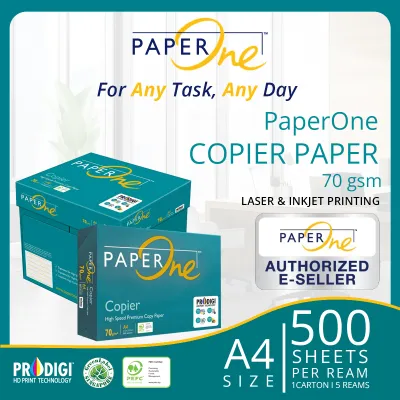
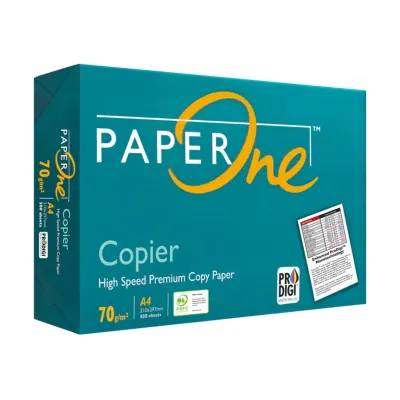
![[2 Reams 1000 sheets] A4 80Gsm Paperone Copy Paper / Paperone Digital Inkjet & Laser Paper 85gsm A4](https://img.lazcdn.com/g/p/6b30a8abe0e8c9414c33ea8ecc1cc966.jpg_400x400q80.jpg_.webp)
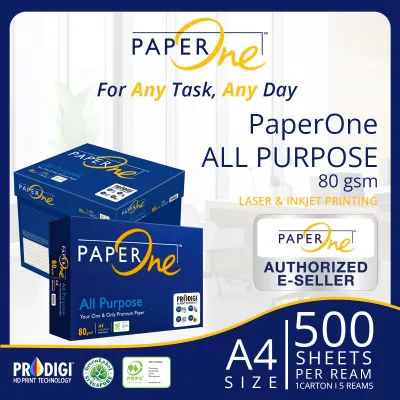
![PaperOne™ All Purpose Premium Quality 80gsm Copy Paper A4 [1 Box]](https://img.lazcdn.com/g/p/287f7942800722dd8239ab45c8063dae.jpg_400x400q80.jpg_.webp)
![PaperOne™ All Purpose Premium Quality 80gsm Copy Paper A4 [2 Reams]](https://img.lazcdn.com/g/p/6fe22f63efd1aeac13600887dc29a7da.jpg_400x400q80.jpg_.webp)
Prices are valid at publication and may change. Please refer to the product page for the latest price.
How Common GSM Values Affect Print Quality and Handling
The weight of your paper dictates how it behaves under the intense heat of laser printers or the wet ink delivery of inkjet systems. Different weights are engineered for distinct tasks, and selecting the correct one prevents common performance issues.

70 GSM: The Everyday Standard
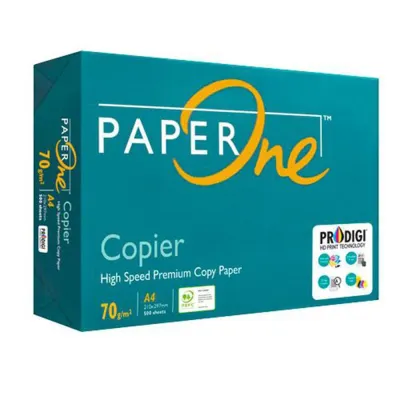
Often the most economical option on the shelf, 70 GSM paper is highly suited for high-volume, everyday utility printing. If you are printing single-sided text documents, rough drafts, or internal office memos that will be read once and recycled, this weight offers excellent cost-effectiveness. It also features a lower environmental footprint per ream because it requires less raw wood pulp to manufacture, and shipping lighter cartons reduces transport emissions.
However, 70 GSM paper has clear physical limitations. Because of its lower density, it has low opacity, making it highly prone to show-through—a phenomenon where printed text is visible from the reverse side of the sheet. If you attempt double-sided (duplex) printing, the overlapping text can become difficult to read. Furthermore, 70 GSM paper lacks stiffness, which can cause it to feel flimsy in hand and make it less suitable for formal client presentations or legal contracts.
80 GSM: The Premium Everyday Choice
For most professional environments, 80 GSM is the industry standard for general office use. This weight strikes an optimal balance between cost, performance, and presentation quality. When you hold an 80 GSM sheet, it feels noticeably sturdier than its 70 GSM counterpart, lending a more professional touch to external correspondence, reports, and standard business documents.
One of the primary advantages of 80 GSM paper is its improved opacity, which significantly reduces show-through and makes reliable double-sided printing possible. Additionally, the increased stiffness of 80 GSM paper allows it to glide more reliably through the paper paths of high-speed office copiers and multi-function printers. It is less prone to curling under the high-temperature fuser units of laser printers, resulting in flatter, neater stacks in the output tray.
100 GSM and Above: For Specialized Needs
When you need to make a strong impression or print media with heavy ink coverage, paper weights of 100 GSM and above are the ideal choice. These heavier grades are commonly reserved for important presentations, marketing portfolios, corporate proposals, and official certificates. The dense fiber structure easily absorbs heavy saturation from inkjet inks or solid toner blocks without warping, wrinkling, or bubbling.
While 100 GSM paper offers a luxurious, premium feel, it requires careful hardware compatibility checks. Standard home and office printers have strict upper limits on the paper weight they can reliably pull through their feed rollers. Attempting to run heavy, stiff paper through a machine not rated for it can cause frequent paper jams, misfeeds, or even physical damage to the pickup rollers and fuser assembly. Always verify your printer’s maximum media weight specifications before investing in bulk quantities of heavy paper.
How to Match Paper Weight to Your Printing Needs
Choosing the right paper weight requires analyzing your typical document types and matching them to the appropriate GSM rating. For internal drafts, simple lists, and high-volume utility copies where presentation is secondary, 70 GSM paper keeps operational costs low. For standard business letters, double-sided reports, invoices, and general correspondence, 80 GSM paper remains the safest and most professional choice. If your work involves full-color brochures, resumes, or documents featuring dense charts and graphics, upgrading to 100 GSM or higher ensures the ink does not degrade the structural integrity of the page.
Before finalizing any purchase, always consult your printer’s user manual to check the supported GSM range. This step is especially critical if you plan to use specialized heavy-weight media.
In tropical, high-humidity environments like Singapore, managing paper storage is just as important as choosing the right weight. Paper is highly hygroscopic, meaning it acts like a sponge, absorbing moisture from the surrounding air. When paper absorbs moisture, its fibers swell, causing the sheets to lose stiffness, curl, and stick together, which inevitably leads to printer jams. While heavier paper weights like 80 GSM or 100 GSM offer slightly better resistance to moisture-induced warping than flimsy 70 GSM sheets, proper storage is the ultimate solution. Keep your copier paper A4 reams sealed in their original moisture-resistant wrappers until you are ready to load them into the printer. Store your backup stock in a cool, dry, air-conditioned room, and avoid leaving open stacks of paper in printer trays for extended periods.
Beyond GSM: Other Specs That Affect Print Quality
While GSM is a vital indicator of weight and density, it is not the sole factor determining overall print quality. Relying entirely on paper weight can lead to disappointing results if other specifications are ignored. For instance, GSM does not dictate paper brightness or whiteness. Brightness is typically measured on a scale up to 100 (or via the CIE Whiteness index, which can exceed 100). A high-brightness 70 GSM paper can actually deliver sharper text contrast and more vibrant colors than a dull, off-white 80 GSM sheet.
Surface smoothness is another critical attribute that directly influences ink and toner transfer. A rough paper surface can cause micro-gaps in solid color blocks and fuzzy edges on fine text, whereas a highly smooth surface ensures uniform toner adhesion and crisp, clean lines. Because smoothness, bleed resistance, and drying speeds depend heavily on the exact combination of your specific printer model, ink type, and paper brand, it is always wise to perform an observable trial run. Test a single ream under your typical printing conditions to verify that the ink dries quickly and does not bleed before committing to a high-volume bulk purchase.
Frequently Asked Questions (FAQ)
Can I use 100 GSM paper in a standard home printer?
Most standard home inkjet and laser printers can comfortably handle paper weights up to 90 or 105 GSM. However, because feed mechanisms vary widely, you must consult your specific printer’s user manual to verify its maximum supported media weight. Exceeding this limit often causes physical jams or roller wear.
Does higher GSM prevent paper jams?
While 80 GSM paper is stiffer than 70 GSM and generally feeds more reliably through standard office machines, simply choosing a higher GSM will not guarantee a jam-free experience. If the paper is too heavy for your machine, it will jam. Furthermore, environmental factors like humidity absorption, static electricity, and failing to fan the paper stack before loading are far more common causes of printer jams than paper weight alone.

Community discussion
Share your experience or ask a question. Comments are reviewed before publication.