
When selecting A4 copier paper for your home or office, the term GSM is the most critical specification you will encounter. GSM stands for Grams per Square Meter, and it directly influences how your printed documents look, feel, and perform. Choosing the wrong paper weight can lead to frustrating printer jams, messy ink bleed-through, or a poor impression on clients.
To make the right choice, you need to understand how different weights perform under daily printing conditions. Generally, 70gsm paper is the budget-friendly option for high-volume drafts, 80gsm is the standard all-rounder for everyday office tasks, and 100gsm is the premium choice for professional presentations. Matching the weight to your specific printer and task ensures smooth operation and professional results.
What GSM Means for A4 Copier Paper
GSM is a metric unit that measures the weight of a single sheet of paper cut to exactly one square meter. While it is a direct measurement of weight and density, it is important to note that GSM is not a direct measurement of physical thickness, which is referred to as caliper.
Products mentioned in this guide
![PaperOne A4 Printing Paper - All Purpose Paper 80gsm [Available in Single Ream / Box]](https://img.lazcdn.com/g/p/27dcdcd07b80cf8dfb582f4178a0997b.png_400x400q80.png_.webp)
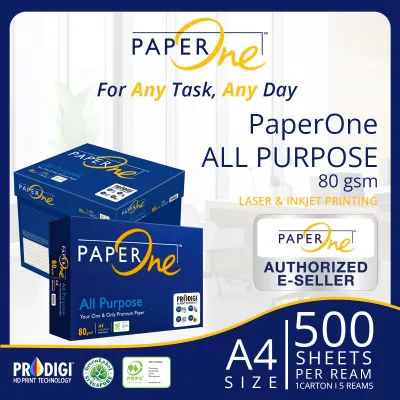
![PaperOne™ All Purpose Premium Quality 80gsm Copy Paper A4 [1 Box]](https://img.lazcdn.com/g/p/287f7942800722dd8239ab45c8063dae.jpg_400x400q80.jpg_.webp)
![PaperOne™ Digital Premium Quality 85gsm / 80gsm Carbon Neutral Copy Paper A4 [1 Box]](https://img.lazcdn.com/g/p/314e28db684b5a59446140a7a613d0c3.jpg_400x400q80.jpg_.webp)
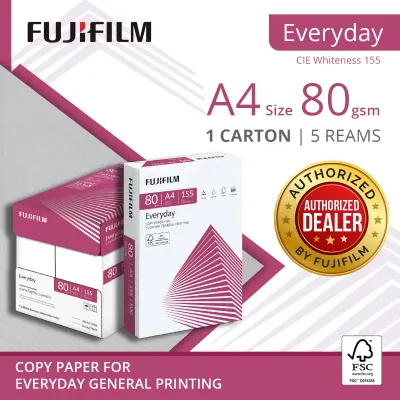
![[SG] FujiXerox A4 x EverydayCopier Paper | 80gsm | 1 Carton | MAX 2 CARTONS/ORDER [Evergreen Stationery]](https://img.lazcdn.com/g/p/0125993f2367983b77308ed48045bba3.jpg_400x400q80.jpg_.webp)

Prices are valid at publication and may change. Please refer to the product page for the latest price.
Generally, a higher GSM correlates with increased opacity, stiffness, and a more substantial feel in the hand. High opacity means that text and images printed on one side of the sheet are less likely to show through to the reverse side, which is essential for double-sided printing.
However, actual thickness and surface finish can vary between manufacturers even at the exact same GSM rating. This variation occurs because different brands use unique blends of wood pulp, chemical additives, and pressing techniques during production, meaning one brand of 80gsm paper might feel slightly stiffer or smoother than another.
70gsm vs 80gsm vs 100gsm: Practical Differences
Choosing between the three standard weights requires balancing cost, performance, and the visual impression you want to make.

70gsm paper is a lightweight, highly economical option designed primarily for high-volume, single-sided printing. It is ideal for internal drafts, utility bills, and temporary records where aesthetic appeal is secondary. The primary trade-offs are its lower opacity, which makes double-sided printing impractical due to severe show-through, and its lower stiffness. In humid environments, lightweight paper can absorb moisture quickly, increasing the risk of paper jams and feeding issues in high-speed office copiers.
80gsm paper is the standard industry benchmark for everyday office and home printing. It offers a reliable balance of opacity, stiffness, and cost-efficiency. This weight is thick enough to support double-sided printing of standard text documents without distracting show-through. It also possesses the ideal rigidity to feed smoothly through almost all laser and inkjet printers, making it the default choice for general business correspondence, reports, and daily filing.
100gsm paper is a premium, heavy-duty option that feels noticeably thicker and more professional. It features high opacity and excellent stiffness, making it the perfect choice for external presentations, client proposals, resumes, and documents with heavy ink coverage. The substantial weight gives the document a tactile sense of quality. However, this extra stiffness can occasionally cause feeding issues in older or basic consumer-grade printers that feature tight, curved paper paths.
How to Match Paper Weight to Your Printer and Tasks
Selecting the right paper weight involves evaluating your hardware capabilities, the nature of your print jobs, and your operational budget.
First, verify your printer’s compatibility by checking the user manual for the officially supported GSM range. While standard office multifunction copiers easily handle weights from 60gsm up to 120gsm, compact home printers often have narrower limits. Forcing heavy paper through a machine not rated for it can wear down the pickup rollers or cause persistent paper jams.
Next, align the paper weight with the document’s lifespan and audience. Use 70gsm for temporary, internal-only documents that will be recycled quickly. Use 80gsm for standard business letters, invoices, and daily filing. Reserve 100gsm for external client proposals, marketing materials, and documents that will be handled frequently by stakeholders.
Ink and toner coverage also dictate your choice. High-density prints, such as full-color charts, diagrams, or images, deposit a large volume of ink or toner onto the page. Lightweight 70gsm paper easily saturates, leading to curling, warping, or severe bleed-through. Heavier 100gsm paper handles heavy ink coverage beautifully, maintaining its flat shape and preventing ink from seeping through to the reverse side.
Finally, consider the logistics of purchasing and storage. While 70gsm paper reduces the physical weight of shipping cartons and costs less per ream, the savings might be offset if it causes frequent printer downtime due to jams. Conversely, stocking 100gsm paper exclusively is financially impractical for daily printing. Many offices in Singapore find that maintaining a primary stock of 80gsm for daily use, supplemented by a few reams of 100gsm for special projects, is the most cost-effective strategy.
Frequently Asked Questions (FAQ)
Can I use 100gsm paper in a standard home printer?
Most modern home inkjet and laser printers can handle 100gsm paper without issue, but it is essential to verify your specific model’s specifications first. Some compact home printers have very tight, curved paper paths designed primarily for standard 80gsm sheets. Stiffer 100gsm paper may fail to bend smoothly around these rollers, resulting in frequent paper jams. If you plan to use heavier paper regularly, check the manual’s media weight guidelines and consider buying a single ream to test before purchasing in bulk.
Does higher GSM always mean better print quality?
No, a higher GSM does not automatically guarantee sharper text or more vibrant colors. GSM only measures the weight of the paper, not its surface characteristics. Print quality is heavily influenced by the paper’s brightness, smoothness, and surface coating. A premium 80gsm paper with a high brightness rating and a smooth, treated surface can produce much sharper text and richer colors than a rough, untreated 100gsm sheet. Laser and inkjet technologies also interact differently with paper fibers, so choosing a paper with the right finish for your specific printer type is just as important as selecting the correct weight.

Community discussion
Share your experience or ask a question. Comments are reviewed before publication.