
When purchasing paper for your home or office, you will inevitably face a choice between two common specifications: 70gsm and 80gsm. At its core, 80gsm copy paper represents a standard weight of eighty grams per square meter, offering a denser and slightly thicker sheet than its 70gsm counterpart. While 80gsm is widely considered the professional standard for double-sided printing and high-quality presentations, 70gsm remains a highly practical, cost-effective option for single-sided drafts and high-volume utility printing.
Choosing between them is not merely a matter of buying the heavier option. It requires balancing your specific print volume, document types, printer capabilities, and even your local climate. Understanding these differences ensures you select the right medium for your documents without overspending on unnecessary paper weight.
Decoding "80gsm": What the Weight Actually Means
Grams per Square Meter (GSM) is a metric of mass per unit area. It does not measure the thickness of a single sheet directly, nor does it represent the weight of a single ream of paper. Instead, it tells you how much a one-meter by one-meter sheet of that specific paper stock would weigh.
Products mentioned in this guide
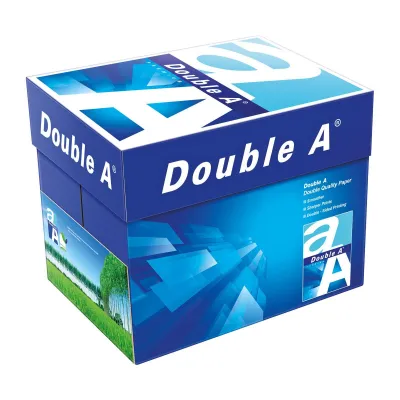
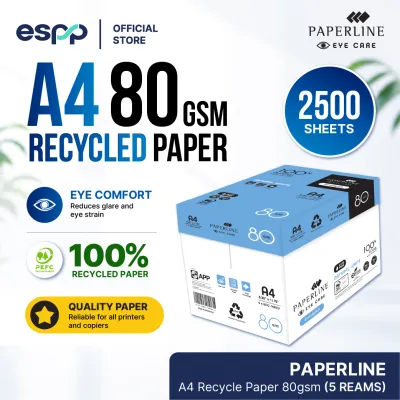
![A5 80Gsm Paperone Copy Paper (10 reams per box) [Pre-Cut to HALF of A4 Size] PaperOne A5 Papers](https://img.lazcdn.com/g/p/c77bfe8534b4e18fecbb161a27e12989.jpg_400x400q80.jpg_.webp)
![PaperOne A3 A4 A5 Printing Paper | Double A A4 Printing Paper | Fujifilm A4 Printing Paper [70gsm | 80gsm | 100gsm]](https://img.lazcdn.com/g/p/e6656a7d0c70606a115a8596caf6a15d.png_400x400q80.png_.webp)

Prices are valid at publication and may change. Please refer to the product page for the latest price.
An 80gsm sheet contains more raw wood pulp fibers compressed into the same square meter of space than a 70gsm sheet. This higher fiber density naturally yields a sheet that is physically more substantial, slightly thicker, and less translucent.
While GSM serves as an essential baseline specification, it is not the sole indicator of paper quality. The overall performance, including how smoothly ink is absorbed and how bright the pages appear, also depends on manufacturing factors like surface finishes, chemical binders, and brightness ratings. Therefore, two different brands of 80gsm paper might feel slightly different in hand or perform differently under heavy ink. Smoothness, bleed resistance, and drying speed depend on the exact material combination of the paper fibers and your printer’s ink type, meaning a quick test print is always the most reliable way to verify compatibility.
70gsm vs. 80gsm: How Weight Changes Your Print Results
Opacity and Double-Sided Printing
One of the most noticeable differences between these two weights is opacity, which directly affects how light passes through the sheet. Because 80gsm paper has a tighter, denser fiber structure, it offers significantly higher opacity than 70gsm paper. This makes 80gsm the standard recommendation for duplex (double-sided) printing.

When you print on both sides of a 70gsm sheet, the lower density often allows text, dark lines, or heavy color graphics to show through to the opposite side. This show-through compromises readability and can make professional documents look messy or unpolished. For clean, legible double-sided reports, the extra density of 80gsm is practically essential.
Stiffness and Printer Feed Reliability
The structural rigidity of a sheet of paper determines how reliably it travels through your printer’s internal paper path. An 80gsm sheet possesses greater stiffness, allowing it to withstand the mechanical forces of pickup rollers, feeder wheels, and duplexing units without bending or buckling.
In contrast, 70gsm paper is more pliable and lightweight. While modern, well-maintained printers handle 70gsm perfectly fine for standard, single-sided runs, this lighter weight can occasionally struggle in high-speed commercial copiers or older home printers. Under high speeds, the more flexible 70gsm sheet is more prone to folding, double-feeding, or misaligning, which can trigger frustrating paper jams.
Tactile Feel and Professional Presentation
The physical sensation of holding a document plays a subtle but powerful role in how the recipient perceives its value. An 80gsm sheet feels crisp, sturdy, and premium to the touch, immediately conveying a sense of care and professionalism.
Conversely, a 70gsm sheet can feel somewhat flimsy or limp when held. If you are handing a contract to a client, submitting a formal proposal, or presenting resume printouts, this tactile difference can influence the reader’s subconscious impression of your work. Using the heavier 80gsm weight ensures your physical presentation matches the quality of your content.
Printing in Singapore: How Humidity Affects Paper Weight Choices
Living and working in Singapore introduces a unique environmental factor to paper selection: high relative humidity. Paper is naturally hygroscopic, meaning its cellulose fibers readily absorb moisture from the surrounding air. In a tropical climate, exposed paper sheets can quickly absorb ambient moisture, leading to a physical distortion known as curling or cockling.
This is where the physical structure of 80gsm paper provides a distinct advantage. Because 80gsm paper features a higher fiber density and greater inherent stiffness, it is more structurally stable and slightly more resistant to humidity-induced curling than 70gsm paper. A lighter 70gsm sheet absorbs moisture more rapidly relative to its mass, causing the edges to wave or curl much faster when left exposed.
To maintain printer reliability, it is helpful to perform a simple observable check. If you notice that your 70gsm paper stacks are frequently curling at the corners or causing feed errors after sitting in the printer tray for a few days, upgrading to 80gsm is a practical step. Alternatively, adjusting your storage habits can help mitigate these moisture-related issues.
Which Should You Buy? Matching Paper Weight to Your Document
To avoid overspending on office supplies while maintaining excellent print quality, you should match your paper choice to your specific document types and printing volumes.
When to stick with 70gsm:
- Internal drafts: Perfect for documents that will be read once and recycled.
- Single-sided text documents: Ideal for text-heavy prints where opacity is not a concern.
- High-volume black-and-white printing: Great for large print runs where saving on paper costs is a priority.
- Student notes and scratch paper: Highly economical for daily handwriting and study guides.
When to upgrade to 80gsm:
- Double-sided printing: Essential for clean, legible duplex reports and booklets.
- Formal business documents: Crucial for client-facing proposals, legal contracts, and official letters.
- Heavy ink coverage: Necessary for documents containing charts, color graphics, or images to prevent bleed-through.
- Archival documents: Best for records that need to be handled frequently or stored for long periods.
Before purchasing any paper in bulk, always verify your printer’s compatibility. Check the manufacturer’s user manual to confirm the supported media weight range. While standard home and office printers universally support both 70gsm and 80gsm A4 copy paper, verifying these specifications ensures trouble-free operation, especially if you plan to use specialty media or heavy cardstock in the future.
Frequently Asked Questions (FAQ)
Will 80gsm paper jam my standard home printer?
No, 80gsm paper is highly unlikely to cause jams in a standard home printer. In fact, 80gsm is the global standard for everyday copy paper, and almost all modern inkjet and laser printers are optimized specifically for this weight. If you do experience feed issues, check your printer manual to ensure the paper tray guides are adjusted correctly and that the paper weight falls within the machine’s supported limits (which typically range up to 90gsm or 105gsm for standard trays).
How should I store copy paper in a humid environment?
To protect your paper from tropical humidity, keep the reams sealed inside their original moisture-resistant wrappers until you are ready to load them into the printer. Store the wrapped reams flat on a level surface in a cool, dry cupboard or drawer. Avoid leaving large stacks of loose paper exposed in the printer tray or on open shelves for extended periods, as this invites moisture absorption and edge curling.

Community discussion
Share your experience or ask a question. Comments are reviewed before publication.