
Finding the right planner for 2026 requires looking past attractive cover designs and focusing on how your brain processes time, tasks, and notes. The ideal layout acts as an intuitive framework for your daily routine, reducing cognitive load rather than adding to it. By analyzing your scheduling density, writing tools, and portability needs, you can identify the exact layout and binding specifications that will support your productivity throughout the year.
Whether you are managing a complex corporate schedule, tracking academic deadlines, or maintaining a personal journal, the physical format of your planner dictates how consistently you will use it. A planner that is too large will be left behind on your desk, while one that is too small will discourage detailed note-taking. Finding the sweet spot between layout structure and physical specifications is the key to maintaining an organized year.
Identifying Your Planning Style and Layout Requirements
Daily formats are designed for high-density scheduling, offering hourly or half-hourly blocks alongside dedicated space for task lists and reflective journaling. If your day is packed with back-to-back meetings, client appointments, or granular time-blocking needs, a daily layout ensures nothing slips through the cracks. These formats provide the maximum amount of writing space per day, making them highly suitable for those who use their planner as a combined schedule and meeting notebook.
Products mentioned in this guide
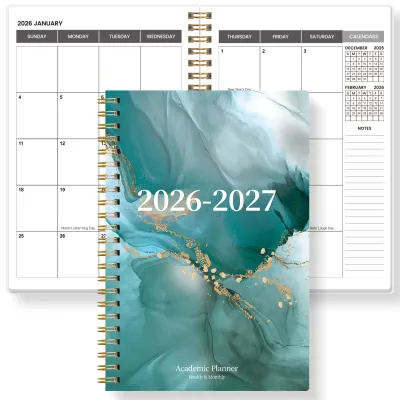
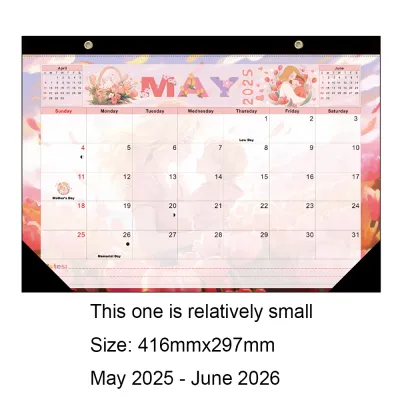
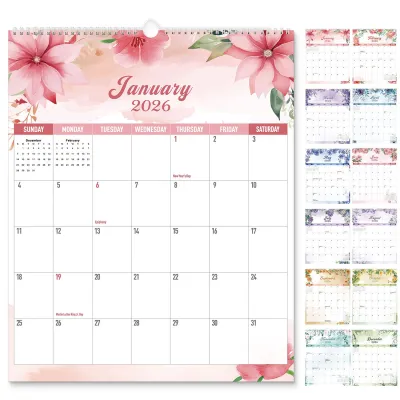
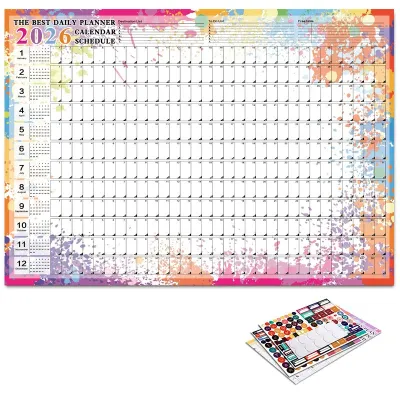
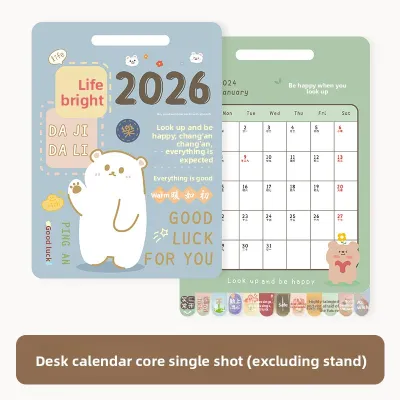
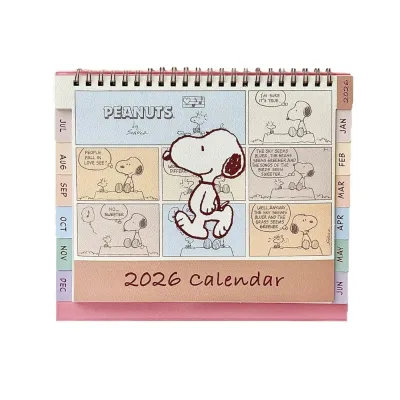
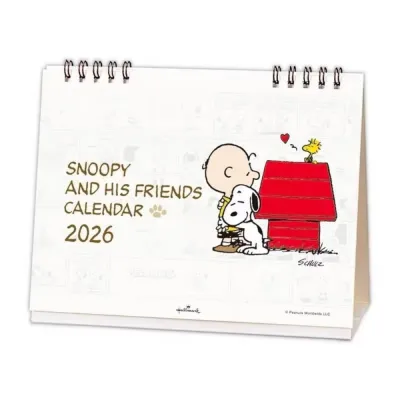
Prices are valid at publication and may change. Please refer to the product page for the latest price.
Weekly formats provide a bird’s-eye view of seven days at once, balancing scheduled appointments with general task lists. They are ideal for project managers, students, and professionals who need to pace their workload across a multi-day horizon rather than focusing solely on the immediate 24 hours. By seeing the entire week on a single spread, you can easily anticipate busy days and distribute your tasks more evenly.
Monthly formats prioritize high-level milestones, deadlines, and long-term project mapping. If your daily tasks are managed digitally and you only require a physical paper system to track major events, travel, or habit trends, a slim monthly planner prevents unnecessary bulk. This format is highly efficient for big-picture planning and serves as an excellent index for long-term goals.
To determine your ideal format, track your daily task volume and meeting frequency for a week. If you consistently generate more than ten distinct tasks a day or require extensive space for meeting notes, a weekly spread may feel too cramped, signaling a need for a dedicated daily page. Conversely, if you only have two or three key appointments per day, a daily page may leave you with intimidating amounts of empty space.
Consider your need for freeform journaling or creative expression alongside your structured schedule. Planners that combine structured schedules with blank or dot-grid pages allow you to transition seamlessly from professional tracking to personal reflection without carrying multiple notebooks. This hybrid approach is highly popular among those who practice mindfulness or creative memory keeping.
Remember that planning density directly dictates the physical size and page count of your book. A full year of daily pages requires roughly 400 pages, resulting in a heavier, thicker volume that may be less convenient to carry in a daily bag compared to a slim, 64-page monthly booklet. Balancing your need for writing space against your willingness to carry a heavy book is a crucial first step.
Essential Stationery Specs to Evaluate Before Buying
Paper weight is measured in grams per square meter (gsm) and is a primary indicator of how the paper will handle different writing instruments. For fountain pen users or those who prefer heavy gel ink, look for paper rated at 80 gsm to 120 gsm. Coated papers, such as those featuring specialized Japanese or European milling, resist ink feathering and bleed-through but may require longer drying times. Uncoated papers absorb ink quickly, reducing smudging, but are more prone to ghosting where the writing is visible on the reverse side.

Stitched bindings, such as thread-bound or Smyth-sewn designs, allow the planner to lay completely flat on your desk, providing a seamless writing surface across two-page spreads. This is particularly important for left-handed writers who often struggle with the raised center of tightly bound books. Stitched bindings also tend to be highly durable, ensuring that pages do not pull loose after months of daily opening and closing.
Spiral or wire-o bindings offer the flexibility to fold the planner back on itself to save desk space, though the metal coils can sometimes interfere with your hand while writing near the margins. Disc-bound and ring-bound systems provide modular flexibility, allowing you to insert, remove, or rearrange pages as your planning needs evolve. However, these modular systems require specialized punches and can suffer from page wear around the rings over a full year of active use.
Size formats like A5 (148mm x 210mm) balance writing space and portability, fitting comfortably in most work bags and backpacks. B6 (125mm x 176mm) offers a slightly more compact alternative that still provides ample room for daily lists, making it a favorite for those who commute regularly. Pocket sizes, such as A6 or passport size, are highly portable but require small, precise handwriting and are best suited for rapid logging rather than detailed meeting notes.
Whether you are investing S$20 in a basic notebook or over S$80 in a premium imported system, verifying these physical attributes ensures your planner remains durable and functional. Smoothness, bleed resistance, drying speed, and erasability depend entirely on the exact combination of your pen’s ink formula and the paper’s surface treatment, making a physical trial highly beneficial before committing to a full year.
Finding the Right Brand Category for Your Preferred Layout
When browsing catalogs for your 2026 planner, filter your search by layout structure first, rather than cover materials or artistic collaborations. Many established stationery brands offer the same interior layout across multiple cover designs, meaning you can secure your ideal functional system without compromising on personal style. Understanding how different brand categories approach layout design will help you narrow down your options quickly.
Evaluate the trade-offs between highly structured pre-printed layouts and flexible modular systems. Structured layouts feature pre-printed hours, designated task boxes, and labeled sections for goals, which minimizes the setup time required each week. Modular systems, such as dot-grid pages or blank templates, require you to draw your own lines and headers, offering complete creative freedom at the cost of regular preparation time.
Daily and Hourly Layouts for Granular Time-Blocking
Daily planners designed for granular time-blocking typically feature vertical columns marked with hourly or half-hourly increments, often spanning from 6:00 AM to 10:00 PM. Look for brands that include adjacent columns for prioritized task lists, ensuring your schedule and your to-do list remain visually aligned. This layout is highly effective for professionals who bill by the hour or students with tightly packed class schedules.
Because a dedicated page for every day of the year results in a substantial page count, these planners are naturally heavier and put more stress on the spine. To mitigate this, some manufacturers use ultra-thin, high-density paper that keeps the book lightweight despite having over 360 pages, though this paper may require specific fine-tip pens to prevent ink pooling. Other brands use standard-weight paper, resulting in a thick, desk-bound volume that is best kept in one location.
If you want to reduce physical bulk, check if the brand offers weekend-combined pages, where Saturday and Sunday share a single page or are presented in a condensed format. Alternatively, look for brands that split the year into two six-month volumes, allowing you to carry only half the year at any given time. This split-year approach is an excellent compromise for those who need daily pages but demand portability.
Weekly Layouts for Balanced Scheduling and Notes
Weekly layouts generally fall into two categories: vertical and horizontal. Vertical weekly spreads display the days of the week in columns side-by-side, which is highly effective for visualizing your daily schedule chronologically and identifying open time slots. Horizontal weekly layouts present the days in rows across the spread, leaving more horizontal space for writing longer sentences, making them ideal for task-oriented planners who do not rely on strict hourly scheduling.
For those who need a mix of scheduling and freeform writing, look for weekly notebook layouts. These typically feature the seven days of the week on the left page and a full ruled, grid, or dot-grid page on the right, allowing you to log appointments on one side and take meeting notes or sketch ideas on the other. This format is highly versatile and adapts easily to changing workloads from week to week.
Before finalizing your choice, verify if the weekly spread includes a dedicated notes column, a habit tracker, or a miniature monthly overview calendar in the margin. These small design details facilitate rapid task migration and help you keep track of broader goals without flipping back and forth through the book. A well-designed weekly margin can significantly increase the functional utility of your planner.
Monthly and Open Layouts for High-Level Project Mapping
Monthly and open layouts are designed for individuals who prefer a minimalist approach or follow custom planning methodologies like bullet journaling. A full-page monthly calendar spread allows you to map out project phases, travel itineraries, and major deadlines at a glance, serving as a master dashboard for your year. This layout requires very little daily maintenance, making it easy to keep up with.
Using an open layout, such as a completely blank or dot-grid notebook, requires a commitment to user-generated structure. You must invest time in setting up your own index, future log, and monthly spreads, which offers unparalleled flexibility but can become a chore if your schedule is demanding. If you enjoy the process of drawing layouts and customizing your pages, this format offers the ultimate creative outlet.
To make open layouts more manageable, look for brands that include built-in organizational aids. Features like pre-printed page numbers, a blank index page, integrated ribbon markers, or included stencils and rulers can significantly speed up your weekly setup and keep your custom layouts neat. These subtle guides provide just enough structure to save time without restricting your creative freedom.
Final Pre-Purchase Checklist for Your 2026 Planner
Before completing your purchase, verify the exact start and end dates of the planner. Some brands design their layouts around the academic year (typically starting in July or August) or the fiscal year (starting in April), while others follow the standard calendar year from January to December. Ensure the transition period matches your current planning cycle so you do not end up with unusable months or a gap in your scheduling.
Review the retailer’s return and exchange policies, particularly when ordering online. Inspect the planner immediately upon arrival for common manufacturing defects, such as misaligned page edges, upside-down pages, broken thread stitching, or misprinted dates, which can occasionally occur during high-volume production runs. Catching these issues early ensures you can secure a replacement before the new year begins.
Confirm that your existing stationery accessories are compatible with the new planner’s dimensions and materials. Check if the cover can accommodate standard adhesive pen loops, if your favorite sticky notes fit within the column widths, and if the paper surface is compatible with your preferred correction tape or highlighters without peeling. Taking the time to verify these details prevents frustration and ensures a smooth planning experience throughout 2026.
Frequently Asked Questions (FAQ)
What happens if I buy a dated planner and the days of the week shift?
If you accidentally purchase a dated planner from a previous year or a misprinted batch, the days of the week will not align with the actual calendar dates of 2026. Because the calendar shifts by one day most years (and two days during leap years), trying to use an incorrect year’s planner will lead to scheduling confusion and missed appointments.
To salvage an incorrect or misprinted planner, you can convert it into an undated system. Use correction tape, date stickers, or specialized planning stamps to cover the pre-printed days of the week and dates, allowing you to manually write in the correct 2026 calendar days. While this requires extra setup time, it is an effective way to reduce waste and still utilize high-quality paper.
How can I test if a planner's paper will work with my favorite pens?
To ensure your pens will not bleed or feather on your new planner’s paper, perform a discreet ink test on an inconspicuous area, such as the very last page, a blank notes page, or an included paper sample card. Write a few test characters using varying pressure and ink flow to observe how the paper reacts.
Keep in mind that a successful home test on a single page does not guarantee universal performance across all writing instruments, as ink formulas and nib sizes vary. Always check the manufacturer’s official paper specifications, looking for details on sizing, coating, and recommended pen types to ensure long-term compatibility.

Community discussion
Share your experience or ask a question. Comments are reviewed before publication.