
Selecting the right yarns for crochet is one of the most critical decisions a beginner in Singapore can make. When you are first learning to hold a hook and control your tension, the physical properties of your yarn will either support your progress or cause immense frustration. A forgiving yarn allows you to see your stitches clearly, undo mistakes without the fiber fraying, and maintain a steady rhythm as your muscle memory develops. By understanding how different fibers, weights, and ply structures behave, you can make informed purchases that maximize your practice time and budget.
Identifying Forgiving Yarn Characteristics for Tension Control
Stitch definition is the clarity with which individual stitches can be seen once they are worked. For beginners, high stitch definition is essential because it helps you identify exactly where to insert your hook for the next stitch. Smooth yarns, which have minimal surface fuzz, provide the cleanest stitch definition. In contrast, fuzzy, textured, or novelty yarns obscure the structure of your stitches, making it incredibly difficult to count your rows or locate the loops at the top of your work.
Elasticity refers to how much a yarn stretches and recovers when pulled. This property plays a vital role in tension control, which is often the hardest skill for beginners to master. Highly elastic fibers, such as acrylic and wool, have a natural bounce that absorbs the uneven pulling forces of learning hands. If you pull too tightly, the yarn stretches slightly to compensate; if you hold it too loosely, it retains some structure. Low-elasticity fibers, like pure cotton or linen, have no stretch, meaning any variation in your grip or pull immediately results in uneven, loose, or overly tight stitches.
Products mentioned in this guide
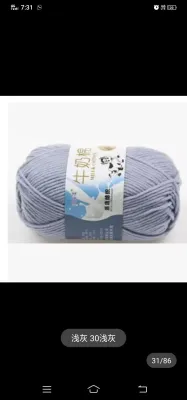
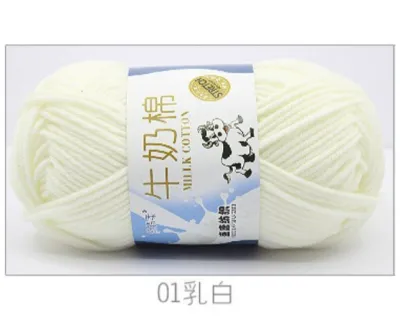
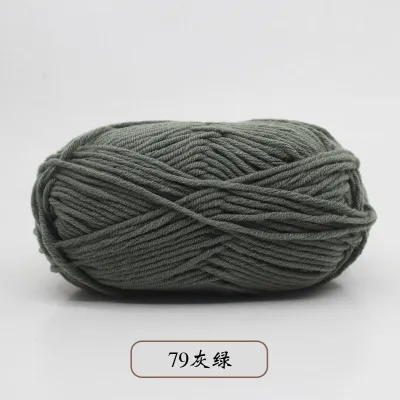
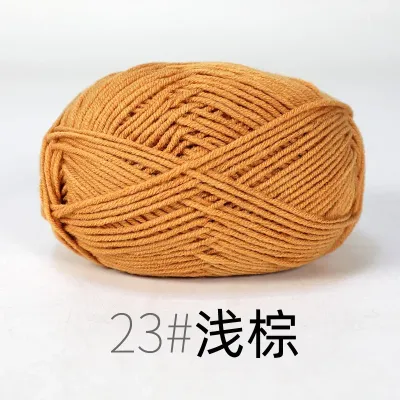
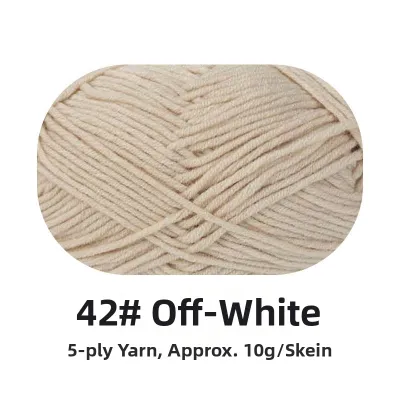
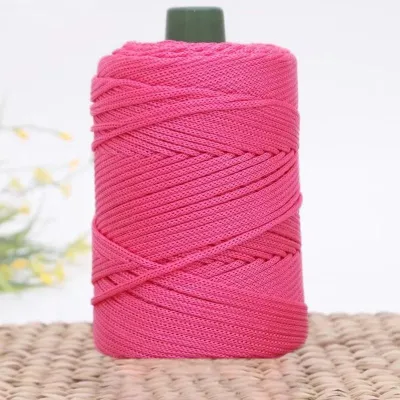
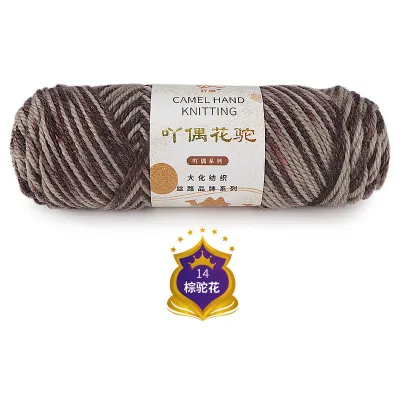
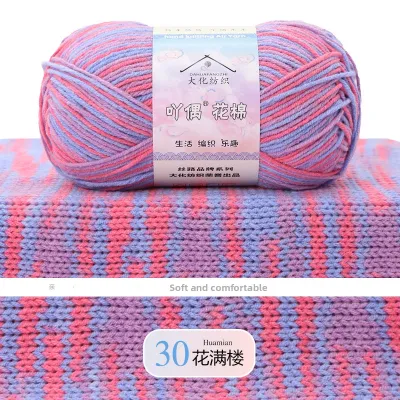
Prices are valid at publication and may change. Please refer to the product page for the latest price.
The ply structure of a yarn describes how many individual strands are twisted together to form the final thread. A yarn with a tight, multi-ply twist is highly resistant to splitting. Splitting occurs when your crochet hook pierces between the individual plies of the yarn rather than catching the entire strand. This not only weakens the stitch but also disrupts your flow and ruins the appearance of your work. When selecting yarns for crochet, look for options where the plies are visibly wrapped tightly around one another, as loosely twisted single-ply yarns will easily separate under a beginner’s uneven tension.
Choosing the Right Yarn Weight and Fiber for Practice
Yarn weight refers to the thickness of the yarn strand, which is standardized into numbered categories on the yarn banderole. For beginners, the most suitable weights are Light Worsted (DK, Category 3) and Medium (Worsted, Category 4). These thicknesses are comfortable to hold, work up relatively quickly, and make stitches large enough to see clearly without straining your eyes. Avoid super-fine lace weights, which require tiny hooks and intense concentration, as well as jumbo or super-bulky yarns, which can be heavy and awkward for hands still adjusting to basic movements.

Fiber content determines how the yarn feels, stretches, and drapes, with each material offering distinct trade-offs for practice projects. Acrylic is highly popular for beginners because it is inexpensive, widely available, and possesses excellent elasticity. However, pure acrylic can feel warm to work with in Singapore’s tropical climate and may pill over time. Plant-based fibers like cotton offer superb stitch definition and a cool feel, but their lack of stretch can tire out beginner hands quickly. A cotton-acrylic blend, often sold as milk cotton, combines the best of both worlds: the softness and stretch of acrylic with the structure and stitch clarity of cotton.
Color selection is an often-overlooked factor that directly impacts your learning curve. Light, solid colors—such as cream, pastel pink, mint green, or light grey—are highly recommended for beginners because they reflect light well, making every loop and stitch boundary highly visible. Dark colors like black, navy blue, and deep forest green absorb light, making it nearly impossible to see where one stitch ends and the next begins, especially under standard indoor lighting. Similarly, variegated or multi-colored yarns create busy visual patterns that camouflage your stitches, making troubleshooting and counting extremely difficult.
Evaluating Yarn Brands and Budgeting for Practice Projects
When evaluating different yarn options, consistency is the primary quality indicator to look for. A high-quality practice yarn should maintain a uniform thickness throughout the entire skein, without sudden thin spots or thick, unspun lumps. It should also be free of knots where the manufacturer has tied two ends together mid-skein. While minor variations are common in budget-friendly lines, excessive inconsistency will disrupt your stitch size and make it difficult to gauge whether your tension is improving.
Dye lot reliability and colorfastness are also crucial, especially if you plan to transition from small practice swatches to larger projects like blankets or garments. The dye lot number on the yarn banderole indicates that those skeins were dyed in the same batch; buying different dye lots can result in noticeable color shifts in your finished piece. To test for colorfastness, particularly with vibrant or dark colors, wet a small scrap of yarn and press it against a white paper towel. If the dye bleeds onto the towel, the yarn may bleed during washing, which is an important consideration for items that will require regular cleaning.
Budgeting for practice projects requires calculating the price-per-meter rather than simply looking at the price per skein. To do this, divide the retail price in S$ by the total length in meters listed on the banderole. For example, a skein costing S$3.50 with 100 meters of yarn has a rate of S$0.035 per meter, while a larger skein costing S$6.00 with 200 meters has a more economical rate of S$0.030 per meter. This simple calculation helps you identify which options offer the best value for repetitive practice, where you will be undoing and redoing stitches constantly.
For entry-level practice, look for widely recognized, unbranded or house-brand utility lines that offer consistent quality at a low price point. Standard 5-ply milk cotton and basic utility acrylics are excellent starting points. These lines are produced in massive quantities, making them highly affordable and easy to replace when you run out of a specific color. Because they are designed for general crafting, they prioritize durability and ease of use, making them highly forgiving for learners who need to practice basic stitches repeatedly.
Sourcing and Verifying Yarn Availability in Singapore
Visiting physical brick-and-mortar craft, sewing, and knitting supply stores in Singapore is highly beneficial for beginners. Locations such as the traditional haberdashery shops in Chinatown (particularly around People’s Park Centre) or specialized craft outlets in central shopping districts allow you to touch and feel the yarn before purchasing. This hands-on experience is invaluable for assessing the softness, twist tightness, and actual color of the fiber, which can often look different on a digital screen. Many of these local shops also have experienced staff who can offer quick advice on matching your yarn to your project goals.
When shopping online, utilizing local e-commerce platforms and digital marketplaces is highly convenient, but it requires a strategic approach. To avoid long shipping times and high freight costs, always filter your search results to show local sellers or items shipping directly from Singapore. This ensures your order will typically arrive within a few business days, allowing you to maintain your momentum. Additionally, local shipping reduces the environmental footprint and minimizes the risk of yarn packages being lost or damaged during transit across international borders.
Before committing to a bulk purchase online, take the time to verify seller ratings and read customer reviews carefully. Look for sellers with high ratings and read comments specifically mentioning the packaging and condition of the yarn. Some online sellers vacuum-pack yarn to save on shipping space, which can temporarily flatten the fibers; while the yarn usually recovers its loft after being opened, it is helpful to know what to expect. Check the store’s return and exchange policies as well, ensuring you can easily return any skeins that arrive soiled or damaged.
Matching Hooks and Essential Tools to Your Yarn
To achieve the best results, you must match your crochet hook size and material to the weight of your selected yarn. The yarn banderole will always list a recommended hook size range, typically in millimeters. For a standard DK or worsted weight yarn, a hook size between 4.0mm and 5.0mm is generally ideal. If you naturally crochet very tightly, choosing a hook at the upper end of the recommended range (or even half a millimeter larger) can help loosen your stitches. Conversely, if your stitches are too loose, a slightly smaller hook will help tighten them. Aluminum hooks with ergonomic, rubberized handles are highly recommended for beginners as they glide smoothly through the yarn and reduce hand fatigue.
Beyond the hook and yarn, a few simple, inexpensive tools are essential for tracking your progress and finishing your projects successfully. Locking stitch markers are indispensable for beginners; placing a marker in the very first stitch of a row ensures you know exactly where to insert your hook when you return, preventing you from accidentally losing or adding stitches at the edges. A simple row counter helps you keep track of your progress without losing count, while a set of blunt-tipped tapestry needles is required for weaving in loose yarn tails securely once your project is complete.
Proper storage and care of your unused yarn will preserve its quality and prevent tangling. Always store your skeins in airtight plastic bins or zip-top bags to protect them from Singapore’s high humidity, which can cause natural fibers to absorb moisture and develop a musty odor over time. If your yarn arrives in a loose hank rather than a pre-wound skein or ball, take the time to wind it into a neat center-pull ball before you begin crocheting. This prevents the yarn from rolling around the floor, collecting dust, or tangling into knots as you pull from the working end.
Frequently Asked Questions (FAQ)
Can I use budget-friendly acrylic yarn for all beginner projects?
Budget-friendly acrylic yarn is excellent for practicing basic stitches, making swatches, and crafting structured items like amigurumi (stuffed toys) or decorative coasters. However, it is less suitable for wearable garments intended for Singapore’s warm and humid climate, as acrylic is a synthetic plastic fiber that does not breathe well and can trap body heat. For summer tops, light shawls, or items that will touch the skin directly, transitioning to a cotton or cotton-acrylic blend will yield a much more comfortable and wearable finished product.
How do I fix a mistake if my yarn splits while crocheting?
If you notice your hook has split the yarn—meaning it went through the middle of the strand rather than under the entire loop—the best approach is to gently pull out the stitch and redo it. To prevent splitting, ensure you are using a hook with a slightly rounded, tapered head rather than a sharp, inline head that easily pierces the plies. Additionally, try to relax your hand tension; tight crocheting forces the hook to push harder into the stitches, increasing the likelihood of splitting the fibers.
Should I buy a yarn sampler pack before committing to a specific brand?
Yarn sampler packs, which contain multiple small skeins in a variety of colors, are excellent for testing different textures, practicing basic stitches, and experimenting with color combinations without a large financial commitment. However, because these skeins are typically very small, they do not contain enough yardage for a complete project like a scarf or a small bag. A practical strategy is to buy a sampler pack to find a fiber blend and texture you enjoy working with, and then purchase full-sized 50-gram or 100-gram skeins of that specific line for your actual projects.
Community discussion
Share your experience or ask a question. Comments are reviewed before publication.