
Choosing the right clay cutter is a fundamental decision that directly shapes the quality, texture, and precision of your finished craft. Whether you are portioning raw blocks of dense pottery clay, slicing delicate polymer clay canes, or trimming intricate shapes for jewelry, the tool you select acts as the primary interface between your hands and the medium. The choice between a wire clay cutter and a blade clay cutter is not about finding an all-in-one solution, but rather about matching the physical cutting mechanism to the hardness of your clay, your required level of detail, and your specific crafting technique. By understanding how these two distinct tools interact with different materials, you can optimize your workflow, reduce waste, and achieve clean, professional edges on every project.
Understanding the Core Mechanisms
To make an informed choice, you must first look at how each tool is constructed and how it physically moves through a mass of clay. A wire clay cutter typically consists of a thin, high-tensile wire—often made of stainless steel or nylon—connected to two handles, or suspended within a rigid, U-shaped toggle frame. The wire itself has no sharp edge in the traditional sense; instead, it relies on its narrow diameter and high tension to shear through the clay body. When you pull a wire cutter through a block of clay, the wire acts as a high-pressure point of contact that separates the material by displacing it along a very narrow path, minimizing the surface area that actually touches the tool during the cut.
In contrast, a blade clay cutter relies on a flat, sharpened metal edge to slice through the medium. These blades come in several configurations, including rigid blades for straight, structural cuts, flexible tissue blades that can bend to follow organic curves, and wavy or textured blades designed to leave decorative patterns. Mechanically, a blade cutter operates through a combination of downward pressing and lateral slicing. Because a blade has a wider surface area than a wire, it experiences more friction as it passes through the clay. However, its rigid or semi-rigid spine provides structural support, allowing you to guide the cutting edge with extreme directional control that a flexible, hand-pulled wire cannot replicate.
Products mentioned in this guide
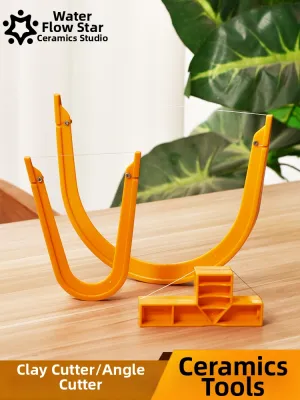
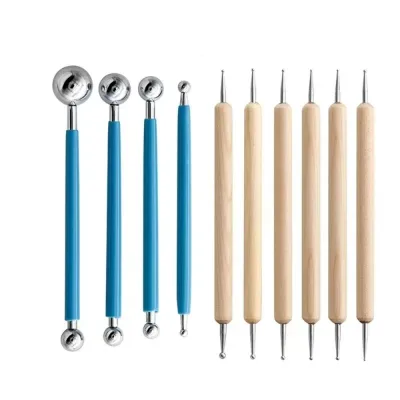
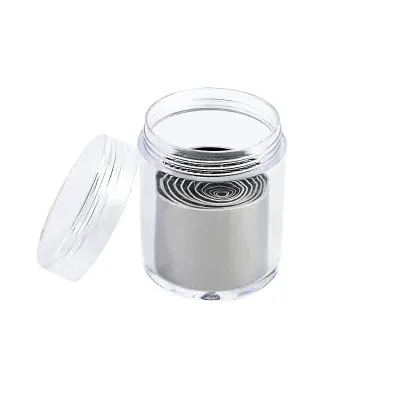
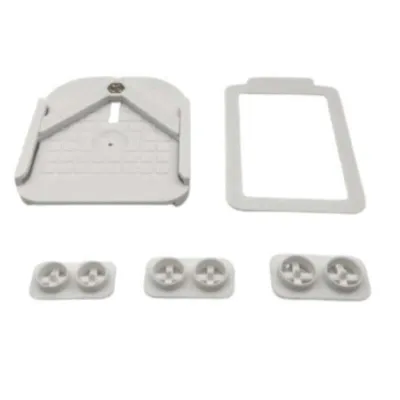
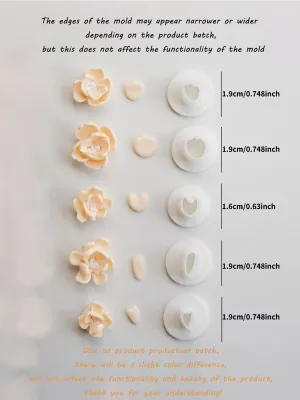
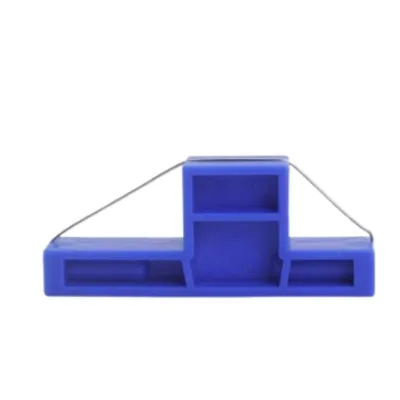
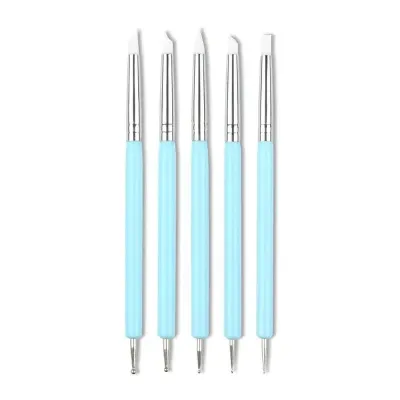
Prices are valid at publication and may change. Please refer to the product page for the latest price.
Key Comparison Dimensions for Clay Crafting
Evaluating these tools requires looking beyond their basic shapes and focusing on how they perform under real workshop conditions. The success of any cut depends on several intersecting variables: the geometry of the cutting edge, the resistance of the clay body, and the amount of pressure applied by the crafter. Different clay formulations react uniquely to shear forces, meaning that a tool that glides effortlessly through one material might drag, tear, or deform another.

To predict how a cutter will behave, you must consider both the physical specifications of the tool and the current state of your clay. Factors such as whether the clay has been conditioned, its moisture content, and its ambient temperature will dictate how much resistance the cutter encounters. By analyzing these dimensions, you can select a tool that minimizes distortion and reduces the amount of post-cut finishing work required.
Cutting Precision and Surface Finish
Precision in clay crafting is largely measured by the cleanliness of the cut edge and the amount of material lost during the process, known as the kerf. Wire cutters excel at making straight, continuous passes through large masses, but the final surface finish depends heavily on the wire’s thickness and tension. A thick, slack wire will bow as it meets resistance, resulting in a curved or uneven cut surface and a wider kerf. Conversely, a thin, highly tensioned wire leaves a remarkably smooth, flat finish with minimal drag marks. When selecting a wire cutter, check the manufacturer’s specifications for the wire gauge; a finer gauge generally yields a cleaner finish but requires careful handling to prevent snapping.
Blade cutters offer a different set of precision characteristics based on their sharpness, flexibility, and edge profile. A sharp, rigid blade produces exceptionally crisp, defined edges with virtually no kerf, making it a practical choice for geometric shapes and tile making. Flexible blades allow you to steer the cut, creating smooth, sweeping curves that are difficult to achieve with a straight wire. However, because the flat side of a blade pressed against the clay creates suction, a dull or overly thick blade can drag the clay downward, distorting the edges of your design. Crafters should inspect blade packaging for thickness measurements—often listed in millimeters—to ensure the blade is thin enough to slice cleanly without bending unintentionally under pressure.
Suitable Clay Types and Hardness Levels
The physical state of your clay is one of the most critical factors in determining which cutter to use. Wire cutters are highly effective when dealing with firm, dense, or even slightly crumbly clay bodies. For example, when portioning large blocks of raw, unconditioned polymer clay or slicing through leather-hard ceramic clay, a wire cutter easily shears through the dense mass without getting stuck. The lack of a flat surface on the wire prevents the suction that often traps wider blades in heavy clay bodies.
Blade cutters, on the other hand, are well suited for soft, highly conditioned, or sticky clays. When working with warm polymer clay, metal clay, or soft modeling clay, a thin blade can slice through delicate layers without squishing or deforming the detailed patterns inside. Additionally, the flat surface of a rigid blade is incredibly useful for sliding underneath soft clay shapes to lift them cleanly off a work surface without warping their outlines. Before starting a project, always verify the tool’s intended medium and hardness limits by checking the manufacturer’s label, as using a delicate blade on overly stiff clay can bend the tool, while using a thick wire on very soft clay can cause severe compression.
Durability and Maintenance Requirements
Maintaining your tools not only extends their lifespan but also ensures consistent performance and workshop safety. Wire cutters require regular cleaning to prevent clay residue from hardening inside the tension mechanisms, connection points, or wooden handles. After each crafting session, wipe the wire down with a damp cloth and dry it thoroughly to prevent rust, especially if you work with water-based ceramic clays. Pay close attention to the areas where the wire meets the handles, as accumulated clay can weaken the connection over time, leading to sudden breakage during a cut.
Blade cutters demand a different maintenance routine focused on edge preservation and personal safety. Because blades are sharp and often flexible, they should be cleaned carefully using a soft cloth wiped from the spine toward the cutting edge to avoid accidental cuts. Store blades flat in a protective case, magnetic strip, or their original packaging to prevent the edges from nicking or bending against other tools in your kit. Regularly perform visual inspections of both tool types: check wire cutters for signs of fraying, rust, or frame bending, and inspect blades for microscopic nicks, dullness, or warping. If a wire begins to unravel or a blade becomes dull and starts dragging the clay, it is time to replace the tool or the consumable blade insert.
Matching the Cutter to Your Specific Project
To optimize your crafting workflow, it helps to map each cutter type to the specific tasks where its mechanical design offers the greatest advantage. Wire cutters are a primary choice for heavy-duty preparation and bulk slicing. If your project begins with a large, dense block of ceramic clay or a thick brick of polymer clay, a heavy-duty wire cutter allows you to portion the material quickly and with minimal physical strain. They are also excellent for cutting uniform slabs from a larger block when guided along depth-marking rails, as well as slicing thick, simple canes where slight surface texture is acceptable or even desired.
Blade cutters shine during the detailed shaping, trimming, and finishing stages of a project. If you are crafting polymer clay jewelry, intricate mosaic tiles, or detailed miniatures, a blade is indispensable. Use a rigid blade to trim clean, straight borders on rolled slabs, or employ a flexible tissue blade to execute smooth, organic curves for petals, leaves, or abstract shapes. Blades are also the primary tool for shaving off micro-thin layers of clay to reveal hidden patterns in techniques like mokume gane, or for carefully lifting delicate, uncured shapes from your glass or ceramic work tile without stretching the edges.
For most active crafters, the question is not which single tool to own, but rather how to use both in tandem. A typical workflow might begin with a wire cutter to slice manageable portions from a raw clay block, progress to rolling out a slab, and then transition to a variety of blade cutters for precise shaping, detailing, and lifting. Keeping a high-quality wire cutter and a selection of rigid and flexible blades in your studio ensures you have the mechanical advantage required for every phase of the clay-working process.
Decision Framework: Which Clay Cutter Should You Choose?
To help you decide which tool to reach for or purchase next, consider this straightforward, condition-based framework tailored to your immediate crafting goals:
- Select a wire clay cutter if:
- You regularly work with large, dense blocks of ceramic, stoneware, or unconditioned polymer clay.
- Your primary task is portioning clay, cutting uniform slabs, or slicing thick, firm canes.
- You need to minimize surface drag and suction when cutting through thick, heavy masses of material.
- You prefer a tool with comfortable handles that allows you to use your body weight to pull through tough materials.
- Select a blade clay cutter if:
- Your projects involve intricate jewelry making, detailed miniatures, or precise geometric shapes.
- You need to make curved cuts, shave thin layers, or create textured edges using specialized wavy blades.
- You frequently need to lift delicate, uncured clay pieces off your work surface without distorting their shapes.
- You work primarily with soft, well-conditioned, or highly pliable clay bodies.
Before making your final choice, always verify if your specific clay brand, project tutorial, or mold manufacturer recommends a particular wire gauge, blade thickness, or cutting technique. Some highly specialized polymer clay techniques, for instance, require ultra-thin, flexible blades to prevent pattern distortion, while certain heavy ceramic bodies demand high-tensile steel wires to withstand the resistance. Aligning your tool selection with these recommendations will ensure a smoother crafting experience and a higher-quality finished product.
Frequently Asked Questions (FAQ)
Can I use a wire cutter for highly detailed polymer clay canes?
Yes, you can use a wire cutter for polymer clay canes, but success depends heavily on the wire’s gauge and tension. A standard, thick ceramic wire cutter will compress and distort the intricate internal patterns of a detailed cane. To preserve these details, you must use an ultra-thin wire gauge specifically designed for fine craft work, mounted in a rigid frame that maintains high tension. Additionally, it is highly recommended to check the firmness of your cane before cutting; if the clay is too warm or soft, even a thin wire can cause distortion. Placing the cane in a refrigerator for a short period before slicing can help firm up the clay, allowing the wire to pass through cleanly without squishing the design.
How do I prevent a blade cutter from dragging or tearing soft clay?
To prevent a blade from dragging or tearing soft clay, you can apply a few simple workshop techniques and tool checks. First, try using a light dusting of cornstarch, baby powder, or a brief wipe of water on the blade as a release agent, depending on whether your specific clay type is water-compatible or polymer-based. This reduces the surface friction and suction between the clay and the flat of the blade. Second, closely inspect your blade’s cutting edge for any microscopic nicks, dried clay residue, or dullness. Even a tiny imperfection on the edge can catch on soft clay and cause tearing rather than a clean slice. If the blade is clean but still drags, it may be time to switch to a thinner, sharper blade or temporarily cool the clay to increase its resistance.
Community discussion
Share your experience or ask a question. Comments are reviewed before publication.