
Choosing between Winsor & Newton’s Cotman and Galeria ranges is not a matter of comparing two competing paints of the same type, but rather deciding between two entirely different artistic mediums. Cotman is a dedicated student-grade watercolor line, while Galeria is a student-grade acrylic line. Your choice depends on whether you want to work with transparent, water-flowing washes on heavy paper or opaque, fast-drying layers on canvas. Both ranges are designed to offer accessible entry points for beginners, but they require completely different tools, techniques, and working environments.
The Core Difference: Watercolor vs. Acrylic Mediums
To make an informed decision, you must first understand how watercolor and acrylic behave as physical mediums. Watercolor, represented by the Cotman range, relies on gum arabic as a binder. It is highly water-soluble, even after it dries on the page. This means you can re-wet dry paint on your palette or paper to blend, lift, or adjust your work. Watercolor is inherently transparent, allowing the white of the paper to shine through the layers to create luminosity. The drying process is physical evaporation, which can be highly influenced by your local climate. For instance, in a humid environment like Singapore, watercolor washes may take slightly longer to dry completely, giving you a wider window to manipulate the paint on the page.
Acrylic, represented by the Galeria range, uses an acrylic polymer emulsion binder. When acrylic paint dries, the water evaporates and the polymer molecules chemically fuse to form a flexible, water-resistant plastic film. Once dry, Galeria acrylics cannot be re-wet or altered. This fast-drying nature allows you to paint bold, opaque layers on top of one another without disturbing the paint underneath. Cleanup requires immediate action; while watercolor can easily wash out of brushes even after drying, acrylic paint will permanently ruin brushes if allowed to cure in the bristles.
Products mentioned in this guide
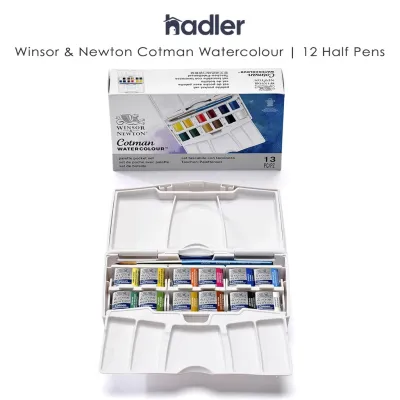


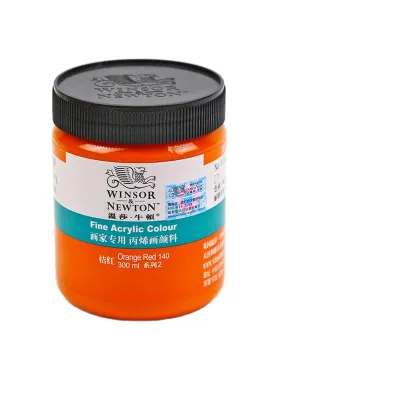
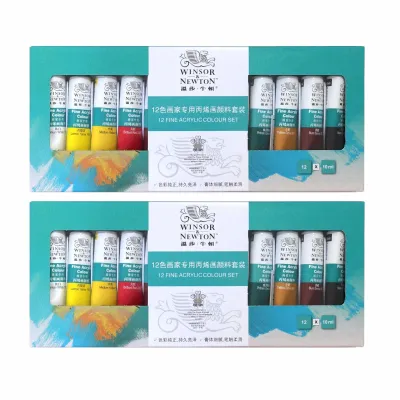
Prices are valid at publication and may change. Please refer to the product page for the latest price.
The choice of medium also dictates your entire studio setup. Cotman watercolors require highly absorbent, heavy-weight paper (typically 300 gsm or more) to prevent warping, along with soft, absorbent brushes that hold large amounts of water. Galeria acrylics, on the other hand, require stiffer synthetic brushes that can push the heavier body of the paint across varied surfaces like stretched canvas, wood panels, or heavy mixed-media paper. Because acrylics adhere to almost any non-greasy surface, they offer greater versatility for three-dimensional projects, whereas watercolors are strictly bound to paper-based substrates.
Winsor & Newton Cotman: What to Expect from the Watercolor Range
The Cotman watercolor range is designed to introduce beginners to the delicate balance of water control and pigment transparency. Because professional watercolors can be costly, Cotman replaces some of the rarer, more expensive natural pigments with synthetic alternatives, often labeled as “hues.” This formulation allows you to practice color mixing and wash techniques without the financial pressure of artist-grade materials.

When exploring the Cotman range, you will find two primary formats: dry pans and wet tubes. Pans are small, semi-dry blocks of paint housed in plastic wells. They are highly favored for their portability and ease of storage, making them ideal for compact workspaces or painting outdoors. To use them, you simply touch a wet brush to the pan to lift the color. Tubes contain wet, paste-like paint that you squeeze onto a palette. Tubes are excellent for mixing large washes of color quickly, though any leftover paint left to dry on the palette can still be reconstituted with water later.
Working with Cotman requires a shift in how you approach light and color. Unlike acrylics, where you can paint white highlights over dark backgrounds, watercolor painting requires you to plan your composition around the white of the paper. You must preserve the lightest areas of your painting by leaving them unpainted or using masking fluid. The final appearance of your painting is heavily dependent on the texture of your paper—whether you choose rough paper for textured granulating effects, cold-pressed paper for general versatility, or hot-pressed paper for fine detail work. Before purchasing a Cotman set, always check the product label to verify the specific colors included, as starter sets vary from basic six-tube introductory kits to comprehensive pocket boxes featuring integrated mixing palettes and travel brushes.
Winsor & Newton Galeria: What to Expect from the Acrylic Range
The Galeria acrylic range is formulated to provide a smooth, free-flowing consistency that makes it easy for beginners to learn brush control and layering. It sits in the “medium-body” category, meaning it is fluid enough to brush out smoothly across a canvas but thick enough to retain some brushstroke texture if applied generously. Like the Cotman range, Galeria utilizes synthetic alternatives for costly pigments, ensuring an affordable entry point while maintaining good lightfastness and working properties.
Galeria is primarily packaged in plastic tubes and larger squeeze bottles or jars. Tubes are highly practical for standard painting sessions, allowing you to dispense precise amounts of paint onto a stay-wet palette or a traditional wooden board. Jars and larger bottles are ideal if you plan to work on large-scale canvases, paint background washes, or use the paint for classroom settings. Because acrylic paint dries quickly, any paint squeezed out of a Galeria tube must be used during that painting session; once it skins over and cures, it cannot be saved.
The defining characteristic of Galeria acrylics is their versatility and opacity. You can apply the paint thickly for a textured, impasto-like effect, or dilute it with water or acrylic mediums to create thin, transparent glazes. Because it dries to a satin finish, it provides a consistent sheen across your artwork. It adheres beautifully to primed canvas, cardboard, wood, plaster, and even certain plastics. This makes Galeria an excellent choice if you enjoy crafting, customizing household items, or working on mixed-media canvases. When selecting a Galeria starter set, verify the volume of the tubes (often ranging from 12ml to 60ml) and check whether the set includes essential starter accessories like brushes or a basic mixing guide.
Comparing Formats, Sets, and Hidden Costs
When deciding between Cotman and Galeria, evaluating the physical format of the paint and the associated startup costs is crucial for managing your budget. Watercolor pan sets, such as the Cotman Pocket Plus sets, are incredibly space-efficient. A single pocket-sized box can contain up to 12 or 24 colors, a travel brush, and built-in mixing wells. This compact design is perfect for those living in smaller spaces, such as typical apartments or shared rooms, where setting up a dedicated painting area is difficult. In contrast, Galeria acrylic sets require significantly more physical space. Even a basic starter set of tubes, along with a palette, water jars, and a selection of brushes, will occupy a substantial portion of a desk or table.
The cost efficiency of each range also depends on how you measure volume and usage. A 11ml tube of Cotman watercolor can last for dozens of paintings because the paint is highly concentrated and diluted extensively with water during application. A 60ml tube of Galeria acrylic, however, may be consumed much faster, especially if you prefer thick, textured brushwork or paint on large canvases. Therefore, while acrylic paint often seems cheaper per milliliter, you will generally consume a much higher volume of paint per square centimeter of artwork compared to watercolor.
Furthermore, you must factor in the “hidden” costs of the supporting materials required for each medium. When planning your budget in S$, your primary investment outside of Cotman watercolors will be high-quality, 100% cotton watercolor paper. Cheap paper will warp, pill, and ruin the painting experience, making paper quality a non-negotiable expense. For Galeria acrylics, your secondary costs will include canvases or heavy boards, gesso (if you need to prime raw surfaces), and potentially acrylic mediums to alter the drying time or gloss level of the paint. Stiff synthetic brushes for acrylics are generally affordable, but you may need to replace them more frequently if you fail to clean them thoroughly before the paint cures.
Decision Framework: Which Range Fits Your Creative Goals?
To help you choose the right range for your artistic journey, consider how your workspace, cleanup preferences, and desired visual style align with each medium’s characteristics.
Choose the Winsor & Newton Cotman watercolor range if:
- You have limited workspace and need a painting setup that can be unpacked and packed away in under two minutes.
- You prefer a painting style characterized by soft edges, delicate color transitions, and luminous transparency.
- You want an easy, chemical-free cleanup process that only requires water and does not risk permanently staining your furniture or ruining your brushes.
- You enjoy painting on the go, sketching outdoors, or keeping an art journal.
Choose the Winsor & Newton Galeria acrylic range if:
- You want to paint on varied surfaces such as stretched canvas, wood, fabric, or clay, rather than being restricted to paper.
- You prefer a bold, opaque painting style where you can easily cover up mistakes by painting a fresh layer directly over dry paint.
- You enjoy working with texture, palette knives, and mixed-media collage elements.
- You want your finished artwork to be water-resistant and durable without requiring glass framing.
Before finalizing your purchase, verify the availability of individual open-stock tubes at your local art supply store. Starting with a pre-packaged set is highly convenient, but being able to buy single replacement tubes of your most-used colors (such as Titanium White for Galeria or Ultramarine for Cotman) ensures you can maintain your palette without buying an entirely new set. Additionally, if you are taking a specific art course, check the syllabus requirements, as instructors often specify whether watercolors or acrylics are mandatory for their lessons.
Frequently Asked Questions (FAQ)
Can I mix Cotman watercolors and Galeria acrylics in one artwork?
Yes, you can combine Cotman watercolors and Galeria acrylics in a single piece of artwork, but you must follow a specific order of application due to how these mediums dry. Watercolors should always be applied first to the paper. Because dry watercolor remains water-soluble, you can easily paint Galeria acrylics over the top of it once the watercolor layer is completely dry. The acrylic paint will adhere well to the paper and the watercolor base, drying into a permanent, water-resistant layer.
However, you should avoid applying watercolor over dry acrylic paint. Because dry acrylic forms a smooth, non-porous plastic film, the water-based Cotman paint will bead up, pool, and fail to adhere to the surface. If you want to experiment with mixed-media techniques, always test your layering sequence on a scrap piece of the same paper or canvas first to observe how the paints interact and to ensure the layers bond securely without peeling or cracking.

Community discussion
Share your experience or ask a question. Comments are reviewed before publication.