
Beginners entering the world of Chinese calligraphy often face a bewildering array of ink options. Selecting the right Yidege ink variant is not about purchasing the most expensive bottle on the shelf, but rather matching the ink’s characteristics to your current practice stage, paper type, and desired concentration. By learning to read the bottle labels for concentration indicators and intended uses, you can find a reliable match for daily practice. This approach ensures a smooth, frustration-free learning curve while avoiding unnecessary expenses on premium formulas that your current paper and brush skills cannot yet fully utilize.
Understanding Yidege Ink Classifications
Yidege is a historic brand with a structured product line. Understanding how they classify their liquid inks helps you decode the labels on online marketplaces or local stationery shops. The brand typically categorizes its inks into distinct concentration tiers, often labeled as standard, refined, or premium. Standard variants are formulated for high-volume daily practice, offering a thinner consistency that flows easily from the brush. Refined and premium tiers contain a higher density of carbon soot, resulting in a thicker, more viscous liquid that yields a deeper, more lustrous black finish suitable for advanced work.
The choice of binder is another critical classification factor. Traditional formulations rely on animal glue, which provides excellent adhesion, a characteristic sheen, and a traditional, slightly musky scent. Modern or practice-grade variants may incorporate plant-based binders or synthetic polymers, which generally offer a milder odor, faster cleanup, and a more fluid consistency that is highly forgiving for beginners.
Products mentioned in this guide
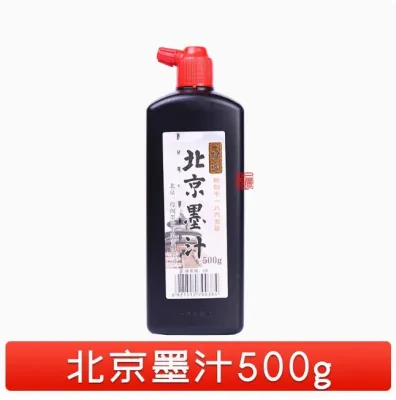
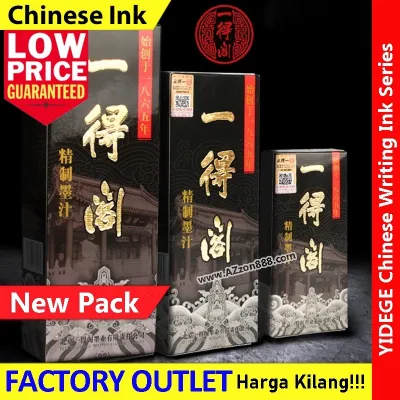
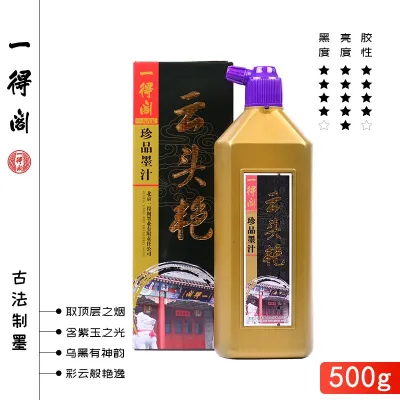
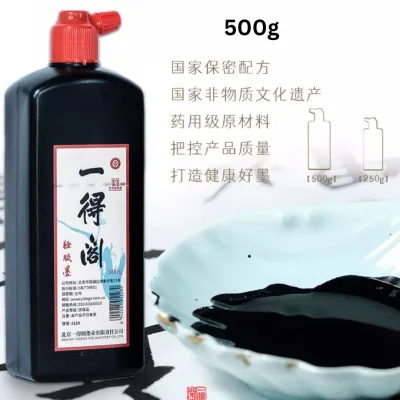
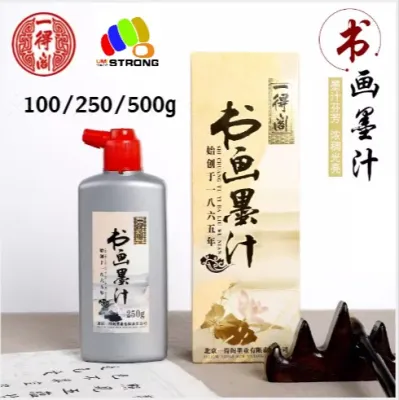
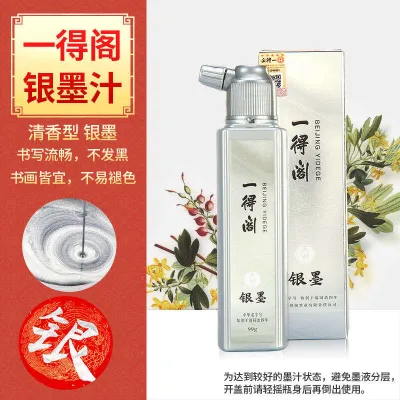
Prices are valid at publication and may change. Please refer to the product page for the latest price.
When browsing, look for visual cues on the packaging. Everyday practice inks often come in simple plastic bottles with straightforward, utilitarian labels. In contrast, exhibition-grade or specialty variants frequently feature more elaborate packaging, traditional calligraphy on the label, or specific terms indicating high concentration or suitability for mounting, such as water-resistant properties after drying.
Key Selection Criteria for Beginners
As a beginner, your primary focus should be on how the ink behaves on your writing surface rather than its historical prestige. The first criterion to evaluate is fluid dynamics, specifically the balance between fluidity and drying speed. An ink that is too thick will drag on the brush, causing premature dry strokes before you can complete a character, while an ink that is too thin will run uncontrollably.

Drying speed must match your practice pace. If you write slowly to master stroke structure, an extremely fast-drying ink can gum up your brush hairs mid-character, whereas a very slow-drying ink might smudge as you move your hand across the page.
Ink shade performance is another vital consideration. While advanced calligraphers seek complex tonal layers, beginners need a consistent, deep blackness that clearly defines the edges of their strokes. This high contrast helps you analyze your character structure and identify mistakes in brush pressure or pathing.
Paper compatibility is the bridge between your ink and your brush. Beginners typically start with highly absorbent, affordable papers like Mao Bian paper or grid-printed practice sheets. Your ink must behave predictably on these surfaces; highly concentrated premium inks may clog the fibers of cheap paper, while overly watery inks will bleed instantly, turning your strokes into blurry blots.
Finally, consider the ease of cleaning your tools. Practice sessions should end with a straightforward cleanup routine. Inks with heavy animal glue binders require thorough, patient washing with cool water to prevent the brush hairs from stiffening and splitting, whereas modern practice formulations wash out of brushes and synthetic inkstones with minimal effort.
Matching Variants to Your Practice Needs
To make a practical decision, align the ink’s characteristics with your specific daily writing scenarios. For daily foundational stroke practice, where you are repeating basic horizontal, vertical, and diagonal lines, prioritize smooth flow and consistency. A standard-concentration, practice-grade variant is ideal here because it flows effortlessly, does not clog the brush during long sessions, and is highly washable, making it easy to clean up after writing dozens of pages.
When you transition to copying masterworks or creating finished pieces that you intend to keep or display, your requirements shift. For these tasks, look for refined or premium variants that offer richer tonal layers and a deeper, more permanent blackness. These inks contain finer carbon particles that adhere securely to high-quality raw or semi-raw Xuan paper, ensuring that your work retains its sharp edges and deep contrast even if the paper is wet-mounted later.
Local environmental factors also play a significant role in how your ink behaves. In Singapore’s warm, high-humidity climate, liquid ink behaves differently than it does in dry, temperate regions. High humidity slows down the evaporation of water from the paper and the inkstone, which can prolong drying times and increase the risk of bleeding on raw Xuan paper.
To manage this, you may need to choose a slightly more concentrated variant and use a dry inkstone to control the moisture level. Alternatively, be prepared to adjust your stroke speed or select semi-sized paper to compensate for the slower drying rate caused by the humid air.
How to Verify and Test Your Chosen Ink
Once you purchase a bottle, performing a few simple, observable checks will ensure the product is in good condition and performs as expected. Start with a post-opening sensory check. Fresh, high-quality Yidege ink should have a mild, traditional ink scent or a neutral odor; it should never smell sour, putrid, or intensely chemical.
Pour a small amount into your inkstone and observe the texture. It should be smooth, uniform, and free of gritty particles or gelatinous clumps. If you notice severe, irreversible separation where the water has completely separated from a thick, rubbery sludge at the bottom, the ink may have been exposed to extreme temperatures or exceeded its shelf life.
Next, conduct a test-stroke observation on your target practice paper. Dip your brush, scrape off the excess on the edge of the inkstone, and draw a slow, continuous line. Observe how the ink interacts with the paper fibers: it should spread slightly but remain controllable. If the ink bleeds uncontrollably into a fuzzy halo, it is too thin or incompatible with that paper; if it skips excessively and leaves dry, broken lines even with a fully loaded brush, it is too thick.
Before pouring, always practice proper mixing techniques. If the bottle has been sitting idle, the carbon pigments may have settled. Gently swirl or tilt the bottle back and forth to redistribute the pigments; avoid violent shaking, which introduces excessive air bubbles that can transfer to your brush and create unsightly white spots in your strokes.
Establish clear stop conditions for your ink. If you encounter a foul, fermented odor, visible mold growth on the surface, or clumping that does not dissolve after gentle stirring, the organic binders have broken down. Using spoiled ink can ruin your brush hairs and leave a persistent, unpleasant smell on your paper, so it is best to discard the bottle.
Purchasing and Storage Best Practices
To ensure you receive a genuine product, purchase your ink from authorized brand stores or reputable local stationery retailers. Counterfeit calligraphy inks are common in online marketplaces, often using cheap industrial dyes instead of properly processed carbon soot, which can damage your brushes and fade quickly.
Before buying, inspect the packaging for manufacturing dates, batch codes, and quality assurance seals. Freshly produced ink performs more predictably, as the binders have not had time to degrade or settle into hard clumps.
Proper storage is essential to maintain the ink’s chemical stability. Store your bottles in a cool, dry place away from direct sunlight and extreme heat, which can dry out the liquid and break down the organic binders. In tropical climates, keeping the bottle tightly sealed in a cupboard away from external walls helps maintain a stable temperature.
Never introduce water directly into the main bottle. When you need to dilute your ink or clean your brush, always pour a small portion of ink into a separate inkstone or dish first. Introducing tap water, which contains minerals and bacteria, directly into the main container will contaminate the entire batch, accelerating bacterial growth and causing the ink to spoil rapidly.
Frequently Asked Questions (FAQ)
Can I dilute Yidege ink with water for practice?
Yes, diluting Yidege ink is a common practice, especially when using highly concentrated variants or when writing on highly absorbent paper. Dilution is appropriate when you want to achieve lighter grey tones for painting, reduce the drag on your brush, or prevent the ink from clogging your brush hairs during long practice sessions.
To dilute safely without ruining the ink’s binding properties, always perform the mixing in your inkstone or a separate small dish, never in the main bottle. Add clean, distilled water drop by drop using a small dropper, gently blending it with your brush or an ink stick until you reach the desired consistency.
Be careful not to over-dilute. If you add too much water, the binder will become too sparse to hold the carbon particles together. You can identify over-diluted ink if it bleeds uncontrollably on the paper, dries with a weak, dusty grey tone instead of a solid black, or rubs off easily as a black powder once dry.
Why does my ink smell sour or spoil quickly?
Liquid calligraphy inks, particularly traditional formulations like Yidege, rely on organic binders such as animal glue to keep the carbon particles suspended and adhere them to the paper. Because these binders are organic proteins, they serve as a breeding ground for bacteria and fungi if exposed to contamination and moisture.
Spoilage is almost always caused by introducing external contaminants into the ink. Dipping a dirty brush, exposing the open bottle to dust, or pouring tap water directly into the main bottle introduces bacteria that trigger fermentation, leading to a sour, rotten odor and clumping.
To prevent rapid spoilage, adopt strict hygiene habits. Only pour the exact amount of ink you need for a single session into your inkstone, and never pour leftover ink back into the main bottle. Keep the bottle cap tightly sealed immediately after pouring, and wash your brushes and inkstones thoroughly with clean water after every session.
Community discussion
Share your experience or ask a question. Comments are reviewed before publication.