
When taking your first steps into scale modeling, Gundam building, or military miniature painting, choosing the right paint can feel overwhelming. Tamiya is widely regarded as one of the most reliable and accessible brands in the hobby, but they do not package a single, all-inclusive “ultimate” starter box containing paints, thinners, and brushes. Instead, the best starter set for a beginner is either a carefully curated retailer bundle or a self-selected custom set of four to six essential colors paired with a dedicated bottle of Tamiya X-20A thinner.
By understanding how Tamiya’s paint system works, you can avoid spending money on redundant colors or incorrect accessories. Selecting the right combination of paints and thinners ensures a smooth, frustrating-free entry into the hobby, allowing you to achieve professional-looking finishes on your very first model.
Why Tamiya Acrylics Are Ideal for New Modelers
Tamiya acrylic paints occupy a unique space in the hobby world due to their chemical formulation. Unlike standard water-based craft paints or miniature paints designed for brush-on tabletop gaming figures, Tamiya acrylics are alcohol-based (often categorized as solvent-based acrylics). This means the pigment is suspended in an alcohol medium, which fundamentally changes how the paint behaves on plastic surfaces.
Products mentioned in this guide
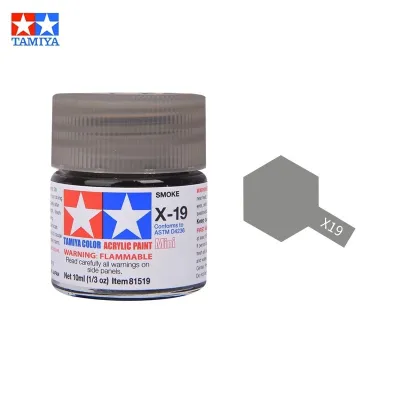
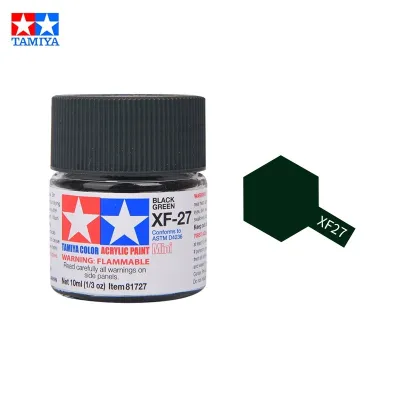
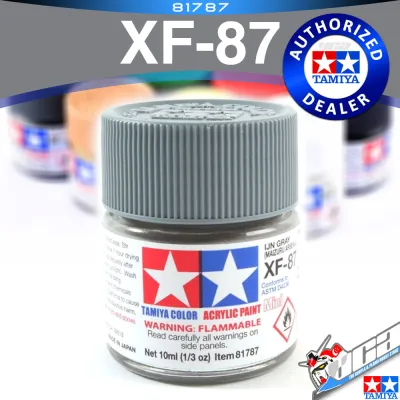
Prices are valid at publication and may change. Please refer to the product page for the latest price.
For a beginner, this alcohol-based chemistry offers several distinct advantages. First, these paints dry incredibly fast. Because alcohol evaporates much quicker than water, a thin coat of Tamiya paint can be touch-dry within minutes, significantly reducing the amount of airborne dust that can settle on and ruin your wet paint job. Second, they offer superior adhesion to bare polystyrene plastic compared to pure water-based acrylics, meaning the paint is less likely to pool, bead up, or slide off the smooth surfaces of your model kit.
To navigate the Tamiya paint line successfully, you must understand their simple labeling system. Tamiya divides its acrylic paints into two primary categories: the X series and the XF series. The “X” prefix denotes a gloss finish, which dries with a shiny, reflective surface. The “XF” prefix denotes a flat or matte finish, which dries with a non-reflective, slightly textured surface. Choosing between these two finishes depends entirely on the subject matter of your model, whether you are building a rugged military tank or a sleek, polished sports car.
While these paints are highly forgiving, their alcohol base requires basic safety precautions when painting indoors. Always work in a well-ventilated room, preferably near an open window or with a dedicated desk fan to keep air moving. The mild alcohol fumes are not highly toxic, but prolonged exposure in a sealed space can cause headaches. Keep paint bottles tightly capped when not in use to prevent the alcohol carrier from evaporating and drying out your paint inside the bottle.
What Makes a Good Tamiya Starter Set?
A common mistake for beginners is purchasing a large paint set simply because it offers a high count of bottles. Many pre-packaged paint sets contain highly specific, niche colors—such as historical military uniform shades or specialized cockpit greys—that you may never use. A truly effective starter set should prioritize versatility, focusing on primary colors (red, blue, yellow), black, white, and a high-quality clear coat. With these core shades, you can mix almost any color you need while keeping your initial investment low.

Another critical factor is the inclusion of a thinning agent. You cannot paint effectively straight from a Tamiya bottle. Because these paints are highly pigmented and formulated to be versatile enough for both airbrushing and hand-brushing, they are thick out of the jar. Attempting to brush unthinned Tamiya paint onto plastic will result in heavy brush marks, obscured surface details, and paint drying on your brush bristles before you can finish a stroke. Therefore, a viable starter kit must include or be paired with a bottle of Tamiya X-20A Acrylic Thinner.
When evaluating starter sets that come with bundled tools, pay close attention to the quality of the included accessories. The alcohol solvent in Tamiya paint is harsh on cheap, natural hair brushes, causing the bristles to splay, shed, or lose their shape rapidly. A good starter setup should feature synthetic brushes, typically made of nylon or Taklon, which resist solvent damage and maintain a sharp point or flat edge. Similarly, look for simple, easy-to-clean plastic or glazed ceramic mixing palettes rather than porous paper alternatives.
Finally, calculate the cost efficiency of any pre-packaged set before buying. In Singapore, a standard 10ml bottle of Tamiya acrylic paint typically retails between S$2.50 and S$3.50. Compare the total price of the bundle against the individual retail costs of the paints and tools included. If a set costs more than the sum of its useful parts, or if it forces you to buy colors you do not want, you are far better off building your own starter set from scratch.
Official Packs vs. Retailer Bundles vs. Custom Sets
Beginners in Singapore have three main pathways when purchasing their first Tamiya acrylic paint setup. Each option offers distinct trade-offs in terms of convenience, cost, and completeness.
Official Tamiya Multi-Packs
Tamiya manufactures several official multi-color blister packs, typically sold in configurations of three or six bottles. These sets are categorized by theme, such as basic gloss colors, basic flat colors, or military camouflage sets.
While these official packs guarantee authentic, high-quality Tamiya paint and offer a convenient way to get a curated palette of colors, they are not complete starter kits. They almost never include thinner, brushes, mixing cups, or cleaning supplies. If you purchase an official multi-pack, you must treat it as a paint-only purchase and buy your essential tools and thinners separately before you can begin your project.
Hobby Store and Retailer Bundles
Many independent hobby shops in Singapore and online marketplaces assemble their own custom starter bundles. These retailers understand the limitations of official packaging and attempt to solve the “missing tools” problem by bundling a selection of popular Tamiya paints with a small bottle of X-20A thinner, a couple of entry-level synthetic brushes, and sometimes a roll of masking tape.
These bundles can offer excellent convenience and moderate cost savings. However, you must carefully inspect the contents before purchasing. Ensure the included thinner is specifically labeled X-20A (the acrylic formula) and not X-20 (Tamiya’s enamel thinner), as mixing enamel thinner with acrylic paint will ruin the paint instantly. Additionally, verify that the retailer is supplying fresh stock; older bottles that have sat on shelves for years can sometimes dry out or separate permanently.
The "Build-Your-Own" Custom Set
For most beginners, building a custom starter set by purchasing individual bottles is the most practical and cost-effective approach. By selecting only the exact colors required for your first model kit, you eliminate waste and ensure that 100% of your budget goes toward items you will actually use.
When building a custom set, you can also optimize your purchases for long-term value. For example, instead of buying a tiny 10ml or 40ml bottle of thinner, you can purchase a 250ml bottle of Tamiya X-20A for around S$9.00 to S$12.00, which offers a significantly lower cost-per-milliliter and will last through dozens of projects. You can then pair this with three or four targeted paint colors and a high-quality pack of synthetic hobby brushes.
Matching Your Paint Set to Your Model Genre
To prevent wasting money on paints that do not suit your building style, tailor your starter set to the specific genre of models you plan to construct. Different subjects require entirely different paint finishes and color palettes.
- Scale Military Vehicles (Tanks, Armored Cars, Aircraft): If your primary interest lies in historical military modeling, your starter set should consist almost entirely of the XF (Flat) series. Military vehicles are designed to be stealthy and non-reflective, so gloss paints look highly unrealistic. Focus on acquiring essential earth tones, olive drabs, greys, and dark greens. A basic military starter set should include XF-1 (Flat Black), XF-2 (Flat White), XF-62 (Olive Drab), and XF-64 (Red Brown). Gloss paints are only used in small amounts for detail work or as a localized clear coat to provide a smooth surface for applying decals.
- Cars and Civilian Vehicles: Automotive modeling demands the exact opposite approach, requiring a heavy reliance on the X (Gloss) series. To replicate the mirror-like finish of a real car, you need vibrant, glossy body colors and metallic accents. A great automotive starter set includes X-1 (Gloss Black), X-2 (Gloss White), X-7 (Gloss Red), X-11 (Chrome Silver), and X-22 (Clear Gloss). The clear gloss coat is especially critical, as it is applied over your color coats and polished to a high shine to protect the paint and give the car its realistic scale appearance.
- Sci-Fi and Mecha (e.g., Gundams): Science fiction subjects and Gunpla kits benefit from a hybrid approach. While metallic parts and sensor eyes look great in gloss or metallic finishes, the main armor plates generally look best with a flat or semi-gloss finish to prevent the model from looking like a cheap plastic toy. An excellent sci-fi starter set includes XF-2 (Flat White), XF-19 (Sky Grey), XF-8 (Flat Blue), X-10 (Gun Metal), and XF-86 (Flat Clear). The flat clear coat is applied at the very end of the build to unify the different finishes and eliminate any remaining plastic glare.
Essential Tools and Thinners to Pair With Your Paints
Once you have selected your paint colors, you must gather the supporting tools necessary to apply and maintain them. Having these accessories on hand before you start will prevent messy mistakes and ensure a smooth painting experience.
First and foremost is the thinning process. To achieve the ideal painting consistency—often compared by modelers to the thickness of skim milk—you must mix your Tamiya paint with X-20A thinner in a separate container. Never thin the paint directly inside the original bottle, as this can introduce contaminants and ruin the remaining paint over time. Use small, cheap plastic mixing cups or reusable glass jars, and transfer the paint and thinner using metal paint stirrers or plastic pipettes. To verify the consistency, drag a drop of the mixed paint up the side of your mixing cup; it should run down smoothly, leaving a translucent film behind, rather than clinging in a thick clump or running off instantly like colored water.
When it comes to application, synthetic brushes are your best option. Look for brushes labeled as “Taklon” or “nylon flat” and “round” brushes in sizes 0, 2, and 4. Unlike water-based acrylics, Tamiya paints do not perform well on a traditional wet palette. Because Tamiya is alcohol-based, the paint will rapidly draw water up through the semi-permeable paper of a wet palette, over-thinning the paint and breaking down the acrylic binder. Instead, use a glazed ceramic paint well or a small metal palette, which keeps the paint stable while you work.
For clean lines and neat details, invest in a roll of high-quality masking tape, such as Tamiya’s dedicated yellow masking tape. This tape is designed with a low-tack adhesive that creates sharp paint boundaries without lifting the underlying paint when peeled away. Finally, for cleanup, you do not need expensive specialty brush cleaners. High-purity Isopropyl Alcohol (IPA), easily purchased at local pharmacies in Singapore, is highly effective at dissolving dried Tamiya paint, making it the perfect, budget-friendly solution for cleaning your brushes, palettes, and mixing jars.
Frequently Asked Questions (FAQ)
Do I need to thin Tamiya acrylic paints for brush painting?
Yes, thinning is absolutely necessary when hand-brushing Tamiya acrylic paints. Because these paints are highly pigmented and thick, using them straight from the bottle will result in heavy, unsightly brush marks, uneven coverage, and rapid drying on your brush bristles. Thinning your paint with Tamiya X-20A thinner to a smooth, milk-like consistency allows the paint to self-level on the plastic surface, preserving the fine details of your model and creating a flat, professional finish.
Can I use tap water to thin Tamiya acrylics?
No, you should avoid using tap water to thin Tamiya acrylic paints. Because Tamiya paints are alcohol-based rather than water-based, adding water can cause the acrylic binder to coagulate, clump, or separate. This results in a chalky, uneven application and significantly reduces the paint’s ability to adhere to the plastic model. For the best results, always use official Tamiya X-20A Acrylic Thinner or high-purity isopropyl alcohol.
What is the difference between the Tamiya X and XF series?
The difference lies entirely in the final finish of the paint once it dries. The Tamiya X series consists of gloss paints that dry with a shiny, highly reflective surface, making them ideal for civilian vehicles, metallic parts, and base coats for decals. The Tamiya XF series consists of flat or matte paints that dry with a non-reflective, textured finish, which is perfect for military vehicles, aircraft, sci-fi armor, and realistic scale figures.
Community discussion
Share your experience or ask a question. Comments are reviewed before publication.