
Choosing the right school stationery in Singapore involves more than just picking out notebooks and pens. Stickers are a highly versatile tool that can significantly ease a student’s transition through different educational stages. From keeping track of personal belongings in chaotic Primary 1 classrooms to structuring intense revision schedules for secondary school exams, these small adhesive tools serve distinct purposes at different ages. Matching the correct sticker type to your child’s specific grade level ensures they stay organized, motivated, and prepared for the daily demands of school life.
In the lower primary years, the focus is on item identification and preventing lost property, making durable name labels and motivational rewards essential. As students progress to upper primary, the academic workload increases, shifting the priority toward index tabs, color-coded subject labels, and visual schedule trackers. By the time they enter secondary school, students require sophisticated tools for time management and personal expression, utilizing functional planner stickers and aesthetic washi tapes to manage their studies and co-curricular activities. Selecting the appropriate material, adhesive strength, and design for each stage helps students build independence and organizational skills.
Quick Guide: Matching Sticker Types to School Stages
A student’s relationship with stationery changes dramatically as they progress through school. In the early years of primary school, stickers act as a protective barrier against lost property and a simple, highly visual form of positive reinforcement. As the student matures, their cognitive and organizational needs evolve. What began as a tool for basic identification transforms into a system for managing complex schedules, categorizing multiple academic subjects, and developing personalized study methods.
Products mentioned in this guide
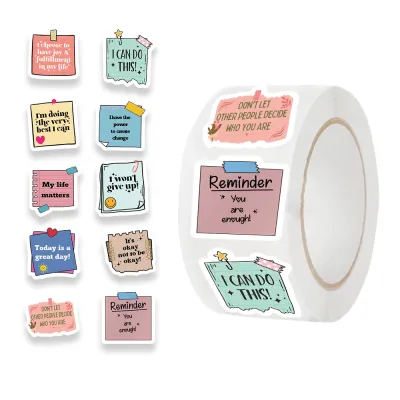
Prices are valid at publication and may change. Please refer to the product page for the latest price.
To help you quickly identify what to prioritize for the upcoming school term, stickers can be broadly classified into three main categories:
- Identification: Personalized name labels designed to withstand daily wear, moisture, and washing, primarily used to secure ownership of personal belongings.
- Organization: Index tabs, color-coded dots, and planner stickers that help students categorize worksheets, mark key chapters, and map out academic deadlines.
- Motivation and Decoration: Reward stickers used to encourage positive habits in younger children, alongside aesthetic stickers and washi tapes used by older students to personalize notes and journals.
Selecting the right sticker is not just about the visual design; it requires matching the sticker’s physical properties to its intended environment. A name label meant for a water bottle must endure daily washing, while an index tab meant for a textbook must feature a gentle, repositionable adhesive to avoid damaging delicate paper. Understanding these distinctions allows parents to build an efficient, age-appropriate school supply kit that supports their child’s daily routine.
Primary 1 to 3: Name Labels and Motivational Rewards
The transition into Primary 1 is a major milestone that introduces young children to a highly structured environment where they are suddenly responsible for their own belongings. In a classroom of thirty or more students, identical water bottles, lunchboxes, and stationery sets are incredibly common, leading to frequent mix-ups. During these early years, stickers serve as a vital safety net, helping children identify their items quickly and giving parents peace of mind.

Name Labels for Daily Belongings
For students in Primary 1 to Primary 3, personalized name labels are an absolute necessity. At this age, children are still developing their organizational habits and frequently leave items behind in the classroom, canteen, or school bus. Applying clear, legible name stickers to every individual item—from large textbook covers down to individual color pencils—drastically increases the chances of lost items being returned safely to your child.
When selecting name labels, it is crucial to match the sticker material to the surface of the item. Hard goods like plastic water bottles, food containers, snack boxes, and umbrellas require permanent, waterproof vinyl stickers. These vinyl labels are designed to resist water, friction, and mild detergents, ensuring the print does not fade or peel after cleaning. In contrast, paper-based labels are highly unsuitable for these items; they quickly absorb condensation from cold drinks, leading to smudged ink and peeling edges that leave a sticky, unsightly residue.
For fabric items such as school uniforms, physical education (PE) shirts, socks, and canvas shoes, standard adhesive stickers will not hold up. Instead, parents should look for specialized iron-on fabric labels or sew-in tags. Iron-on labels use a heat-activated adhesive that fuses directly with the fabric fibers, allowing them to survive repeated cycles in the washing machine without peeling off. When applying these, always consult the manufacturer’s instructions regarding the exact heat level and pressing time required, as overheating can damage the fabric, while underheating will prevent the adhesive from bonding fully.
Reward and Motivational Stickers
Beyond practical identification, stickers are highly effective tools for positive reinforcement during the lower primary years. Children in this developmental stage respond exceptionally well to visual progress trackers. Parents and educators can use classic star stickers, smiley faces, and colorful character labels to reward completed homework, consistent reading habits, or helpful behaviors around the home.
If you plan to use motivational stickers directly inside school textbooks, reading logs, or spelling books, it is important to choose acid-free paper stickers. Standard stickers often contain acidic adhesives that can yellow, brittle, or degrade book pages over time. Acid-free options ensure that your child’s academic records and journals remain preserved without discoloration, which is particularly valuable for keeping progress reports or school portfolios.
While these decorative stickers are highly appealing to young children, they should be used with clear intention. Handing out stickers too freely can diminish their motivational value, turning them into mere playthings rather than symbols of achievement. Creating a simple chart where a specific number of accumulated stickers leads to a larger reward—such as a favorite activity or a special treat—helps children connect their efforts with tangible outcomes, reinforcing positive learning habits.
Primary 4 to 6: Index Tabs and Organization Stickers
As students enter the upper primary years (Primary 4 to Primary 6), their academic landscape undergoes a significant shift. The preparation for school assessments intensifies, bringing a substantial increase in the volume of textbooks, worksheets, practice papers, and ring files. At this stage, the primary role of stickers transitions from simple identification to active organization and time management.
Subject and Folder Index Stickers
With multiple subjects to manage—including English, Mathematics, Science, Mother Tongue, and Social Studies—upper primary students can easily become overwhelmed by loose papers. Color-coded dot stickers and index tab stickers are incredibly efficient tools for establishing visual order. By assigning a specific color to each subject, students can categorize their files, notebooks, and reference guides at a single glance.
For instance, a student might use blue dot stickers for all Mathematics materials, red for Science, green for English, and yellow for Mother Tongue. Placing these dots on the spines of notebooks and the corners of plastic folders makes it simple to pull the correct materials from a school bag or bookshelf, saving valuable time during lesson transitions. Index tab stickers, which stick to the edge of a page and protrude outward, are equally useful for dividing thick ring files into clear sections, such as notes, worksheets, and past-year papers.
When purchasing index tabs, it is highly recommended to choose options labeled as removable or repositionable. Upper primary students frequently need to reorganize their files as the school year progresses and new topics are introduced. Permanent adhesives can tear paper pages or pull off textbook coatings if you attempt to move them. Repositionable tabs allow students to adjust the placement of their dividers smoothly, keeping their study materials neat and intact throughout their exam preparation.
Schedule and Routine Stickers
Developing independent study habits is a key focus of the upper primary years. To support this transition, parents can introduce schedule and routine stickers. These include visual timetable stickers, habit trackers, and task-specific labels that help students map out their weekly routines, homework deadlines, and revision slots.
Using visual stickers on a study planner or a wall calendar makes a child’s daily schedule much more approachable than a dense block of text. For example, a sticker depicting a book can represent daily reading time, while a sport-themed sticker can mark physical activity or CCA sessions. This visual breakdown helps children understand how their time is distributed, reducing the anxiety often associated with heavy academic workloads and helping to prevent the morning rush by clearly showing what needs to be packed the night before.
For maximum utility, these routine-tracking stickers are best applied to smooth, non-porous surfaces. Placing a weekly planner sheet inside a laminated pocket or sticking it directly onto a personal whiteboard allows the child to use repositionable stickers or combine them with dry-erase markers. This setup creates a reusable, highly interactive planning station that can be updated easily as school timetables change from term to term.
Secondary School: Planner Trackers and Aesthetic Note-Taking
Entering secondary school introduces students to a much larger campus, a wider array of academic subjects, and a significantly more demanding schedule. With the introduction of specialized sciences, humanities, and intensive Co-Curricular Activities (CCAs), secondary students must manage their time with a high degree of independence. At this stage, stickers become sophisticated tools for personal productivity and creative expression.
Functional Planner Stickers
In secondary school, a basic student planner becomes an essential tool for survival. To keep track of rotating timetables, project deadlines, laboratory sessions, and CCA practices, students can utilize functional planner stickers. These include specific markers like “Exam,” “Project Due,” “CCA,” “Meeting,” and color-coded priority flags that draw immediate attention to urgent tasks.
Using dedicated planner stickers helps students visualize their commitments and balance their workload effectively. When looking at a monthly calendar view, a cluster of red priority stickers immediately signals a busy assessment week, prompting the student to start studying earlier. This visual mapping prevents deadlines from creeping up unexpectedly and teaches valuable project-management skills that are highly beneficial for tertiary education and beyond.
When selecting functional stickers for a planner or notebook, look specifically for those with a matte finish. Glossy vinyl stickers, while durable, are highly resistant to ink, causing standard ballpoint pens, gel pens, and highlighters to smudge or run. Matte paper stickers allow students to write dates, times, or brief notes directly onto the sticker surface using their everyday writing instruments, ensuring their planner remains clean, legible, and highly functional.
Aesthetic and Note-Taking Stickers
In addition to strict scheduling, secondary school students often use stickers to enhance their academic note-taking and revision materials. Bullet journaling and aesthetic note-taking have become highly popular study methods, helping students process complex information by making their notes visually structured and engaging to review.
Minimalist stickers, geometric shapes, and paper-based washi tapes are excellent for this purpose. Washi tape, made from natural fibers, is lightweight, easily tearable by hand, and features a low-tack adhesive that makes it completely repositionable. Students can use thin strips of washi tape to divide pages into columns, highlight key formulas, or border critical definitions in their study guides. This visual separation breaks down dense blocks of text, making the information much easier to digest during intense revision periods.
However, it is important to establish boundaries for the use of decorative stickers. While highly beneficial for personal study notes, journals, and revision cards, bulky or highly decorative stickers are generally not appropriate for formal school submissions, laboratory reports, or national examination papers. Students should reserve their creative sticker layouts for their personal notebooks and use standard, clean formatting for any work that will be graded formally by teachers or external examiners.
Buying Checklist: Durability, Adhesive, and Safety Standards
Before purchasing stickers for the upcoming school year, evaluating their physical specifications ensures they will perform well under daily classroom conditions. Not all stickers are created equal, and using the wrong type can lead to damaged books, ruined uniforms, or peeling labels that need constant replacement. Use this practical checklist to guide your purchasing decisions:
- Adhesive Type: Determine whether the task requires a permanent or removable adhesive. Permanent adhesives are essential for personalized name tags on water bottles, lunchboxes, and pencil cases, where the label must stay firmly attached despite moisture and friction. Removable or repositionable adhesives are critical for index tabs, page flags, and textbook labels, allowing students to adjust organization systems without tearing paper or leaving sticky residue on rented or school-owned materials.
- Material Durability: Assess the environmental exposure of the stickered item. Items that undergo frequent handling, washing, or exposure to outdoor elements require tear-resistant, waterproof vinyl or polyester stickers. These synthetic materials resist stretching, tearing, and water damage. Standard paper stickers should be reserved strictly for dry, low-wear environments, such as the inside of notebooks, planners, and personal journals.
- Safety and Compliance: For stickers applied to food containers, lunchboxes, and water bottles, prioritize safety certifications. Look for labels explicitly marked as non-toxic, BPA-free, and food-safe. Because these items come into direct contact with food and drinks, ensuring the adhesive and face material do not contain harmful chemicals is an important health consideration for growing children.
- Surface Compatibility: Always verify that the sticker material is compatible with the target surface, whether it is plastic, metal, paper, glass, or fabric. Applying a standard sticker to a highly textured plastic surface or a flexible fabric item will almost certainly result in the edges peeling up. If you are applying a sticker to a delicate or expensive surface, such as a high-end laptop shell or a leather-bound journal, it is wise to consult the manufacturer's care instructions first, or perform a small, non-destructive test in an inconspicuous area to check for adhesive compatibility.
Frequently Asked Questions (FAQ)
Are waterproof name stickers dishwasher safe for school water bottles?
While waterproof name stickers are designed to resist moisture and hand washing, they are not automatically dishwasher safe. Dishwashers subject items to extremely high water temperatures, intense water pressure, and harsh chemical detergents that can rapidly break down the sticker’s adhesive backing and cause the printed ink to fade or bleed. If you plan to clean your child’s water bottle in a dishwasher, you must specifically verify that the sticker manufacturer designates the labels as dishwasher safe. If this rating is not explicitly stated on the packaging, it is highly recommended to wash the bottle by hand to preserve the integrity and lifespan of the name label.
How do I safely remove sticky residue from textbooks or folders?
Removing old sticker residue from school supplies requires a gentle, cautious approach to avoid damaging the underlying material. For paper-based items like textbooks or notebooks, avoid liquid solvents entirely, as they will warp the paper and dissolve the ink. Instead, try gently rubbing the residue with a clean, soft eraser, which will often roll the adhesive up into small, easily sweepable crumbs. For non-porous surfaces like plastic folders, metal pencil cases, or laminated book covers, you can use a clean microfiber cloth slightly dampened with warm water and a drop of mild dish soap. Gently rub the area in a circular motion, then dry it immediately with a clean towel; always avoid harsh chemical solvents like acetone or nail polish remover, which can permanently melt plastic surfaces or strip away protective coatings.
Can I use regular paper stickers for fabric school uniforms?
Regular paper or standard vinyl stickers are completely unsuitable for fabric school uniforms and physical education (PE) attire. These stickers lack the flexibility to move with the fabric, causing them to crease, crack, and peel off almost immediately when the child moves. Furthermore, standard adhesives will completely dissolve or fail during a single wash cycle, often leaving a sticky, lint-attracting residue that can permanently stain the uniform fabric. For clothing, always use specialized iron-on fabric labels or sew-in name tags. These are specifically engineered to bond with textile fibers, allowing them to stretch with the garment and withstand repeated machine washing and drying cycles without losing their adhesion.
Community discussion
Share your experience or ask a question. Comments are reviewed before publication.