
Choosing the correct packaging tape or label depends entirely on your specific packaging tasks, surface materials, and operational environment. Rather than relying on generic recommendations, this guide helps you diagnose your exact requirements and match them to the right product specifications for carton sealing, labelling, or bundling. In tropical environments where high humidity and elevated temperatures are common in transit vehicles and non-air-conditioned warehouses, adhesive performance can vary significantly. By systematically evaluating your packaging setup, you can select a tape or label that secures your shipments without wasting resources or risking package failure during transit.
Diagnose Your Packaging Tasks and Surface Conditions
Before selecting a tape or label, you must define the primary task it will perform. Lightweight carton sealing, heavy-duty bundling, and product identification each require distinct material properties. For instance, sealing a standard shipping box requires a tape with high shear strength to resist the upward pressure of cardboard flaps, whereas bundling heavy wooden components demands high tensile strength to prevent snapping under shifting loads.
The surface material of your packaging plays an equally decisive role in adhesive performance. Corrugated cardboard boxes made from recycled fibers have shorter, looser paper fibers and a higher dust content than virgin kraft paperboard. This dusty, porous surface makes it difficult for standard adhesives to establish a permanent bond. Conversely, non-porous surfaces like plastic shrink wrap, poly mailers, and metal drums require adhesives with high initial tack that can wet out smoothly across a slick surface without lifting at the edges.
Products mentioned in this guide
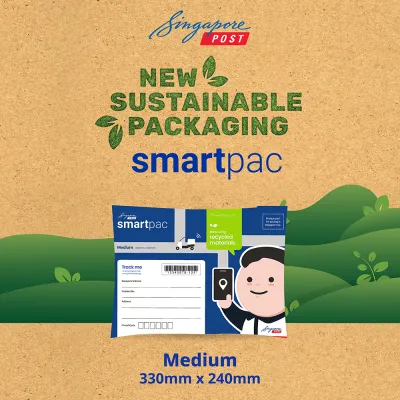
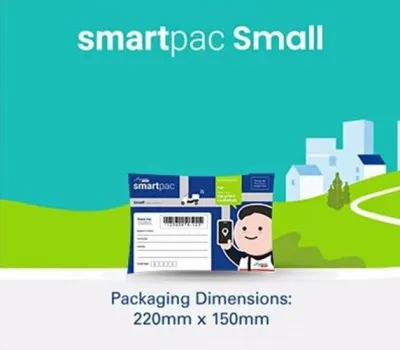
![[1/2/3/4 pcs] SingPost Smartpac Medium size - for using within Singapore only - Prepaid Packaging with Tracking](https://img.lazcdn.com/g/p/8f2c3c3994c2d6fb1e87feebed85f10b.jpg_400x400q80.jpg_.webp)
![[2pcs] SingPost Smartpac Medium size - for using within Singapore only - Prepaid Packaging with Tracking](https://img.lazcdn.com/g/p/3723bb51383d082fe8de03c34ecc0c93.jpg_400x400q80.jpg_.webp)
![[SINGPOST] MEDIUM smartpac - A postage-paid packaging for local delivery. Trackable via the SingPost mobile app.](https://img.lazcdn.com/g/p/3360d819ebee92c4900de5d10f98c2e8.png_400x400q80.png_.webp)
Prices are valid at publication and may change. Please refer to the product page for the latest price.
Environmental factors in your packing and storage areas must also be factored into your decision. High relative humidity can penetrate paper backings and weaken water-based adhesives over time. Dust and airborne particulates in busy fulfillment centers can settle on exposed adhesive surfaces during application, instantly reducing their bonding capacity. If your packages transition between air-conditioned offices, humid loading docks, and warm delivery vehicles, the adhesive must be stable enough to withstand these rapid temperature and moisture fluctuations.
Evaluate Tape Specifications for Sealing and Bundling
When evaluating packaging tapes, the choice of backing material determines physical durability and ease of application. Biaxially Oriented Polypropylene (BOPP) is the most common backing material due to its high resistance to splitting, abrasion, and moisture. It is highly effective for medium-weight carton sealing but can be noisy during manual dispensing. Polyvinyl Chloride (PVC) tape offers a quieter release, conforms better to irregular surfaces, and can be torn by hand, making it suitable for quiet office environments or manual packing stations. Kraft paper tape, available in both self-adhesive and water-activated varieties, provides a strong, tamper-evident seal that bonds directly with cardboard fibers.

The adhesive layer applied to these backings generally falls into three categories: acrylic, hot melt, and natural rubber. Acrylic adhesives are water- or solvent-based and offer excellent UV resistance and long-term stability, making them ideal for packages stored for extended periods. However, they require pressure to activate and have a slower initial bond build-up. Hot melt adhesives (synthetic rubber) provide an exceptionally high initial tack and quick grab, which is ideal for fast-paced automated sealing lines, though they can soften under prolonged exposure to high temperatures. Natural rubber adhesives offer the most aggressive adhesion, bonding reliably to dusty, recycled, or highly textured surfaces, and performing consistently across a wide temperature range.
For bundling and securing heavy loads, standard carton sealing tapes are insufficient. You must verify the tape’s tensile strength, thickness, and elongation specifications. Tensile strength, measured in Newtons per centimeter (N/cm), indicates the maximum force the tape can withstand before breaking. Bundling applications typically require reinforced filament tapes, which incorporate fiberglass yarns along the backing to provide extreme tensile strength and minimal elongation, ensuring that heavy or shifting items remain tightly bound during transit.
Select Label Materials for Identification and Tracking
Choosing the right label material is essential for ensuring that barcodes, shipping addresses, and handling instructions remain legible throughout the delivery cycle. The primary decision lies between direct thermal and thermal transfer printing technologies. Direct thermal labels use heat-sensitive paper that darkens when it passes under the printhead, eliminating the need for ink or ribbons. While highly cost-effective for short-term shipping labels, direct thermal paper is sensitive to heat, light, and friction. Exposure to direct sunlight in delivery vans or high-temperature storage can cause the entire label to darken, rendering barcodes unscannable.
For long-term storage, international shipping, or exposure to harsh environments, thermal transfer labels are the more durable choice. This method uses a thermal printhead to melt a wax or resin ribbon onto the label surface. The resulting print is highly resistant to smudging, moisture, chemical exposure, and fading. When selecting thermal transfer consumables, you must match the ribbon type (wax, wax-resin, or full resin) to the label material. Paper labels typically pair well with wax ribbons, while synthetic labels, such as polyester or polypropylene, require wax-resin or resin ribbons to achieve maximum scratch and water resistance.
Beyond the printing method, you must verify the physical compatibility of the label roll with your specific printer model. Measure the inner core diameter—typically 25.4 mm (1 inch) for desktop printers or 76.2 mm (3 inches) for industrial printers—and the maximum outer roll diameter that your printer’s supply compartment can accommodate. Additionally, check whether your printer utilizes a transmissive sensor to detect gaps between labels, or a reflective sensor to read black marks on the liner, ensuring the label roll backing matches your equipment’s sensor configuration.
Verify Product Specifications and Test Before Purchasing
To prevent costly packaging failures and equipment downtime, always cross-reference the manufacturer’s technical data sheets rather than relying solely on generic product names. These sheets provide precise measurements of total thickness (measured in microns), peel adhesion (the force required to remove the tape from a stainless steel plate), and holding power. Confirming these specifications ensures that the product you purchase matches the physical demands of your packaging workflow.
Before committing to a large-volume purchase, conduct a small-batch sample test under your actual operating conditions. Apply the tape or label to your standard packaging material and observe its behavior over a 48-hour period. For labels, perform a manual smudge test by rubbing the printed surface firmly with a finger to check ink anchorage, and expose a sample to moisture to verify water resistance. For tapes, inspect the sealed cartons for any signs of flagging—where the tape ends lift away from the cardboard—especially on cartons stored in non-air-conditioned areas.
Proper storage is critical to maintaining the shelf life of adhesives and label face stocks. Store your unused tapes and labels in a cool, dry environment, away from direct sunlight and heat sources. Keeping them sealed in their original plastic packaging until use prevents moisture absorption and dust accumulation, ensuring that the adhesive remains fully functional when it is finally applied to your packages.
Frequently Asked Questions (FAQ)
Can I use standard carton sealing tape for heavy-duty bundling?
Standard carton sealing tape is designed primarily to hold carton flaps closed and generally lacks the tensile strength and backing thickness required for heavy-duty bundling. Attempting to bundle heavy items, such as metal rods or thick plastic pipes, with standard tape often results in stretching, tearing, and package failure under transit vibrations. For bundling tasks, refer to the manufacturer’s guidelines to select reinforced filament tapes or strapping tapes designed specifically to bear high-tension loads.
How do I know if a SmartPAC label is compatible with my printer?
To confirm compatibility, you must verify three physical dimensions: the roll’s core diameter, the maximum outer roll diameter, and the label width. Compare these measurements against your printer’s user manual specifications. Additionally, ensure the printing technology matches; direct thermal printers require heat-sensitive paper labels, while thermal transfer printers require compatible ribbons that match the label material (such as wax ribbons for paper labels or resin ribbons for synthetic labels).
Community discussion
Share your experience or ask a question. Comments are reviewed before publication.