
Selecting a brush pen can quickly lead to choice paralysis, especially when faced with the extensive variety offered by Pentel. With options ranging from stiff, marker-like felt tips to highly flexible synthetic bristles, finding the right tool requires looking beyond the brand name. The key to a satisfying writing or drawing experience lies in matching a pen’s physical tip structure and ink formulation to your current level of hand control and specific creative goals. By understanding these variables, you can invest in a tool that integrates seamlessly into your creative workflow and helps you avoid unnecessary frustration.
Understanding Pentel Brush Pen Tip and Ink Types
To evaluate any brush pen objectively, you must first understand the physical construction of the tip. Pentel brush pens generally fall into two categories: synthetic bristle tips and felt or fiber tips. Synthetic bristle tips are composed of individual nylon fibers that mimic traditional animal-hair brushes. These tips offer maximum line variation and a highly responsive feel, but they require a high degree of hand control to prevent the lines from becoming shaky or unpredictable. In contrast, felt or fiber tips are molded from a single piece of compressed material, offering a firmer, more stable writing experience that behaves similarly to a flexible marker.
Ink formulation is the second critical variable to consider before making a purchase. Pentel utilizes both dye-based and pigment-based inks across its product lines, and each behaves differently on paper. Dye-based inks are known for their vibrant colors and smooth flow, making them excellent for blending and shading. However, they are typically water-soluble and can fade over time when exposed to light. Pigment-based inks contain solid particles of color that bind to the paper fibers, offering excellent water resistance and lightfastness once fully dry.
Products mentioned in this guide
![[SG] Pentel Brush Sign Pen Pastel Colours ( 6c/12c/24c set) [Evergreen Stationery]](https://img.lazcdn.com/g/p/58dbc5f94d423b0baddc039d90ecee4b.png_400x400q80.png_.webp)
![[SG] Pentel Brush Sign Pen Pigment Black Ink [Evergreen Stationery]](https://img.lazcdn.com/g/p/0e059cade2559fbc925c1d2a161ab472.png_400x400q80.png_.webp)
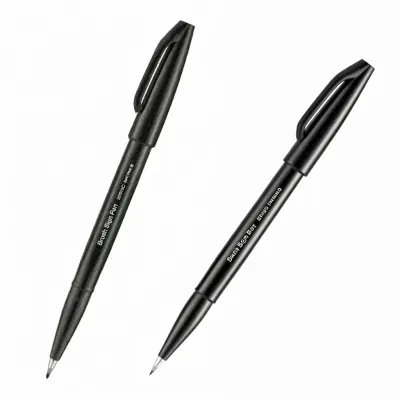
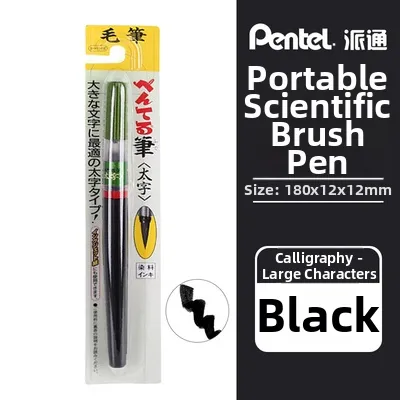
Prices are valid at publication and may change. Please refer to the product page for the latest price.
Rather than making assumptions based on the color of the pen body, you should always check the product packaging or manufacturer specifications for explicit ink properties. Look for terms such as “water-based pigment,” “dye ink,” or “waterproof” to ensure the pen is compatible with your intended media. For example, if you plan to apply wet washes over your linework, a pigment-based ink is essential to prevent your drawings from smudging or bleeding.
Matching Pentel Variants to Your Skill Level
Selecting a brush pen is not about finding the most advanced model available; it is about choosing a tool that matches your current muscle memory and hand control. Working with a tip that is too flexible for your current skill level can lead to inconsistent line weights and discouragement.

Starting Points for Beginners
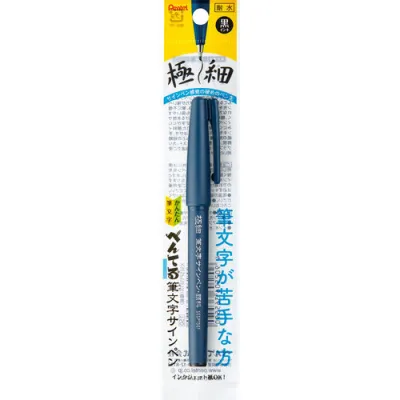
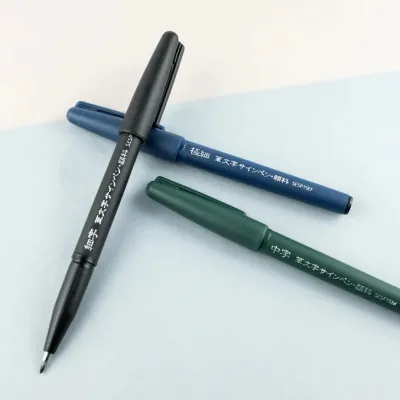
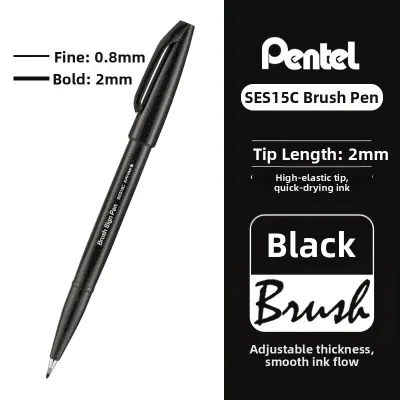
For those who are new to brush lettering or illustration, managing both the angle of the pen and the pressure of your hand can feel incredibly challenging. This is where firmer tips, such as those found in the Pentel Sign Pen with Brush Tip series, become invaluable. These pens feature a compact, flexible fiber tip that offers structural support, preventing the tip from collapsing under heavy pressure. The firm material acts as a guide, helping you learn the physical transition between thin upstrokes and thick downstrokes without losing control of the line.
When shopping, look for indicators of tip firmness in the product descriptions. A firmer tip provides the tactile feedback necessary to build muscle memory in your fingers and wrist. This structural support ensures that your strokes remain predictable, allowing you to focus on the mechanics of letterforms or basic sketching techniques.
It is highly recommended to start your journey with standard black ink. Focusing on a single, high-contrast color allows you to concentrate entirely on stroke mechanics and pressure consistency. Introducing multi-color blending or shading too early can distract from mastering the foundational movements required for consistent brush control.
Advanced Options for Expressive Strokes
Once your hand has developed the muscle memory to execute consistent lines with a firm tip, you can transition to highly responsive tools. Soft synthetic bristle models, such as the classic Pentel Pocket Brush Pen, offer an authentic brush-like feel. Because the tip is made of individual nylon bristles, it responds to the slightest change in pressure and angle, allowing for dramatic, sweeping transitions and textured, dry-brush effects.
These advanced tips require a delicate touch and a refined sense of pressure control. When first using a bristle brush pen, it is wise to spend time testing its limits on scrap paper. Observe how quickly the bristles snap back into a fine point and how the ink flow responds to fast, sweeping strokes. This experimentation helps you understand the unique elasticity of the nylon fibers before you begin a formal piece.
Many of these advanced models are designed for long-term studio use and feature replaceable ink cartridges. This design not only reduces waste but also ensures you can maintain a consistent ink flow during extensive drawing or writing sessions. Investing in a cartridge-based system is often more economical over time, as you only need to purchase replacement ink rather than an entirely new pen body.
Selecting the Right Pen for Your Specific Purpose
The physical demands of calligraphy, journaling, and large-scale signage are vastly different, requiring specific pen characteristics to achieve clean, professional results.
Calligraphy and Lettering
For clean, sharp letterforms, you need a brush pen with a highly responsive tip that recovers its shape instantly after a heavy downstroke. This rapid recovery is essential for maintaining crisp, hairline upstrokes immediately following a thick shade. If the tip material is too sluggish to spring back, your transitions will appear muddy and lose the sharp contrast that defines elegant lettering.
Before committing to a final piece of calligraphy, always verify how the ink interacts with your chosen paper stock. Even high-quality inks can feather or bleed through if the paper fibers are too loose or lack proper sizing. Testing a few sample strokes on an inconspicuous area of your paper will save you from ruining a completed layout.
Drying time is another critical factor to check. If you are working on a continuous writing project, a slow-drying ink can easily smudge under your hand as you move across the page. Opt for variants known for quick-drying properties, or adjust your writing posture to avoid contact with freshly inked areas.
Journaling and Illustration
If your creative work involves mixed-media layouts, detailed sketches, or daily planning, ink compatibility is paramount. For illustrations that will be layered with watercolors, alcohol markers, or water-based highlighters, look for pigment-based, water-resistant inks. Testing the ink’s water resistance on a small scrap of your journal paper ensures your outlines will not dissolve into a messy smudge when wet media is applied.
Portability and design also play a significant role in journaling. Consider the pen’s overall length, weight, and the security of its cap seal. A pen with a secure, click-on cap prevents accidental leaks in your bag and keeps the tip from drying out during travel, making it a reliable companion for sketching on the go.
For those who like to add quick visual accents, color coding, or decorative borders to their planners, multi-color brush pen sets offer excellent utility. Having a curated palette of colors on hand allows you to switch tones quickly without carrying a bulky art kit, keeping your journaling routine simple and efficient.
Large Signage and Bold Strokes
Creating large-format lettering, retail displays, or bold event signage requires tools designed for broad coverage and heavy-duty use. Standard fine-tip brush pens will quickly wear out or fail to provide the necessary visibility from a distance. Look for jumbo or sign-specific brush variants equipped with robust, oversized tips that can withstand heavy pressure on rough surfaces like poster boards and cardboard.
When working on non-porous or glossy surfaces, verify the ink’s opacity and adhesion. Some water-based inks may bead up or scratch off easily on glossy poster paper, so checking the manufacturer’s surface compatibility guidelines is essential before starting your project.
Additionally, if your signage will be displayed outdoors or near windows, check if the ink is rated for UV resistance and moisture exposure. Standard dye-based inks can fade rapidly under direct sunlight, rendering your signs unreadable within days. Choosing a pigment-based, weather-resistant option ensures your work remains vibrant and legible.
Key Checks Before You Buy
Before finalizing your purchase, running through a practical checklist will ensure the brush pen you select aligns with your materials, budget, and creative environment.
- Paper Compatibility: The performance of any brush pen is highly dependent on the paper you use. Smooth, high-density papers allow the tip to glide effortlessly, reducing wear and preventing ink feathering. Rough or highly absorbent papers can cause the ink to bleed and may quickly fray delicate felt or synthetic tips. Always test your pen on a sample sheet of your intended paper before starting a major project.
- Refill and Cartridge Options: Consider the long-term cost and environmental impact of the pen. Some models are strictly disposable, which may be convenient for occasional use but can become costly over time. Other models feature refillable cartridge systems. While the initial investment in a refillable pen body might be slightly higher, purchasing replacement cartridges in S$ is generally much more economical and sustainable for regular users.
- Storage Requirements: Proper storage is vital for preserving the life of your brush pen. Some manufacturers recommend storing brush pens horizontally to ensure the ink remains evenly distributed between the reservoir and the tip. Storing them vertically tip-up can cause the tip to dry out, while storing them tip-down can lead to pooling or leaking. Always check the specific storage guidelines provided on the packaging.
- Authenticity and Sourcing: Due to the popularity of Pentel brush pens, counterfeit products are common on various online marketplaces. These counterfeits often feature inferior ink that fades quickly or tips that split after minimal use. To ensure you are getting an authentic product, purchase your pens from official brand stores, reputable local stationery shops, or authorized online retailers.
Frequently Asked Questions (FAQ)
How do I fix a dried-out Pentel brush pen?
If your brush pen is experiencing poor ink flow, the first step is to check if the cartridge needs replacing or if the pen has been stored incorrectly. For refillable models, try storing the pen tip-down for a few hours to allow gravity to pull the ink back into the synthetic fibers. Avoid using excessive force, hot water, or unauthorized solvents like rubbing alcohol to revive the tip, as these harsh methods can dissolve the internal adhesives holding the bristles together or permanently ruin the synthetic fibers. If the ink has completely evaporated or the tip has become permanently deformed and split, troubleshooting will no longer be effective, and it is best to replace the cartridge or invest in a new pen.
Can I use Pentel brush pens on canvas or fabric?
Standard Pentel brush pens are primarily formulated for paper surfaces. Water-based dye and pigment inks are generally not designed to bind to fabric fibers, meaning they will likely bleed during application and wash out or fade significantly when laundered. Furthermore, rough surfaces like raw canvas or textured fabrics act like sandpaper on delicate brush tips. Writing on these materials can quickly fray felt tips and split synthetic bristles, permanently ruining the pen’s ability to produce fine lines. If you wish to work on textiles, always check the product label for specific multi-surface or fabric-safe claims, or seek out dedicated fabric markers designed specifically to withstand the texture and washing requirements of textiles.
Community discussion
Share your experience or ask a question. Comments are reviewed before publication.