
Choosing the right pencil sharpener for your child involves balancing safety, physical coordination, and school environment rules. A sharpener that works effectively on a spacious home study desk may be too noisy, bulky, or messy for a student’s classroom desk. By matching the sharpener type—whether a compact handheld model, a manual rotary crank, or an electric device—to your child’s grade level, you can ensure they have a reliable tool that supports their daily writing and drawing without causing classroom disruptions.
Quick Guide: Matching Pencil Sharpeners to School Stages
Selecting stationery for students requires looking beyond aesthetics to consider practical daily usage. In lower primary levels, children are still developing their fine motor skills, making safety and ease of grip the most critical factors. As students transition to upper primary, classroom rules and desk space become major constraints, shifting the focus toward quiet, mess-free, and durable handheld or compact manual options. By the time students reach secondary school, the volume of writing increases significantly, and specialized subjects like art or design and technology introduce different pencil types, making high-capacity manual crank or electric sharpeners more suitable for home study.
No single pencil sharpener fits every scenario. A student often needs a dual strategy: a portable, spill-proof handheld sharpener that fits easily into a pencil case for school, paired with a sturdier, high-efficiency manual crank or electric model kept on their study desk at home. Evaluating where the sharpener will be used, how much space is available on a standard classroom desk, and the physical strength of your child will guide you to the most practical choice.
Products mentioned in this guide
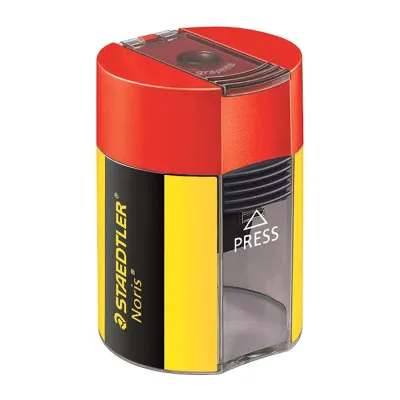
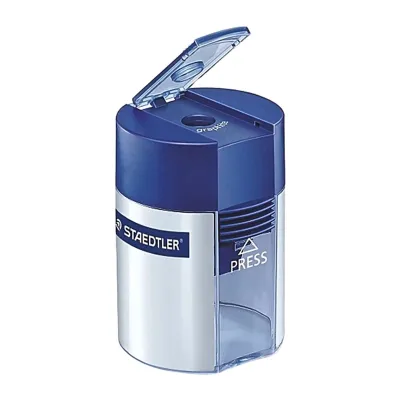
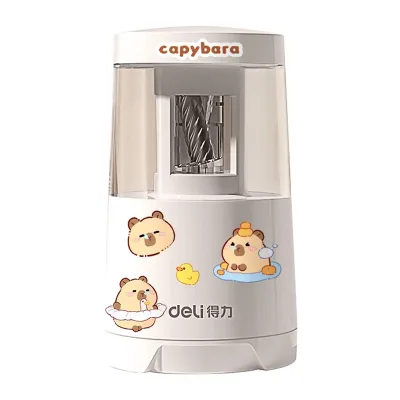
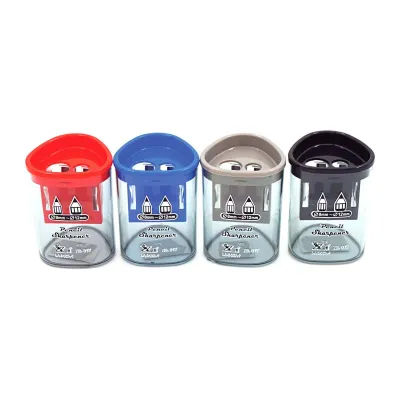
![MTRADE [Bulk 24 Set/Box] Giraffe & Toucan DIY Puzzle Pencil Sharpener](https://img.lazcdn.com/g/p/d7f6256fc68947a0ed0cf8146da9ca95.jpg_400x400q80.jpg_.webp)
Prices are valid at publication and may change. Please refer to the product page for the latest price.
Lower Primary: Prioritizing Safety and Easy Grip
For primary one and primary two students, using a pencil sharpener is not just a utility but also an exercise in fine motor coordination. At this stage, children are learning how to apply the right amount of pressure so they do not snap the graphite core while sharpening. Handheld sharpeners designed for young learners should feature ergonomic, non-slip outer casings that are easy for small hands to hold securely. It is essential to choose models where the blade is fully enclosed within the plastic housing, preventing any direct finger contact with the sharp edge during use.

Manual rotary crank sharpeners can also be an excellent option for home use, provided they have features tailored for younger children. Look for models with a stable, non-slip base or a desk clamp that keeps the unit stationary, allowing the child to focus on turning the handle rather than holding the machine in place. The crank handle should turn smoothly without requiring excessive physical force.
When shopping for lower primary students, pay close attention to the construction of the shavings reservoir. Avoid designs with loose, easily detachable parts or lids that pop open with minimal pressure, as these frequently lead to accidental spills of graphite dust on school uniforms or study tables. Instead, opt for secure, slide-out drawers or screw-on canisters that require a deliberate action to open, minimizing the risk of messy cleanups.
Upper Primary: Balancing Efficiency and Classroom Rules
As students progress to upper primary levels, their daily writing volume increases, requiring more frequent pencil sharpening. However, classroom dynamics introduce new constraints. Many schools in Singapore enforce strict rules regarding classroom disruptions, meaning noisy electric sharpeners or large, attention-grabbing desktop models are generally not permitted during lessons. A sharpener for school use must be quiet, compact, and highly efficient.
For the classroom pencil case, a high-quality manual handheld sharpener with a double-hole design and a generous, secure shavings reservoir is often the most practical choice. The reservoir should be large enough to hold shavings from several pencils so the student does not need to make constant trips to the classroom bin during a lesson. Look for models with a flip-top lid that covers the pencil holes when not in use, preventing graphite dust from escaping into the pencil case.
Durability becomes a key factor during these school years. Older primary students tend to write faster and apply more pressure, which can lead to frequent lead breakages if the sharpener blade is dull or misaligned. Choosing a sharpener with a high-carbon steel blade ensures a clean, smooth cut that preserves the wood casing and prevents the graphite from fracturing inside the pencil. Compact desktop manual crank sharpeners that can be tucked away in a school locker or kept on a home study desk offer a great balance of speed and control without the noise of a motorized unit.
Secondary School: Handling Higher Volume and Specialized Pencils
Secondary school students face a demanding curriculum with a high volume of written work, alongside specialized subjects such as geography, art, and design and technology. These subjects often require different types of pencils, including standard graphite pencils of varying hardness and colored pencils with softer, wax-based cores. The ideal sharpening setup for a secondary student must accommodate these diverse needs while keeping up with a faster academic pace.
For home study desks, electric sharpeners and heavy-duty manual crank sharpeners are highly efficient options. Electric models quickly restore a sharp point with minimal effort, which is highly convenient during intense exam preparation periods. When selecting an electric sharpener, consider the power source: battery-operated models offer portability around the home, while USB or plug-in models provide consistent power without the need for battery replacements. It is also wise to check the noise level of electric models, especially if the student shares a study room or works late into the evening.
Multi-hole sharpeners are particularly valuable for secondary students. Standard pencils typically have an 8mm diameter, but art pencils, charcoal pencils, and specialized drawing tools can range up to 10mm or 12mm. A sharpener with adjustable hole sizes or multiple entry ports ensures that the student can maintain all their drawing instruments with a single device. Additionally, look for sharpeners that offer adjustable point settings, allowing the user to choose between a very sharp, fine point for detailed writing and a broader, blunt point for shading with colored pencils.
Essential Features to Check Before You Buy
Before purchasing a pencil sharpener, running through a practical checklist of physical specifications will help you avoid common compatibility issues.
- Pencil Diameter and Shape Compatibility: Verify the entry hole dimensions. Standard school pencils are typically 8mm in diameter, but early-learning pencils are often jumbo-sized or triangular. Ensure the sharpener's opening can accommodate the specific shapes and sizes your child uses.
- Shavings Reservoir Security: Inspect the locking mechanism of the shavings container. For school use, a screw-on lid or a button-released latch is far more secure than a simple friction-fit cover, which can easily slide off inside a school bag.
- Blade Quality and Housing Stability: Look for sharpeners that use sturdy metal blade carriers rather than thin plastic frames. A stable blade housing keeps the blade perfectly aligned with the pencil, preventing uneven sharpening, wood splintering, and broken leads.
- Auto-Stop Mechanism: For manual crank and electric sharpeners, check if the device has an automatic stop feature. This mechanism prevents over-sharpening, saving the pencil from being eaten away unnecessarily and extending its lifespan.
Frequently Asked Questions (FAQ)
Can one sharpener handle both standard graphite and colored pencils?
Standard graphite pencils and colored pencils have very different core compositions. Graphite is hard and dry, whereas colored pencil cores are made of soft, wax-based or oil-based binders. When you sharpen a colored pencil, the soft wax can melt slightly due to friction, leaving a sticky residue on the steel blade that dulls its cutting edge and causes subsequent pencils to jam.
To use a single sharpener for both, look for models explicitly labeled as compatible with colored pencils, or choose a dual-hole sharpener where you can dedicate one hole to graphite and the other to colored pencils. A helpful maintenance tip is to sharpen a standard graphite pencil after sharpening several colored pencils; the hard graphite and wood shavings will help clean the waxy buildup off the blade.
Are electric pencil sharpeners generally allowed in classrooms?
In most schools, electric pencil sharpeners are not permitted in regular classrooms due to the noise they generate, which can distract other students during quiet study or exam periods. They also take up valuable space on standard classroom desks, which are designed to hold only essential books and writing materials.
Electric sharpeners are best reserved for home study desks or specialized school environments like art rooms and design studios. For daily classroom use, a compact, manual handheld sharpener with an enclosed shavings container remains the standard and most widely accepted choice. Always check your child’s school stationery list or consult their form teacher before sending them to school with any motorized stationery items.
Community discussion
Share your experience or ask a question. Comments are reviewed before publication.