
Choosing the correct paper envelope size is the key to ensuring your documents arrive in pristine condition while keeping your postage costs manageable. The ideal envelope size depends entirely on the dimensions of the items you are mailing and whether you plan to fold them. For flat, unfolded A4 documents, a C4 envelope is the standard choice. If you fold those A4 sheets once in half, they will fit perfectly into a C5 envelope, while folding them twice into thirds matches the classic business DL format.
Understanding these standardized sizes saves you from the frustration of cramming papers into tight spaces or paying excess postage for oversized mailers. By matching your documents to the correct ISO dimensions, you can streamline your mailing process.
Decoding Standard Envelope Sizes: The ISO C-Series and DL Explained
The global standard for paper envelope sizes is governed by the ISO 269 standard, which works in perfect harmony with the ISO 216 A-series paper sizes. This system relies on a consistent mathematical relationship where each smaller size is exactly half the area of the size preceding it. Because of this, envelope manufacturers design the C-series to be slightly larger than the corresponding A-series paper, providing just enough clearance for a smooth fit.
Products mentioned in this guide
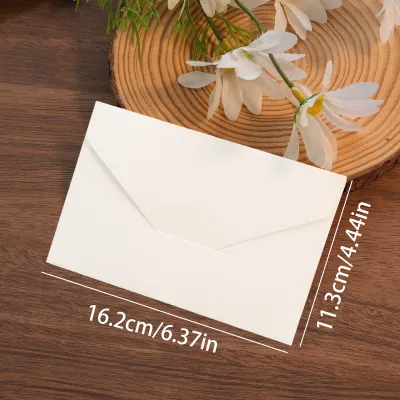
Prices are valid at publication and may change. Please refer to the product page for the latest price.
For example, a standard sheet of A4 paper measures 210 mm by 297 mm. A C4 envelope measures 229 mm by 324 mm, leaving a comfortable margin around the edges so the paper slides in flat. If you fold that A4 sheet cleanly in half, it becomes A5 size (148 mm by 210 mm), which fits perfectly into a C5 envelope measuring 162 mm by 229 mm.
The DL (Dimension Length) envelope is a unique format that does not follow the standard C-series numbering. Measuring 110 mm by 220 mm, the DL envelope is specifically proportioned to hold a standard A4 sheet that has been folded horizontally into three equal parts. This sleek, elongated shape is the standard for corporate mailings, invoices, and official statements.
While these measurements are standardized internationally, slight manufacturing variations can occur across different stationery brands. A difference of one or two millimeters is common, meaning you should always aim for a small margin of clearance rather than relying solely on the name of the envelope.
How to Match Envelope Sizes to Common Documents
Selecting the right envelope requires balancing the physical dimensions of your document with the professional presentation you wish to project. Folding a document reduces its footprint but increases its thickness, which can alter both the appearance of the paper and the cost of postage.

Mailing Flat or Lightly Folded Documents (C4 and C5)
C4 envelopes are indispensable when your documents must remain completely flat and free of creases. High-importance items such as legal contracts, academic transcripts, certificates, glossy brochures, magazines, and original artwork should always be mailed in a C4 envelope. Keeping these items flat preserves their professional appearance and prevents damage to heavy paper stocks or delicate finishes.
C5 envelopes offer a highly versatile middle ground for both personal and business correspondence. They are designed to hold A5-sized items flat, such as custom greeting cards, event invitations, and small booklets. Additionally, a C5 envelope is the ideal choice for mailing standard A4 letters or multi-page reports that have been folded once across the middle, offering a compact package without excessive creasing.
Mailing Compact Letters and Invoices (C6 and DL)
C6 envelopes are a traditional favorite for personal correspondence and compact mailings. Measuring 114 mm by 162 mm, a C6 envelope comfortably holds an A6 card flat or an A4 sheet that has been folded twice—first in half, and then in half again to create quarters. This size is widely used for sending RSVP cards, small thank-you notes, and family holiday cards.
DL envelopes are the undisputed workhorse of the business world. When you print a standard invoice, utility bill, or formal letter on A4 paper and fold it twice to create three equal panels, it slides effortlessly into a DL envelope. The clean, professional aesthetic of a DL mailer makes it the preferred choice for transactional and promotional business mail.
Quick Reference Table
The following table outlines the most common document types, how they should be folded, and the corresponding paper envelope size to use:
| Document Type | Fold State | Recommended Envelope Size | Envelope Dimensions (mm) |
|---|---|---|---|
| A4 Contract / Certificate | Flat (Unfolded) | C4 | 229 × 324 |
| A4 Letter / Multi-page Report | Folded in Half | C5 | 162 × 229 |
| A5 Greeting Card / Flyer | Flat (Unfolded) | C5 | 162 × 229 |
| A4 Business Invoice / Statement | Folded in Thirds | DL | 110 × 220 |
| A4 Personal Letter | Folded in Quarters | C6 | 114 × 162 |
| A6 RSVP Card / Photograph | Flat (Unfolded) | C6 | 114 × 162 |
Beyond Dimensions: Thickness, Paper Weight, and Mailing Rules
While length and width are crucial, the physical structure of your paper envelope plays a significant role in protecting your contents and determining your final postage costs. Factors such as paper thickness, expansion capabilities, and postal regulations must be considered before sending your mail.
For bulky items, standard flat envelopes may not suffice. If you are mailing a thick stack of documents, a bound catalog, or a heavy booklet, look for pocket envelopes or gusset envelopes. Gusset envelopes feature expanding sides that open up to accommodate three-dimensional depth, preventing the seams of the paper from splitting under pressure.
The durability and feel of an envelope are determined by its paper weight, measured in grams per square metre (GSM). Standard office envelopes typically range from 80 GSM to 100 GSM, which is ideal for everyday, lightweight correspondence. For premium business mail, formal invitations, or highly confidential documents, opt for 110 GSM to 120 GSM paper envelopes. Higher GSM values offer superior tear resistance, a luxurious tactile feel, and high opacity to prevent sensitive text from showing through the paper.
If you are mailing invoices or statements in bulk, window envelopes can save significant time. These envelopes feature a transparent plastic window designed to align perfectly with the recipient’s address printed on the document inside. When purchasing window envelopes, verify the exact window coordinates (left, right, or center) and dimensions to ensure your folded documents align properly with the clear pane.
In Singapore, the cost of mailing is heavily influenced by the dimensions and thickness of the envelope. Singapore Post (SingPost) categorizes mail to determine postage rates. Standard Regular mail must fit within 240 mm by 162 mm with a maximum thickness of 6 mm, making DL and C5 envelopes highly cost-effective options for lightweight letters. A C4 envelope exceeds these dimensions and falls under the Standard Large category, which accommodates items up to 324 mm by 229 mm with a maximum thickness of 14 mm. Always check the latest SingPost guidelines regarding weight thresholds and thickness limits to ensure your packed envelope qualifies for standard rates and avoids delivery delays.
How to Measure Items and Verify the Fit Before Mailing
Mailing non-standard items, such as handmade crafts, bound journals, or thick stacks of loose documents, requires a manual measurement process to ensure a secure fit. Standard dimensions are a helpful guide, but three-dimensional objects require extra clearance.
Start by measuring the exact length, width, and thickness of your item using a reliable ruler. Once you have these dimensions, add a 1 to 2 cm allowance to both the length and width of your envelope selection. This extra space is essential because as the envelope expands to accommodate the thickness of the item, the flat width and length are naturally pulled inward.
Next, examine the seal flap clearance. The adhesive strip on the flap must be able to fold over and seal completely flat against the back of the envelope. If the contents are too bulky, the flap will be pulled tight, preventing the adhesive from making full contact and risking an unsealed envelope during transit.
Before sealing the envelope, always conduct a dry fit test. Gently slide your item inside the unsealed paper envelope to verify that it fits smoothly without stretching the paper or putting stress on the seams. If the item resists or causes the paper to buckle, transition to a larger size or a gusseted mailer.
Frequently Asked Questions (FAQ)
Will an unfolded A4 paper fit into a C5 envelope?
No, an unfolded A4 sheet will not fit inside a C5 envelope. A C5 envelope measures 162 mm by 229 mm, which is significantly smaller than a flat A4 sheet of paper (210 mm by 297 mm). To use a C5 envelope, you must fold the A4 paper cleanly in half to match the A5 size. If your document must remain completely flat without any folds, you must use a larger C4 envelope (229 mm × 324 mm).
What size envelope is best for mailing a standard passport or ID card?
A standard passport or ID card physically fits inside a C6 or DL envelope. However, because these items are rigid, valuable, and sensitive, using a standard paper envelope alone is not recommended. The rigid edges of a passport can easily tear through standard paper during automated postal sorting. Instead, place the passport or ID card inside a padded bubble mailer or a rigid cardboard envelope of equivalent size. Always check local postal regulations regarding the mailing of official identification documents to ensure compliance and security.
Community discussion
Share your experience or ask a question. Comments are reviewed before publication.