
The appropriate metal ruler length depends on your child’s school grade level, balancing physical handling, desk space, and academic requirements. For lower primary students (Primary 1 to 3), a 15cm metal ruler is ideal due to its compact size and ease of handling. As students transition to upper primary (Primary 4 to 6) and secondary school, a 30cm metal ruler becomes necessary to accommodate larger worksheets, geometry diagrams, and technical drawing subjects. Choosing the right length ensures your child has the correct tool for their daily schoolwork without cluttering their desk or pencil case.
Lower Primary (Grades 1 to 3): Why a 15cm Metal Ruler Fits Best
Primary 1 to Primary 3 students are adjusting to a structured classroom environment. Their desks are relatively small, often shared or arranged in clusters where space is at a premium. A 15cm metal ruler is the perfect fit for this setting, taking up minimal space on the desk and reducing the likelihood of it being knocked onto the floor during lessons.
Younger children are still refining their fine motor skills. Holding a long 30cm ruler steady with one hand while drawing a line with the other can be physically challenging for a seven-year-old. A 15cm ruler is lightweight and easy to grip, allowing small hands to apply even pressure across its entire length. This prevents the ruler from slipping mid-line, which helps build confidence during early math and art activities.
Products mentioned in this guide
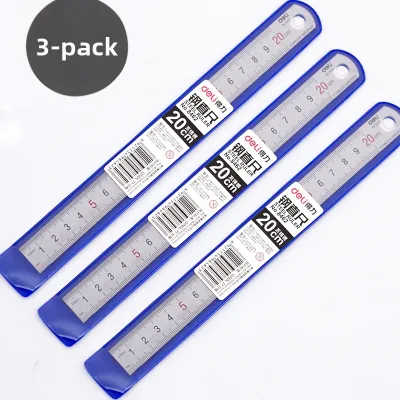
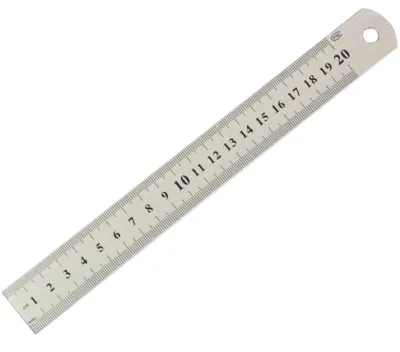
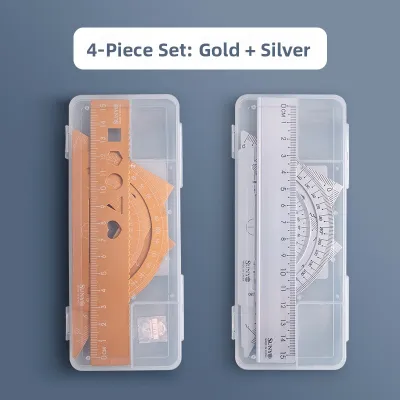
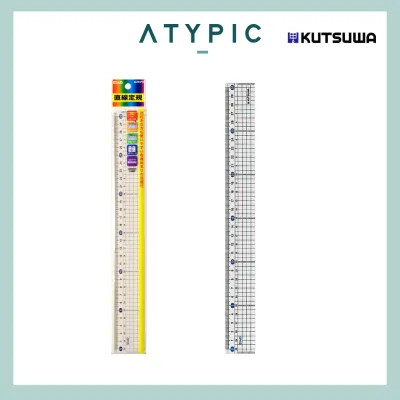
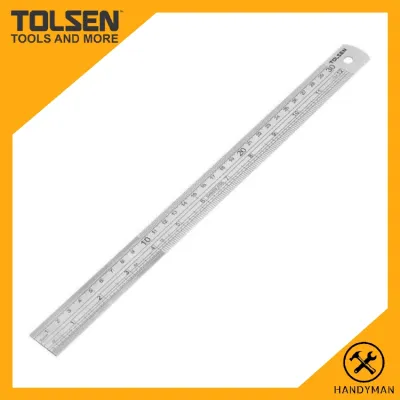
Prices are valid at publication and may change. Please refer to the product page for the latest price.
Pencil case compatibility is another major factor. Most lower primary students use standard-sized pencil cases or pouches designed to hold basic items like pencils, an eraser, and a sharpener. A 15cm ruler slides easily into these cases, keeping it protected and preventing it from scratching other items. A longer ruler would have to be carried separately or forced into a school bag, increasing the risk of it bending or getting lost.
Safety is also a key consideration. Metal rulers have sharper edges and corners than plastic ones. For younger children, a shorter ruler is easier to control, minimizing the risk of accidental pokes or scratches. Parents should look for metal rulers with rounded safety corners and smooth edges specifically designed for school use.
Upper Primary (Grades 4 to 6): Transitioning to a 30cm Metal Ruler
As students transition to Primary 4, Primary 5, and Primary 6, their academic workload and the complexity of their subjects increase significantly. In mathematics, students begin learning geometry in earnest, which involves drawing angles, constructing geometric shapes, and working with larger coordinate grids and graphs.

At this stage, worksheets and exam papers are typically standard A4 size. Drawing a straight line across the width or diagonal of an A4 sheet requires a tool longer than 15cm. A 30cm metal ruler becomes an essential classroom companion. Trying to use a 15cm ruler for these tasks requires students to slide the ruler along the page to extend the line, which almost always results in a noticeable bend or misalignment at the junction. In exams, where precision in graphing and geometry is graded strictly, a crooked line can lead to lost marks.
Additionally, the science curriculum in upper primary often involves plotting data points and drawing line graphs to represent experimental results. A 30cm ruler allows students to draw clean, continuous axes and trend lines quickly and accurately. Many primary school booklists explicitly list a 30cm ruler as a required item starting in Primary 4, signaling to parents that the transition is necessary for the curriculum.
Secondary School: Advanced Needs and Technical Subjects
In secondary school, the demands on stationery become even more specialized. Students are introduced to subjects like Design and Technology (D&T), Art, Geography, and advanced Mathematics (including Additional Mathematics). These subjects require a high level of precision and the frequent use of specialized drawing instruments.
A 30cm metal ruler is the standard choice for secondary school students. In D&T and Art, students frequently work with materials like cardboard, acrylic, and thin wood, requiring them to use utility knives or craft cutters. A plastic ruler is entirely unsuitable for this, as a blade can easily shave off slivers of plastic, ruining the ruler’s straight edge and posing a safety hazard. A stainless steel or heavy-duty aluminum ruler provides a safe, cut-proof barrier that guides the blade perfectly.
Furthermore, secondary school geometry sets include compasses with sharp metal points. When setting the radius of a compass, students press the metal point against the ruler’s markings. Over time, this can scratch and wear down plastic or wooden rulers, making the measurements illegible. A metal ruler resists this wear, ensuring that the millimeter graduations remain perfectly clear and accurate throughout the student’s secondary school journey.
How to Verify Your Child's Specific School Requirements
With so many options available at local bookstores and online marketplaces, it is easy for parents to make impulse purchases that end up unused. To avoid this, always start by reviewing the official school booklist. In Singapore, schools distribute these lists during the year-end holidays or registration periods. The stationery section of the booklist is highly specific, often detailing whether a metal or plastic ruler is preferred, and the exact length required.
If the booklist is not entirely clear, or if you are unsure about specialized elective subjects, consult the school bookshop operators or wait until the orientation sessions. Bookshop staff are highly familiar with the specific demands of the teachers in that particular school and can guide you to the correct purchase.
It is also wise to avoid buying large stationery bundles or bulk packs before the school year begins. While these bundles may seem cost-effective, they often contain items that do not meet the school’s specific guidelines—such as rulers with non-standard markings or lengths that are either too short or too long for the curriculum. Buying individual, high-quality items as needed is often more economical in the long run.
Practical Buying Tips for Metal Rulers
When selecting a metal ruler, parents should look beyond just the length and price. The quality of the construction directly impacts how easy the ruler is to use and how long it will last.
First, examine the measurement markings. High-quality metal rulers have their graduations etched or engraved directly into the metal surface, which are then filled with black ink. This ensures that even if the ink eventually fades or wears away, the physical grooves remain visible, allowing the ruler to be used indefinitely. Avoid rulers with surface-printed markings, as these can rub off completely after a few months of friction inside a pencil case.
Second, look for a ruler with a non-slip backing. Some metal rulers feature a thin layer of cork or foam on the underside. This backing raises the metal edge slightly off the paper, which is incredibly useful when drawing with ink pens or fine-liners, as it prevents the ink from bleeding or smudging underneath the ruler. The non-slip surface also keeps the ruler firmly in place on smooth paper, reducing the frustration of slipping during precise geometric constructions.
Third, check the thickness and rigidity of the metal. A good metal ruler should be made of stainless steel or high-grade aluminum and have a thickness of at least 1mm. Extremely thin metal rulers are flexible, which might seem convenient, but they bend easily under the weight of heavy textbooks in a school bag. Once a metal ruler is bent, it is nearly impossible to flatten it perfectly again, rendering it useless for drawing straight lines.
Frequently Asked Questions (FAQ)
Can a 30cm metal ruler be used for lower primary students?
While a 30cm ruler can technically measure everything a 15cm ruler can, it is generally not recommended for lower primary students. The extra length makes it cumbersome to handle on small classroom desks, and it often does not fit inside standard pencil cases, leading to it being misplaced or damaged in school bags. Additionally, the extra weight and sharp corners of a longer metal ruler can pose minor safety risks for younger children who are still developing their coordination.
Are plastic rulers better than metal rulers for school?
Both materials have distinct advantages depending on the classroom task. Plastic rulers are lightweight, inexpensive, and transparent, which makes it easy for students to see the lines and text underneath while tracing or measuring. However, they chip easily, can snap under pressure, and their edges can warp over time. Metal rulers, on the other hand, offer unmatched durability, a perfectly straight edge that does not nick, and are essential for subjects involving craft knives or compasses. For general classroom use in lower primary, plastic is often sufficient, while metal is highly recommended for upper primary and secondary school technical tasks.

Community discussion
Share your experience or ask a question. Comments are reviewed before publication.