
Selecting the right school stationery involves more than just picking appealing colors; it requires matching tools to your child’s daily academic tasks. A hole puncher is a fundamental tool for keeping worksheets, handouts, and assignments organized, but the ideal type changes significantly as a student progresses through school. For primary school students, a lightweight, single-hole puncher is often the most practical choice for simple crafts, flashcards, and creative projects. As students transition into secondary school, the sheer volume of paper handouts increases, making a standard 2-hole puncher essential for organizing subject notes into ring binders. Understanding these shifting academic demands ensures your child has the right tool to maintain an orderly filing system without unnecessary frustration.
Check Your Child's School Filing Requirements First
Before purchasing any stationery, it is highly beneficial to review the specific filing systems used by your child’s school. Most schools in Singapore issue a detailed stationery list or student handbook at the start of the academic year, outlining the exact types of files required for each subject. These requirements typically specify whether students need 2-ring binders, 4-ring binders, or heavy-duty lever arch files. Buying a puncher without checking these details can lead to incompatible tools and poorly filed worksheets that easily tear or fall out.
Additionally, pay close attention to the paper size standards used in the classroom. School worksheets and exam papers are almost universally printed on standard A4 paper. Therefore, any hole puncher you select must easily accommodate this width and feature clear alignment markings. It is also wise to consult teachers or join parent communication groups to clarify if specific subjects require unique filing methods. For instance, some art portfolios, science projects, or student name tags may require single-hole punching for treasury tags or string fasteners, which a standard multi-hole desktop puncher cannot easily accommodate.
Products mentioned in this guide
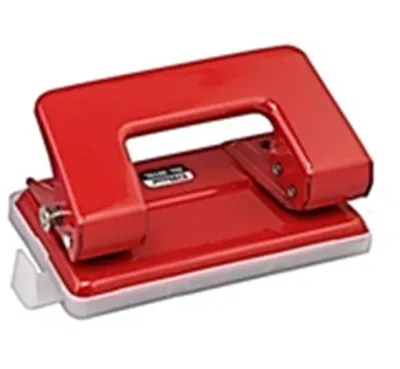
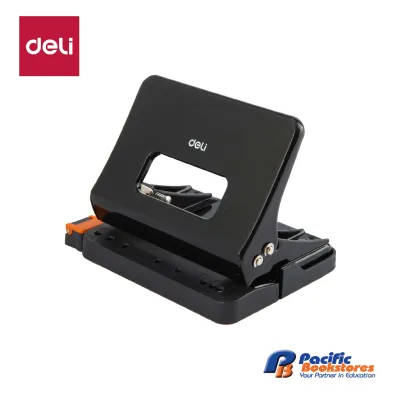
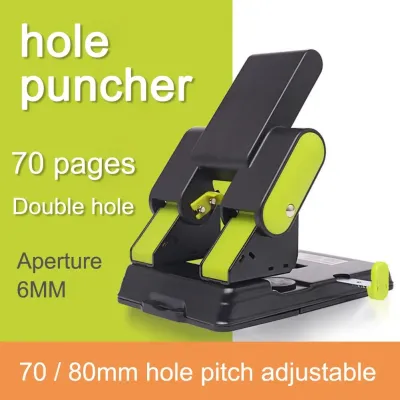
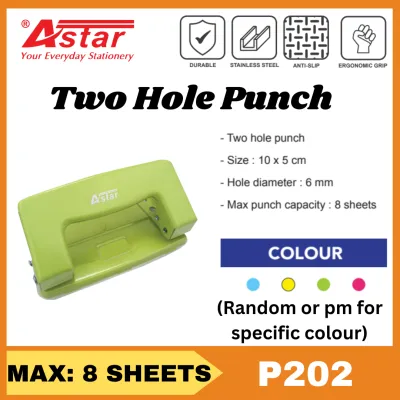
Prices are valid at publication and may change. Please refer to the product page for the latest price.
Single-Hole Punchers for Primary School Basics
During the early primary school years, students rarely manage massive binders of loose-leaf notes. Instead, their organizational needs center around smaller, highly tactile tasks. A single-hole puncher is incredibly useful during this stage for creating flashcards, binding spelling lists with metal rings, or preparing creative art submissions. These tools allow students to punch a single, precise hole in the corner of a worksheet or card, which can then be secured with a treasury tag, ribbon, or binder ring.

When choosing a single-hole puncher for a primary school student, physical ergonomics must be a priority. Younger children are still developing their hand strength and fine motor skills, so a heavy, all-metal desktop puncher can be difficult and tiring to operate. Look for handheld, plier-style single-hole punchers that feature soft, ergonomic rubber grips designed for smaller hands. These designs reduce the squeezing force required to cut through paper. Additionally, select a model equipped with an integrated confetti catcher or waste tray. This small compartment collects the paper dots, preventing them from scattering across classroom floors or home study desks, making cleanup effortless for your child.
2-Hole Punchers for Secondary School Binders
The transition to secondary school brings a dramatic increase in academic workload and paper volume. Students receive daily worksheets, lecture notes, and practice papers across multiple subjects, making systematic organization crucial for exam preparation. The standard 2-hole puncher is the absolute workhorse of this stage, as almost all standard secondary school subject files and ring binders utilize a standard two-ring configuration.
To ensure compatibility, verify that the puncher adheres to the standard 80mm spacing between the two cutting heads, which matches standard 2-ring and D-ring binders. Sheet capacity is another critical factor to check. A puncher with a capacity of 10 to 20 sheets of standard 80gsm paper is ideal, allowing students to punch entire chapters or multi-page worksheets in a single action rather than dividing them into thin, tedious batches. Furthermore, look for models equipped with a sturdy, adjustable paper guide. A reliable guide with clear markings for A4, A5, and B5 paper sizes ensures that holes are punched perfectly straight every time. This prevents pages from sitting crookedly inside the binder, which often leads to the paper edges rubbing against the binder cover and tearing over time.
Multi-Hole Punchers for Advanced Filing Systems
For advanced organizational setups, standard 2-hole punchers may not always suffice. Some secondary schools or specific academic programs utilize 4-ring binders or lever arch files to store heavy portfolios, extensive lab reports, or geography coursework. A 4-ring binder distributes the weight of the paper more evenly along the spine, which significantly reduces the risk of pages tearing out during frequent referencing. For these systems, a dedicated 4-hole puncher is highly recommended to ensure all four holes are perfectly aligned in a single press.
While 3-hole punchers are standard in North American filing systems, they are relatively uncommon in Singapore schools unless your child is enrolled in an international curriculum that utilizes imported binders. Because multi-hole punchers (especially 4-hole models) require more cutting heads, they are physically larger, heavier, and require more downward force to operate. Carrying a bulky 4-hole puncher in a school bag daily is highly impractical. Instead, parents should consider keeping a sturdy multi-hole puncher at the child’s home study desk. This establishes a dedicated “filing station” where students can systematically punch and file their accumulated worksheets at the end of each school day or week.
Practical Features to Check Before Buying
When evaluating different hole punchers at a stationery store or online marketplace, a few practical design features can make a significant difference in daily usability and safety. First, inspect the base of the puncher. It should feature a non-slip rubber pad or coating. This prevents the tool from sliding across the desk when your child applies downward pressure, ensuring a clean punch while protecting wooden or glass study tables from scratches.
Second, test the punching mechanism if possible, or check product specifications to ensure a smooth, effortless action. High-quality hardened steel cutters cut cleanly through standard 80gsm school paper without leaving ragged, fibrous edges that can catch on binder rings. Finally, safety features are paramount, particularly if younger siblings have access to the study area. Look for punchers with enclosed cutting heads that prevent small fingers from coming into contact with the sharp metal punches. A handle lock-down mechanism is also highly beneficial; it locks the handle in a compressed, flat position, making the tool safer to handle and much easier to store compactly in a drawer or pencil case.
Frequently Asked Questions (FAQ)
How do I clear a paper jam in a hole puncher?
If a paper jam occurs, first release the handle lock if your model has one, and gently attempt to pull the jammed paper out from the bottom waste tray or the main paper slot. If the paper is firmly stuck, avoid using sharp metal objects like scissors, knives, or screwdrivers to pry it out, as these can easily dull or chip the precision steel cutting heads and pose a safety risk. Instead, try sliding a piece of stiff cardstock into the slot to push the jammed pieces through, or gently tap the puncher upside down over a bin to loosen the compacted paper fibers.
Can a 2-hole puncher be used for 4-ring binders?
While it is physically possible to use a 2-hole puncher for a 4-ring binder by punching two holes at a time and then flipping or sliding the paper to punch the remaining two, this method is highly inefficient and prone to alignment errors. Even a slight misalignment will prevent the paper from sliding smoothly onto the four rings, causing the pages to buckle, jam, or tear when the binder is opened and closed. If your child’s school strictly requires 4-ring binders, investing in a dedicated 4-hole puncher is the best way to ensure neat, perfectly aligned pages and long-lasting files.
Community discussion
Share your experience or ask a question. Comments are reviewed before publication.