
Finding the right A5 weekly planner in Singapore is a highly personal decision that directly impacts your daily productivity and organization. With a wide variety of options available in local stationery boutiques and online marketplaces, the choice often comes down to how you write, what pens you use, and where you plan to use your book. Because Singapore’s high humidity can significantly affect ink drying times and paper behavior, selecting a planner requires looking beyond aesthetic covers to evaluate technical specifications like paper weight, binding construction, and layout design.
To find a planner that fits your routine, you must balance physical durability with functional layout structures. An A5 planner offers the ideal middle ground, providing enough writing space for detailed scheduling while remaining compact enough to slip into a daily commute bag. By understanding how different layouts, paper types, and bindings interact with your writing habits, you can select a tool that keeps you organized all year round.
Identify Your Planning Style and Layout Needs
The layout of your weekly planner dictates how you visualize your time and organize your tasks. Weekly planners generally fall into two main structural categories: horizontal and vertical layouts. A vertical layout features columns for each day, which is highly effective for time-blocking, tracking hourly appointments, or managing packed schedules. If your day is structured around specific meeting times, a vertical column allows you to map out your hours chronologically. Conversely, a horizontal layout presents the days as rows across the spread, offering a more traditional diary format. This structure is ideal for freeform journaling, writing down open-ended daily tasks, or recording reflective notes rather than strict hourly commitments.
Products mentioned in this guide
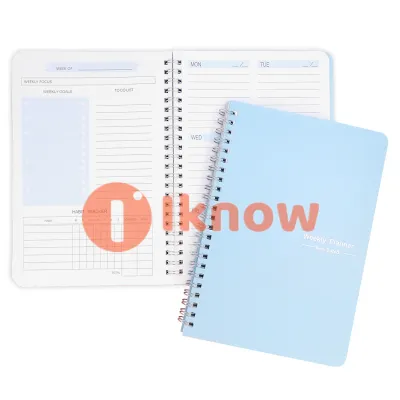
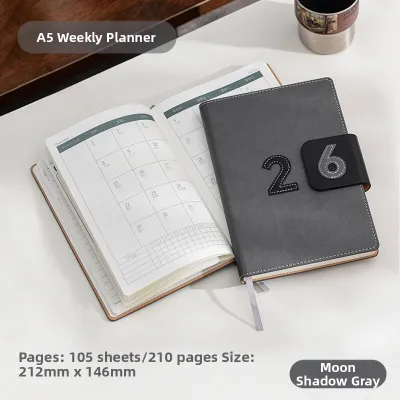

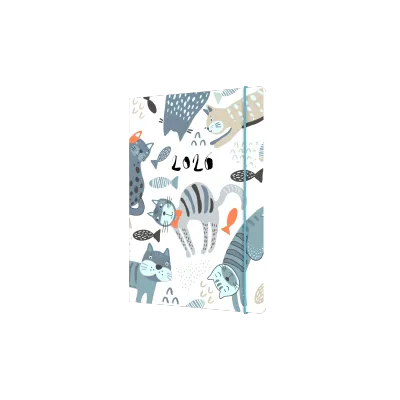
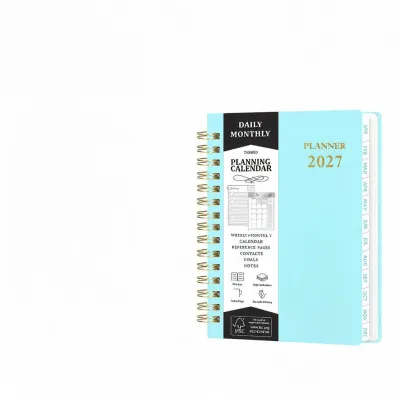
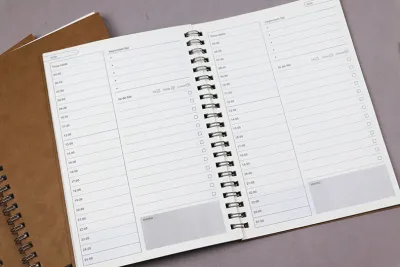
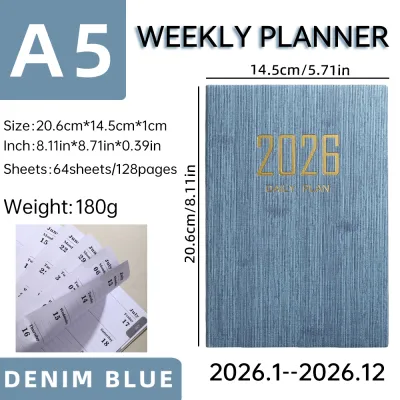
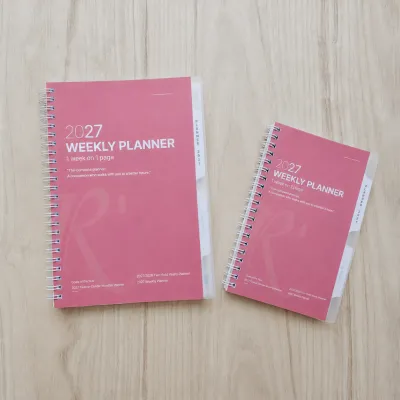
Prices are valid at publication and may change. Please refer to the product page for the latest price.
Another popular variation is the hybrid weekly spread, which typically places the weekly calendar on the left-hand page and a blank, ruled, or grid page on the right-hand page. This design is excellent for individuals who need to see their weekly deadlines at a glance while having ample, unstructured space for brainstorming, meeting notes, or weekly habit trackers. If you find yourself constantly running out of space for miscellaneous lists in a standard weekly layout, a hybrid spread provides the necessary breathing room without requiring a separate notebook.
Finally, pay close attention to the background pattern of the pages. Lined backgrounds offer clean, structured guidance for neat handwriting, making them ideal for straightforward journaling. Grid and dotted backgrounds provide subtle guidelines that assist with both writing alignment and creative drawing. Dotted pages are particularly favored by those who like to customize their spreads with hand-drawn habit trackers, custom tables, or bullet-journal elements, as the dots remain unobtrusive once the page is filled with writing.
Evaluate Paper Quality and Pen Compatibility
Paper quality is the foundation of a satisfying writing experience, especially if you prefer using liquid-ink pens. The most common metric for paper quality is GSM (grams per square meter), which measures the weight and density of the paper. Standard planners typically range from 52 GSM to 120 GSM. Lightweight papers around 52 to 68 GSM are incredibly thin, allowing a 12-month planner to remain remarkably slim and portable, though they are highly prone to “ghosting”—where writing is visible as a shadow on the reverse side of the page. Medium-weight papers around 80 to 90 GSM offer a balanced, standard writing surface, while heavy papers of 100 to 120 GSM provide a thick, sturdy feel that highly resists ink penetration.

Pen compatibility depends heavily on the interaction between your ink type and the paper’s surface treatment. Fountain pens, wet gel pens, and heavy ink markers require paper that is either highly absorbent or specifically coated to prevent “feathering” (where ink spreads along the paper fibers) and “bleeding” (where ink soaks completely through to the other side). Coated papers keep ink crisp and sharp, but they also slow down drying times. In Singapore’s naturally humid climate, this extended drying time can lead to accidental smudging when you close your planner quickly. Uncoated papers dry faster but may cause wet inks to spread or bleed if the paper fibers are too loose.
To avoid ruining your planner, always plan a testing strategy before committing to daily use. When you receive a new planner, use the blank notes pages at the very back of the book to conduct a pen test. Write with your preferred gel pens, fountain pens, and highlighters, then observe how long the ink takes to dry completely. Flip the page to check for ghosting and bleeding under normal writing pressure. If you are highly particular about your writing instruments, look for retailers that offer paper sample swatches or physical display models in-store so you can feel the texture and test smoothness before purchasing.
Compare Binding, Cover Materials, and Portability
The physical construction of your planner determines how well it survives daily handling and how comfortable it is to write in. Binding is a critical factor in usability. Thread-sewn (or Smyth-sewn) binding is the gold standard for planners because it allows the book to lay completely flat on a desk when opened. This lay-flat performance ensures you can write comfortably across the entire page, including the inner margins near the spine, without having to fight the pages or hold the book down with your free hand. Glued bindings are often less expensive but can resist laying flat, sometimes cracking over time and causing pages to detach with heavy use. Spiral or wire-o bindings allow you to fold the planner completely back on itself, which is highly convenient for writing on your lap, though the metal coils can sometimes get caught on other items inside your bag.
Cover materials play a dual role in protecting your pages and defining the planner’s aesthetic. Hardcovers made of thick cardboard, book cloth, or heavy leatherette provide a rigid, durable writing surface that acts as a portable desk, making it easy to write while standing or commuting. However, hardcovers add noticeable weight and bulk to your bag. Softcovers made of flexible cardstock, thin leather, or protective PVC jackets offer lightweight flexibility, allowing the planner to bend and conform to tight spaces in a backpack or tote. PVC covers provide the added benefit of water resistance, protecting your paper pages from sudden tropical downpours or accidental spills during your daily commute.
When assessing portability, consider the overall weight and thickness of the planner in relation to your daily routine. If you carry your planner everywhere in a daily bag, a slim, softcover planner with medium-weight paper will keep your load light. If your planner primarily lives on your office desk, a heavier hardcover with thick, premium paper and robust edge protection will provide a more substantial, long-lasting workspace companion.
Decision Framework: Match the Planner to Your Routine
To finalize your choice, match your physical writing environment and tool preferences to the correct planner specifications. Use the following scenarios to guide your decision:
- The Desk-Bound Professional: If you primarily write at a dedicated desk, use fountain pens or wet gel inks, and enjoy detailed daily tracking, choose a thread-sewn hardcover planner with high-GSM (100+ GSM) or specialized coated paper. This setup provides maximum durability, prevents ink bleeding, and lays perfectly flat on your workspace.
- The Mobile Commuter: If you constantly move between meetings, study spaces, or site visits and use standard ballpoint or quick-drying gel pens, choose a lightweight softcover or PVC-jacketed planner with 80 GSM grid or dotted paper. This configuration minimizes weight in your bag while offering a flexible, resilient cover that handles daily wear and tear.
Before purchasing, verify whether the brand offers dated or undated versions. Dated planners are highly convenient as they come with pre-printed calendar days, holidays, and structured weekly spreads, making them ready to use immediately. However, if your schedule fluctuates significantly, or if you are starting your planning routine midway through the year, an undated planner allows you to fill in the dates yourself. This flexibility ensures that no pages are wasted during quiet weeks or busy periods where you rely on digital tools instead.
Keep in mind that if your daily routine requires extensive, hour-by-hour scheduling with long lists of tasks for every single day, a standard A5 weekly spread may not offer enough writing space. If you find yourself constantly running out of room, consider switching to an A5 daily planner format, which dedicates a full page to each day, rather than trying to squeeze excessive details into a weekly layout.
Where to Verify Specifications and Purchase Safely
To ensure you get a genuine product that matches your expectations, always verify the exact specifications before making a purchase. Check the official brand website or product packaging for precise dimensions, page counts, paper weight (GSM), start months, and layout details. Be cautious of generic listings on online marketplaces that use stock photos without specifying the paper weight or binding type, as these can often result in receiving low-quality paper that bleeds easily.
When you are ready to buy, purchase from official brand stores, authorized local stationery retailers, or established online marketplaces to guarantee authenticity. Buying from reputable sources ensures you receive high-quality paper and binding rather than a counterfeit alternative. Additionally, check the retailer’s return and exchange policies before checking out. This protection is invaluable if your planner arrives with defective binding, misprinted dates, or transit damage, allowing you to secure a replacement quickly and start your planning year with confidence.
Frequently Asked Questions (FAQ)
Can I use fountain pens in any A5 weekly planner?
No, you cannot use fountain pens in just any planner. Fountain pens release a high volume of liquid ink, which requires specific paper characteristics to prevent feathering and bleed-through. Look for planners that explicitly state they use fountain-pen-friendly paper, or choose options with high-GSM (typically 100+ GSM) or specialized coated paper. Always perform a pen test on a back page or a small corner before writing extensively with a fountain pen.
What is the exact size of an A5 planner?
The standard ISO 216 dimensions for an A5 page are 148 mm x 210 mm. However, the actual physical size of the planner itself will vary depending on the cover and binding. Hardcover planners, spiral-bound books, and planners with protective PVC jackets or built-in pen loops are typically slightly wider and taller (often around 155 mm x 215 mm) to accommodate the extra material and protect the edges of the inner pages.
Should I choose a dated or undated weekly planner?
Choose a dated planner if you prefer a ready-to-use structure with pre-printed calendar days, holidays, and sequential weeks, which helps maintain a consistent planning habit. Choose an undated planner if your schedule is highly irregular, if you frequently skip weeks, or if you are starting your planner late in the year. Undated planners allow you to write in the dates only when needed, preventing empty, wasted pages during quiet periods.
Community discussion
Share your experience or ask a question. Comments are reviewed before publication.