
Choosing the right 80gsm A4 paper brand in Singapore depends on matching your specific printing equipment, volume, and document purpose with the paper’s physical specifications. While many brands look identical on the shelf, differences in whiteness, opacity, surface smoothness, and moisture resistance directly affect print quality and machine reliability. Rather than looking for a single universal winner, buyers should evaluate key packaging indicators and run small-batch tests to find the most cost-effective and reliable option for their home or office setup.
The standard A4 paper size (210mm by 297mm) at a weight of 80gsm (grams per square meter) is the global benchmark for everyday office printing. This weight offers a practical balance, providing enough thickness to prevent excessive ink show-through while remaining light enough to feed smoothly through high-speed office copiers. However, because different brands use varying pulp sources, chemical treatments, and manufacturing standards, performance can vary significantly when subjected to the heat of a laser printer or the wet ink of an inkjet printer.
To make an informed purchase, you must look past generic marketing slogans like “jam-free” or “ultra-white.” Instead, focus on the technical specifications printed on the ream wrapper. By understanding how these metrics influence real-world performance, you can avoid costly printer jams, poor print legibility, and wasted paper.
Products mentioned in this guide
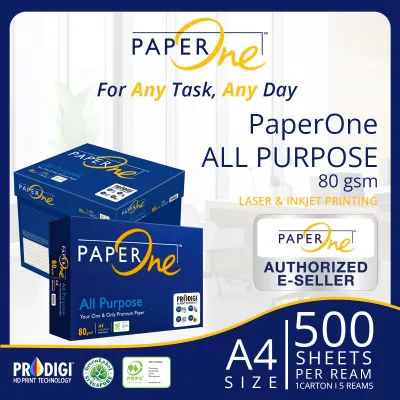
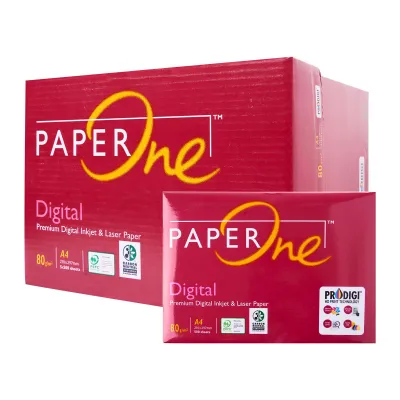
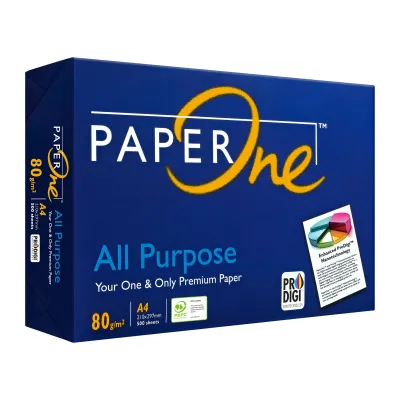
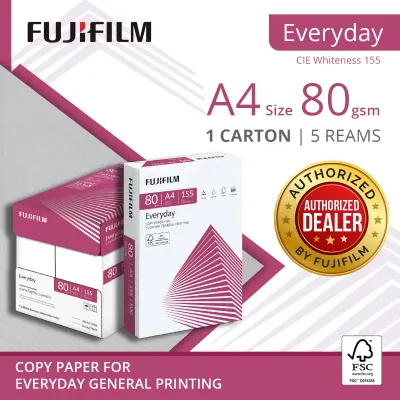
![[SG] FujiXerox A4 x EverydayCopier Paper | 80gsm | 1 Carton | MAX 2 CARTONS/ORDER [Evergreen Stationery]](https://img.lazcdn.com/g/p/0125993f2367983b77308ed48045bba3.jpg_400x400q80.jpg_.webp)
![[2 REAMS] A4 PaperOne Copier Papers 80gsm Printing Papers - Plain - Office Supplies](https://img.lazcdn.com/g/p/4423a9fbe2ff198d8701511f17f420ad.png_400x400q80.png_.webp)
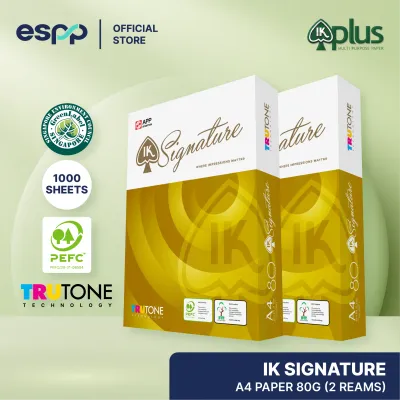
Prices are valid at publication and may change. Please refer to the product page for the latest price.
Key Factors to Evaluate When Comparing 80gsm A4 Paper Brands
When comparing different paper brands, the CIE whiteness index is one of the most critical specifications to check. Measured on a scale developed by the Commission Internationale de l’Éclairage, CIE whiteness indicates how white the paper appears to the human eye under standard daylight conditions. High-end office papers typically feature a CIE rating between 160 and 167, which gives a bright, slightly blue-white tint that makes black text stand out sharply and colors appear more vibrant. Standard papers usually range from 145 to 155 CIE, offering a warmer, slightly softer white that is highly readable and comfortable for long-form documents.
Brightness is a separate metric that measures the reflectance of a specific blue wavelength of light. While whiteness tells you how the paper looks under full-spectrum light, brightness indicates how much light is reflected back to your eyes. For high-contrast printing, a higher brightness level is desirable, but it must be balanced with the correct whiteness to avoid glare under bright office fluorescent lights.
Opacity is another vital specification, especially if you plan to print on both sides of the sheet. Expressed as a percentage, opacity measures how much light is blocked from passing through the paper. A high-quality 80gsm paper should have an opacity rating of 90% or higher. If the opacity is too low, text and images from the reverse side will show through, making the document difficult to read and giving a unprofessional appearance.
Surface smoothness and stiffness directly influence how reliably the paper moves through your printer’s internal path. A smooth surface ensures that laser toner adheres evenly and inkjet ink dries quickly without spreading or feathering. However, if the paper is too slick, the printer’s rubber pickup rollers may fail to grab the sheet, leading to misfeeds. Stiffness, or bending resistance, prevents the paper from curling as it passes through the high-heat fuser unit of a laser printer, which is a primary cause of multi-sheet feeding and paper jams.
Finally, environmental certifications provide verifiable proof of sustainable sourcing. Look for official logos from the Forest Stewardship Council (FSC) or the Programme for the Endorsement of Forest Certification (PEFC) directly on the wrapper. These independent certifications guarantee that the wood pulp used to manufacture the paper was harvested from responsibly managed forests, allowing you to meet corporate sustainability targets with confidence.
Comparing Popular 80gsm A4 Paper Options Available in Singapore
To simplify your purchasing decision, 80gsm A4 papers available in Singapore can be broadly categorized into three distinct tiers based on their performance characteristics and intended use cases.

Choose Premium/High-Brightness Options If:
You frequently print client-facing proposals, official contracts, color presentations, or high-resolution graphics. Premium papers feature high CIE whiteness ratings (typically 160+) and advanced surface treatments designed to lock ink pigments near the surface. This prevents feathering and ensures sharp, crisp text and vibrant color reproduction. These papers are highly optimized for both high-speed laser copiers and color inkjet printers, offering maximum stiffness to prevent jams during heavy duplex printing runs.
Choose Standard/Economy Options If:
Your primary daily tasks consist of printing internal drafts, high-volume black-and-white text documents, shipping labels, or everyday school assignments. Standard papers offer a balanced CIE whiteness (around 145 to 155) and reliable feeding mechanics at a more economical price point. While they may not deliver the high-contrast pop required for marketing materials, they perform consistently in standard office laser printers and copiers without causing excessive wear on internal components.
Choose Recycled/Eco-Friendly Options If:
Your organization operates under strict environmental guidelines or prioritizes reducing its ecological footprint. Recycled 80gsm papers are manufactured using varying percentages of post-consumer waste. When selecting these options, check the packaging carefully for potential trade-offs. Recycled papers often have a slightly lower CIE whiteness rating, resulting in a warmer, off-white appearance. Additionally, some lower-grade recycled papers can release more paper dust during printing, which requires more frequent cleaning of your printer’s feed rollers.
| Paper Category | Typical CIE Whiteness | Primary Use Case | Key Packaging Indicators |
|---|---|---|---|
| Premium / High-Brightness | 160 to 167 | Client proposals, color presentations, official contracts | High CIE rating, "Color Laser" or "Premium" labels |
| Standard / Economy | 145 to 155 | Internal drafts, high-volume text, everyday copying | "Multi-purpose", "Everyday", or "Copy" labels |
| Recycled / Eco-Friendly | 135 to 145 | Sustainability-focused offices, internal memos | FSC/PEFC logos, "% Recycled Content" stamp |
Price and Value: How to Calculate the True Cost per Sheet
When budgeting for office stationery, evaluating paper costs solely by the price of a single ream can be misleading. To find the most cost-effective option, you should calculate the true cost per sheet using a simple formula:
$$\text{Cost per Sheet} = \frac{\text{Total Price of the Purchase}}{\text{Total Number of Sheets Received}}$$
For example, if a single ream of 500 sheets costs S$6.50, the cost per sheet is S$0.013. However, if you purchase a full carton containing 5 reams (2,500 sheets total) for S$28.00, the cost per sheet drops to S$0.011. Over high-volume monthly print runs, this minor difference accumulates into significant savings.
In Singapore, purchasing channels play a major role in the final cost. Buying individual reams from local retail stationery shops is convenient for immediate, low-volume needs but carries a higher unit price. Ordering in bulk from online marketplaces or dedicated office suppliers offers substantial volume discounts. However, you must factor in delivery fees. A low carton price can easily be offset by high shipping charges unless your total order meets the supplier’s minimum threshold for free delivery.
While bulk buying reduces the cost per sheet, it introduces storage challenges. Purchasing multiple cartons requires dedicated, dry storage space. If you do not have a suitable environment to protect the paper from Singapore’s ambient humidity, buying in smaller quantities as needed is often more economical than dealing with ruined, moisture-damaged stock.
How to Test and Verify Paper Performance Before Bulk Buying
Before committing to a large bulk purchase of a new paper brand, it is highly recommended to buy a single trial ream to test its compatibility with your specific printer models. Printer feed mechanisms, fuser temperatures, and ink formulations vary widely, and a paper that performs flawlessly in one machine might cause issues in another.
Begin by running a small-batch test print of at least 50 consecutive sheets. Include a mix of single-sided text, double-sided documents, and pages with simple graphics. Observe the printer during the run. Check if the paper feeds smoothly without static cling pulling multiple sheets into the feeder at once. After printing, inspect the output sheets for curling; excessive heat from laser fusers can cause low-quality paper to curl tightly, making stacking and binding difficult.
Next, evaluate the print quality. For inkjet printers, check the drying speed by gently rubbing a finger across a printed block immediately after it exits the tray. If the ink smudges, the paper’s absorption rate is too slow for your ink type. For laser printers, fold a printed sheet along a line of heavy toner; if the toner cracks or flakes off along the fold, the paper’s surface texture or moisture content prevented proper toner fusion.
Finally, inspect the physical condition of the ream itself. Open the wrapper and run your finger along the cut edges of the stack. If you notice a visible buildup of white powder or rough, uneven edges, the paper was cut with dull blades during manufacturing. This paper dust will quickly accumulate on your printer’s pickup rollers and optical sensors, leading to frequent misfeeds, slipping, and the need for professional maintenance.
Frequently Asked Questions (FAQ)
Is 80gsm paper suitable for double-sided printing?
Yes, high-quality 80gsm paper is suitable for double-sided (duplex) printing, provided it has an opacity rating of 90% or higher. For standard black-and-white text documents, quality 80gsm paper prevents distracting show-through. However, if your documents contain heavy color graphics, solid dark backgrounds, or high-density ink blocks, some show-through is inevitable. In those specific cases, upgrading to a heavier 100gsm paper is recommended to maintain professional legibility.
How should I store A4 paper in Singapore's humid climate?
Singapore’s high relative humidity can quickly degrade paper quality, causing sheets to absorb moisture, swell, curl, and jam inside printers. To prevent this, always keep unused paper sealed inside its original moisture-proof wrapper, which is lined with a protective barrier. Store reams in a cool, dry cupboard off the floor and away from direct sunlight, air conditioning vents, or damp walls. Only load your printer’s paper tray with the amount of paper you expect to use within a day or two, leaving the rest safely sealed in the wrapper.

Community discussion
Share your experience or ask a question. Comments are reviewed before publication.