
Finding the right four-line notebook for your child’s handwriting practice in Singapore involves looking beyond the cover design to evaluate the physical properties of the paper itself. There is no single brand that universally outperforms all others, as the ideal paper depends on whether your child writes with a heavy hand, uses a fountain pen, or relies on a standard pencil. By understanding how paper weight, texture, and binding affect daily schoolwork, you can make an informed choice that prevents ink bleeding, resists tearing from frequent erasing, and keeps school notes neat throughout the academic year.
Key Paper Quality Metrics for Daily Handwriting
When browsing the stationery aisles or shopping online, the technical specifications of a notebook provide the first clues about its performance. The most common metric you will encounter is grams per square meter (GSM), which measures the weight and density of the paper. For daily school use, paper ranging from 70 GSM to 80 GSM is standard, offering a practical balance between notebook thickness and durability. If your child uses wet ink or presses down heavily, opting for 90 GSM or higher provides a thicker barrier that significantly reduces the risk of ink showing through on the reverse side of the page.
Beyond weight, the brightness and tint of the paper play a crucial role in visual comfort during long study sessions. High-brightness, stark white paper can cause glare under bright classroom fluorescent lights, leading to eye strain over time. Cream, off-white, or ivory-tinted pages offer a softer contrast that is gentler on a child’s eyes, making it easier to focus on the blue and red guidelines of the four-line format. When evaluating options, look for paper described as acid-free, which resists yellowing and degradation over time, ensuring that early handwriting milestones remain legible for years.
Products mentioned in this guide
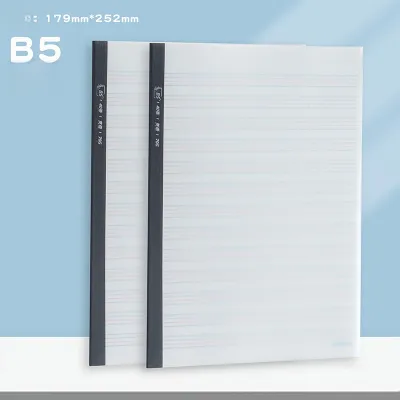
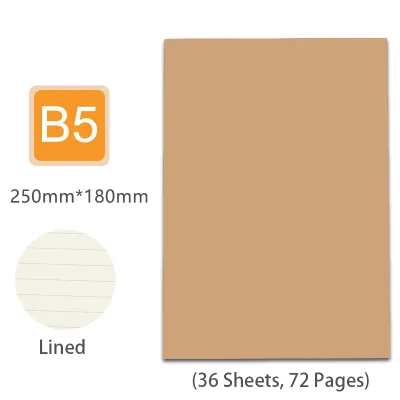
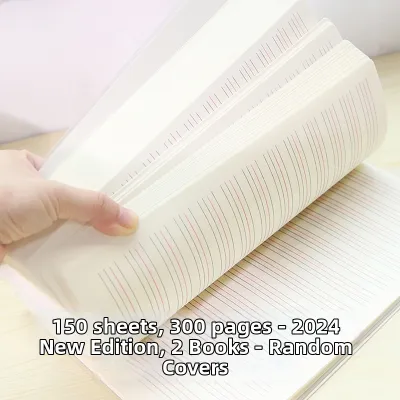
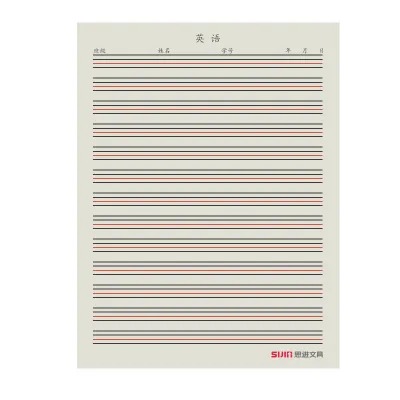
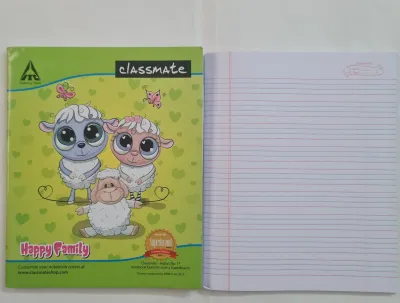
Prices are valid at publication and may change. Please refer to the product page for the latest price.
The surface finish, or sizing, is another critical factor that determines how ink interacts with the paper fibers. Sizing refers to chemical additives applied during manufacturing to control the paper’s absorbency. Highly sized paper has a smoother, more water-resistant surface that keeps ink on top rather than letting it soak in and spread out. Unsized or poorly sized paper acts like a sponge, causing ink to feather, which blurs the sharp edges of letters and makes handwriting practice less effective. You can identify good sizing by looking for a subtle sheen on the page surface under direct light, indicating a protective barrier that supports clean, crisp lines.
Matching Paper to Everyday Writing Instruments
The interaction between paper and writing instruments is highly dynamic, meaning a notebook that works beautifully with a pencil might fail when paired with a gel pen. For students using fountain pens or liquid gel ink, the paper must possess high bleed-through resistance and a relatively fast drying speed. If the paper is too absorbent, the ink will seep through to the next page, ruining subsequent sheets and making both sides of a single leaf unusable. Conversely, if the paper is completely non-absorbent, wet ink will pool on the surface, leading to smudges when your child’s hand moves across the page.

For younger students who primarily use graphite pencils and colored pencils, the paper requires a completely different set of characteristics. Pencils need a certain amount of surface texture, often referred to as “tooth,” to shave off the graphite and leave a clear mark on the page. If the paper is too smooth or coated, the pencil will slide effortlessly without leaving a dark line, forcing the child to press down harder and fatigue their hand. Additionally, pencil-friendly paper must have strong surface integrity to withstand frequent erasing without thinning, pilling, or tearing.
Standard ballpoint pens present their own set of challenges, requiring a moderately smooth surface to keep the internal ball rolling freely. If the paper is too rough or fibrous, the ballpoint may skip, resulting in broken lines and frustrated students. A balanced paper surface allows the oil-based ink of a ballpoint to transfer smoothly while providing enough friction to maintain control over letter shapes. When selecting a notebook, consider the primary writing tool your child will use in school, as matching the paper’s texture to the instrument is the most effective way to ensure neat handwriting.
Structural and Binding Checks for School Durability
A notebook’s paper quality is only as good as the binding that holds it together, especially when subjected to the daily wear and tear of a school bag. Thread-sewn binding, also known as stitch binding, is highly recommended for school use because it allows the notebook to lay completely flat when opened. This lay-flat capability is essential for young children practicing handwriting, as it eliminates the curved margins that force them to adjust their hand position near the center spine. Thread-sewn notebooks also secure pages in groups, making it highly unlikely for individual sheets to fall out over time.
In contrast, standard glued or perfect-bound notebooks are often stiffer and resist staying open on their own, which can frustrate a child trying to keep the book flat with one hand while writing with the other. If you choose a spiral-bound notebook, ensure the wire coil is double-looped and has locked ends to prevent it from snagging on clothing or unraveling inside a backpack. While spiral notebooks lay flat and fold back easily, the metal or plastic coils can sometimes interfere with a left-handed writer’s wrist comfort, making binding choice a matter of personal physical alignment.
The cover material and overall alignment of the notebook also contribute significantly to its longevity. A stiff, heavy-duty paperboard or flexible plastic cover protects the inner pages from bent corners and moisture damage from water bottle spills. Before purchasing, inspect the alignment of the printed four-line grids across the center fold to ensure they match up perfectly from the left page to the right page. Misaligned lines or uneven margins can disrupt a child’s visual tracking, making it harder to maintain consistent letter height and spacing across the entire spread.
How to Test and Compare Brands In-Store or at Home
If you are unable to find detailed paper specifications on a notebook’s packaging, you can perform several simple, non-destructive tests to evaluate quality. The first is the backlight test, which helps you assess the internal structure and density of the paper fibers. Hold a single page up to a bright light source or window and observe the pattern of light passing through. High-quality paper will show a uniform, dense cloudiness without large, bright spots, indicating that the wood fibers are evenly distributed and will provide consistent ink absorption across the entire page.
Next, you can conduct a practical ink and erase test on a sample page, typically at the very back of the notebook. Write a few words using your child’s preferred school pen, observing how quickly the ink dries and whether the edges of the letters remain sharp or begin to feather into the surrounding fibers. Turn the page over to check for ghosting, which is the visibility of the writing from the other side, and actual bleed-through, where ink has physically penetrated the sheet. On the same page, write firmly with a pencil and erase it completely with a standard eraser to verify if the paper resists tearing and leaves no dark smudges behind.
Finally, the fold and crease test allows you to evaluate the physical strength of the paper fibers and the quality of the manufacturing process. Take a corner of a back page and fold it sharply to create a crisp crease, then flatten it out again. High-quality paper with strong, long fibers will hold the crease without cracking or splitting along the fold line. If the paper feels brittle, cracks easily, or tears along the crease with minimal tension, it is likely made from short, low-grade fibers that will degrade quickly under the daily stress of school use.
Decision Framework: Choosing the Right Notebook
Selecting the right four-line notebook requires balancing your child’s writing style, their school’s specific requirements, and the characteristics of the paper. If your child is using wet ink pens, such as gel pens or fountain pens, and tends to write with heavy pressure, prioritize notebooks with heavily sized paper of at least 80 GSM to prevent bleed-through. For children who primarily use pencils and require frequent corrections, a slightly textured paper with high surface strength is the better choice, as it facilitates clean erasing without damaging the page.
Before making a final purchase, always verify if your child’s school or teacher has established specific formatting guidelines for handwriting practice. Some schools require notebooks with exact margin widths, specific line spacing, or pre-punched holes for filing into binders. Additionally, consider the overall page count; a thinner notebook with fewer pages is lighter to carry in a school bag but will need to be replaced more frequently, whereas a thicker notebook offers longevity but adds weight. By matching these practical considerations with the paper quality metrics outlined in this guide, you can confidently select a notebook that supports your child’s learning journey.
Frequently Asked Questions (FAQ)
Does the number of lines per page affect paper quality?
No, the ruling format of a notebook is simply a printed design and does not inherently alter the physical quality of the base paper. However, the printing process itself can occasionally impact the writing experience if the ink used for the lines is excessively thick or oily. In some lower-quality notebooks, the printed lines can repel water-based inks, causing gel pens or fountain pens to skip when crossing over the guidelines. High-quality notebooks use thin, matte, water-based printing inks that allow writing instruments to glide smoothly over the lines without any interruption in ink flow.
How can I prevent ink from bleeding through to the next page?
If you already have notebooks that suffer from ink bleed-through, you can manage the issue without discarding the books by using a simple blotter sheet. Placing a thick piece of cardstock or a plastic writing board directly beneath the page your child is writing on will absorb any excess ink and protect the subsequent pages from damage. Additionally, consider switching to a drier-writing pen, such as a fine-tip ballpoint or a gel pen with a smaller tip size, which deposits less liquid onto the page. For future purchases, look for paper with higher GSM ratings and superior sizing to eliminate the need for protective sheets.

Community discussion
Share your experience or ask a question. Comments are reviewed before publication.