
Selecting the right 2027 calendar is more than an aesthetic choice; it is a decision that directly impacts your daily productivity, cognitive load, and spatial organization. The ideal format acts as an intuitive extension of your mind, helping you manage time without adding friction to your day. Whether you need a broad, high-level overview of long-term projects or a highly structured, hour-by-hour breakdown of daily tasks, matching your planning style to the correct layout is essential. By evaluating your environment, writing instruments, and scheduling habits, you can find a tool that remains functional and engaging throughout the year.
Diagnose Your Planning Habits and Organization Pain Points
Before browsing the latest stationery collections, analyze how you naturally process time. Many people experience planning struggles not from a lack of discipline, but because their format conflicts with their cognitive habits. Identify whether you are a macro-level or micro-level planner. Macro-planners focus on weeks and months, tracking project deadlines, travel, and major milestones. Micro-planners require a granular view, needing to schedule specific hours, track daily habits, and manage detailed to-do lists.
Next, pinpoint your primary organization pain points. If you frequently miss deadlines, your schedule might be hidden inside a closed notebook that you rarely open. If you feel overwhelmed by an endless, unstructured task list, you likely need a layout that forces you to allocate specific time slots to your work. Desk clutter is another common issue; choosing a massive desk pad for a small workspace creates physical friction, while squeezing a complex schedule into a tiny pocket planner leads to illegible notes.
Products mentioned in this guide
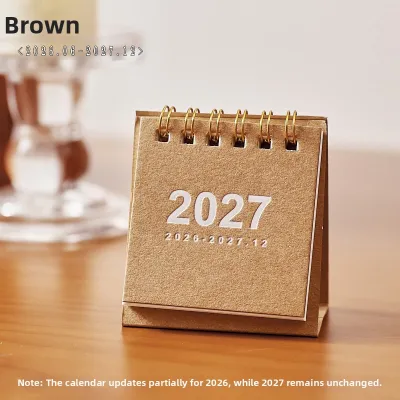
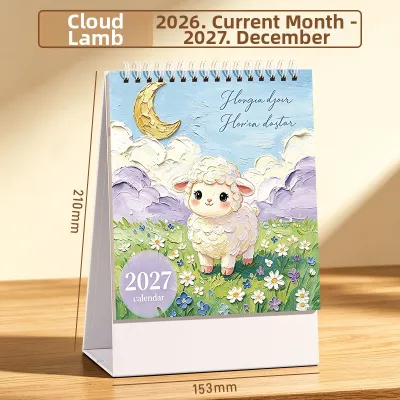
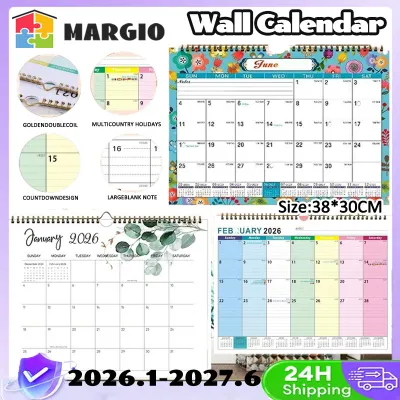
Prices are valid at publication and may change. Please refer to the product page for the latest price.
Finally, define your primary organizational goal for 2027. Are you coordinating a busy household, tracking professional project timelines, or establishing personal habits? Managing a family schedule makes a shared visual hub far more effective than an individual notebook. If you are building personal routines, a planner with dedicated habit-tracking grids keeps you accountable. Recognizing these specific needs and environmental constraints is the most effective way to avoid buyer’s remorse and select a tool that you will actually use.
Evaluate the Four Main 2027 Calendar Formats
Selecting a 2027 calendar format requires a clear understanding of where, when, and how you intend to interact with your schedule. The stationery market offers four primary configurations, each designed to solve specific organizational challenges. Evaluating these formats against your daily routine will help you identify the most supportive tool for your workflow.

Wall Calendars for High-Level Visibility
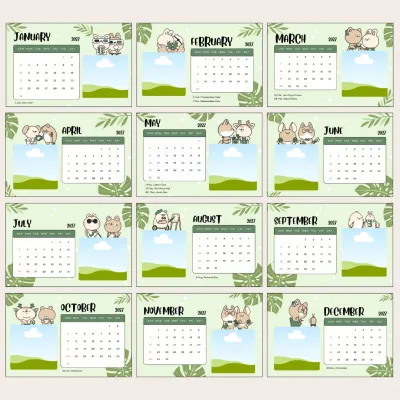
Wall calendars serve as centralized visual hubs for shared spaces like kitchens, home offices, or communal workspaces. Their primary benefit is high-level visibility, letting everyone in a household or team coordinate schedules, track school terms, or monitor milestones at a glance. This macro-planning format is perfect for spotting scheduling conflicts early.
However, wall calendars offer zero portability, meaning you cannot access your schedule on the go. Additionally, the individual date blocks provide limited writing space, making them unsuitable for detailed daily tasks or hourly appointments. If you plan to write on your wall calendar frequently, check the paper weight; thin paper can easily tear or allow ink to bleed through, potentially marking the wall behind it.
Desk Calendars for Quick Desktop Reference
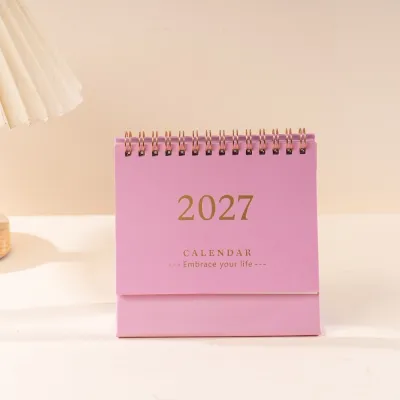
Desk calendars sit directly in your field of vision, providing an instant reference point as you work. They are highly effective for quick date checking, tracking deadlines, and keeping immediate, high-priority tasks top-of-mind without needing to open a digital app or flip through a closed planner.
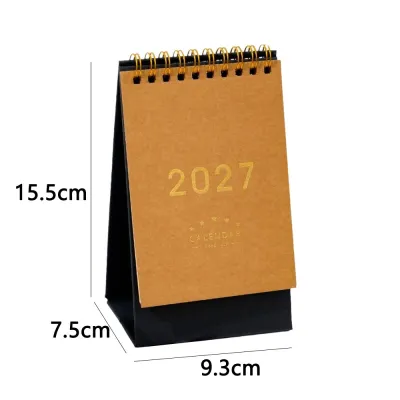
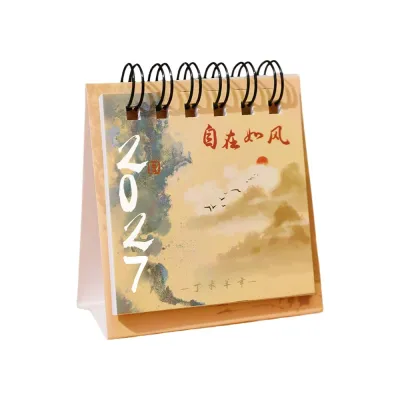
These calendars generally come in flat tear-off pads or upright stand-up tent styles. Flat desk pads offer a large writing surface for quick brainstorming and weekly notes, but they occupy a significant portion of your desk. Upright tent calendars have a much smaller physical footprint, making them ideal for compact workspaces, though they offer much less writing room. The main trade-off is this lack of writing space, making them a poor fit for managing complex, multi-step daily projects.
Daily Planners for Hourly and Task-Heavy Schedules
Daily planners are built for granular, high-density scheduling and extensive note-taking. They are the ideal match for appointment-heavy professionals, students with packed timetables, and individuals who want to combine daily journaling, habit tracking, and task management into a single book.
With a page-per-day or two-page-per-day layout, these planners offer unmatched writing space. You can easily time-block your day hour by hour, list detailed sub-tasks, and write down meeting notes or personal reflections. This comprehensive structure keeps all your daily information centralized, reducing the need to carry separate notebooks.
The main trade-off of a daily planner is physical bulk. Because they require a page for almost every day of the year, these planners are inherently thick and heavy. Carrying an A5 or larger daily planner in your bag every day can become a physical chore, making them less practical for mobile professionals or anyone who prefers to travel light.
Weekly Planners for Balanced Task and Time Management
Weekly planners represent the most popular and versatile middle ground for paper planning. They allow you to view an entire week’s commitments across a single two-page spread, making it easy to pace your energy, balance your workload, and spot upcoming deadlines well in advance.
The portability of weekly planners is a major advantage; they are typically thin and lightweight enough to slip into almost any bag. Within this category, you can choose between vertical and horizontal layouts to match your specific cognitive style.
Vertical layouts are designed for time-blocking, presenting each day as a vertical column often marked with hourly intervals, which is perfect for managing back-to-back meetings. Horizontal layouts are better suited for task-oriented planners, offering horizontal boxes for each day that allow you to list tasks and general notes freely without the rigid structure of hourly lines.
Verify Physical Specs, Paper Quality, and Binding
Once you have identified the right format, you must look closely at the physical specifications of the stationery to ensure it is compatible with your daily tools, workspace, and writing habits.
Size and Footprint: Before buying, measure your available desk space and the interior dimensions of your everyday bag. An A5 planner (approximately 148mm x 210mm) is widely considered the ideal balance between portability and writing space. If your desk is cluttered with monitors and tech accessories, a compact B6 or slim pocket planner will prevent your workspace from feeling cramped. For desk pads, ensure the dimensions do not interfere with your mouse movement or keyboard placement.
Paper Weight and Compatibility: The thickness and quality of planner paper are measured in GSM (grams per square meter). For standard writing with traditional ballpoint pens, a paper weight of 70 to 80 GSM is perfectly adequate. However, if you prefer using fountain pens, gel pens, rollerballs, or heavy markers, you should look for planners featuring 100 to 120 GSM paper. High-quality paper prevents ink from bleeding through to the reverse side of the page or creating dark shadows (ghosting) that ruin the clean look of your layout. Some specialized planners use thin, lightweight Japanese papers (such as Tomoe River paper, around 52 to 68 GSM) that are formulated to resist fountain pen bleed-through while keeping the overall book thin.
Binding Types: The binding of your planner determines how easily it opens and how long it will last. Wire-o and spiral bindings allow the planner to fold completely flat or back on itself, which is incredibly useful when working in tight spaces. However, the metal or plastic coils can sometimes get in the way of your hand when writing near the margins. Stitched or thread-bound planners offer a classic, book-like feel and are designed to lay completely flat when opened, providing a smooth, uninterrupted writing surface across the entire two-page spread. Avoid cheap glued bindings, as they are prone to cracking over time, causing pages to fall out before the year ends.
Layout and Localization: If you are left-handed, look for layouts that minimize physical obstacles, such as flat-laying stitched bindings or designs with coils placed away from your writing hand. Pay attention to the layout of the weekend columns; some weekly planners compress Saturday and Sunday into smaller boxes, which can be highly frustrating if your weekends are just as busy as your weekdays. Additionally, ensure the calendar includes public holidays relevant to Singapore, such as Chinese New Year, Hari Raya, Deepavali, and National Day, so you can plan your long weekends and family events accurately.
Choose Your Action Path: Adopt, Combine, or Switch
Choosing a 2027 calendar does not mean you are locked into a single, rigid system. Your planning needs may evolve, and the most successful organizational systems are those that adapt to your lifestyle.
Adjust Current Tools: Before purchasing a completely new format, consider whether you can adjust how you use your current tools. If you already own a weekly planner but struggle to stay organized, try transitioning from a simple task list to a strict time-blocking system within your existing layout. Dedicate specific hours of your day to individual tasks directly on your weekly spread to see if your productivity improves before investing in a heavy daily planner.
Combine Formats: Many people find that a single tool cannot meet all their organizational needs. For example, you can mount a large wall calendar in your home to coordinate family logistics, while keeping a portable weekly planner in your bag to manage professional tasks. Another popular combination is using a small desk calendar for instant date reference alongside a digital calendar for scheduling meetings.
Switch to Digital: Be honest about when a physical paper calendar is the wrong tool. If your schedule changes constantly, requires real-time syncing, or relies heavily on automated reminders, a digital calendar is far superior. Do not force paper scheduling if it causes friction; instead, use paper for reflective journaling or high-level goal setting, and leave active scheduling to your digital devices.
Final Pre-Purchase Checklist: Before finalizing your purchase of a 2027 calendar, run through this quick checklist to ensure a perfect match:
- Have you verified that the physical dimensions fit comfortably on your desk or in your bag?
- Is the paper weight (GSM) compatible with your favorite writing instruments?
- Does the binding allow the planner to lay flat for a comfortable writing experience?
- Are Singapore public holidays clearly marked or easy to integrate?
- Does the layout match your preference for either task-listing or hourly time-blocking?
Frequently Asked Questions (FAQ)
What is the best time to buy a 2027 calendar?
The ideal window to purchase a 2027 calendar is between September and November of 2026. Major stationery brands and independent designers typically launch their upcoming collections during late Q3. Waiting until late December or January often means popular layouts, limited-edition designs, and highly sought-after paper stocks will be sold out, leaving you with fewer options that may not match your planning style.
Can I use a standard 2027 calendar if my fiscal or academic year starts mid-year?
While standard 12-month calendars run from January to December, they can be challenging to use if your professional or academic timeline begins mid-year. If your schedule revolves around an academic year (typically starting in July or August) or a specific fiscal cycle, look for ‘academic’ or ‘mid-year’ planners. These formats usually run for 16 to 18 months, starting in July, allowing you to maintain a continuous record without switching planners mid-cycle. Alternatively, undated planners let you customize the start date to fit any fiscal calendar.
How do I prevent my desk calendar from curling or falling over?
To prevent a desk calendar from curling or warping, pay attention to its placement and construction. Singapore’s humid climate can cause thin paper to absorb moisture, leading to curled edges. Choose a calendar with a thick, heavy cardboard base that resists bending, and position it away from direct air conditioning vents or open windows where humidity levels fluctuate. If you use a flat desk pad, look for designs with protective plastic corner protectors or a sturdy backing to keep the pages flat.
Community discussion
Share your experience or ask a question. Comments are reviewed before publication.