
To choose the ideal poster tube holder for your craft supplies, you must balance storage capacity, physical footprint, material durability, and protective features against your specific workspace constraints and inventory. Crafting materials like delicate vellum, heavy watercolor paper, vinyl rolls, and canvas sheets require specialized support to prevent creasing, warping, and edge damage. By focusing on structural stability, ease of access, and environmental protection, you can transform a chaotic pile of rolls into an organized, inspiring, and highly functional workstation.
Assess Your Craft Tube Inventory and Space
Before browsing online marketplaces or visiting local stationery shops, take a comprehensive inventory of your current collection. Gather every roll of wrapping paper, drafting blueprint, vinyl sheet, and canvas tube in your workspace. Count the total number of items and measure the outer diameter of the thickest rolls, as well as the length of the longest ones. This baseline measurement ensures you do not purchase a holder with slots too narrow for your heavy-duty cardboard tubes or too shallow to support tall rolls without tipping.
Next, evaluate your physical workspace. In compact urban homes or dedicated crafting alcoves, floor space is often at a premium. Use a measuring tape to map out potential locations for your holder, such as the empty space beside your worktable, the area underneath a desk, or an unused stretch of wall. If you plan to store the holder under a desk, measure the vertical clearance to ensure you can easily slide tubes in and out without hitting the underside of the tabletop.
Products mentioned in this guide
![[SG] Extendable Poster Tube Holder [Small 45cm to 75cm] | [Medium 64cm To 108cm] | [Large 78cm To 130cm) Up to 180cm](https://img.lazcdn.com/g/p/e37dcdebf2fd6a8f059301685bda0e55.png_400x400q80.png_.webp)
![[SG] Extendable Poster Tube Holder 64cm To 108cm. Black / White / Red / Blue / Green / Yellow](https://img.lazcdn.com/g/p/b0f8c0c1c8b4a86e37b7bc9820cae461.jpg_400x400q80.jpg_.webp)
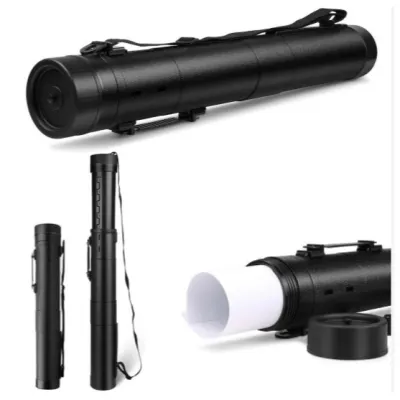
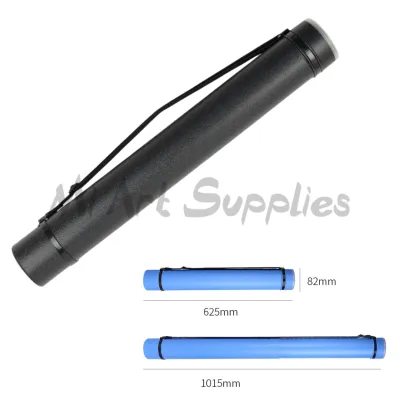
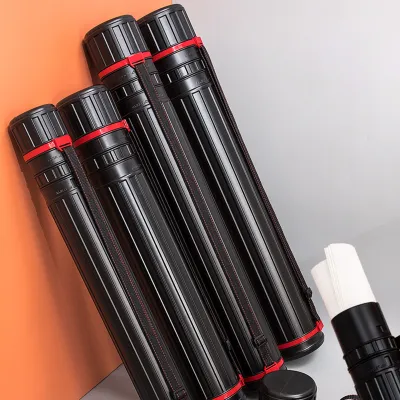
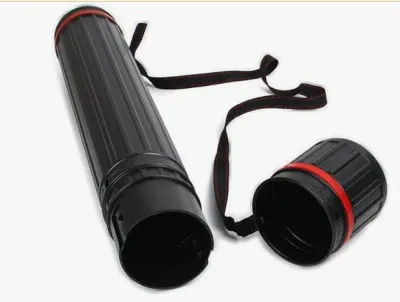
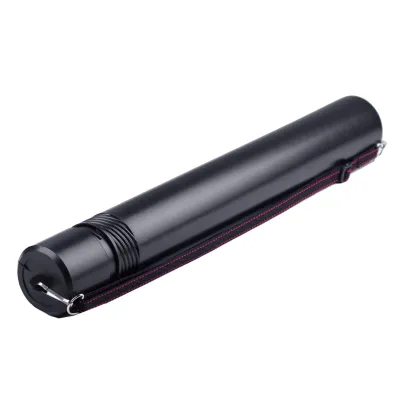
Prices are valid at publication and may change. Please refer to the product page for the latest price.
Do not design your storage system solely for your current inventory. Crafting hobbies tend to expand, and you may find yourself acquiring seasonal wrapping papers, holiday-themed vinyls, or bulk drawing sheets over time. Factor in a buffer of at least 20% to 30% beyond your current capacity needs. This foresight prevents you from outgrowing your storage solution within a few months and saves you the expense of buying a second unit later.
Compare Poster Tube Holder Configurations
The structural design of your poster tube holder directly dictates how easily you can retrieve materials during a busy crafting session. Choosing between vertical and horizontal configurations involves weighing floor space efficiency against ergonomic comfort and physical accessibility.

Freestanding and Mobile Bases
Freestanding vertical holders are highly popular for their compact footprints, making them excellent choices for tight corners. However, because vertical storage places the center of gravity much higher, you must carefully evaluate the base width and weight distribution of any unit you consider. A top-heavy rack loaded with tall, dense paper rolls can easily tip over if bumped, potentially damaging your expensive supplies or causing injury. Look for designs with weighted bases or wide, flared footprints that offer reliable stability.
If you frequently move between a cutting table, an easel, and a sewing station, a mobile cart with rolling casters offers unmatched convenience. When evaluating mobile units, verify the quality and size of the wheels. Larger casters roll more smoothly over transition strips and low-pile rugs, while smaller wheels are best suited for flat, hard floors. Ensure that at least two of the casters feature robust locking mechanisms to keep the cart securely in place while you pull or replace heavy tubes.
Consider the physical effort required to retrieve a single roll from a crowded vertical rack. If the slots are packed too tightly, pulling one tube can create friction that drags adjacent rolls upward, causing them to spill out. Look for vertical holders that feature individual grid dividers or spacious compartments, allowing each tube to slide out independently without disturbing its neighbors.
Horizontal and Wall-Mounted Options
Horizontal wall-mounted racks are the ultimate space-savers, lifting your entire inventory off the floor and utilizing empty vertical wall space. This configuration is particularly advantageous in small rooms where floor space must be reserved for furniture and walking paths. However, wall mounting requires careful installation. You must locate wall studs or use heavy-duty wall anchors suitable for your wall type—such as concrete, brick, or drywall—to support the cumulative weight of multiple heavy paper rolls.
Ergonomics play a significant role in horizontal storage. Reaching for a high wall-mounted rack or bending down to access a low shelf can strain your back and shoulders over time, especially if you handle heavy canvas or vinyl rolls. Position your most frequently used materials at waist-to-chest height, reserving the highest and lowest slots for seasonal or rarely used items.
Another critical factor is slot adjustability. Unlike vertical grids that can accommodate various heights easily, horizontal racks rely on fixed or adjustable arms. Check if the manufacturer offers adjustable brackets or modular pegs. This flexibility allows you to customize the distance between shelves, ensuring you can store thick cardboard tubes and thin vinyl rolls in the same unit without wasting valuable vertical space.
Evaluate Material Durability and Stability
A poster tube holder must be robust enough to withstand the physical demands of a busy craft room. To ensure long-term durability, look for explicit manufacturer specifications regarding maximum load capacity and weight limits per shelf or slot. Avoid relying on vague marketing terms like “heavy-duty” or “premium quality”; instead, seek out concrete weight ratings to verify if the unit can safely support your specific inventory.
Inspect the construction materials and joint reinforcements closely. If you are considering a metal rack, look for powder-coated steel or aluminum frames with clean, continuous welds rather than thin spot welds. For plastic or acrylic models, check the thickness of the panels and the design of the interlocking connectors. Thin plastic joints can crack under the stress of heavy loads or temperature fluctuations, whereas thick, reinforced polymer connectors provide a much more stable frame.
The contact points between the holder and your floor are equally important for maintaining stability and protecting your home. Look for units equipped with adjustable leveling feet, which allow you to stabilize the rack on slightly uneven floors. If the holder will sit on delicate hardwood, laminate, or vinyl flooring, ensure it features non-marring rubber feet or felt pads to prevent scratching when the unit is moved or loaded.
Check Compatibility with Craft Supply Needs
Your choice of poster tube holder should actively protect your delicate craft materials from environmental hazards. In regions with high humidity, such as Singapore’s tropical climate, exposed paper rolls can absorb moisture from the air, leading to warping, rippling, and mold growth. If you store sensitive papers, vellum, or fine art canvases, look for holders that accommodate protective plastic sleeves, or choose enclosed bin designs that can be fitted with dust covers or end caps to seal out moisture and dust.
Physical damage during storage is another common issue. Rough interior edges, sharp metal burrs, or unpolished plastic seams can easily scratch, tear, or snag the outer layers of your paper rolls as you slide them in and out. Carefully inspect product photos or floor models for rounded rims, smooth interior dividers, or protective fabric linings. If you use a wire grid holder, consider lining the slots with smooth cardboard or plastic sleeves to create a gentle barrier for your delicate materials.
An efficient workflow relies on quick visual identification. If your tubes are stored blindly in a deep, dark bin, you will waste time pulling out and unrolling multiple sheets just to find the right color or texture. Look for holders that offer high label visibility, such as open-frame wire designs, clear acrylic panels, or built-in label slots on the front of each compartment. This allows you to catalog your inventory with color-coded tags or descriptive labels, streamlining your creative process.
Build Your Conditional Shortlist
Once you have analyzed your space, inventory, and material needs, you can synthesize these criteria into a highly targeted shopping strategy. Begin by defining your absolute, non-negotiable constraints. For example, if you have a maximum floor width of 40 cm beside your desk, any holder exceeding this dimension must be immediately ruled out. Similarly, if you own 30 rolls of vinyl, filter out any units with fewer than 30 individual slots.
When browsing online marketplaces or specialty stationery catalogs, utilize specific search filters to narrow down your options. Filter by material (such as steel, wood, or acrylic), orientation (vertical or horizontal), and mobility (stationary or rolling). This systematic approach prevents you from getting distracted by aesthetically pleasing designs that do not actually meet your functional requirements.
Before making a final purchase, cross-reference user reviews to verify the real-world performance of your shortlisted options. Pay close attention to feedback regarding assembly complexity, long-term stability under full loads, and whether the actual slot dimensions match the manufacturer’s advertised specifications. If multiple reviews mention that a vertical rack wobbles when fully loaded or that the plastic connectors are brittle, use that information to refine your choice and select a more reliable alternative.
Frequently Asked Questions (FAQ)
Can I use a standard umbrella stand as a poster tube holder?
While repurposing a standard umbrella stand might seem like a cost-effective and stylish solution, it often presents significant safety and stability risks for craft storage. Umbrella stands are typically designed for short, relatively light umbrellas and may lack the depth and base weight required to support long, top-heavy craft tubes. Placing tall paper rolls or heavy canvas tubes in a shallow stand creates a severe tipping hazard, which can lead to damaged supplies, spilled materials, or broken items in your workspace. If you choose to repurpose an umbrella stand, ensure it has a heavily weighted base, a minimum depth of 40 cm, and a wide footprint to safely counterbalance the height of your rolls.
How do I prevent paper rolls from getting crushed in a shared craft space?
In high-traffic or shared creative environments, paper rolls are highly vulnerable to being stepped on, bumped, or crushed. To safeguard your delicate materials, store them inside rigid outer cardboard or plastic mailing tubes equipped with secure end caps. This extra layer of structural protection prevents the inner rolls from creasing or collapsing under external pressure. Additionally, position your poster tube holder in a designated low-traffic zone, such as a corner behind your desk or mounted high on a wall. Switching to a horizontal wall-mounted rack is particularly effective in shared spaces, as it completely removes your valuable supplies from the floor, eliminating the risk of accidental foot traffic damage.
Community discussion
Share your experience or ask a question. Comments are reviewed before publication.