
Quick Guide to Choosing a No Face Piggy Bank
Finding the perfect No Face piggy bank in Singapore requires balancing whimsical charm with functional durability. Inspired by the iconic, enigmatic spirit from Studio Ghibli’s Spirited Away, these novelty coin banks have become highly sought-after collectibles, home decor pieces, and delightful gifts. When shopping, your primary decision lies between a classic static figurine bank and an interactive, motorized animatronic version that “eats” coins placed on its red bowl. To make an informed purchase, you must evaluate four core pillars: material composition, mechanical reliability, aesthetic accuracy, and seller credibility. Whether you are browsing physical gift shops in downtown shopping malls or scrolling through online marketplaces, understanding these factors ensures you select a high-quality piece that preserves your savings while serving as an eye-catching display.
Evaluating Materials and Build Quality
The material of your No Face piggy bank directly influences its weight, durability, visual appeal, and suitability for different environments. The three most common materials available on the market are ceramic, resin, and ABS plastic, each offering distinct advantages and trade-offs.

Ceramic piggy banks provide a classic, premium feel with a glossy, glazed finish that reflects light beautifully. They carry a satisfying weight, making them excellent decorative centerpieces for adult collectors. However, ceramic is highly fragile; a single accidental drop on a hard marble or vinyl floor can shatter the bank completely. This makes ceramic models less suitable for households with active pets or young children.
Products mentioned in this guide
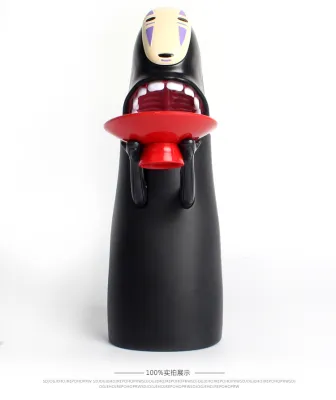
Prices are valid at publication and may change. Please refer to the product page for the latest price.
Resin is a popular alternative that captures intricate sculptural details far better than ceramic. It offers a matte or semi-gloss finish and feels substantial in the hand. While resin is slightly more impact-resistant than ceramic, it can still chip or crack if dropped from a shelf. It is best reserved for dedicated display cabinets or study desks where it remains undisturbed.
ABS plastic is the standard material for interactive, motorized No Face piggy banks. It is lightweight, highly durable, and resilient against minor drops and bumps. This makes plastic models the safest choice for children’s bedrooms or high-traffic areas. The trade-off is that plastic can sometimes look less premium than ceramic or resin, and cheap plastic models may exhibit visible mold lines or a hollow feel.
When evaluating build quality, inspect the structural integrity of the bank. Check for seamless joints where different molded parts meet. A high-quality bank must have a perfectly flat, stable base to prevent it from tipping over when filled with heavy coins. For static models, ensure the material thickness is uniform to avoid weak spots that could crack under the weight of accumulated savings.
Checking Size, Capacity, and the Coin Slot Mechanism
Before committing to a purchase, it is essential to match the physical dimensions of the piggy bank to your available space and saving habits. No Face piggy banks come in various sizes, ranging from miniature desktop figurines to large, statement-making statues.
Always measure the depth, height, and width of your display shelf or bedside table before buying. A bank that is too large can overcrowd your space, while one that is too small might get lost among other decor items. Consider the weight of the bank when fully loaded with coins; a large ceramic bank filled to capacity can become surprisingly heavy, requiring a sturdy, well-supported shelf.
Next, evaluate the coin slot size and placement. For static models, the slot is typically located on the back of the figure’s head or shoulders. Ensure the slot is wide and thick enough to accommodate local Singapore coin denominations, particularly the thicker S$1 coin, as well as folded paper notes if you plan to save cash.
Interactive models feature a motorized mechanism where you place coins onto a small red bowl held by No Face. When the weight threshold is reached, the mechanism triggers: No Face lifts the bowl to his mouth, accompanied by music or sound effects, and “swallows” the coins. When choosing an interactive model, verify the battery requirements—most require two or three AA or AAA batteries. Pay attention to the operational noise level; high-quality motors run smoothly with a gentle hum, whereas low-grade motors can produce a loud, grinding noise that detracts from the novelty experience.
Finally, inspect the retrieval method. A practical piggy bank must allow you to access your savings without breaking the outer shell. Look for a secure, flexible silicone or rubber plug at the bottom of the bank that is easy to remove yet tight enough to stay in place under the weight of the coins. Some interactive models feature a twist-lock compartment or a removable top half, which should align perfectly and lock securely without loose gaps.
Assessing Design Details, Paint Finish, and Accessories
The charm of a No Face piggy bank lies in its faithful representation of the beloved character. Minor defects in paint or proportions can quickly make a collectible look cheap or unappealing.
When inspecting the design, use a systematic checklist to evaluate the paint finish. Look closely at the iconic purple facial markings above and below the eyes; these should be symmetrical, sharp, and free from color bleeding or smudging. The black body should have an even, consistent coat without thin patches, bubbles, or rough textures. If the model features teeth or an open mouth, check that these details are painted cleanly without overlapping colors.
The debate between officially licensed merchandise and unlicensed alternatives is crucial when assessing design accuracy. Licensed products, often imported from authorized distributors, adhere to strict quality control standards, ensuring precise character proportions, accurate color matching, and a refined finish. Unlicensed versions may be more budget-friendly but frequently suffer from distorted facial features, incorrect body shapes, or low-grade paint that emits a strong chemical odor.
Additionally, consider any included accessories that enhance the product’s value. Some models come with miniature props, such as a tiny bathhouse token, a display tray, or decorative backdrops. High-quality protective packaging, such as custom-cut foam inserts or a beautifully designed box, is also a valuable accessory, especially if you plan to transport the item or keep it as a pristine collectible.
Verifying Seller Credibility on Online Marketplaces
With numerous options available on online marketplaces, verifying seller credibility is vital to avoid receiving damaged, defective, or poorly made counterfeit items.
Start by examining the seller’s profile on your chosen ecommerce platform. Look for high positive feedback ratings (ideally above 95%) and a substantial history of successful transactions. Reliable sellers often provide detailed, unedited product photos taken from multiple angles, rather than relying solely on stock images. They should also be highly responsive to customer inquiries, answering questions about materials, dimensions, and packaging with clarity.
User reviews are a goldmine of practical information. Scroll through the review section and filter for buyer-uploaded photos and videos. This allows you to see the actual product in real-world lighting, helping you verify the paint quality and mechanical function before buying. Pay close attention to reviews mentioning packaging quality. Because ceramic and resin items are highly fragile, they require robust protection—such as thick bubble wrap, sturdy cardboard boxes, or foam molding—to survive transit. If multiple reviews complain about items arriving broken or poorly packed, look for another seller.
Before finalizing your purchase, carefully read the seller’s return and refund policies. Ensure there is a clear process for handling items that arrive damaged or with defective motorized parts. A reputable seller will offer a straightforward return window or a replacement policy, giving you peace of mind during the checkout process.
Selecting the Right Option for Gifting or Souvenirs
A No Face piggy bank makes an excellent gift or souvenir, but the ideal choice depends heavily on the recipient and the occasion.
If you are purchasing the bank as a gift, presentation is key. Opt for sellers who offer official packaging or premium gift boxes. If you are buying the item as a souvenir to take back home from Singapore, prioritize compact, lightweight, and durable models. An ABS plastic interactive bank or a small, sturdy resin figurine is much easier to pack securely in a suitcase than a large, fragile ceramic piece. Always request extra layers of bubble wrap from the retailer to protect the item during travel.
Align the complexity of the piggy bank with the recipient’s profile. For young children, a durable plastic model with a simple drop-in slot or a sturdy interactive mechanism is ideal, as it encourages saving habits through play. For adult fans of Studio Ghibli, a highly detailed, static resin or ceramic statue that serves as an elegant desk accessory is often more appreciated.
When deciding between buying locally in Singapore or importing from overseas, weigh the trade-offs. Local physical gift shops and local online sellers offer the advantage of rapid delivery times and easier returns if something goes wrong. Importing from overseas might offer a wider selection or a slightly lower price, but you must factor in longer shipping times, potential transit damage, and limited recourse if the item arrives defective. Allocate your S$ budget wisely, balancing the convenience of local customer support against the potential savings of international shipping.
Frequently Asked Questions (FAQ)
How do I clean and maintain a resin or ceramic No Face piggy bank?
To keep your No Face piggy bank looking pristine, routine dusting is essential. Use a soft, dry microfiber cloth or a clean, soft-bristled makeup brush to gently sweep away dust from the facial features and crevices. Avoid using harsh chemical cleaners, abrasive scrubbing pads, or solvents, as these can strip or discolor the paint finish. For stubborn spots on non-electronic models, a slightly damp cloth with mild soap may be used, followed immediately by drying with a soft towel. Never submerge interactive, motorized, or electronic versions in water, as moisture will permanently damage the internal circuitry and battery compartment. Always refer to any care instructions provided by the manufacturer.
What should I do if the interactive coin mechanism stops working?
If your interactive No Face piggy bank stops swallowing coins, begin by checking the power source. Replace the existing batteries with a fresh set of high-quality, matching cells, ensuring they are inserted with the correct polarity. Over time, weak batteries may have enough power to play music but not enough to drive the motor. Next, inspect the coin bowl and the mouth sensor area for any physical obstructions, such as dust buildup, sticky residue, or bent coins that might block the mechanism. If the motor still fails to run after these checks, avoid disassembling the internal gears yourself, as this can void any seller warranty. Instead, contact the seller or manufacturer for assistance or replacement options.
Are No Face piggy banks suitable for young children?
Whether a No Face piggy bank is suitable for young children depends entirely on its material and design. Ceramic and resin models are highly fragile and can shatter into sharp, dangerous shards if dropped, making them unsuitable for young kids. For children, choose a durable ABS plastic model. However, even with plastic models, you must inspect the item for small, detachable parts, loose accessories, or battery compartment covers that lack a secure screw closure, as these can pose serious choking hazards. Additionally, interactive models with moving mechanical arms or mouths should be used under adult supervision to prevent curious fingers from getting pinched in the mechanism.
Community discussion
Share your experience or ask a question. Comments are reviewed before publication.