
Selecting your very first acrylic paint starter set is an exciting milestone, but the sheer variety of options on art store shelves can quickly become overwhelming. To make the best choice, a beginner should look for a set that features student-grade paint, a focused palette of six to eight primary colors, medium-sized tubes, and basic synthetic brushes. A well-designed starter set prioritizes teaching you the fundamentals of color mixing and paint handling rather than distracting you with a massive array of pre-mixed colors or low-quality plastic accessories.
Quick Answer: Essential Features of a Good Beginner Acrylic Set
To get started without unnecessary frustration, focus on a few essential features that balance cost, usability, and learning value:
- Student-Grade Quality: Offers excellent workability and vibrant colors at a fraction of the cost of professional paints, allowing you to practice without worrying about wasting expensive materials.
- A Split-Primary Palette: Look for a set containing warm and cool versions of red, blue, and yellow, along with titanium white and a dark neutral like mars black or burnt umber.
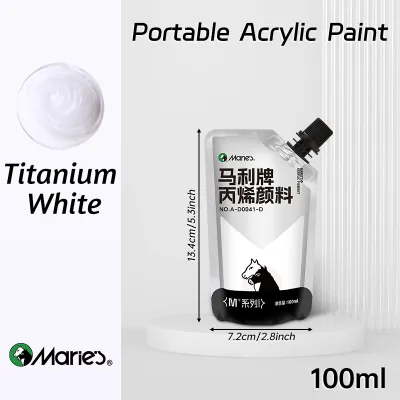
- Practical Tube Sizes: Standard color tubes should range from 20ml to 37ml, while the titanium white tube should be significantly larger (75ml or more) since you will use it constantly.
- Synthetic Brushes: Look for durable nylon or polyester brushes that hold their shape and resist the harsh, fast-drying nature of acrylic polymers.
By focusing on these core elements, you ensure that your budget goes toward usable, high-quality materials rather than filler items that will end up in the bin.
Products mentioned in this guide
Prices are valid at publication and may change. Please refer to the product page for the latest price.
Understanding Paint Grades: Why Student-Grade Acrylic Paint is Best for Beginners
When shopping for acrylic paint, you will immediately notice two distinct categories: student-grade (often labeled as “studio” or “academic”) and artist-grade (or “professional”). Student-grade acrylics are specifically formulated for learners, hobbyists, and those working on large-scale practices. They achieve a lower price point by using a lower concentration of pure pigment and replacing expensive organic pigments with synthetic alternatives, which are labeled as “hues.” For example, instead of costly and toxic genuine cadmium, a student set will use a safe, synthetic “Cadmium Red Hue” that mimics the color perfectly.

Another practical benefit of student-grade paint is consistency. Manufacturers often add fillers and modifiers to ensure that every color in a student line behaves similarly, drying at a uniform rate and offering a predictable sheen. In professional lines, different pigments dry at different speeds and have varying levels of natural gloss, which requires advanced handling. For a beginner, having a predictable, uniform paint behavior makes it much easier to focus on learning basic brush techniques and layering.
Cost-effectiveness is perhaps the most compelling reason to start with student-grade paints. Learning to paint requires a massive amount of trial, error, and generous paint application. In Singapore, a single tube of professional-grade acrylic can easily cost S$15 to S$30, whereas a complete student-grade starter set of eight to twelve colors typically ranges from S$25 to S$60. Working with student-grade materials removes the psychological barrier of “ruining” expensive paint, giving you the freedom to experiment, paint over mistakes, and practice underpainting techniques without financial anxiety.
To make an informed purchase, learn to read the basic information printed on the back of paint tubes. Look for the lightfastness rating, which indicates how well the paint resists fading when exposed to light over time. This is usually rated under the ASTM standard, where Category I is excellent and Category II is very good; avoid any paints rated Category III or lower for permanent work. You should also check the opacity indicator, which is typically represented by a small square: a clear square denotes a transparent paint, a solid black square indicates fully opaque paint, and a diagonal line or half-filled square represents semi-opaque properties.
Eventually, you will know it is time to upgrade to professional-grade paints when you find yourself limited by the tinting strength of your student paints. Professional acrylics contain a much higher pigment load, meaning a tiny speck of paint can dramatically alter a mixture. You might also upgrade when you require highly specific archival guarantees for gallery exhibitions, or when you want to work with specialized heavy-body textures that retain dramatic, sculptural palette knife marks without shrinking as they dry.
Evaluating the Color Range and Tube Sizes
The Ideal Color Palette for Starters
It is highly tempting to buy the largest paint set available, but massive kits containing 48 or 60 pre-mixed colors can actually hinder your artistic growth. When you rely on pre-mixed tubes for every shade, you miss out on learning the fundamental principles of color theory and color mixing. A focused palette of six to eight colors forces you to understand how warm and cool tones interact, allowing you to mix hundreds of custom shades with ease.
The ideal beginner palette uses a “split-primary” system, consisting of a warm and a cool version of each primary color. For your red primaries, look for a warm, orange-leaning red (like Cadmium Red Hue) and a cool, blue-leaning red (like Quinacridone Magenta or Alizarin Crimson). For blues, select a warm, red-leaning blue (like Ultramarine Blue) and a cool, green-leaning blue (like Phthalo Blue). For yellows, choose a warm, deep yellow (like Cadmium Yellow Medium) and a cool, pale yellow (like Lemon Yellow). Complete this set with a large tube of Titanium White and a dark neutral, such as Mars Black or Burnt Umber.
Including a few classic earth tones in your starter palette can also be incredibly helpful. Colors like Yellow Ochre and Burnt Sienna act as a bridge, making it much easier to mix realistic skin tones, natural landscapes, and subtle shadow areas without accidentally creating muddy, dull mixtures.
Choosing the Right Tube Volume
The physical size of the paint tubes in your starter set directly impacts your painting experience and the longevity of your supplies. The most important rule of thumb is that you will use Titanium White far faster than any other color. White is used constantly to lighten values, mix pastel shades, create highlights, and prime surfaces. Therefore, look for starter sets that include a white tube that is at least double or triple the volume of the colored tubes—for instance, a 75ml tube of white paired with 22ml color tubes.
For the colored paints, standard tube sizes between 20ml and 37ml are the sweet spot for beginners. This volume provides enough paint to complete several medium-sized canvases while ensuring you use the product before it has a chance to dry out inside the tube. In Singapore’s humid climate, paint can occasionally spoil or dry around the cap threads if left unused for too long, making these medium-sized tubes highly efficient.
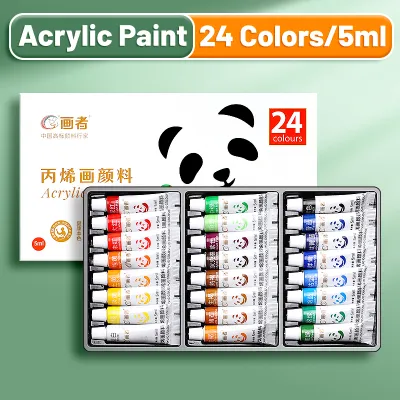
Be cautious of starter sets that offer an incredibly high color count by reducing the tube size to 5ml or 10ml. These miniature tubes are highly impractical for canvas painting; you will likely empty an entire tube of blue or yellow during a single painting session. These tiny volumes are best reserved for highly specialized hobbies, such as painting miniature scale models, rather than general canvas art.
Assessing Included Accessories: Brushes, Palettes, and Surfaces
Many comprehensive starter kits come bundled with an assortment of brushes, palettes, and surfaces, but the quality of these accessories can vary wildly. When evaluating brushes, always prioritize synthetic bristles over natural hair. Natural hair brushes, such as those made from sable or hog bristle, are easily damaged by the alkaline chemistry of acrylic binder and the rough scrubbing action required during cleaning. Synthetic fibers, usually made of nylon or polyester (often marketed as Taklon), are incredibly resilient, hold their spring when wet, and are easy to clean.
A versatile beginner brush set does not need dozens of options; it only needs three essential shapes. A medium flat or bright brush is perfect for blocking in large areas of color and creating sharp, clean edges. A round brush is indispensable for sketching your initial design, painting fine details, and creating controlled linework. Finally, a filbert brush—which features a flat shape with a curved tip—is excellent for soft blending, painting organic shapes like flower petals, and transition zones.
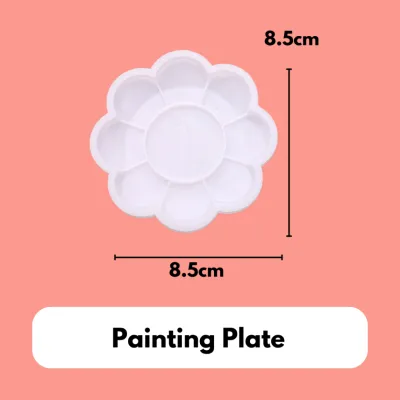
The palette included in most starter kits is usually a basic, rigid white plastic tray with small circular wells. While these are fine for holding liquid paints, they offer very little flat surface area for mixing custom colors. Furthermore, because acrylic paint dries rapidly through water evaporation, paint on a standard plastic palette can become unusable within 15 minutes, especially in air-conditioned rooms. While you can start with the included plastic tray, you will likely want to upgrade to a “stay-wet” palette, which uses a damp sponge layer and permeable paper to keep your paints wet and workable for days.
The surface you paint on is just as important as the paint itself. Look for kits that include rigid canvas boards or heavy-weight acrylic paper pads that are at least 300 gsm (140 lb) in weight. Canvas boards are highly recommended for beginners because they are pre-primed with gesso, highly durable, and will not warp under heavy, wet paint layers. If you use paper, ensure it is specifically labeled for acrylics or mixed media; standard drawing or sketch paper will quickly buckle, warp, and bleed through when exposed to wet paint. To prevent disappointment, always test a small patch of paint on your chosen paper to verify its bleed-through resistance and warping behavior before starting a large piece.
Finally, learn to spot “filler” items that are added to kits simply to inflate the price tag. Cheap, lightweight plastic easels are often too flimsy to support a standard canvas board without wobbling. Low-grade yellow sponges and brittle plastic palette knives also add very little value. It is always wiser to choose a set that focuses its value on high-quality paint and a few excellent brushes rather than a box filled with cheap plastic tools.
Recommended Starter Set Profiles for Different Learning Goals
The Minimalist Color Theory Set
The minimalist color theory profile consists of six to ten high-quality student-grade paint tubes in standard sizes (such as 37ml), with absolutely no extra tools or accessories included in the box. This profile is ideal for beginners who are serious about learning the craft and prefer to select their own high-quality brushes and painting surfaces separately. By avoiding bundled accessories, every dollar of your budget goes directly toward superior pigment quality and paint consistency. The main limitation is that you cannot start painting immediately; you must make a separate trip to the art store to purchase brushes, a palette, and canvases.
The All-in-One Convenience Kit
For those who want an immediate, out-of-the-box experience, the all-in-one convenience kit is the perfect solution. These kits typically contain 12 to 24 colors in smaller 12ml or 20ml tubes, a basic selection of synthetic brushes, a plastic mixing palette, and a few small canvas boards. This profile is excellent for gifting, casual weekend hobbyists, or anyone who wants to try acrylic painting as a low-pressure experiment. However, keep in mind that the included brushes are entry-level and will likely lose their shape over time, meaning you will need to upgrade your tools as your skills progress.
The Heavy Body vs. Soft Body Choice
Acrylic paints come in different consistencies, and understanding these options will help you match your starter set to your preferred painting style. Heavy-body acrylics have a thick, buttery consistency similar to oil paint. They hold brush strokes, retain palette knife textures, and are ideal for expressive, textured impasto techniques. Soft-body or fluid acrylics have a smooth, creamy, or liquid consistency that flows easily off the brush. They level out on the canvas, making them the superior choice for detailed graphic work, smooth blending, glazing, and watercolor-like washes. Most standard student starter sets default to a medium-to-heavy body consistency, which offers the most versatile starting point.
What to Avoid in Starter Kits
To protect yourself from poor-quality purchases, learn to recognize common red flags in product listings. Avoid unbranded “craft” paints sold in large squeeze bottles; these are designed for basic school crafts, lack lightfastness and opacity ratings, and often dry with a chalky, easily scratched finish. You should also pass on sets that advertise an excessively high color count (such as 100 colors) at an unbelievably low price, as this is almost always achieved by using tiny, low-quality tubes filled with watery binders. Finally, avoid kits that include stiff natural-bristle brushes that shed hairs into your wet paint, or flimsy tabletop easels that collapse under the slightest pressure.
Frequently Asked Questions (FAQ)
Do I need a medium or varnish in my first starter set?
No, you do not need to purchase specialized acrylic mediums or varnishes for your very first painting sessions. For basic learning and practice, clean tap water is perfectly adequate for thinning your paint and cleaning your brushes. However, be careful not to dilute your acrylic paint with more than 30% water, as excessive water can break down the acrylic polymer binder, causing the paint to lose its adhesive properties and dry with an uneven, chalky texture. Once you feel comfortable with the default drying time and handling of your paint, you can experiment with gloss mediums to increase shine, or retarders to slow down drying times.
Can I use student-grade acrylics for final artworks?
Yes, student-grade acrylics from reputable art manufacturers are fully capable of producing beautiful, long-lasting final artworks. While they contain less pigment and more binder than professional alternatives, they still utilize high-quality, stable pigments that will not crack, peel, or yellow over time. They are excellent for finished canvas paintings, sketchbooks, art commissions, and home decor projects. The primary difference you will notice as you gain experience is that professional paints offer richer color saturation and greater tinting strength, but student-grade paints are more than durable enough for permanent display.
How long do acrylic paints in a starter set last once opened?
Once a tube of acrylic paint is opened, it can easily last between two and five years if stored under the right conditions. Because acrylics dry through the evaporation of water, any exposure to air will cause the paint to cure into a permanent, water-resistant plastic polymer inside the tube. To prevent this, always wipe the threads of the tube clean with a damp paper towel before screwing the cap on as tightly as possible. Store your paint set in a cool, dry place away from direct sunlight; in humid environments like Singapore, keeping your paints tightly sealed also prevents airborne mold spores from settling and growing inside the tubes.
Community discussion
Share your experience or ask a question. Comments are reviewed before publication.