
Selecting your first knitting needle set is the most critical decision you will make when starting your crafting journey. The right tools do more than just hold your yarn; they actively support your hands as you build muscle memory, control your stitch tension, and prevent frustrating mistakes like dropped stitches. For beginners, a well-chosen set provides the necessary friction to keep stitches secure while offering a smooth path for the yarn to glide.
To make an informed purchase, you must evaluate three primary dimensions: the material of the needles, the configuration of the set (straight, circular, or interchangeable), and the quality of the manufacturing—particularly where the needle meets the cable. Focusing on these foundational elements ensures your early practice sessions are rewarding rather than discouraging.
Essential Features to Evaluate in a Knitting Needle Set
Material Composition and Surface Friction
The material of your knitting needles dictates how much grip you have over your yarn. For beginners, controlling slippery stitches is the greatest hurdle, making material choice paramount.
Products mentioned in this guide
Prices are valid at publication and may change. Please refer to the product page for the latest price.
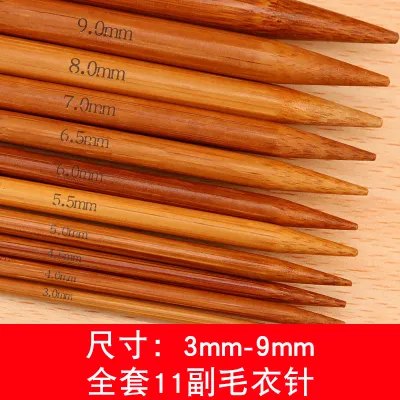
- Bamboo and Wood: These natural materials offer the highest surface friction. This gentle resistance prevents your stitches from sliding off the tips accidentally, which is incredibly helpful when you are still learning how to hold your yarn and needles. Bamboo is lightweight, warm to the touch, and has a slight flexibility that is gentle on stiff hands.
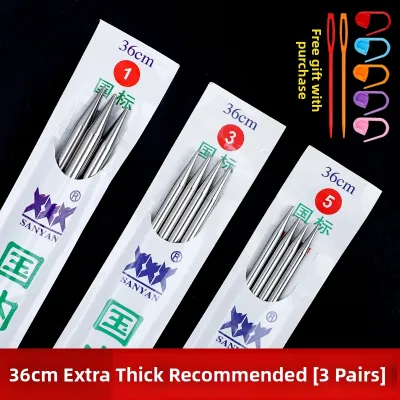
- Metal (Aluminum, Brass, Stainless Steel): Metal needles are exceptionally smooth and slick. While experienced knitters cherish them for their speed, they can be highly frustrating for novices. Stitches slide freely, meaning a single moment of distraction can result in an entire row unraveling.
- Plastic and Acrylic: These synthetic needles are lightweight and budget-friendly. However, they can sometimes feel slightly "sticky" with acrylic yarns, and thinner sizes are prone to bending or warping under tight tension.
Tip Sharpness and Profile
Needle tips range from very blunt to needle-sharp, and each profile serves a specific purpose in fabric creation.
- Blunt or Standard Tips: Beginners should look for moderately blunt, rounded tips. A rounded tip pushes the yarn loops aside rather than piercing through the middle of the strand. This significantly reduces "splitting" the yarn, which ruins the look of your stitches and weakens the fabric.
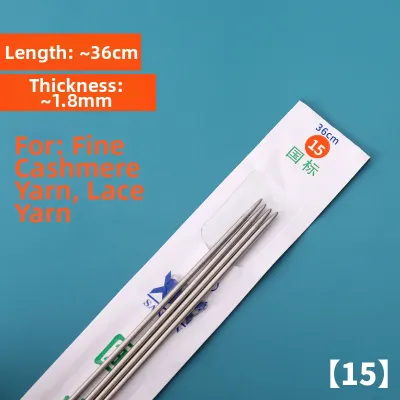
- Sharp or Lace Tips: These are designed for intricate lace patterns and ultra-fine yarns where you must manipulate multiple loops at once. For a beginner using medium-weight yarn, sharp tips are unnecessary and can cause discomfort if you have a habit of pushing the needle tip with your index finger.
Surface Smoothness and Join Quality
If you choose circular or interchangeable needles, the point where the needle tip meets the flexible cable is called the “join.” The quality of this transition is the ultimate test of a good knitting needle set.
- The Fingernail Test: To verify join quality before buying or during your first trial, run your fingernail over the transition from the needle to the cable. If your nail catches on a ridge or gap, your yarn will too.
- Snagging Risks: A rough join catches delicate yarn fibers, causing them to fray over time. It also halts your knitting rhythm, forcing you to manually push each stitch over the bump. Look for seamless, tapered joins that allow yarn to slide effortlessly.
Straight, Circular, or Interchangeable: Choosing the Right Needle Type
Straight Needles
Traditional straight needles are single-pointed shafts with a stopper or knob at one end to keep stitches from sliding off. They are typically sold in pairs and are used exclusively for flat knitting, where you turn the work at the end of every row.

- Pros: Highly intuitive for absolute beginners. There are no cables to manage, making them excellent for simple, narrow projects like dishcloths or basic scarves.
- Cons: The length of the needles can make them awkward to handle. More importantly, as your project grows, the entire weight of the knitted fabric rests on the tips of the needles, putting significant leverage and strain on your wrists.
Fixed Circular Needles
Circular needles consist of two short needle tips permanently connected by a flexible plastic cable. Despite their name, they are not just for knitting round items like hats; they are highly effective for flat knitting as well.
- Pros: Excellent ergonomics. The cable allows the bulk of your project's weight to rest naturally in your lap rather than on your wrists. They are also highly portable; if you enjoy knitting on your daily commute, circular needles are compact and won't accidentally poke the person sitting next to you.
- Cons: Because the cable is permanently fixed to the tips, you must buy a completely new pair of needles if your next project requires a different cable length.
Interchangeable Needle Sets
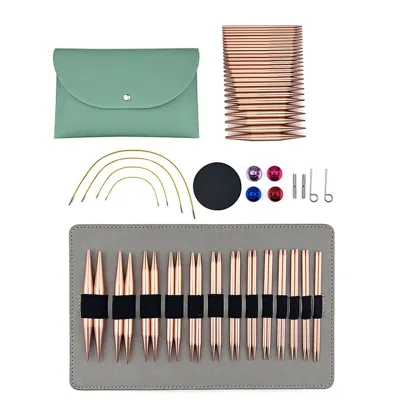
An interchangeable set is a system of separate needle tips and cables that can be screwed or clicked together in various combinations. This is the most versatile option for long-term hobbyists.
- Pros: Incredible value over time. A single set can configure dozens of different needle-and-cable combinations, saving you from buying individual needles for every new pattern.
- Cons: High upfront cost. Additionally, lower-quality interchangeable sets can suffer from joins that unscrew during use, requiring you to constantly tighten them with a small metal key to prevent your work from falling apart.
The Beginner Recommendation
For your very first project, start with either a high-quality pair of fixed circular needles with a 60cm to 80cm cable, or a medium-length pair of bamboo straight needles. This allows you to master the basic knit and purl stitches without a massive financial investment or the complexity of managing interchangeable parts.
Must-Have Components and Accessories in a Beginner Set
A truly supportive beginner set should contain more than just the needles themselves. Having the right utility tools on hand prevents you from having to halt your progress to run to a local craft shop.
Standard Needle Size Range
Your starter set should focus on medium-sized needles. Look for kits that include sizes from 4.0mm to 6.0mm (US sizes 6 to 10). These sizes pair perfectly with worsted-weight or 8-ply yarns, which are thick enough for you to see your stitch structure clearly but small enough to handle comfortably without hand fatigue.
Stitch Markers and Row Counters
Knitting requires keeping track of patterns, stitch counts, and repetitions.
- Stitch Markers: Small plastic rings that slide onto your needles to mark specific points in your pattern, such as the start of a round or where to decrease. Locking stitch markers (which look like tiny safety pins) are the most useful because you can also clip them directly onto a specific stitch to mark your progress.
- Row Counters: A simple manual dial or digital clicker that helps you keep track of how many rows you have completed, ensuring both sides of a garment or scarf match perfectly.
Tapestry Needles
Also known as darning needles, these are blunt-tipped needles with massive eyes designed to accommodate thick yarn. You will use them at the very end of every project to weave your loose yarn tails securely into the fabric, preventing your hard work from unraveling during washing.
Cable Connectors and End Caps
If you choose an interchangeable or circular-focused set, these small plastic pieces are invaluable.
- End Caps (Stoppers): These screw onto the open ends of your cables when you need to detach the needle tips. This allows you to put a project on hold safely, or use those same needle tips for a second project without losing your stitches.
- Cable Connectors: Small metal tubes that allow you to join two shorter cables together to create an extra-long cable for large projects like blankets.
Organized Storage Case
Knitting accessories are small and easily misplaced. A zippered fabric case or a roll-up organizer with labeled slots for each needle size keeps your tools safe, clean, and organized. It also protects wooden or bamboo needles from absorbing excess humidity or getting stepped on and snapped.
Recommended Knitting Needle Sets for Beginners
To help you transition from theory to practice, here are three highly regarded, real-world needle sets available on the market that cater specifically to beginner needs.
1. Clover Takumi Bamboo Circular Starter Range
Clover is a Japanese brand world-renowned for its precision-engineered bamboo tools. While they sell full interchangeable sets, their individual fixed circular needles are a phenomenal starting point for novices.
- Ideal Use Case: Perfect for knitting your very first flat scarf, a simple garter-stitch baby blanket, or a basic beanie.
- Why It Suits Beginners: The Japanese bamboo is select-grade, offering a velvety surface that provides just the right amount of resistance to keep slippery acrylic or wool stitches in place. The cable-to-needle joins are incredibly smooth, meaning you will not experience snagging.
- Limitations: The natural grip of bamboo means your knitting speed will be capped. If you naturally knit very tightly, the extra friction can make moving stitches along the needle require more physical effort.
- Pre-Purchase Checklist: Check the packaging to ensure you are buying a 60cm or 80cm cable length. Avoid 20cm or 40cm cables for your first project, as they are too short for flat-knitting comfortable widths.
2. KnitPro Symfonie Wood Starter Interchangeable Needle Set
KnitPro (often branded as Knitter’s Pride) offers the Symfonie range, which is crafted from highly polished, multicolored laminated birchwood.
- Ideal Use Case: Best for beginners who know they want to stick with the hobby and transition quickly from basic scarves to hats, sweaters, and shawls.
- Why It Suits Beginners: Birchwood is significantly stronger than bamboo, allowing for slightly sharper tips without the risk of splitting. The laminated surface is smoother than raw bamboo, offering a speed boost while still retaining enough grip to prevent dropped stitches.
- Limitations: As an interchangeable set, you must use the included metal "tightening key" to secure the cables to the needle tips. If you skip this step and tighten them only by hand, they will slowly unscrew as you knit, which can drop your stitches.
- Pre-Purchase Checklist: Verify that the starter set includes the standard beginner sizes (typically 4.0mm, 4.5mm, and 5.0mm) and at least two cable lengths.
3. Prym Ergonomics Single Pointed Knitting Needle Set
Prym has redesigned the traditional straight needle using modern material science. These needles are made from high-performance synthetic material.
- Ideal Use Case: Excellent for children, absolute novices, or those with joint pain who want to practice flat-knitting basic swatches and dishcloths.
- Why It Suits Beginners: These needles feature unique, drop-shaped "hook" tips that make catching the yarn incredibly easy. The shafts are slightly teardrop-shaped rather than perfectly round, which helps stitches slide freely without binding up. They are also highly flexible and virtually silent.
- Limitations: They are straight needles, so they cannot be used for circular projects. The synthetic material can feel unusually bendy to those used to rigid wood or metal.
- Pre-Purchase Checklist: Ensure you select the 30cm or 35cm length option; longer straight needles can feel unwieldy for smaller body frames.
Beginner Needle Sets Comparison
| Set / Needle Name | Material | Included Needle Sizes | Cable Lengths | Key Accessories |
|---|---|---|---|---|
| Clover Takumi Circulars | Japanese Bamboo | Individual sizes (e.g., 4.0mm to 6.0mm) | Fixed (60cm or 80cm options) | None (sold individually or in custom retailer bundles) |
| KnitPro Symfonie Starter Set | Laminated Birchwood | 4.0mm, 4.5mm, 5.0mm | 60cm, 80cm, 100cm (Interchangeable) | Cable keys, end caps, clear vinyl storage case |
| Prym Ergonomics Straight Set | High-performance Synthetic | Individual pairs (e.g., 4.0mm to 6.0mm) | N/A (Straight needles) | Integrated click-heads to clip pairs together |
Common Beginner Mistakes When Buying Knitting Needles
Choosing Extreme Sizes
One of the most common mistakes is selecting needles that are either too small or too large for your first project.
- Too Small (under 3.0mm): These needles require very thin yarn. The stitches are tiny, making them incredibly difficult to see, which leads to unnoticed mistakes and extreme eye strain.
- Too Large (over 8.0mm): While chunky knits are trendy, massive needles are heavy and require wide hand movements. This causes rapid hand fatigue and cramping for beginners who have not yet developed their hand strength.
Ignoring Cable Length
When buying circular needles, beginners often focus solely on the needle size (the thickness) and ignore the cable length.
- If your cable is too short for your project, your stitches will be crowded together, making them difficult to manipulate.
- If your cable is too long, you will not be able to stretch your stitches all the way around to join them in the round, causing the yarn to stretch out of shape.
Prioritizing Aesthetics Over Function
It is easy to get swayed by beautiful, gleaming metal needles or high-tech carbon fiber sets that look incredibly professional. However, without established tension control, these slick surfaces will cause your stitches to slide off constantly. Save the premium metal and carbon fiber needles for your second year of knitting, once your muscle memory is fully established.
Frequently Asked Questions (FAQ)
What size knitting needles are best for beginners?
The absolute best size range for beginners is 4.5mm to 5.5mm (equivalent to US sizes 7 to 9). These medium-sized needles pair perfectly with standard worsted-weight (8-ply or 10-ply) yarn. Stitches made on these needles are large enough to see clearly, making it easy to identify mistakes, while the needles themselves are comfortable to hold without causing hand fatigue.
Are bamboo or metal knitting needles better for beginners?
Bamboo needles are highly recommended for beginners. Their natural surface texture provides gentle friction, which keeps your yarn from slipping off the needle tips prematurely. This extra control builds confidence and helps you maintain consistent stitch tension. Metal needles are excellent for experienced, fast knitters, but they are too slippery for someone still mastering the basic movements.
Do I need to buy an interchangeable knitting needle set right away?
No, you do not need to invest in an interchangeable set immediately. While they offer excellent long-term value, quality sets can cost anywhere from S$80 to over S$150. For your first few projects, it is much wiser to buy one or two pairs of high-quality fixed circular needles in the specific sizes required by your chosen patterns. This allows you to confirm that you enjoy the hobby before making a larger financial commitment.
Community discussion
Share your experience or ask a question. Comments are reviewed before publication.