
Transitioning from hand-brushing or spray cans to an airbrush is a major milestone for Gundam modelers. This upgrade unlocks seamless gradients, smooth base coats, and advanced techniques like pre-shading and candy coating that are difficult to achieve with traditional brushes.
However, entering the world of airbrushing can be intimidating. The market is flooded with various kits, ranging from ultra-cheap portable pens to high-end professional setups. To make an informed decision, you must understand how different components interact, what specifications suit scale model scales, and how to manage your workspace safely.
By focusing on core decision-defining dimensions, you can select or build a reliable starter setup that meets the specific demands of scale model painting without overspending on unnecessary features.
Products mentioned in this guide
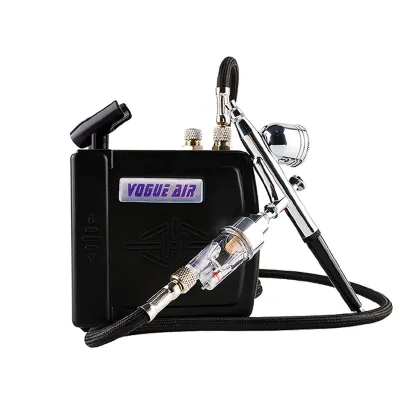
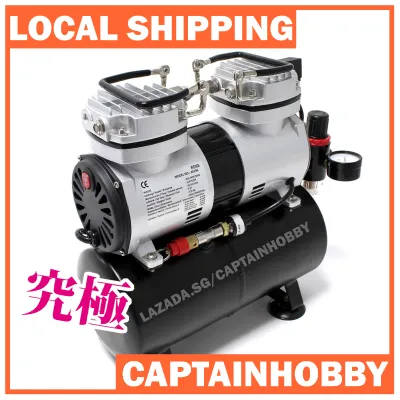
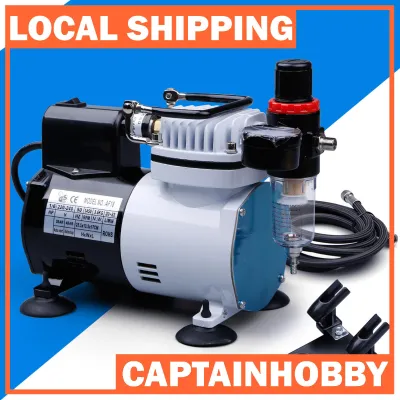
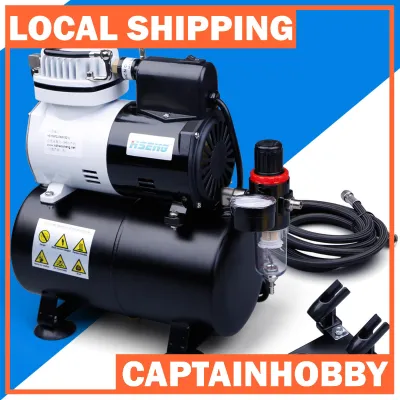
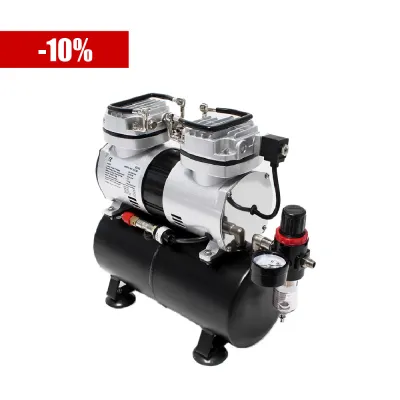
Prices are valid at publication and may change. Please refer to the product page for the latest price.
Verify the Hardware: Core Components of a Complete Setup
An airbrush system is not a single tool but an interconnected ecosystem. When evaluating a beginner kit, you must verify that all essential hardware components are included to avoid unexpected secondary purchases that can stall your project.
The airbrush gun is the centerpiece of the setup. It is responsible for mixing paint with compressed air and atomizing it into a fine mist. Without a reliable gun, even the most advanced compressor cannot deliver a smooth finish on your model parts.
The air compressor acts as the power source, supplying the pressurized air needed to atomize the paint. A steady, controllable air supply is critical because inconsistent pressure leads to paint splattering and uneven coverage across the plastic surfaces.
Connecting these two is the air hose. Look for a braided nylon air hose rather than a stiff plastic one. Braided hoses offer superior durability, flexibility, and resistance to kinking, allowing you to maneuver the airbrush freely around complex Gundam parts.
In humid climates like Singapore, a moisture trap is an absolute necessity. As the compressor compresses air, moisture condenses inside the system. Without an inline moisture trap, water droplets will travel down the hose and shoot out of your airbrush, ruining your fresh paint job with unsightly water spots.
Finally, a pressure regulator with an integrated pressure gauge allows you to monitor and adjust the airflow. Different paint types and techniques require specific pressure settings, making real-time adjustment capability vital for consistent results.
Airbrush Specifications: Matching Nozzles and Actions to Gunpla Scales
Airbrush guns come in various configurations, and selecting the right specifications is crucial for the specific demands of Gundam modeling.

The first decision is the trigger action type. Dual-action airbrushes are the standard for Gunpla. Pressing the trigger down releases air, while pulling it back controls the paint volume. This independent control allows you to paint fine lines, shade panel lines, and adjust paint flow on the fly. Single-action airbrushes, which release a fixed amount of paint when the trigger is pressed, lack the control needed for subtle shading and detailed work.
Nozzle and needle sizes dictate the spray pattern width and the viscosity of paint you can spray. For beginners, a 0.3mm nozzle is the most versatile choice. It is wide enough to spray primer and base coats on 1/144 High Grade (HG) and 1/100 Master Grade (MG) parts, yet fine enough for pre-shading and detail work. A 0.2mm nozzle is excellent for micro-details but clogs easily with thicker paints, while a 0.5mm nozzle is ideal for large surfaces or thick primers but lacks precision.
The feed mechanism determines how paint enters the nozzle. Gravity-feed airbrushes, featuring a cup mounted on top of the gun, are highly recommended for Gundam modeling. They require lower air pressure to operate, which reduces overspray, and they allow you to use every last drop of paint—a major benefit when mixing custom colors.
Consider the paint cup capacity as well. A cup size of 7cc to 9cc is the sweet spot for Gunpla. It holds enough paint to cover several armor pieces without refilling, without making the airbrush too heavy or obstructing your line of sight. Look for a cup with a lid to prevent accidental spills when tilting the brush.
Compressor Features: Ensuring Stable Airflow for Scale Models
The compressor is the workhorse of your setup, and its features directly impact your painting experience and the quality of your finish.
An air compressor equipped with an air tank (typically 3 liters for hobby models) is highly advantageous. The tank stores pressurized air, allowing the compressor motor to turn off once the tank is full. This ensures a completely smooth, pulsation-free airflow, reduces wear on the motor, and significantly lowers noise levels since the motor only runs intermittently.
Adjustable pressure output is another critical feature. Gundam paints, such as lacquers, acrylics, and enamels, require different operating pressures. For instance, highly thinned paints for shading might require a low pressure of 10 to 15 PSI, while thicker primers or metallic paints may need 25 to 30 PSI. A compressor that allows precise pressure adjustments ensures you can adapt to any paint medium.
Look for safety and longevity features like an auto-stop/start function and thermal overload protection. The auto-stop function shuts down the motor when the target pressure is reached, preventing overheating during long painting sessions. Thermal protection automatically cuts power if the unit gets too hot, safeguarding your equipment.
For modelers living in apartments or shared spaces in Singapore, noise level and physical footprint are major considerations. Look for oil-free piston compressors designed specifically for hobby use, which typically operate at noise levels below 50 decibels. This is quiet enough to use in a spare room without disturbing family members or neighbors.
Kit Configurations: Choosing Between Bundles and Custom Builds
When purchasing your first setup, you must decide between buying an all-in-one beginner bundle or assembling a custom kit from individual components.
All-in-one beginner bundles are highly convenient and often cost-effective, with entry-level packages starting around S$120 to S$200. These bundles ensure that all components—compressor, airbrush, hose, and fittings—are compatible out of the box. However, the airbrush guns included in budget bundles are often generic models with lower manufacturing tolerances, which can make cleaning and fine detailing more challenging.
A mix-and-match approach involves pairing a reliable, entry-level branded airbrush with a standard hobby compressor. While this requires a higher initial investment (often between S$250 and S$450), it offers superior long-term value. You get a high-precision tool that is easier to clean and maintain, backed by readily available replacement needles and nozzles.
If space or budget is strictly limited, prioritize the quality of the compressor first. A good compressor with an air tank can last for many years and support multiple airbrush upgrades. If you must start with a tankless compressor to save space, ensure it has a moisture trap and a reliable pressure regulator to maintain paint quality.
Before finalizing any purchase from online craft stores or hobby shops, use a pre-purchase verification checklist. Verify the thread sizes of the airbrush and hose; the industry standard is 1/8-inch BSP (British Standard Pipe). Check if the kit includes necessary adapters, a cleaning brush set, and clear warranty support for the compressor motor.
Beyond the Kit: Essential Safety Gear and Maintenance Tools
An airbrush kit alone is not enough to start painting safely and effectively. You must budget for essential safety gear and maintenance tools to protect your health and keep your equipment functioning.
Respiratory protection is non-negotiable, especially when spraying solvent-based paints like lacquers and enamels, which are popular in Gundam modeling for their durability and vibrant finishes. A half-mask respirator fitted with organic vapor cartridges and particulate pre-filters is essential to prevent inhaling harmful fumes and aerosolized paint particles. Simple dust masks do not provide adequate protection against chemical vapors.
Proper ventilation is equally critical for indoor setups. A dedicated spray booth with an extraction fan vents paint fumes and overspray out of a window, keeping your living space clean and safe. If a commercial spray booth is not feasible, ensure you work in a highly ventilated area with cross-drafts, and avoid spraying near living areas or air conditioning intakes.
Maintenance tools are vital for keeping your airbrush in working order. A cleaning pot serves as a safe receptacle to flush out paint and cleaning solvents during color changes. You will also need specialized nozzle cleaning brushes, dental picks or nozzle needles for removing stubborn paint clogs, and compatible airbrush cleaners or thinners matching your paint type.
Finally, handling small, intricate Gunpla parts requires holding tools. Invest in a set of alligator clips mounted on bamboo skewers and a painting stand or foam block to hold them. This allows you to paint parts from all angles without touching the wet surface, ensuring a flawless, fingerprint-free finish.
Frequently Asked Questions (FAQ)
Can I use a standard craft airbrush kit for Gundam models?
While standard craft airbrush kits designed for cake decorating or temporary tattoos can be used for basic, broad base coats, they generally fall short for Gundam modeling. These kits often feature single-action triggers and larger nozzle sizes (0.5mm or larger) that lack the precision required for fine scale details. They also struggle to handle the thicker pigments found in model primers and metallic paints, leading to frequent clogging and uneven finishes. For Gunpla, a dual-action airbrush with a 0.3mm nozzle is highly recommended to achieve professional results like pre-shading and clean panel lines.
Do I need a special adapter for my airbrush hose?
Whether you need an adapter depends on the thread sizes of your airbrush and compressor. Most hobby-grade airbrushes and compressors use a standard 1/8-inch BSP thread, allowing them to connect directly without adapters. However, some brands use proprietary thread sizes. When mixing brands or buying third-party hoses, always check the product specifications. If a mismatch occurs, inexpensive adapters are widely available at hobby shops and online marketplaces to convert proprietary threads to the standard 1/8-inch BSP size.
Community discussion
Share your experience or ask a question. Comments are reviewed before publication.