
Finding the perfect sampul duit—also widely known as green packets or money envelopes—is about balancing aesthetics, respect, and physical practicality. Whether you are preparing gifts for Hari Raya, weddings, or corporate milestones in Singapore, the size of your envelope dictates how smoothly your presentation goes. If the envelope is too small, you risk crumpling pristine banknotes or tearing the delicate paper seams. If it is too large, a single bill can slide around awkwardly, diminishing the impact of your gift. Matching the dimensions of Singapore’s polymer and paper banknotes to the correct envelope size ensures your token of appreciation remains secure and beautifully presented.
Understanding Standard Sampul Duit Size Categories
To choose the right envelope, you must first understand the four primary size categories available on the market. While individual stationery designers and online marketplaces may use slightly different names, most products fall into these standard classifications:
- Long/Rectangular Envelopes: These typically measure between 165 mm and 170 mm in length, with a width of 80 mm to 85 mm. They are specifically engineered to hold banknotes completely flat without any folding. This size is highly favored for premium presentation because it preserves the crisp, unblemished state of newly minted bills.
- Standard/Regular Envelopes: Measuring approximately 115 mm to 120 mm in length and 80 mm in width, standard envelopes are designed for notes folded precisely in half. They offer a compact alternative that balances physical portability with a clean, organized look.
- Square Envelopes: Usually measuring between 85 mm and 95 mm on all sides, square envelopes require banknotes to be folded either in half or in thirds (a letter fold). They provide a modern, stylish aesthetic that stands out from traditional rectangular designs.
- Mini/Petite Envelopes: These compact options measure around 70 mm by 70 mm or smaller. They are designed for notes that have been folded multiple times (double-folded) or for holding small items like gold coins, tokens, or gift vouchers.
When reviewing these categories, remember that “size” refers to both the outer dimensions and the internal pocket depth. The physical construction of the envelope—such as side seams, glue lines, and the shape of the sealing flap—inevitably reduces the usable internal space. For example, a thick, curved decorative flap or an elaborate 3D embossed border can shave up to 5 mm off the internal depth. Always check the manufacturer’s specifications for the actual pocket capacity before purchasing in bulk.
Products mentioned in this guide
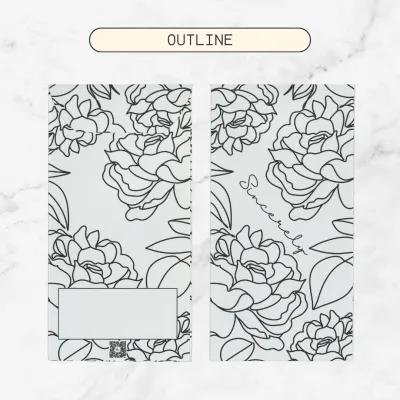
Prices are valid at publication and may change. Please refer to the product page for the latest price.
How to Match Envelope Sizes to Cash Amounts and Bill Conditions
The physical state of your cash, the denomination of the notes, and the total volume of the stack are the primary factors that determine which envelope size you need.

Crisp, Unfolded New Bills
If you have queued at the bank to secure pristine, newly printed banknotes, you should preserve their condition by using Long/Rectangular envelopes. In Singapore, standard banknotes vary in size by denomination: a S$2 note is 126 mm by 63 mm, a S$10 note is 141 mm by 66 mm, and a S$50 note is 156 mm by 74 mm. A long envelope easily accommodates even the larger S$50 and S$100 notes without bending the corners, ensuring a flawless presentation.
Folded Bills (Single or Double Fold)
If you prefer a more compact presentation, Standard or Square envelopes are highly practical. However, folding a banknote changes its physical dynamics. A single fold halves the length of the bill but doubles its thickness. A double fold reduces the length to a quarter but quadruples the thickness. If you are placing multiple folded notes into a single Standard or Square envelope, the accumulated thickness can cause the paper to bulge, distorting the envelope’s shape and putting immense pressure on the adhesive seal.
High-Volume Cash Stacks
When gifting larger sums using smaller denominations (for example, ten S$2 notes instead of a single S$20 note), the physical bulk increases dramatically. A standard flat paper envelope is not designed to expand and will likely burst at the seams or fail to seal securely. For thick stacks, look for envelopes made from heavier paper stock (at least 120gsm) or those featuring built-in side gussets that expand to accommodate depth. Alternatively, the most practical solution is to exchange the bulk cash for larger denomination notes to keep the profile thin and elegant.
Coins or Token Amounts
If you are gifting physical coins, commemorative gold tokens, or small folded vouchers, Mini/Petite envelopes are the ideal choice. Placing a heavy coin inside a large rectangular envelope allows it to slide around freely. This movement can easily puncture the thin paper edges or break the bottom seal during transit. A mini envelope keeps the item snugly in place, preventing damage.
When selecting your envelopes, the exact outer width is generally less critical than the internal pocket depth and the flexibility of the paper material. Thinner paper (around 80gsm) offers a small amount of stretch but tears easily under tension, whereas premium cardstock (150gsm and above) is highly durable but completely rigid, offering no room for overstuffed contents.
Practical Steps to Measure and Test the Fit
To avoid damaging your cash or ruining expensive custom-designed envelopes, follow these practical steps to verify the fit before sealing.
Measuring Banknotes Against Pocket Depth
Do not rely solely on the outer dimensions listed on the packaging. Measure the physical banknotes you plan to gift and compare them to the internal pocket depth of the envelope. To find the internal depth, measure from the bottom seam of the envelope up to the opening line, subtracting about 3 mm on each side to account for the glued side seams.
The “Slip and Grip” Test
Before applying any adhesive or folding the flap, slide your cash stack into the envelope. Ensure there is a safe clearance margin of approximately 1 cm to 2 cm between the top edge of the banknotes and the folding crease of the flap. This margin prevents the banknotes from getting caught in the flap’s glue or double-sided tape. It also ensures the recipient can easily grip and slide the cash out without tearing the envelope or the bills.
Accounting for Bill Condition
Pristine, bank-new polymer notes are exceptionally thin and lie perfectly flat. However, older, circulated paper notes are softer, wrinkled, and naturally hold more air between the fibers. This means five circulated S$10 notes will take up significantly more physical volume than five brand-new ones. If you are using circulated currency, adjust your expectations and opt for a slightly larger envelope size or distribute the bills across multiple packets.
Sizing Norms for Different Gifting Occasions
In Singapore, cultural expectations and the formality of the event often dictate which envelope size is most appropriate, extending beyond mere physical fit.
Weddings and Formal Banquets
For formal events like weddings, there is a strong cultural preference for Long/Rectangular envelopes. Gifting pristine, unfolded notes in a long packet reflects high respect, formality, and careful preparation. It also aligns with the traditional practice of presenting clean, unblemished gifts to the newlyweds.
Hari Raya and Festive Seasons
During festive seasons like Hari Raya Aidilfitri, green packets are distributed in large quantities to children, extended family members, and visitors. For these occasions, Standard and Square sizes are the most popular and practical. They are highly portable, fitting easily into pockets or handbags, and allow the host to prepare and stack dozens of packets efficiently.
Corporate or Formal Gifts
For corporate gifting, business partnerships, or professional bonuses, Standard-sized envelopes are preferred. Opting for a minimalist design printed on premium, heavy-weight paper (such as 120gsm to 140gsm) projects professionalism and ensures the envelope fits neatly into a standard business portfolio or breast pocket.
Frequently Asked Questions (FAQ)
Can I use a standard ang bao size for sampul duit?
Yes, standard red packets (ang bao) and green packets (sampul duit) share highly similar dimensions, and standard sizes designed for folded notes are functionally interchangeable. However, long rectangular envelopes are particularly prominent in Malay and Muslim gifting traditions to keep notes flat and pristine, whereas traditional ang baos come in a wider variety of square and mini shapes. Always verify the physical dimensions of the envelope to ensure your specific notes fit comfortably.
What should I do if my cash stack is too thick for the envelope?
If your cash stack is too thick, do not force it inside, as this can split the paper seams or ruin the presentation. A practical solution is to split the total amount into two separate envelopes, or exchange the smaller notes for a single, larger denomination note (such as swapping ten S$5 notes for one S$50 note). Alternatively, look for specialized envelopes designed with expandable side gussets to handle thicker stacks safely.
Community discussion
Share your experience or ask a question. Comments are reviewed before publication.