
Gouache paint occupies a unique space in the art world, offering a bridge between the fluid transparency of watercolor and the bold, solid opacity of acrylic. Often described as an opaque watercolor, this versatile medium has been a staple for illustrators, designers, and fine artists for centuries. Its defining characteristic is its ability to deliver rich, velvety, matte color that can be reactivated with water long after it has dried. Understanding how gouache behaves, and how it compares to its close relatives, is key to deciding if it is the right tool for your creative workflow.
The Core Properties of Gouache Paint
At its foundation, gouache paint consists of natural or synthetic pigments mixed with a water-soluble binder, most commonly gum arabic. This is the same binder used in traditional watercolors. However, gouache is formulated with a much higher concentration of pigment relative to the binder. In addition to this high pigment load, many traditional gouache paints contain inert white opacifiers, such as chalk or titanium dioxide. This structural difference prevents light from passing through the paint layer to the paper beneath, resulting in its signature opacity.
The visual result of this high pigment concentration is a flat, velvety matte finish. Unlike acrylics, which dry with a plastic-like sheen, or watercolors, which leave a delicate glaze, dry gouache absorbs light rather than reflecting it. This non-reflective surface makes gouache exceptionally easy to photograph, scan, and reproduce digitally without glare. For this reason, it has historically been the preferred medium for commercial artists, poster designers, and illustrators.
Products mentioned in this guide
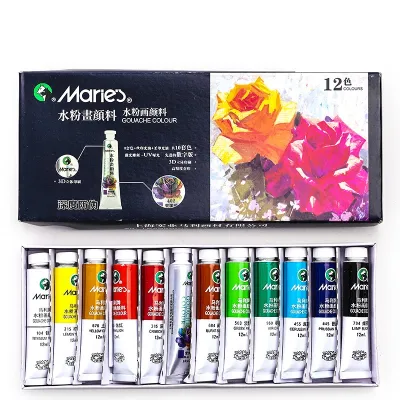
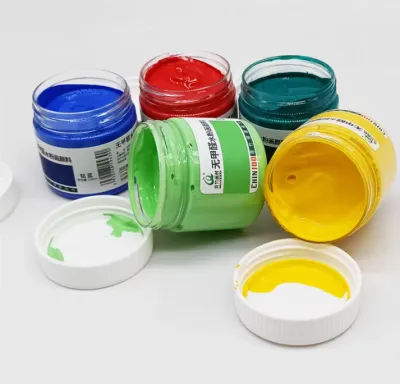
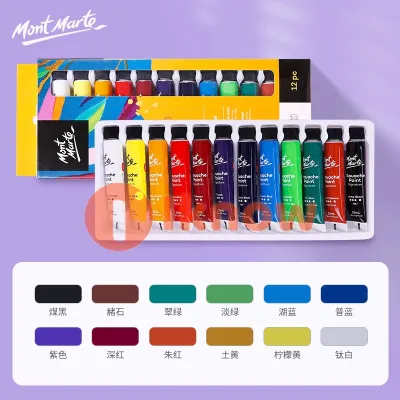
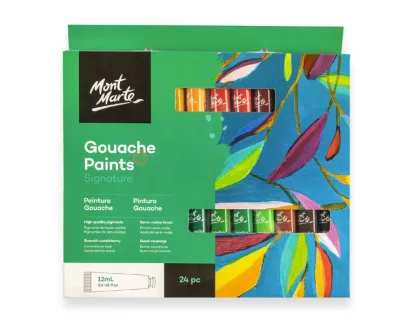
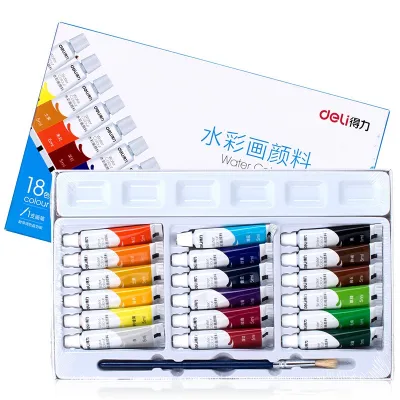
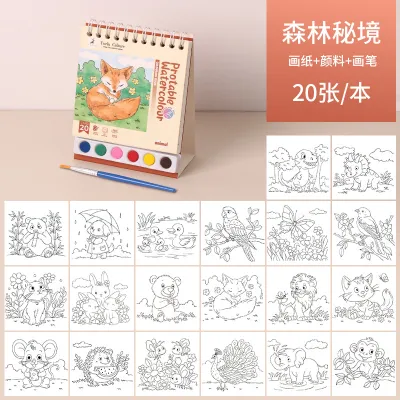
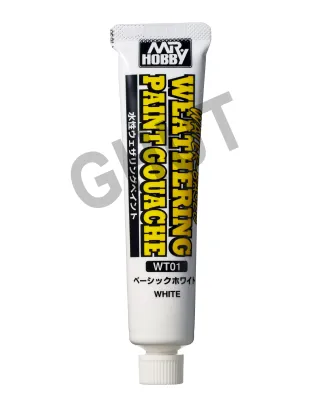
Prices are valid at publication and may change. Please refer to the product page for the latest price.
Working with gouache requires managing its water-soluble nature. Because the binder does not chemically cure, the paint remains soluble indefinitely. You can let gouache dry on a palette and reactivate it days later simply by adding water. However, this makes layering a delicate process. Applying a wet layer over a dry layer can dissolve the paint underneath, leading to muddy mixtures. To prevent this, subsequent layers must be applied quickly, with minimal brush strokes and a relatively dry brush.
Gouache vs. Watercolor: Opacity, Reactivation, and Layering
The most obvious distinction between gouache and watercolor is how they interact with light and the painting surface. Watercolor is transparent. Light passes through the pigment layer, reflects off the white surface of the paper, and travels back to your eyes, creating a luminous, glowing effect. Gouache, by contrast, is opaque. It sits on top of the paper fibers as a solid barrier, blocking the background entirely. This opacity allows you to paint on toned, gray, or black paper, where the colors stand out with remarkable vibrancy.

This difference in opacity completely changes how you plan and execute a painting. With watercolor, you must work strictly from light to dark, preserving the white of the paper for your brightest highlights. If you make a mistake or paint a dark wash over an area, it is incredibly difficult to correct. Gouache frees you from this rigid sequence. Because it is opaque, you can work from dark to light. You can lay down a dark background wash and then paint bright white highlights or intricate light patterns directly on top without the dark background showing through.
While both mediums can be reactivated with water, they behave differently when you attempt to lift or correct mistakes. In watercolor, you can often lift pigment off the paper with a damp, clean brush to restore a highlight or soften an edge. With gouache, attempting to lift paint can be more unpredictable. Because the paint layer is thicker and more opaque, scrubbing the surface with water can quickly turn the area into a chalky, muddy slurry. Reworking gouache requires a delicate touch, often relying on painting a fresh, opaque layer over the mistake rather than trying to wash the old paint away.
Gouache vs. Acrylic: Drying Time, Finish, and Permanence
The fundamental difference between gouache and acrylic lies in their binders, which dictate how the paints dry and cure. Gouache relies on gum arabic, a water-soluble natural gum that remains soluble indefinitely. Acrylic paint uses an acrylic polymer emulsion as its binder. When acrylic paint dries, the water evaporates, causing the polymer particles to chemically fuse together. This process creates a flexible, water-resistant plastic film. Once dry, acrylic paint is completely permanent and cannot be dissolved or reactivated with water, regardless of how much moisture is applied to the surface.
This difference in binder also affects the physical texture and finish of the dry paint. Acrylic paint dries to a slightly glossy, satin, or semi-matte finish, depending on the specific formulation and any mediums added. It is highly flexible and can be applied thickly to create textured, three-dimensional brushstrokes without the risk of cracking. Gouache, on the other hand, dries to a completely flat, brittle, matte finish. Because it lacks the flexible plastic quality of acrylic, gouache cannot be applied in thick, heavy layers; doing so will cause the paint to shrink, crack, and eventually flake off the surface.
The permanent nature of acrylic means that once it dries on your palette or brushes, it is incredibly difficult to remove. Brushes must be kept wet during use and washed immediately afterward to prevent permanent damage. Gouache offers a much more forgiving workflow. If you leave your palette open and the paint dries out, you can simply spray it with water to bring it back to life. Brushes can be easily cleaned even if the paint has dried on the bristles, making gouache a highly portable and low-maintenance option.
How to Decide Which Medium Suits Your Artistic Needs
Gouache is highly suited for artists who value flat, graphic compositions, precise detail, and a matte aesthetic. It is an excellent choice for illustrators, character designers, and comic artists who plan to scan their work for digital reproduction. Its quick drying time and easy cleanup also make it a favorite for plein air sketching and keeping a visual journal. If you enjoy the ability to blend colors smoothly but also want the freedom to paint light details over dark backgrounds, gouache provides the perfect balance.
Watercolor remains the ideal choice for artists who want to explore transparency, fluid movement, and luminous washes. If your style relies on soft gradients, atmospheric landscapes, or expressive, unpredictable paint bleeds, watercolor is unmatched. It is also highly portable and requires very little paint to cover large areas, making it a classic choice for travel sketching and minimalist setups.
Acrylic is the best option if you work on large canvases, paint on non-paper surfaces like wood, metal, or fabric, or require a durable, waterproof finish. It is highly versatile, allowing you to mimic both watercolor washes (when heavily diluted) and oil paint textures (when used straight from the tube). If you enjoy building up thick, textured layers or want to create mixed-media pieces without worrying about underlying layers dissolving, acrylic is the most reliable medium.
When choosing between these mediums, consider your working environment and cleanup routine. In humid climates, such as Singapore, gouache and watercolor palettes must be managed carefully to prevent mold growth if stored wet for long periods. Acrylics dry very quickly in warm environments, which can be frustrating on the palette but advantageous if you want to build multiple layers rapidly. Assessing your preferred surface, your patience for brush maintenance, and whether you want a permanent or reworkable finish will guide you to the right choice.
Frequently Asked Questions (FAQ)
Can you mix gouache with watercolor or acrylic?
Traditional gouache and watercolor can be mixed freely on the palette because they share the same gum arabic binder. Mixing them allows you to adjust the opacity of your washes, creating a semi-opaque effect. Mixing traditional gouache with standard acrylic, however, is more complicated. While they can be blended while wet, the different binders (water-soluble gum arabic versus water-resistant acrylic polymer) can conflict, leading to uneven drying or reduced adhesion. If you want the matte finish of gouache with the permanence of acrylic, it is best to use dedicated acrylic gouache, which uses an acrylic binder formulated to dry to a flat, matte finish.
What type of paper is best for gouache painting?
To prevent buckling and warping from the water used in gouache painting, select a heavyweight paper. Look for watercolor or mixed media paper with a weight of at least 300 gsm (grams per square meter). Hot-pressed paper has a smooth, flat surface that is excellent for fine details, clean lines, and scanning. Cold-pressed paper has a textured tooth that can hold heavier applications of paint and create interesting dry-brush effects. Regardless of the texture, taping the edges of your paper to a rigid board with artist’s tape will help keep the surface flat as it dries.
Does gouache paint fade or crack over time?
The longevity of a gouache painting depends on the pigments used and how the paint is applied. To prevent fading, check the manufacturer’s lightfastness ratings on the paint tubes, choosing pigments rated as excellent or very good. Because gouache dries to a brittle, non-flexible finish, applying it in thick, heavy layers (impasto) can lead to cracking and flaking over time. To protect your finished artwork from moisture, dust, and physical damage, frame it behind glass. Using a mat board is essential to ensure the painted surface does not touch the glass directly.
Community discussion
Share your experience or ask a question. Comments are reviewed before publication.