
Choosing the right envelope size is essential for preserving your document’s presentation and managing postage costs. The simplest way to determine the correct envelope is to match your document’s paper size with its corresponding envelope format, considering how you plan to fold the paper. For example, an unfolded A4 sheet requires a C4 envelope, an A4 folded in half needs a C5 envelope, and an A4 folded into thirds fits perfectly into a DL envelope.
Understanding these relationships saves time and prevents the frustration of forcing documents into tight spaces or paying unexpected postage for oversized packaging. By aligning your mailings with international sizing standards, you ensure smooth transit and a professional presentation upon delivery.
Understanding Standard Envelope Sizing Systems
Most stationery globally, including in Singapore, follows the ISO 269 international standard. This standard defines the dimensions of the C-series envelopes, which are specifically designed to pair with the standard A-series paper formats (such as A4 and A5) used in everyday printing. The system is logical and sequential, making it easy to identify the correct size once you understand the underlying relationship.
Products mentioned in this guide
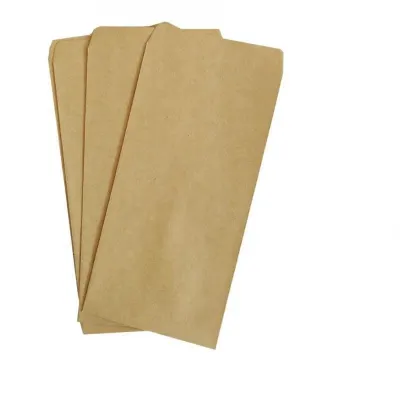
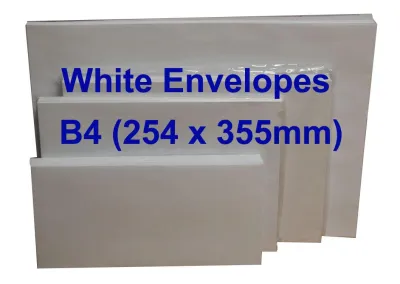
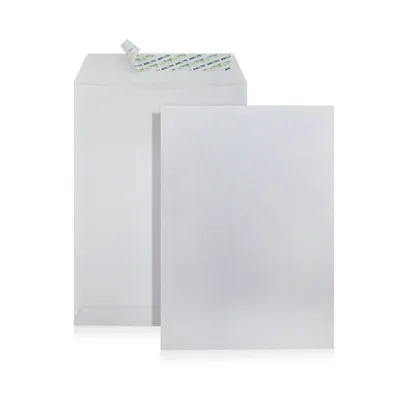
Prices are valid at publication and may change. Please refer to the product page for the latest price.
The key to this system is that every C-series envelope is manufactured to be slightly larger than its corresponding A-series paper counterpart. For example, a C4 envelope measures slightly larger than an A4 sheet of paper. This intentional size difference, known as clearance, allows you to slide your documents into the envelope smoothly without catching the edges or bending the corners.
This geometric relationship scales consistently. A C5 envelope fits an A5 sheet flat, while a C6 envelope accommodates an A6 sheet. Because folding a piece of paper in half reduces its size to the next standard A-series format, you can easily calculate your envelope needs based on your folding method. Folding an A4 sheet in half once turns it into an A5-sized document, which then fits inside a C5 envelope.
Matching Envelope Sizes to Common Paper Formats
When preparing mail, your choice of envelope depends on whether your documents can be folded. Folding reduces the overall footprint of the mailpiece, allowing you to use smaller, more cost-effective envelopes. Keeping documents flat, however, preserves their pristine condition and is essential for formal or legal correspondence.

DL and C6 Envelopes for Folded Documents
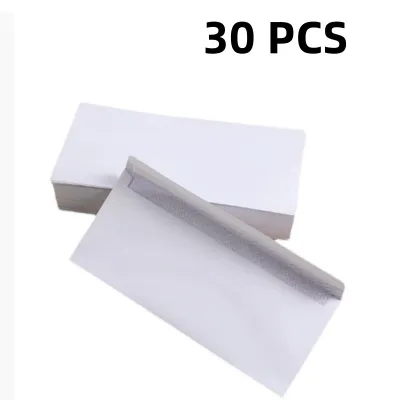
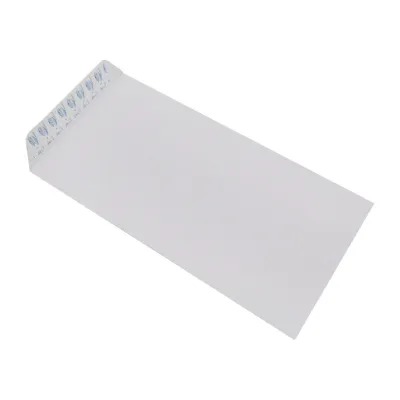
The DL (Dimension Lengthwise) envelope is the most ubiquitous format in corporate and administrative mailing. Measuring 110 mm by 220 mm, the DL envelope is specifically designed to hold an A4 sheet of paper folded horizontally into thirds. This format is the standard choice for professional business letters, monthly utility bills, invoices, and formal marketing letters. Because it maintains a slim, elongated profile, it fits easily into standard letterboxes and automated sorting machines.
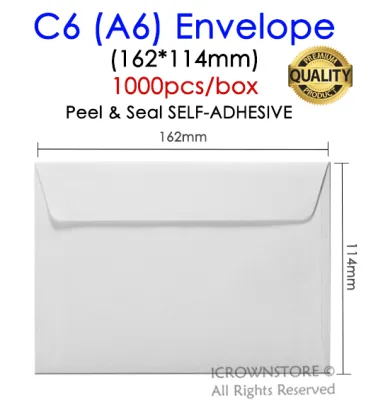
The C6 envelope, measuring 114 mm by 162 mm, is a more compact option. It is designed to hold an A6 sheet flat, or an A4 sheet folded in half twice (into quarters). C6 envelopes are highly popular for personal correspondence, greeting cards, invitations, and small postcards. While less common for formal business letters, they are highly efficient for compact, lightweight mailings that do not require complex multi-page layouts.
C5 Envelopes for Half-Folded or A5 Documents
Measuring 162 mm by 229 mm, the C5 envelope is a highly versatile mid-sized option. It is engineered to hold an A5 sheet flat, or an A4 sheet folded in half once along its shortest axis. This format strikes an excellent balance between document presentation and mailing efficiency, making it a staple in both office and home environments.
C5 envelopes are the preferred choice for sending multi-page documents where a tri-fold would make the paper stack too thick to slide easily into a DL envelope. Common use cases include corporate brochures, promotional catalogs, multi-page financial statements, and thicker greeting cards. By folding your A4 documents only once, you maintain a cleaner, more professional presentation while still keeping the package compact enough to qualify for standard letter postage rates.
C4 Envelopes for Unfolded A4 and Important Documents
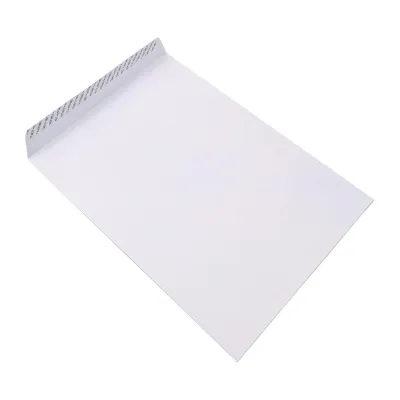
The C4 envelope measures 229 mm by 324 mm and is designed to accommodate a standard A4 sheet of paper completely flat, without any folds or creases. When your document’s visual integrity and professional presentation are paramount, the C4 envelope is the industry standard.
This format is essential for mailing high-value or sensitive documents, including legal contracts, certificates, academic transcripts, professional diplomas, photographs, and architectural drawings. Creasing these items can permanently damage them or diminish their professional appearance. Using a C4 envelope ensures your documents arrive in the exact condition they were printed, laying flat and ready for presentation or filing.
How to Measure and Select Envelopes for Non-Standard Items
Not every item you need to mail will conform to standard A-series paper dimensions. When mailing non-standard items like thick booklets, custom-sized greeting cards, promotional merchandise, or stationery sets, you must use a manual measurement approach to select the correct envelope.
Start by measuring the exact length, width, and thickness of your item using a reliable ruler. Once you have these dimensions, apply the clearance margin rule: add at least 10 mm to 15 mm to both the length and the width of your item. This extra space prevents the envelope seams from splitting during insertion and ensures the postal carrier can handle the package without tearing the outer paper.
If your item has significant thickness, such as a catalog or a heavy book, you must also account for the depth. The thickness of the item will naturally pull the sides of the envelope inward, reducing the effective width and length. For items thicker than 5 mm, it is wise to abandon standard paper envelopes. Instead, opt for gusseted envelopes, which feature expandable sides designed to accommodate depth, or padded mailers that offer built-in bubble protection for fragile items. For rigid items like photographs or certificates that must not bend, a rigid cardboard mailer is the safest choice to prevent transit damage.
Beyond Dimensions: Thickness, Weight, and Mailing Constraints
Selecting the correct envelope dimensions is only the first step; you must also consider the physical properties of the envelope and how they interact with local postal regulations. The weight and thickness of your mailpiece directly influence both its durability during transit and the cost of postage.
Envelope paper quality is measured in GSM (grams per square metre). Standard office envelopes typically range from 70 GSM to 80 GSM, which is adequate for light, single-page correspondence. However, if you are mailing heavier documents, multi-page reports, or items with sharp edges, you should upgrade to envelopes with a paper weight of 90 GSM to 120 GSM. These heavier envelopes offer greater puncture resistance and ensure your contents remain secure throughout the sorting and delivery process.
In Singapore, postal services like Singapore Post (SingPost) categorize mail based on strict physical dimensions, weight, and thickness. For example, standard regular letters must fit within specific size limits and must not exceed a thickness of 6 mm. Standard large letters can be thicker, but still have strict limits (such as a maximum thickness of 14 mm). If your C4 envelope is stuffed with a thick document that exceeds these limits, or if it weighs more than the standard threshold, it will be reclassified as a package or parcel.
To avoid delivery delays, returned mail, or unexpected postage fees, always verify your sealed envelope’s final weight and thickness. If your envelope feels rigid, bulky, or heavy, check the latest weight and dimension tiers provided by your local postal operator before applying postage stamps.
Frequently Asked Questions (FAQ)
Can I put an unfolded A4 paper in a C5 envelope?
No, an unfolded A4 sheet will not fit inside a C5 envelope. A C5 envelope is designed to hold an A5 sheet flat, which is exactly half the size of an A4 sheet. To use a C5 envelope, you must fold your A4 paper in half once; otherwise, you must upgrade to a larger C4 envelope to mail the A4 sheet flat.
What is the difference between C5 and B5 envelopes?
The difference lies in their sizing standards and intended contents. A C5 envelope (162 mm x 229 mm) is designed to hold standard A5 paper flat or A4 paper folded in half. A B5 envelope (176 mm x 250 mm) is slightly larger and is designed to hold B5-sized paper or booklets. B5 envelopes are also commonly used to hold thicker stacks of A5 documents that cannot easily fit into a standard C5 envelope.
How do I know if my envelope needs extra postage?
Your envelope will require extra postage if it exceeds the standard weight, thickness, or size limits set by your postal carrier. For instance, if your mailpiece is thicker than 6 mm, weighs more than the standard limit, or contains rigid items that cannot bend, it will likely be classified under a higher postage tier. Always measure and weigh your completed envelope and consult your postal service’s current guidelines to ensure correct postage.
Community discussion
Share your experience or ask a question. Comments are reviewed before publication.