
Selecting the right envelope for letter documents ensures your mail arrives in pristine condition while preventing unexpected postage surcharges. The ideal envelope size depends entirely on your document’s physical dimensions and how you fold it. By matching your paper size to the corresponding standard envelope system, you ensure a professional presentation and seamless sorting through automated postal machines.
Navigating the world of mailing supplies becomes straightforward once you understand how paper sizes and envelope dimensions interact. Selecting the correct size protects your contents from tearing, keeps sensitive information secure, and streamlines your mailing process.
Understanding Standard Envelope Size Systems (C-Series, B-Series, and DL)
The international standard for paper sizes, ISO 216, directly dictates standard envelope dimensions. This system uses a geometric relationship where each envelope series is designed to hold a corresponding paper series. The C-series is the most common envelope standard, engineered specifically to fit A-series paper sheets of the same numerical designation.
Products mentioned in this guide

Prices are valid at publication and may change. Please refer to the product page for the latest price.
For example, a C4 envelope is designed to hold an unfolded A4 sheet of paper snugly. If you scale down to A5 paper, it fits perfectly inside a C5 envelope. This systematic naming logic eliminates the guesswork when purchasing office or personal stationery, as you only need to match the letter’s final folded size to the corresponding C-series number.
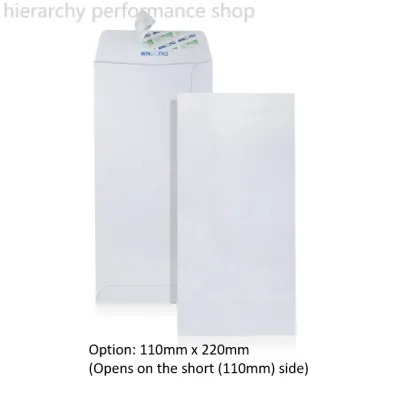
The DL (Dimension Long) format is a unique but highly common envelope size that does not follow the standard C-series numbering. Measuring 110 mm by 220 mm, the DL envelope is specifically designed to accommodate an A4 sheet of paper that has been folded horizontally into three equal parts. This format is the absolute standard for professional business correspondence, utility bills, and commercial mailings.
B-series envelopes provide an alternative for more complex mailing needs. B-series envelopes are slightly larger than their C-series counterparts of the same number. For instance, a B4 envelope easily accommodates a C4 envelope inside it, or holds a thick stack of A4 papers that would stretch or tear a standard C4 envelope. Understanding this hierarchy allows you to choose the right outer layer for multi-layered mailings or bulky documents.
How to Match the Right Envelope for Letter Formats
Selecting the right envelope requires mapping your document’s paper size and folding method to the correct envelope dimensions. Using the wrong size can lead to excessive folding, which looks unprofessional, or using an oversized envelope, which increases postage costs.

The following quick-reference table summarizes the most common paper sizes, folding methods, and their corresponding envelope requirements:
| Paper Size | Folding Method | Resulting Dimensions | Recommended Envelope | Envelope Dimensions | Common Use Case |
|---|---|---|---|---|---|
| A4 | Unfolded (Flat) | 210 mm x 297 mm | C4 | 229 mm x 324 mm | Contracts, certificates, catalogs |
| A4 | Folded in half once | 148 mm x 210 mm | C5 | 162 mm x 229 mm | Personal letters, booklets, invitations |
| A5 | Unfolded (Flat) | 148 mm x 210 mm | C5 | 162 mm x 229 mm | Invoices, flyers, greeting cards |
| A4 | Folded in thirds | 99 mm x 210 mm | DL | 110 mm x 220 mm | Business letters, bills, statements |
| A4 | Folded in quarters | 105 mm x 148 mm | C6 | 114 mm x 162 mm | Small greeting cards, RSVP cards |
| A6 | Unfolded (Flat) | 105 mm x 148 mm | C6 | 114 mm x 162 mm | Photos (4×6 inch), postcards, notes |
Unfolded A4 Documents (C4 Envelopes)
C4 envelopes are the standard choice for mailing documents that must remain perfectly flat and free of creases. Measuring 229 mm by 324 mm, these envelopes provide ample room for standard A4 sheets without requiring any folding.
This format is essential for formal correspondence, including legal contracts, academic transcripts, diplomas, certificates, and professional design portfolios. Folding these items can compromise their presentation or even invalidate their official status.
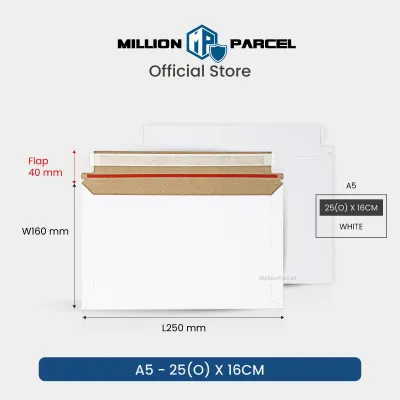
When mailing highly sensitive or valuable unfolded documents, consider using rigid or board-backed C4 envelopes. These specialized envelopes feature a thick cardboard backing that prevents the envelope from bending, twisting, or folding during transit through automated sorting systems.
Single-Folded Letters and A5 Documents (C5 Envelopes)
Folding a standard A4 sheet in half across its longest dimension creates an A5-sized document. A C5 envelope, measuring 162 mm by 229 mm, is designed to hold these single-folded letters perfectly.
This size is highly popular for personal letters, seasonal greeting cards, wedding invitations, and standard A5 booklets or promotional catalogs. It strikes an ideal balance between a compact mailing size and maintaining a clean, professional look with minimal creasing.
C5 envelopes are also the natural choice for unfolded A5 stationery. If you write personal correspondence on A5 sheets, you can slide them directly into a C5 envelope without folding them further, preserving the elegant look of your handwriting.
Tri-Folded Business Letters (DL Envelopes)
The DL envelope is the cornerstone of corporate communication and automated mailing systems. To fit a DL envelope, an A4 sheet must be folded horizontally into three equal panels, resulting in a compact, elongated shape.
This configuration is standard for utility bills, financial statements, formal corporate correspondence, and direct marketing materials. The tri-fold method keeps the letter compact while ensuring it fits neatly into standard office filing systems and mailboxes.
Many DL envelopes feature a transparent plastic window on the front. When preparing business letters for windowed DL envelopes, you must format your document so the recipient’s address block aligns precisely with the window pane, eliminating the need to print separate address labels.
Small Cards, Photos, and A6 Notes (C6 Envelopes)
C6 envelopes, measuring 114 mm by 162 mm, are designed for smaller mailing items. They fit an A6 sheet of paper, which can be created by folding an A4 sheet in half twice, or folding an A5 sheet in half once.
This size is widely used for standard 4×6 inch photographs, RSVP cards, compact greeting cards, and short, handwritten thank-you notes. Because of their smaller footprint, they are highly favored for social stationery and casual personal correspondence.
While C6 envelopes are highly convenient for personal notes, verify that your final folded packet is not too thick. Multiple folds in a small space can cause the envelope to bulge, which may require additional sealing reinforcement or alternative postage rates.
Accounting for Thickness, Capacity, and Postal Limits
Selecting the correct envelope involves more than matching length and width; you must also consider the third dimension of thickness. The weight of your paper, measured in grams per square meter (GSM), and the total page count directly affect how much space your document occupies inside the envelope.
Standard printer paper is typically 80gsm, meaning a single A4 sheet weighs approximately 5 grams. While a standard DL or C5 envelope easily holds three to five sheets of 80gsm paper, mailing a thicker document—such as a 20-page report—will cause a flat envelope to bulge, strain the adhesive seams, and potentially tear during transit.
For thick stacks of paper, small books, or rigid items, upgrade to a gusseted or expandable envelope. Gusseted envelopes feature pleated sides that expand to accommodate dimensional bulk, keeping the package flat and secure without putting undue stress on the paper seams.
In Singapore, postal regulations set by Singapore Post dictate strict size and thickness thresholds that determine your postage costs. A “Standard Regular” letter must not exceed 240 mm in length, 162 mm in width, and 6 mm in thickness, with a maximum weight of 40 grams. DL and C5 envelopes easily fit this category, provided they are kept thin and light.
If your mailpiece exceeds these dimensions, or if its thickness is between 6 mm and 14 mm, it is classified as a “Standard Large” letter, which can measure up to 324 mm by 229 mm (fitting a C4 envelope) and weigh up to 500 grams. Any item exceeding 14 mm in thickness, weighing over 500 grams, or containing rigid, uneven items is classified as “Non-Standard” or a “Parcel,” which incurs higher shipping rates. Always verify the current weight and thickness limits on the official Singapore Post website before sealing and stamping bulkier mail.
Frequently Asked Questions (FAQ)
What is the difference between C-series and B-series envelopes?
C-series envelopes are designed to hold standard A-series paper sizes directly and snugly, such as a C4 envelope holding an unfolded A4 sheet. B-series envelopes are slightly larger than C-series envelopes of the same number, meaning a B4 envelope can comfortably hold a C4 envelope inside it. This makes B-series envelopes ideal for multi-layered mailings, thick manuscripts, or documents that require extra breathing room.
Do I need a larger envelope if my letter has multiple pages?
For standard letters containing three to five sheets of standard 80gsm paper, your regular DL or C5 envelope is perfectly adequate and will seal securely. You only need to upgrade to a larger size, such as a C4 or a B-series envelope, or choose an expandable gusseted envelope, when your document stack exceeds 15 to 20 pages. This prevents the envelope from bulging past standard thickness limits and risking a seam burst during automated sorting.
Community discussion
Share your experience or ask a question. Comments are reviewed before publication.