
Selecting the perfect envelope size is more than just a matter of making paper fit; it is about presenting your documents professionally, protecting your contents, and managing your postage costs effectively. Whether you are sending a formal business contract, a delicate wedding invitation, or a simple greeting card, matching your paper to the correct envelope ensures a seamless fit. In Singapore, where business correspondence and personal celebrations keep our postal system active, understanding standard dimensions saves you from the frustration of folded edges or rejected mail.
To find the right envelope, you must consider both the physical dimensions of your document and how you plan to fold it. Standard international paper sizes correspond directly to specific envelope formats, making the selection process highly logical once you know the system. By understanding a few simple rules, you can confidently purchase the exact stationery you need for any occasion.
Understanding Standard Envelope Sizes: The C-Series and DL Formats
The international standard for paper sizes, known as ISO 216, governs the dimensions of the paper we use every day, such as A4. To complement this, the ISO 269 standard defines the C-series for envelopes. The beauty of this system lies in its mathematical consistency: each C-series envelope is designed to hold the corresponding A-series paper size perfectly.
Products mentioned in this guide
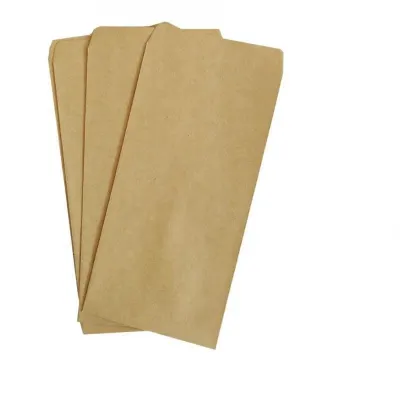
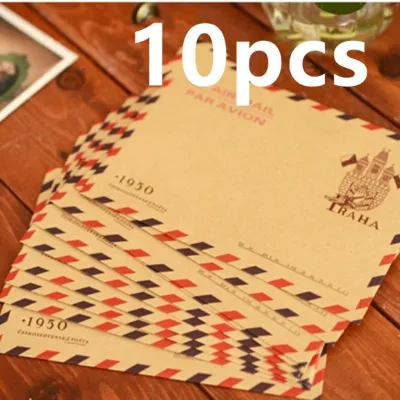
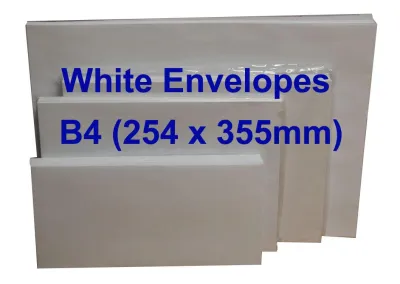
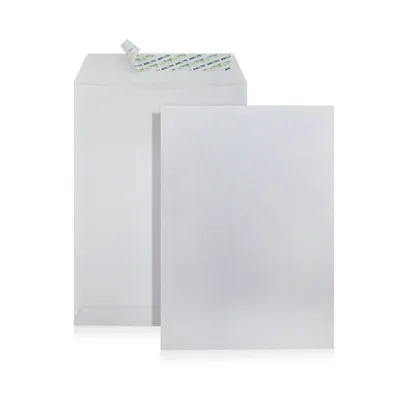
Prices are valid at publication and may change. Please refer to the product page for the latest price.
The design principle is straightforward: a C-series envelope is slightly larger than its A-series counterpart. This means a C4 envelope is specifically dimensioned to hold a flat, unfolded sheet of A4 paper. Similarly, a C5 envelope accommodates a flat sheet of A5 paper, and a C6 envelope fits a flat sheet of A6 paper. This standardized scaling eliminates the guesswork when matching stationery.
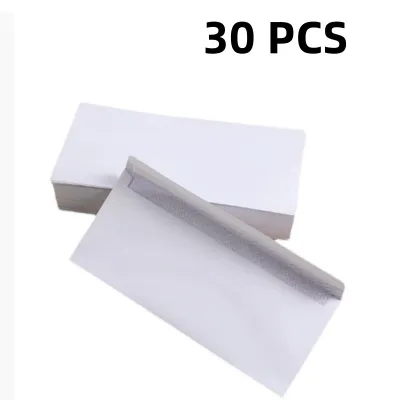
Aside from the C-series, the DL (Dimension Lengthwise) format is one of the most common envelopes used in corporate environments. The DL envelope does not follow the same square-root-of-two proportions as the C-series. Instead, it is a long, narrow envelope designed specifically to hold an A4 sheet of paper that has been folded horizontally into three equal parts. This format is the standard choice for professional letters, invoices, and bank statements, offering a compact and elegant presentation.
Quick Match Guide: Matching Envelopes to Paper and Documents
To help you quickly identify the correct envelope for your documents, use this practical reference guide. It maps common paper sizes and folding configurations to their corresponding envelope dimensions.

| Envelope Size | External Dimensions | Matching Paper Size & Fold Type | Common Use Cases |
|---|---|---|---|
| C3 | 324 mm x 458 mm | A3 flat (unfolded) | Art prints, posters, architectural blueprints, large certificates |
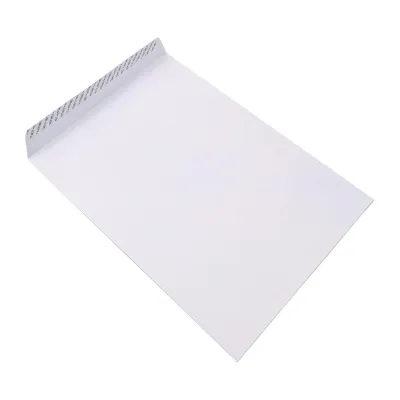
| C4 | 229 mm x 324 mm | A4 flat (unfolded) | Contracts, legal documents, magazines, certificates, catalogs |
| C5 | 162 mm x 229 mm | A5 flat, or A4 folded once in half | Booklets, corporate brochures, greeting cards, multi-page letters |
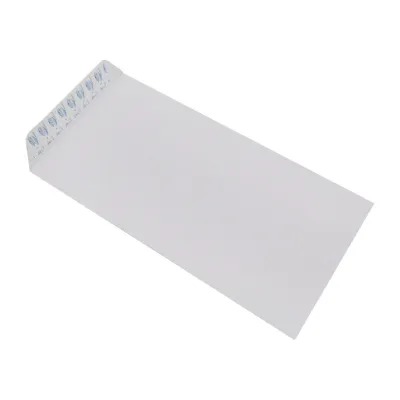
| DL | 110 mm x 220 mm | A4 folded horizontally into thirds | Business letters, invoices, flyers, promotional pamphlets |
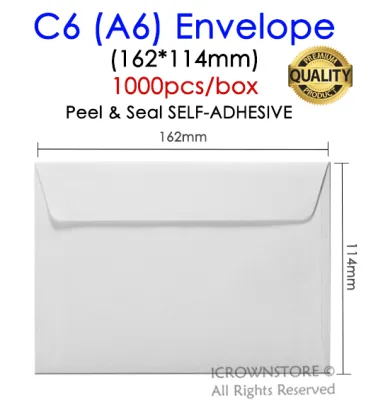
| C6 | 114 mm x 162 mm | A6 flat, or A5 folded once in half | Standard greeting cards, postcards, personal letters, photos |
| C7 | 81 mm x 114 mm | A7 flat, or A6 folded once in half | Mini gift cards, RSVP cards, florist cards, small tokens |
When using this guide, remember that envelope dimensions always refer to the external measurements. The internal capacity will be slightly smaller due to the paper seams and the thickness of the adhesive flaps. If you are inserting a thick document, such as a multi-page contract or a heavy catalog, you may need to step up one envelope size to accommodate the bulk without tearing the paper.
Additionally, consider the material compatibility of your envelope. Standard white woodfree paper envelopes (usually 80 to 100 gsm) are excellent for general printing and laser jet printing. However, if you plan to write addresses by hand using a fountain pen or gel pen, test the ink on a spare envelope first. High-absorbency or low-quality paper can cause ink feathering, bleeding, or slow drying times, which can smudge and render the address illegible during transit.
Sizing for Non-Standard Items: Greeting Cards and Invitations
Not every item you mail will conform to standard A-series dimensions. Custom greeting cards, square wedding invitations, and handmade craft items often feature unique shapes and thicknesses that require careful measurement before purchasing envelopes.
To ensure a smooth fit for custom items, always apply the “margin rule.” As a general guideline, your envelope should be approximately 5mm to 10mm larger than the item in both length and width. This extra clearance provides enough wiggle room for the recipient to slide the contents out easily without damaging the edges. For example, if you have a custom invitation measuring 150mm x 150mm, a square envelope measuring at least 155mm x 155mm or 160mm x 160mm is ideal.
Thickness and rigidity also play a major role in envelope selection. Heavy cardstock, layered invitations with ribbons, or cards featuring wax seals add physical depth. A flat envelope will stretch and warp when forced over a thick item, which can break seals or tear the paper seams. For bulky or rigid items, consider upgrading to gusseted (expandable) envelopes, which feature pleated sides that expand to accommodate depth.
If your contents are fragile or have sharp edges, standard paper envelopes may not offer sufficient protection. In these cases, padded envelopes or bubble mailers are the safest choice. The interior bubble lining cushions the contents against impacts during sorting and transport. Always measure the actual physical item with a ruler rather than relying on the printed dimensions on the packaging, as manufacturing variances can sometimes occur.
Mailing Considerations: Dimensions, Thickness, and Postage Rules
Choosing the right envelope is not just about physical compatibility; it also directly impacts your postage costs and delivery success. In Singapore, Singapore Post (SingPost) categorizes mail based on dimensions, weight, and thickness, which determines the required postage value.
Before sealing your envelope, verify that it complies with local mailing standards. Standard basic mail has strict limits on thickness—typically up to 2mm for standard letters. If you stuff a C5 or DL envelope with multiple pages, cardstock, or promotional items, it can easily exceed this limit. Once an envelope crosses the thickness threshold, it may be reclassified as a large letter or a package, which requires higher postage.
Weight is another critical factor. A standard paper envelope containing a single sheet of paper is incredibly light, but adding multiple inserts, heavy-duty cardstock, or decorative elements can quickly push the envelope past the standard weight tiers. To avoid delivery delays or return-to-sender issues, weigh your fully packed and sealed envelope on a digital scale. If you are unsure about the classification, visit a local post office or use a postage calculator to verify the exact postage rules based on your final packed weight and thickness.
Frequently Asked Questions (FAQ)
Can I put an A4 document in a C5 envelope without folding it?
No, an unfolded A4 document will not fit inside a C5 envelope. A C5 envelope measures 162mm x 229mm, whereas an unfolded A4 sheet is 210mm x 297mm. To use a C5 envelope, you must fold the A4 paper exactly in half. If you need to keep the A4 document completely flat and unfolded—such as for certificates, legal contracts, or official transcripts—you must use a larger C4 envelope.
What is the main difference between C6 and DL envelopes?
The primary differences lie in their dimensions and typical use cases. A DL envelope is long and narrow, measuring 110mm x 220mm, and is designed specifically to hold an A4 sheet folded horizontally into thirds. This makes it the standard choice for professional business letters and invoices. In contrast, a C6 envelope is more compact and rectangular, measuring 114mm x 162mm. It is designed to hold an A6 card or an A5 sheet folded in half, making it the preferred choice for personal correspondence, greeting cards, and postcards.
Community discussion
Share your experience or ask a question. Comments are reviewed before publication.