
A good beginner knitting kit must bridge the gap between raw materials and a finished piece without overwhelming a newcomer. It should contain medium-sized needles with sufficient grip, a highly visible and forgiving yarn, essential finishing notions, and clear, step-by-step instructions. Having these components pre-selected allows you to focus entirely on mastering the basic knit and purl stitches. By choosing a well-curated kit, you avoid the confusion of matching yarn weights to needle sizes on your own, ensuring a smooth and enjoyable introduction to the craft.
Core Knitting Needles for Beginners
Needles are the foundation of your knitting journey, and their material significantly affects how easily you control your stitches. For beginners, bamboo or wooden needles are highly recommended because their textured surfaces provide natural friction. This grip prevents slippery yarn from sliding off the tips accidentally, reducing dropped stitches and frustration. In contrast, metal or plastic needles offer high speed but can be too slick for someone still learning to maintain consistent tension.
The size of the needles in a starter kit is equally critical. Look for kits that include medium-sized needles, typically ranging from 4.0 mm to 5.5 mm (US sizes 6 to 9). These sizes are comfortable to hold, allow you to see your stitches clearly, and pair well with medium-weight yarns. Avoid very thin needles, which can be fiddly and strain your eyes, as well as extremely thick jumbo needles, which can tire out your hands and wrists quickly.
Products mentioned in this guide
![[✅SG Ready Stock] 70Pcs DIYI Crochet Kit for Beginners Complete Crochet Knitting Kit Adorable Animal Crochet Starter Pack](https://img.lazcdn.com/g/p/2d3fdc639d4d617dd2a33c60c591bddb.png_400x400q80.png_.webp)
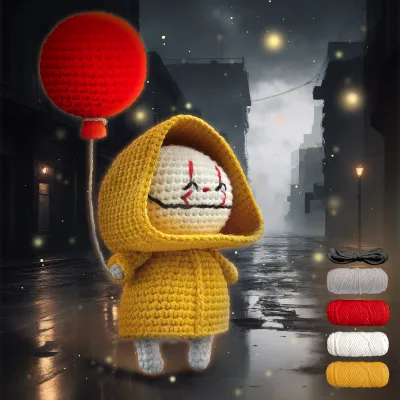
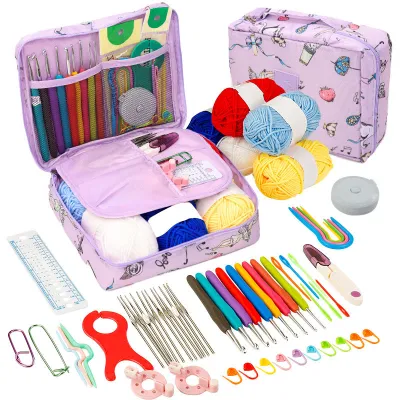
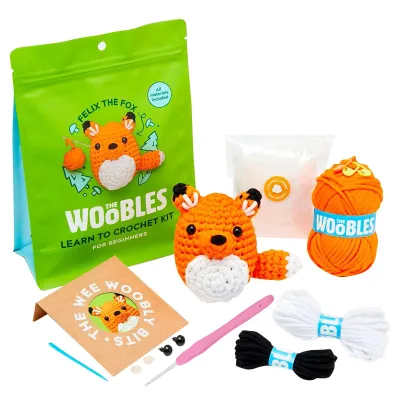
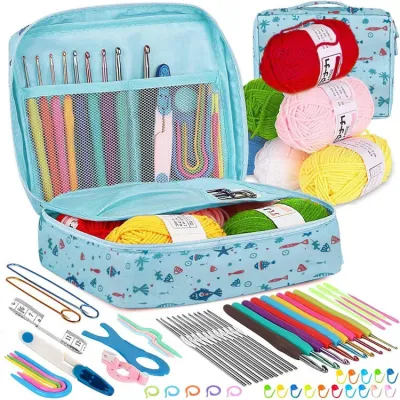
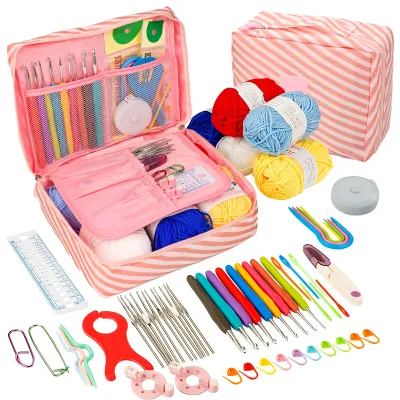
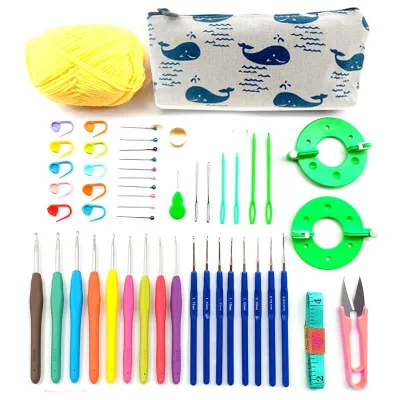
Prices are valid at publication and may change. Please refer to the product page for the latest price.
You will also need to choose between straight and circular needles. Straight needles are traditional and excellent for small, flat projects like scarves, but they can feel unwieldy if they are too long. Circular needles, which consist of two needle tips joined by a flexible cable, are highly versatile. They can be used for both flat and round projects, distribute the weight of the fabric onto your lap, and are much easier to store in compact Singapore apartments where space is at a premium.
Yarn Essentials: Fiber, Weight, and Yardage
The yarn included in a beginner kit should make learning easy, not difficult. Medium-weight yarns, specifically worsted or aran weight (often labeled as category 4), are the industry standard for beginners. They are thick enough to progress quickly but thin enough to handle comfortably. Opt for light, solid colors like cream, pastel blue, or soft grey, as dark or highly variegated yarns make it incredibly difficult to see where to insert your needle.

Fiber content determines how the yarn behaves on your needles and how the finished item feels. Acrylic yarn is highly durable, machine-washable, and budget-friendly, making it a common choice for starter kits. Wool blends offer excellent elasticity, which helps maintain even stitch tension, though you should verify that the blend is soft enough for sensitive skin. Cotton is strong and breathable, which suits warmer climates, but its lack of stretch can make it harder on beginner hands.
Before purchasing, always cross-check the yardage provided in the kit against the requirements of the included pattern. A reliable kit will include at least 10% to 15% more yarn than the pattern strictly requires. This extra yardage acts as a safety net, allowing you to knit a practice swatch or accommodate looser tension without running out of material before your project is complete.
Must-Have Notions and Accessories
A complete knitting kit should save you from making immediate trips to a craft store by including essential small tools, known as notions. These accessories are vital for finishing your work professionally.
- Tapestry Needles: Look for blunt-tipped needles with large eyes. These are used to weave in loose yarn ends securely without splitting the fibers of your stitches.
- Stitch Markers: These small plastic rings slide onto your needles to mark pattern repeats, stitch counts, or the beginning of a round.
- Flexible Measuring Tape: Essential for checking your progress and ensuring your project reaches the correct dimensions.
Some kits also include helpful extras like row counters or stitch holders. While not strictly necessary for your very first project, a manual row counter helps you keep track of your progress without relying on pen and paper, while stitch holders safely secure active stitches when you need to pause or split your work.
Evaluating the Pattern and Instructions
A pile of beautiful yarn and high-quality needles is of little use without a clear roadmap. The pattern and instructions included in a beginner kit must be designed specifically for someone who has never held needles before. Look for kits that offer step-by-step written instructions accompanied by clear illustrations or high-resolution photographs. A comprehensive glossary explaining common abbreviations, such as “K” for knit and “P” for purl, is also indispensable.
Digital support has become a hallmark of modern, high-quality kits. Many excellent options now feature QR codes linking directly to exclusive video tutorials. These videos allow you to watch the exact hand movements required for casting on, knitting, purling, and binding off, which is incredibly beneficial for visual learners.
Finally, verify that the provided pattern is a direct match for the materials in the box. The pattern must explicitly call for the exact yarn weight and needle size provided. A mismatch here will lead to a finished project that is either distorted, too stiff, or completely different in size than expected.
What Might Be Missing: Planning Extra Purchases
Even the most comprehensive beginner kits rarely contain absolutely everything you need to complete a project. Knowing what is typically excluded helps you prepare your workspace and avoid mid-project interruptions.
Fabric scissors are almost always excluded from basic kits due to shipping and safety constraints. You will need a sharp pair of scissors dedicated to cutting yarn cleanly without fraying the ends.
Other advanced finishing tools, such as foam blocking mats and rust-resistant T-pins for shaping your damp finished knits, or specialized wool washes, are also standard exclusions that you can purchase later as your hobby grows.
Before checking out, carefully review the kit’s exact inventory list to calculate your true total cost. Basic kits in Singapore typically range from S$25 to S$60, depending on the quality of the yarn and tools. If essential items are missing, you can easily source them from local craft stores or online stationery and fabric suppliers to complete your setup.
Frequently Asked Questions (FAQ)
Can I use the yarn from a beginner kit for other projects?
Yes, you can use the yarn for other projects, provided you check the yarn label for its specifications. The label contains crucial information, including the fiber content, weight category, and care instructions. If you decide not to make the kit’s intended pattern, you can use the yarn for practice swatches, simple coasters, or any other pattern that calls for the same yarn weight and matching needle sizes.
Do I need to buy different needle sizes for my first kit?
No, a single pair of needles in the size provided by the kit is fully sufficient for your first project. The kit is curated so that the needle size matches the yarn weight and pattern exactly. You will only need to purchase different needle sizes later when you decide to transition to new projects that use thinner or thicker yarns, or when you need to adjust your needle size to achieve the correct pattern gauge.
Community discussion
Share your experience or ask a question. Comments are reviewed before publication.