
Finding the right weekly view diary in Singapore requires matching your daily cognitive style with the physical layout of the page and the technical specifications of the paper. Because Singapore’s tropical humidity can actively affect how paper fibers interact with ink, selecting a planner is not just about aesthetic appeal; it is a functional decision. Whether you are balancing back-to-back corporate meetings in the Central Business District, tracking academic deadlines, or organizing a creative personal routine, the structure of your weekly spread dictates how effectively you capture and execute your tasks. Choosing a layout that aligns with your natural thinking patterns prevents the common phenomenon of “planner guilt,” where a beautifully bound book is abandoned after a few weeks of mismatched use.
Identifying Your Core Planning Style
To select a weekly view diary that you will consistently use, you must first analyze how you naturally process tasks and time. Planning styles generally fall into three categories: time-blocking, task-based, and freeform journaling. If your day is dictated by hourly appointments, scheduled calls, and strict deadlines, you require a layout that treats time as a physical grid. Conversely, if your daily life consists of a long list of tasks that can be completed at any point during the day, a rigid hourly schedule will only frustrate you, leaving large swaths of empty space that make your day look unproductive even when you have accomplished a great deal.
Running out of writing space is a frequent pain point for detailed planners, while feeling constrained by pre-printed grids is the primary complaint of creative thinkers. If you find yourself writing tiny notes in the margins or crossing out pre-printed hours to fit your schedule, your current layout is working against you. Your daily routine should dictate the structure of your diary, not the other way around. A shift worker or a student with irregular hours will have vastly different spatial needs than a corporate professional working a standard nine-to-five schedule, making it essential to match your daily rhythm to either hourly slots or open, customizable canvases.
Products mentioned in this guide
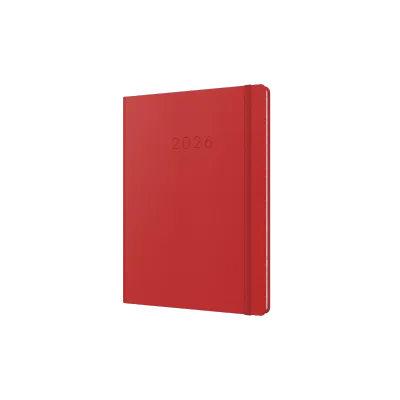
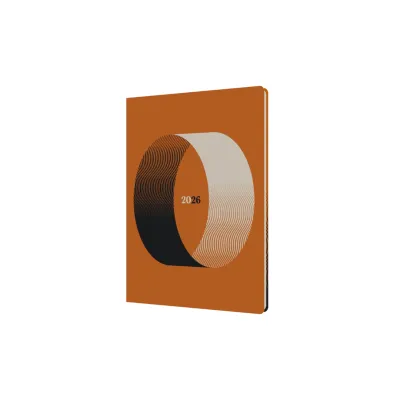
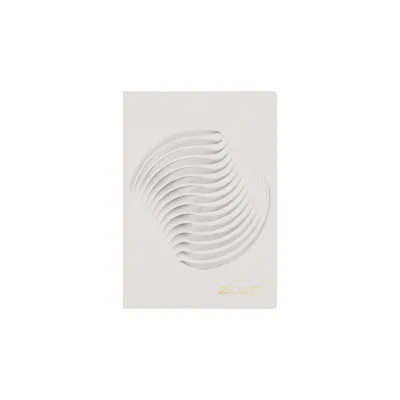

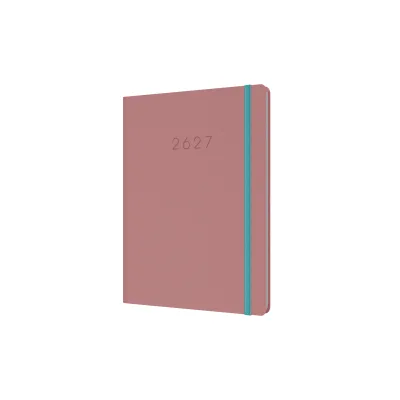
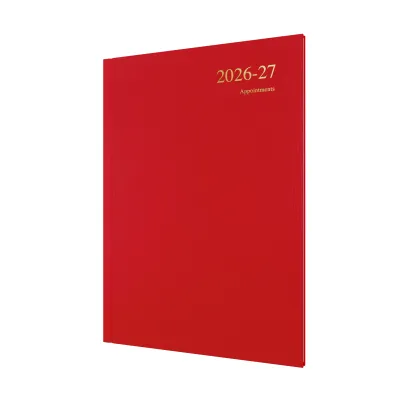
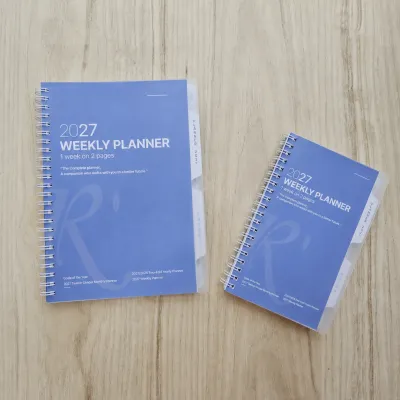
![[2 in 1] 2027 Vincent van Gogh Monthly Planner + Weekly Planner/Notebook - (A5 | 120 pages)|ROYCE PUBLISHING](https://img.lazcdn.com/g/p/167f5ca7dc71bb65dfe551a31e9f4650.jpg_400x400q80.jpg_.webp)
Prices are valid at publication and may change. Please refer to the product page for the latest price.
Before purchasing a diary, track your planning habits for a single week on a blank sheet of paper. Note whether you naturally write in chronological order, group tasks by project, or simply jot down thoughts as they occur. This simple self-assessment reveals your cognitive planning style. If you find yourself drawing boxes and timelines, you are a visual, time-blocking planner. If you list items with checkboxes, you are a task-based planner. If you write paragraphs and sketch ideas, you are a freeform planner who requires maximum open space.
Essential Features to Evaluate in a Weekly Diary
Once you have identified your planning style, you must evaluate the physical and structural attributes of the diary to ensure it can withstand daily use. The most critical component of any paper planner is the paper itself. Paper weight is measured in grams per square meter (GSM), and this figure determines how the pages handle different writing instruments. For standard ballpoint pens, a paper weight of 70 to 80 GSM is perfectly adequate. However, if you prefer using fountain pens, wet gel pens, rollerballs, or highlighters, you should look for diaries featuring 80 to 120 GSM paper with specialized sizing coatings to prevent ink from feathering or bleeding through to the reverse side.

In Singapore’s humid climate, paper naturally absorbs ambient moisture from the air, which can soften the fibers and make even high-quality paper more susceptible to ink bleed-through and slower drying times. Coated papers, often found in premium Japanese and European diaries, resist this moisture absorption better than uncoated, highly porous papers. When evaluating paper, consider the color as well; bright white paper offers high contrast for colorful gel pens, while cream or off-white paper reduces eye strain during long planning sessions under office fluorescent lighting.
Binding is another crucial factor that directly impacts the daily writing experience. A true lay-flat binding, typically achieved through Smyth-sewn or thread-bound construction, allows the diary to open completely flat on your desk. This ensures you can write comfortably across the entire page, including the area near the center gutter, without having to hold the pages down with your hand. Spiral or wire-o bindings also lay flat and allow you to fold the diary back on itself to save desk space, though the metal or plastic coils can sometimes obstruct your hand when writing on the inner margins. Glued softcover bindings are highly portable but often require a break-in period or a paperweight to remain open.
Size formats represent a direct trade-off between portability and writing space. The standard A5 size (148mm x 210mm) is widely considered the most versatile option, offering ample room for detailed weekly planning while fitting easily into most commuter bags and backpacks. For those who prioritize portability and want a diary that can fit into a small handbag or a large pocket, the B6 size (125mm x 176mm) or pocket size (A6) offers a compact alternative, though you must be prepared to write smaller and use abbreviations. Desk-bound professionals who manage complex projects or multiple team schedules should consider an A4 size (210mm x 297mm) to maximize their visual workspace.
Layout Profiles for Different Planning Approaches
Weekly diaries are structured in several distinct formats, each designed to support specific workflows. When browsing product descriptions online or inspecting planners in a store, look closely at the page diagrams to identify how the days are arranged. The layout of the weekly spread determines how your eyes track your schedule and how you prioritize your daily tasks.
Vertical and Horizontal Weekly Spreads
Vertical weekly layouts present the week across a two-page spread, with each day allocated a vertical column running from the top of the page to the bottom. This structure is the gold standard for hourly scheduling and sequential time-blocking. It allows you to visualize your day as a timeline, making it easy to spot gaps in your schedule, plan travel times between meetings, and allocate dedicated blocks of time for deep work. When evaluating a vertical layout, verify the hourly scale printed on the side; some diaries only cover standard business hours, while others offer a full 24-hour timeline or blank columns that allow you to write in your own hours.
Horizontal weekly layouts, on the other hand, allocate horizontal blocks across the two-page spread, typically with Monday through Wednesday on the left page and Thursday through Sunday on the right. This format is highly suited for linear task lists, narrative journaling, or tracking daily milestones. Because horizontal lines mimic the natural flow of writing, this layout is comfortable for those who write in complete sentences. Look for horizontal designs that incorporate a dedicated notes margin or a blank grid page on the right side of the spread, which provides an excellent space for weekly shopping lists, habit trackers, or overflow notes that do not fit into a specific day.
Open-Space and Modular Weekly Layouts
For planners who find traditional grids and columns too restrictive, open-space and modular layouts offer a flexible, hybrid approach. These designs often feature a highly simplified weekly calendar on one side of the spread, leaving the facing page completely blank, dotted, or grid-lined. This structure is ideal for bullet journaling enthusiasts who want the convenience of a pre-printed weekly overview but still require a blank canvas for mind-mapping, sketching, or tracking habits throughout the week.
When selecting a modular layout, pay close attention to the dot-grid or grid spacing, which is typically 5mm. A dot-grid provides just enough visual guidance to keep your handwriting straight and help you draw clean boxes, without the intrusive feel of solid ruled lines. This allows you to divide the open space into custom modules based on your changing needs from week to week—such as a meal planning section one week, and a project brainstorming space the next. This adaptability is perfect for creative professionals and students whose weekly workloads vary significantly in structure.
Minimalist and Undated Weekly Formats
Undated weekly diaries offer ultimate flexibility for individuals who do not require a continuous, day-by-day record throughout the entire year. If you travel frequently, experience highly seasonal workloads, or find yourself skipping weeks of planning during holidays, an undated format ensures that no paper is wasted. You simply fill in the dates as you go, allowing you to pause and resume your planning practice at any time without leaving empty pages behind.
However, undated formats come with specific trade-offs that you must consider before purchasing. Manually writing in the dates, months, and week numbers for an entire year requires a time investment and carries the risk of dating errors that can throw off your scheduling. Furthermore, because there are no pre-printed dates, forward-planning for events several months in advance can be challenging. To mitigate this, verify that the undated diary you choose includes a robust set of undated monthly spreads at the front of the book, which you can use to map out future commitments before transferring them to your weekly pages.
Evaluating Brands and Verifying Specifications Before Purchase
To ensure your chosen weekly view diary meets your expectations, always verify the manufacturer’s technical specifications on official product pages before making a purchase. Look for explicit details regarding paper weight (GSM), paper origin, and binding construction. Avoid relying solely on vague marketing terms like “premium paper” or “fountain pen friendly” without checking the underlying specifications, as these terms are subjective and do not guarantee compatibility with your specific writing tools.
Whenever possible, visit physical stationery stores in Singapore to conduct a hands-on inspection of the diaries you are considering. Perform a simple “lay-flat test” by opening the diary to several different sections—the beginning, middle, and end—to see if the book remains open on its own without the spine springing shut. If the store provides tester books, bring your preferred everyday pens to conduct a discreet bleed-through and drying-time check on a back page. This is particularly important in Singapore, as testing the paper in local ambient humidity will give you an accurate representation of how the ink will behave in your daily environment.
When purchasing online through ecommerce platforms or specialized stationery retailers, carefully review the seller’s return and exchange policies. Ensure that you can return the product if it arrives with defective binding, misprinted pages, or transit damage such as bent corners. Reading customer reviews specifically for mentions of binding durability, paper consistency, and packaging quality can also help you avoid common manufacturing defects and ensure your diary arrives in pristine, usable condition.
Frequently Asked Questions (FAQ)
Can I use fountain pens in standard weekly diaries?
You can use fountain pens in weekly diaries, but you must verify the paper’s technical specifications first. Look for diaries that specify high-density, coated paper (typically 80 GSM or higher) designed to resist ink absorption and feathering. If the manufacturer does not explicitly state fountain pen compatibility, perform a discreet test in a corner of the very last page. Apply a small amount of ink and observe if it spreads along the paper fibers or bleeds through to the reverse side. Because Singapore’s high humidity can slow down ink evaporation, allow extra drying time for wet inks on coated papers to prevent smudging when you close the diary.
How do I transition my tasks if I miss a week in an undated diary?
Transitioning tasks in an undated diary is simple if you use systematic task migration. When you resume planning after a gap, review your last active week and mark incomplete tasks as either migrated (using an arrow symbol) or canceled if they are no longer relevant. Write the current dates on the next clean weekly spread and copy the active, migrated tasks over. You can use any blank pages left during your absence for creative brainstorming, project planning, or index adjustments, ensuring that no paper is wasted and your planning momentum is maintained.
What is the best way to keep a softcover diary intact in a bag?
To protect a softcover diary during daily commutes, place it inside a rigid protective sleeve or a dedicated planner cover made of canvas, leather, or durable plastic. This prevents the corners from bending and shields the edges of the paper from other items in your bag. Additionally, avoid overstuffing your diary with thick inserts, loose receipts, or heavy pens clipped directly to the pages, as this puts uneven pressure on the spine and can eventually compromise the stitched or glued binding over months of use.
Community discussion
Share your experience or ask a question. Comments are reviewed before publication.