
Finding the perfect weekly planner in Singapore requires balancing your daily scheduling style with the specific writing instruments you use. Rather than relying on subjective brand popularity, the most effective way to choose a planner is to evaluate its physical specifications, layout ergonomics, and paper characteristics. By understanding how paper weight, surface finish, and binding methods interact with your favorite pens, you can select a tool that enhances your productivity without causing frustration from ink feathering or structural wear.
Core Criteria for Comparing Weekly Planners
Before diving into aesthetic details, you must establish the foundational physical and structural criteria of any planner. Size is the first practical constraint. Standard formats like A5 (148mm x 210mm) offer a balanced canvas for detailed writing, while B6 (125mm x 176mm) and pocket sizes provide superior portability for those who carry their planners daily in a small bag or backpack during a daily commute. The overall weight and page count directly influence this portability; a 400-page daily-weekly hybrid will feel significantly heavier than a slim, 120-page weekly-only booklet.
Layout categories dictate how information is organized and prioritized on the page. The four primary formats are vertical columns, horizontal blocks, hourly schedules, and freeform layouts. Each format serves a distinct cognitive style, shifting the focus from strict chronological tracking to open-ended task listing.
Products mentioned in this guide
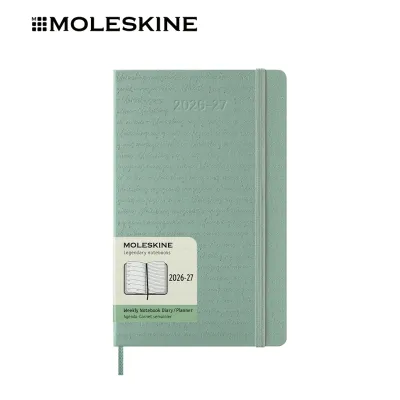
![[2 in 1] 2027 Winnie-The-Pooh Classic Monthly Planner + Weekly Planner / Notebook-(A5 | 120 pages)|ROYCE PUBLISHING](https://img.lazcdn.com/g/p/e80990a67cd76a5aff09f199057fca0f.jpg_400x400q80.jpg_.webp)
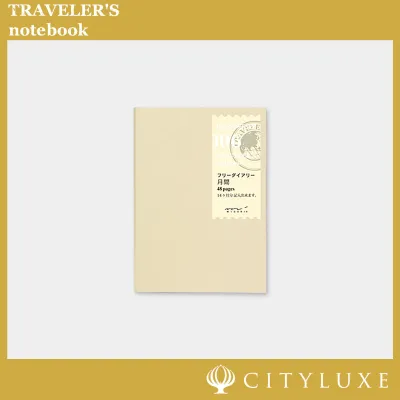
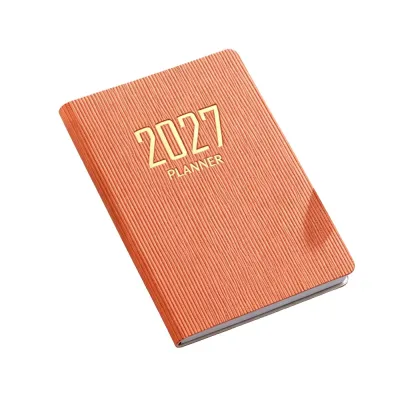
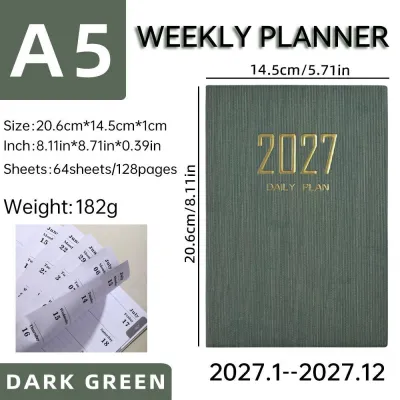
Prices are valid at publication and may change. Please refer to the product page for the latest price.
Paper metrics are equally critical and are often printed on the product label or manufacturer’s specification sheet. The most common metric is GSM (grams per square meter), which measures paper density. However, GSM alone does not guarantee performance; you must also consider the paper’s coating and surface tooth. Coated papers slow down ink absorption to prevent bleeding, while textured, uncoated papers offer more friction, or “tooth,” which some writers prefer for pencil or ballpoint use.
Finally, the binding type determines how the planner opens and how easily you can write across the center fold. Thread-sewn bindings allow the book to lie completely flat, whereas glued bindings may require you to hold the pages down. Spiral and disc-bound systems offer maximum flexibility, allowing you to fold the planner in half or swap pages, though the physical rings can sometimes obstruct your hand while writing.
Matching Layout Designs to Your Planning Style
Selecting the right layout is a matter of matching the visual structure of the page to your daily cognitive workflow. Vertical layouts present the week in parallel columns, making them ideal for time-blocking and visualizing your day from top to bottom. If your day is packed with meetings, appointments, or scheduled classes, a vertical format allows you to map out your hours side-by-side, giving you an instant overview of your open time slots.

In contrast, horizontal layouts divide the page into wide, landscape blocks. This format is highly suited for task-oriented planning, where the sequence of events matters less than the checklist itself. Horizontal spaces mimic natural writing lines, providing ample room for long-form task descriptions, daily reminders, or brief reflective journaling entries at the end of the day.
For those who require strict chronological discipline, hourly breakdowns within a vertical layout provide pre-printed time slots, often ranging from 8:00 AM to 8:00 PM. If your schedule is highly variable or project-based, however, these rigid lines can feel restrictive. In such cases, unstructured freeform layouts—which combine a minimal weekly grid on one page with a blank or dotted page on the facing side—offer the flexibility to brain-dump, sketch diagrams, or list weekly goals without daily constraints.
You should also evaluate how a planner handles supplementary pages. High-quality planners typically include monthly overviews at the beginning of each section to help you track long-term deadlines. Look for dedicated spaces for weekly goal setting, habit trackers, and dotted note sections at the back of the book.
Finally, consider how the layout handles overflow. When a single day becomes exceptionally busy, a rigid layout can run out of space. Planners that incorporate a “notes” column on the weekly spread or provide extra blank pages at the end of each week allow you to expand your lists without cluttering your daily schedule.
Verifying Paper Quality and Pen Compatibility
Paper quality is not merely about thickness; it is about how the paper fibers interact with different ink formulas. While a higher GSM (such as 100 GSM to 120 GSM) generally indicates a thicker, more opaque sheet that resists ghosting—where writing is visible on the reverse side—some specialized lower-GSM papers (such as 52 GSM or 68 GSM Japanese papers) use advanced sizing agents to prevent ink from bleeding through despite their thinness.
The surface finish of the paper plays a major role in drying speed and line crispness. Smooth, coated papers keep the ink on the surface, which preserves the vibrant color of gel pens and the shading of fountain pen inks, but this can result in longer drying times—a key consideration in Singapore’s humid climate. Textured, uncoated papers absorb ink quickly, reducing the risk of smudging, but they can cause water-based inks to feather, where the ink spreads along the paper fibers and creates fuzzy lines.
To verify compatibility before committing to a planner, you can perform a simple, reversible swatch test. If the retailer does not provide a sample paper booklet, use the very last page of the planner or an inconspicuous area near the inner margin. Draw a small grid using your primary writing instruments, including gel pens, ballpoints, fineliners, and fountain pens.
Observe how the ink behaves on the page. Check the reverse side of the sheet under natural light to evaluate the level of ghosting and look closely for any pinprick bleeding. If you notice that your favorite gel pen takes more than ten seconds to dry, or if a fineliner begins to feather immediately, you may need to adjust your choice of pen or opt for a planner with a different paper specification. Always refer to the manufacturer’s care guidelines regarding recommended ink types to ensure the longevity of your records.
Decision Framework: Choosing Your Ideal Weekly Planner
To narrow down your choices, use a structured decision framework based on your verified writing habits and scheduling needs. If your daily routine revolves around back-to-back appointments, time-blocking, or hourly tracking, prioritize a vertical or hourly layout with a thread-sewn, lay-flat binding. This combination ensures you can view your entire week at a glance and write comfortably across the entire spread.
If your planning style is more fluid, focusing on task lists, project milestones, or daily journaling, choose a horizontal or freeform layout. Look for options that feature a weekly overview on the left page and a dotted or grid page on the right, which provides the necessary space for unstructured notes and creative layouts.
Before making a final purchase, always verify the physical binding and paper specifications. If you prefer heavy ink applications, such as wet fountain pens, liquid ink rollers, or highlighting markers, confirm that the paper has a high opacity rating or a specialized protective coating. For those who write on the go, a durable hardcover with a secure elastic band will protect the pages from bending inside a bag.
If you find that your needs change throughout the year, or if you prefer to customize your page order, consider a modular, refillable, or disc-bound system. These setups allow you to insert different paper types—such as heavy mixed-media paper for sketching or lightweight ruled paper for notes—ensuring your planner adapts to your evolving workflow without requiring you to buy an entirely new book.
Frequently Asked Questions (FAQ)
How can I test if a planner's paper will bleed with my fountain pen?
To test for fountain pen compatibility without damaging the usable sections of your planner, perform a controlled swatch test on the very last page or along the inner margin of an index page. Draw a series of short, consistent lines using your standard ink and nib width, then write a few characters to test normal writing pressure. Allow the ink to dry completely under natural light, noting the time it takes to set. Flip the page to inspect the reverse side; look for ghosting (shadowing) or actual bleed-through (ink spots penetrating the paper fibers). Cross-reference your observations with the manufacturer’s paper specifications, keeping in mind that coated papers often resist bleeding better but require longer drying times.
Does a lay-flat binding affect the durability of a weekly planner?
Yes, a true lay-flat binding—typically achieved through section-sewn (thread-sewn) binding or specialized cold-glue techniques—significantly improves the planner’s long-term durability. Because the pages open flat naturally, you do not need to force the spine open, which prevents the glue from cracking and pages from detaching over time. However, some lay-flat planners feature exposed spines or softer covers to facilitate this flexibility, making them more vulnerable to edge wear when carried loose in a bag. To protect the binding, use a dedicated protective cover (such as clear vinyl or fabric) and avoid folding the cover completely backward unless the binding is specifically designed for 360-degree rotation.
Community discussion
Share your experience or ask a question. Comments are reviewed before publication.