
Why Red Packet Dimensions Matter for Wedding Gifts
In Singapore, attending a wedding is a joyous occasion marked by the traditional presentation of a red packet, locally known as an ‘ang bao’. This red packet is a physical representation of your blessings, respect, and well-wishes for the newlyweds. Because wedding cash gifts typically involve higher amounts than those given during festive seasons like Chinese New Year, the physical dimensions of the envelope play a critical role in how your gift is presented and handled.
Selecting the wrong size can lead to practical frustrations at the reception table. Wedding gifts often consist of crisp, newly printed banknotes. If you purchase an envelope that is too small, you will be forced to fold these clean bills, ruining their smooth texture and creating an awkward, bulging packet. By choosing the correct dimensions, you ensure your gift looks elegant, remains secure, and fits seamlessly into the couple’s collection box.
Decoding Red Packet Sizes and Singapore Dollar Compatibility
Navigating the stationery aisle can be confusing when faced with multiple red packet dimensions. To make an informed purchase, it is helpful to understand how these physical measurements correspond directly to the sizes of Singapore Dollar (SGD) banknotes.
Products mentioned in this guide
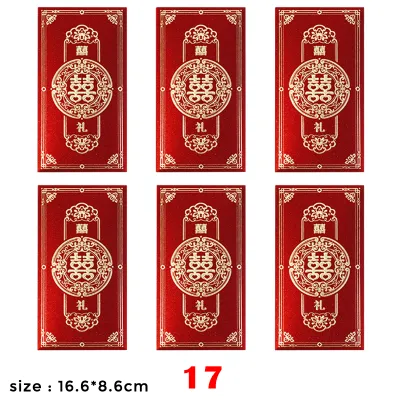
![[SG READY STOCK] Premium Wedding Red Packet | Double Happiness Angbao | Angpao/Angpow/Hongbao | 6pcs/Pack 结婚红包 双喜 喜字红包](https://img.lazcdn.com/g/p/ec9df034dec8ee51e6a720c9cd3b9fb9.jpg_400x400q80.jpg_.webp)
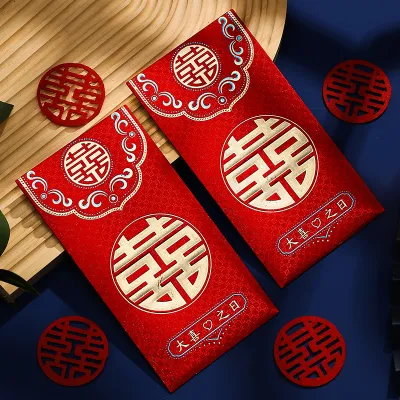
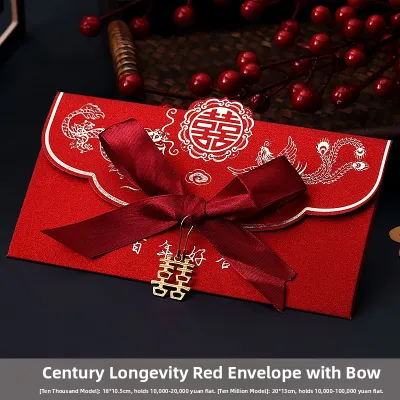
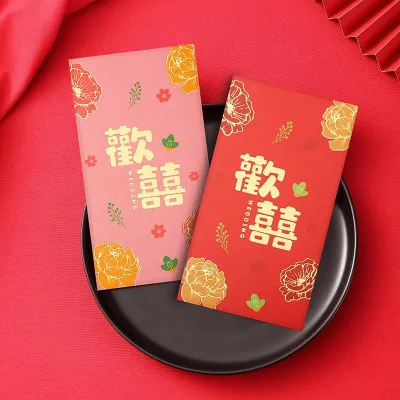
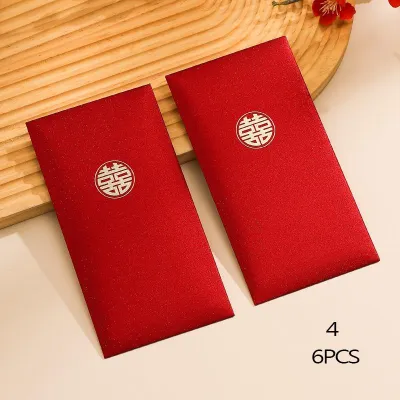
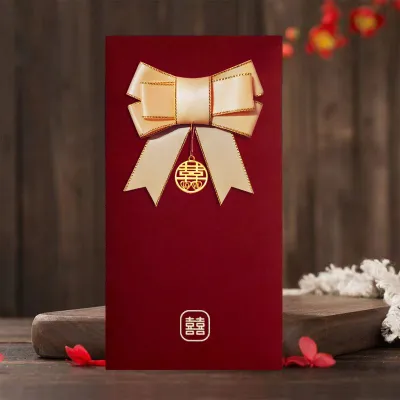
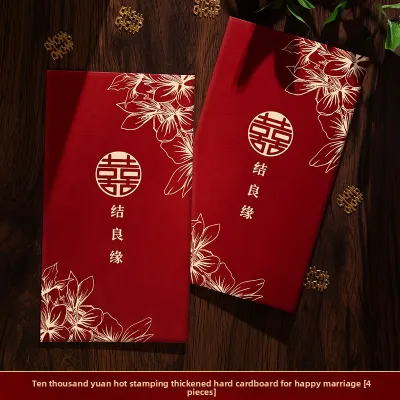
Prices are valid at publication and may change. Please refer to the product page for the latest price.

Standard Size (Approx. 170 x 90 mm)
A standard red packet measuring approximately 170 x 90 mm is the most versatile option for wedding gifts. This dimension is specifically designed to accommodate the majority of SGD banknotes completely flat. For instance, a standard $50 banknote measures 156 x 74 mm, while a $100 banknote measures 162 x 77 mm. A 170 x 90 mm envelope provides a comfortable buffer on all sides, allowing you to slide these high-denomination notes inside without bending the corners. It is the ideal choice for most standard wedding gifts where you are presenting a few flat notes.
Large or Extra-Long Size (Approx. 190 x 100 mm and above)
For close family members or high-tier wedding banquets, the gift amount is often higher, resulting in a thicker stack of banknotes. A large or extra-long red packet, measuring 190 x 100 mm or more, is designed to handle this increased physical volume. When you are inserting ten or more $100 notes, the cumulative thickness can cause a standard envelope to bulge or tear. The generous proportions of a large packet distribute the bulk evenly, keeping the envelope flat. Additionally, this size offers ample space if you wish to include a small physical greeting card or a handwritten note of congratulations.
Mini or Small Size (Approx. 110 x 75 mm)
Mini red packets, typically measuring around 110 x 75 mm, are common during festive seasons for distributing smaller denominations. However, they are highly unsuitable for wedding cash gifts. Because the length of even the smallest SGD banknote—the $2 note—is 126 mm, it is physically impossible to fit any Singapore banknote flat inside a mini packet. Using this size requires you to fold the money in half or into thirds. Folded bills create an unnecessarily thick, uneven packet that looks unprofessional and goes against traditional wedding gifting etiquette.
Matching Packet Size to Your Wedding Gift Amount
To simplify your shopping experience, it is highly effective to match your intended gift amount with the physical dimensions of the red packet. The following decision matrix outlines typical wedding gift tiers in Singapore, the corresponding bill combinations, and the recommended envelope size to ensure a flawless presentation.
| Estimated Gift Amount (SGD) | Typical Bill Combination | Recommended Packet Size | Presentation Tip |
|---|---|---|---|
| $50 – $100 | 1 to 2 notes ($50 or $100) | Standard (170 x 90 mm) | Keep bills flat; use a standard envelope with a secure flap. |
| $200 – $500 | 2 to 5 notes ($100) | Standard or Large | Standard fits up to 5 notes comfortably; use Large if adding a physical greeting card inside. |
| $800 – $1,000+ | 8 to 10+ notes ($100) | Large (190 x 100 mm+) | Essential for thick stacks; ensures the envelope does not burst open during transport. |
When preparing your gift, you might choose an auspicious, non-rounded amount such as $168, $288, or $388 to convey wishes of wealth and prosperity. These amounts naturally require a larger variety of banknotes, combining $100, $50, $10, and sometimes $2 or $5 notes. Because a mixed-denomination gift contains more physical pieces of paper, the stack will be significantly thicker than a gift of the same value made up of fewer, high-denomination notes. Always base your red packet size selection on the total physical volume of the banknotes rather than the numerical value alone to prevent the envelope from bursting.
Paper Weight and Design Specs to Check Before Buying
Beyond the length and width, several physical specifications of the stationery itself dictate how well a red packet will perform on the wedding day. Paying attention to these construction details prevents embarrassing tears or structural failures.
Paper Weight (GSM) The thickness of the paper, measured in grams per square meter (GSM), is a primary indicator of quality and durability. For wedding red packets, look for a paper weight between 150 GSM and 250 GSM. Envelopes made from thin paper (below 120 GSM) feel flimsy and are prone to tearing when holding multiple banknotes. Furthermore, low-GSM paper can be translucent, exposing the denomination and amount of cash inside. A heavier paper weight feels premium to the touch and ensures complete opacity.
Closure Mechanism Red packets generally feature either a traditional tuck-in flap, a self-adhesive strip, or a magnetic clasp. For wedding gifts, a secure tuck-in flap or a strong adhesive seal is highly recommended. Because wedding reception tables can be chaotic, a weak closure can easily fail. If you are using a packet with a tuck-in flap for a thicker stack of cash, ensure the flap is long enough to insert deeply into the rear slot, preventing it from slipping out under pressure.
Shape and Structure While modern stationery designers often experiment with novelty shapes—such as circular, fan-shaped, or heavily die-cut envelopes—these designs are highly impractical for weddings. These creative cuts significantly reduce the usable internal space of the envelope. As a result, you may find that standard SGD notes do not fit flat, even if the overall external dimensions seem large enough. Stick to classic rectangular structures to guarantee full compatibility with your cash gift.
Writing and Ink Compatibility It is customary to write the names of the guests and a personalized blessing on the back of the red packet. The paper’s surface finish directly affects how ink behaves. Glossy, metallic, or heavily gold-foiled papers often resist water-based inks, leading to slow drying times or severe bleeding. To prevent ruinous smudges, perform a simple trial: write a test word on a hidden area, such as the inside of the envelope flap, to verify the drying speed and compatibility of your pen before writing your final message on the back.
Frequently Asked Questions (FAQ)
Can I fold new bills to fit into a smaller red packet if I run out of large ones?
While it is physically possible to fold banknotes to fit into a smaller envelope, doing so is highly discouraged for wedding gifts. Crisp, unfolded bills represent respect and meticulous preparation. If you have no other choice but to use a smaller packet for a large sum, fold the entire stack of bills neatly in half together once, rather than folding individual notes. This minimizes creases and keeps the packet as flat as possible, though purchasing standard or large envelopes remains the ideal approach.
Do I need a different size if I am giving a cheque or a money card?
Standard bank cheques and digital money cards are highly compact and easily fit within a standard 170 x 90 mm red packet without folding. When using a red packet for a cheque or money card, the primary specification to verify is the opacity of the paper. Ensure the envelope is made from a thick, high-GSM paper so that sensitive financial details, such as account numbers and signatures, are not visible through the envelope under bright banquet hall lighting.
Community discussion
Share your experience or ask a question. Comments are reviewed before publication.