
Preparing your child’s school supplies for a new academic year can quickly become an expensive endeavor. Between textbooks, uniforms, and specialized gear, the costs add up, and labeling everything is a tedious but necessary task to prevent lost property. While shopping for labels, you will likely encounter premium waterproof name stickers alongside standard paper labels. Defaulting to waterproof options for every single item is a common and costly mistake.
To optimize your back-to-school budget, you can categorize your child’s supplies using two simple rules of thumb:
- The "Wash & Weather" Rule: Any item that will be washed in a sink, run through a dishwasher, exposed to rain, or subjected to heavy outdoor condensation requires a high-quality waterproof adhesive.
- The "Dry & Desk" Rule: Items that remain inside a school bag, sit strictly on a classroom desk, or never come into contact with liquids can be labeled with standard paper or basic vinyl stickers.
By matching the durability of the label to the actual environmental risks the item will face, you can save money while ensuring your child’s belongings remain clearly identified throughout the school term.
Products mentioned in this guide
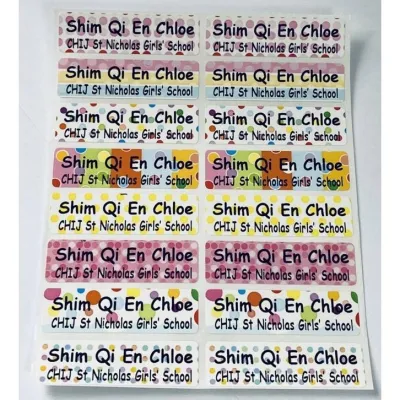
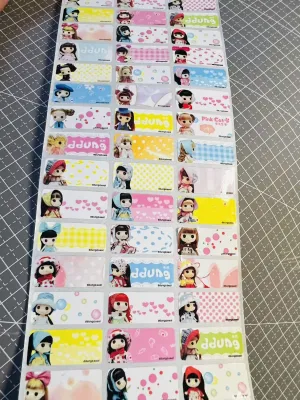
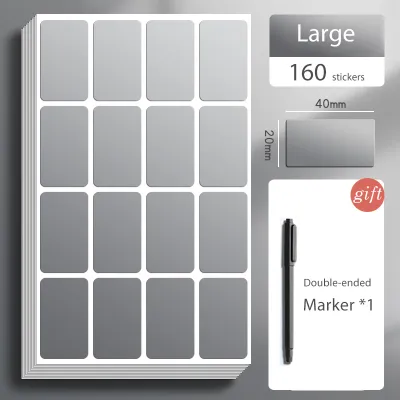
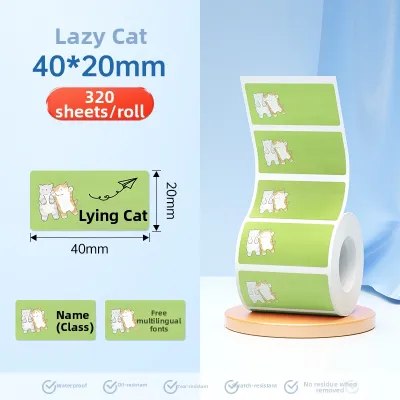
Prices are valid at publication and may change. Please refer to the product page for the latest price.
High-Moisture & High-Friction Items: When Waterproof Stickers Are Essential
Certain school items face daily exposure to water, friction, and outdoor elements. For these high-risk belongings, standard paper labels will disintegrate, peel, or fade within days, making waterproof name stickers an essential investment.
Drinkware and Lunchboxes In warm, humid climates, cold water bottles sweat constantly. This persistent condensation quickly dissolves the adhesive on standard paper labels. Furthermore, reusable lunchboxes and snack containers require daily washing with dish soap and warm water. If you use a dishwasher, the combination of high heat and pressurized water will easily strip away non-waterproof labels. For these items, look for stickers explicitly rated as waterproof and dishwasher-safe.
Outerwear and Umbrellas Rain gear, including umbrellas, raincoats, and wet-weather pouches, must endure sudden downpours and damp storage conditions. When a wet umbrella is folded and stuffed into a locker or bag, any standard label applied to it will quickly turn to mush. Waterproof stickers with strong, weather-resistant adhesives are necessary to withstand these rapid transitions from dry to wet environments.
Footwear and Physical Education (PE) Gear Shoes, sports equipment, and PE gear are subjected to intense physical friction, sweat, and outdoor mud. Labels placed on the insoles of shoes or the handles of sports rackets must endure constant rubbing and moisture. Standard labels will rub off almost instantly under these conditions. Specialized heavy-duty waterproof stickers are required to handle the abrasive environment of active school sports.
Material and Surface Checks Before purchasing waterproof stickers, inspect the material of the item you need to label. Smooth, flat surfaces like stainless steel water bottles or rigid plastic lunchboxes provide excellent adhesion. However, curved, textured, or powder-coated surfaces can prevent even waterproof adhesives from bonding correctly. Always verify that the sticker manufacturer’s specifications match the specific surface texture of your item to ensure a long-lasting bond.
Dry & Indoor Supplies: Where Regular Labels Are Enough
While waterproof stickers are excellent for wet environments, using them on dry, indoor classroom supplies is an unnecessary expense. Standard paper labels or basic vinyl stickers are highly effective and far more economical for items that spend their lives safely inside a classroom or school bag.

Textbooks, Notebooks, and Folders School textbooks, exercise books, and plastic document folders are kept dry inside backpacks and desks. They are never subjected to washing or outdoor weather. Standard paper labels are perfect for these items. They accept handwritten ink easily, adhere well to paper and cardboard covers, and can be purchased in bulk for a fraction of the cost of waterproof alternatives.
Small Stationery Items Pencils, pens, rulers, and erasers have very small surface areas, making it difficult for any large sticker to wrap around them securely. Furthermore, these items are frequently lost or used up long before a label has a chance to wear out. Instead of using expensive waterproof name stickers, opt for budget-friendly paper labels, or simply write your child’s name directly onto the item using a permanent marker.
Pencil Case Interiors and Dry Art Supplies Items stored inside a pencil case, such as colored pencils, crayons, oil pastels, and scissors, have minimal exposure to moisture or external friction. Standard labels are more than sufficient for these supplies. Since art supplies are often shared during classroom activities, labeling each individual piece with a simple, low-cost paper sticker ensures they return to the correct case without draining your budget.
Surface Considerations for Standard Labels To get the best performance out of regular paper labels, ensure the application surface is completely smooth, clean, and dry before sticking them down. Wiping away dust or manufacturing residues with a dry cloth will help standard adhesives grip the surface effectively, extending their lifespan without the need for premium waterproof upgrades.
Borderline Cases: Evaluating Mixed-Use School Supplies
Some school items do not fit neatly into the wet or dry categories. These borderline cases require a quick evaluation of your child’s daily habits and the replacement cost of the item before you decide which label to use.
Pencil Case Exteriors A child’s pencil case is handled constantly throughout the day, dropped on the floor, and shoved into crowded bags. While it rarely gets submerged in water, it experiences high friction and occasional contact with sweaty hands or spilled drinks. If the pencil case is made of a wipeable plastic or metal, a basic vinyl label offers a good balance of durability and cost. For fabric pencil cases, standard stickers will not hold, and alternative marking methods should be considered.
Calculators and Electronic Devices Scientific calculators and electronic dictionaries are expensive investments that stay inside the classroom but are handled frequently. While they do not undergo washing, they are susceptible to accidental water bottle spills in the school bag. Additionally, the heat generated by electronic devices during prolonged use can warm up adhesives, causing standard paper labels to slide or peel. Using a durable, heat-resistant vinyl or waterproof sticker on these high-value items provides peace of mind.
Musical Instruments and Sports Equipment Instruments like plastic recorders are exposed to saliva and require regular washing, making waterproof labels mandatory. Conversely, larger instruments like ukuleles or violins remain dry but are stored in cases. For sports equipment like tennis or badminton rackets, the high humidity of outdoor storage and sweaty hands can degrade standard labels.
The Decision Matrix When deciding on borderline items, consider this simple framework:
- Replacement Cost: If the item costs more than S$20 to replace (such as a calculator or electronic device), protect it with a durable, high-quality label.
- Handling Frequency: Items touched multiple times a day benefit from the scratch-resistant properties of vinyl or waterproof labels.
- Sentimental Value: For cherished items, a long-lasting label ensures they can always be identified and returned if misplaced.
Application Techniques to Maximize Label Lifespan
Regardless of whether you choose a premium waterproof sticker or a budget-friendly paper label, the way you apply the sticker determines how long it will stay attached. Proper application techniques can double the lifespan of any label.
Surface Preparation Adhesives require direct contact with the item’s surface to form a strong bond. Before applying any label, clean the area thoroughly to remove oils, dust, fingerprints, and residual moisture. Wiping the surface with a small amount of rubbing alcohol and letting it dry completely is the most effective way to prepare the surface. Avoid using household cleaners that leave behind a slick residue.
Curing Time One of the most common reasons labels peel prematurely is immediate exposure to moisture or friction. After applying a sticker, press down firmly across the entire surface, paying special attention to the edges. Allow the adhesive to “cure” or set undisturbed for at least 24 to 48 hours before washing the item or sending it to school. This waiting period allows the adhesive bond to reach its maximum strength.
Placement Strategy Position your labels strategically to minimize wear and tear. Avoid placing stickers over curved seams, ridges, or high-friction areas where your child’s hands grip the item constantly. For water bottles, placing the label on a flat section near the base or neck is often safer than placing it directly in the middle where hands squeeze and twist the bottle.
Safety Boundaries Regularly inspect labeled items, especially those belonging to younger children in preschool or early primary school. Over time, even the best adhesives can begin to lift at the corners. Peeling stickers can become a choking hazard or a temptation for curious fingers to pick at. If you notice a label starting to peel or fray, remove it completely, clean the surface, and apply a fresh label promptly.
Frequently Asked Questions (FAQ)
Can I use waterproof name stickers on clothing and fabric?
Standard adhesive waterproof name stickers are designed for hard, non-porous surfaces and generally do not perform well on fabrics. Clothing, uniforms, and fabric school bags are flexible, porous, and stretch during wear and washing, which quickly breaks the bond of a standard sticker adhesive. For fabric items, check the manufacturer’s instructions for specialized iron-on labels, sew-in name tags, or fabric-safe permanent ink stamps designed to withstand laundry cycles.
Are waterproof labels safe for items that go in the microwave or dishwasher?
Waterproofing and heat resistance are distinct properties. A label that can withstand cold water or rain may not survive the high temperatures of a microwave or the intense heat and chemical detergents of a dishwasher cycle. Before placing labeled lunchboxes or containers into these appliances, check the label packaging for explicit microwave-safe and dishwasher-safe certifications. If the packaging does not specify heat resistance, hand-washing the item is the safest way to preserve the label.
Community discussion
Share your experience or ask a question. Comments are reviewed before publication.