
Selecting the right calendar format for 2027 is a highly personal decision that directly impacts your daily productivity and spatial organization. The ideal choice depends on where you work, who needs to see your schedule, and how you process tasks. While a wall calendar acts as a central visual hub for households or shared offices, a desk calendar keeps daily priorities within arm’s reach at a stationary workspace, and a portable planner offers deep, highly customized personal tracking on the go. Matching your physical environment and cognitive style to the correct format ensures your scheduling tool remains functional throughout the entire year rather than being abandoned by February.
Assessing Your Space and Planning Style
Before purchasing any physical calendar, you must evaluate the physical constraints of your environment and your specific planning habits. In compact living or working environments, such as typical Singapore apartments or shared hot-desking offices, physical space is at a premium. A large wall calendar requires dedicated, unobstructed vertical space, whereas a desk calendar demands a permanent spot on your desktop that could otherwise hold a second monitor or keyboard. If your work style involves frequent commuting on the MRT or moving between home and a CBD office, portability becomes the deciding factor, immediately pointing you toward a compact planner.
Your cognitive planning style also dictates the format that will serve you best. Some individuals require a broad, high-level monthly overview to track major deadlines, family events, or school terms without getting bogged down in hourly details. Others need to map out micro-tasks, hourly appointments, and daily habit trackers. If you share a living space with family members or roommates, a shared visual reference point is essential for coordinating household duties, helper schedules, and social gatherings. Identifying these specific needs first prevents the frustration of buying a beautifully designed calendar that ultimately fails to fit your daily workflow.
Products mentioned in this guide
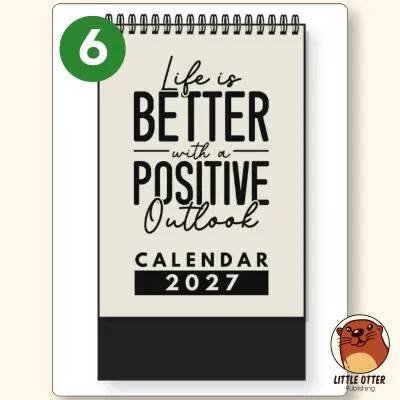
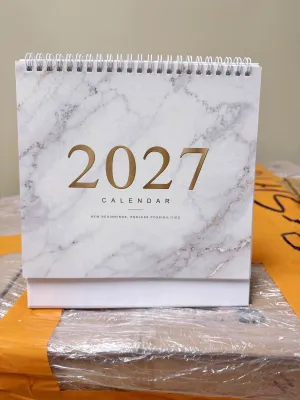
Prices are valid at publication and may change. Please refer to the product page for the latest price.
Wall Calendars for Visual and Shared Tracking
Wall calendars serve as an excellent visual anchor for shared spaces, making them highly effective for families, communal offices, and creative studios. By placing a calendar in a high-traffic area, such as a kitchen wall or near an entryway, every member of the household can instantly view upcoming events, school holidays, and shared responsibilities. This high visibility reduces the need for constant digital coordination and ensures everyone stays aligned on major dates at a single glance.

The primary advantage of a wall calendar is its generous visual scale, which allows for easy reading from a distance. It provides a continuous, uninterrupted monthly overview that helps you conceptualize time and anticipate busy weeks long before they arrive. However, this format comes with distinct physical limitations. It requires a dedicated, flat wall surface and secure mounting, which can be challenging if you want to avoid damaging paint or plaster with adhesive hooks. Additionally, wall calendars are entirely stationary; once hung, they cannot easily travel with you to meetings or remote work locations.
When selecting a wall calendar for 2027, several physical specifications require close inspection. Verify the binding mechanism, as spiral-bound options tend to hang flatter and allow for smoother page-turning compared to stapled or glued bindings that may curl over time. Pay close attention to the paper weight, aiming for at least 120 to 150 GSM (grams per square meter) to prevent heavy ink or markers from bleeding through to the subsequent months. Finally, measure your intended wall space carefully before purchasing to ensure the open dimensions of the calendar do not overlap with light switches, shelving, or door frames.
Desk Calendars for Daily Task Management
Desk calendars are designed for localized, individual task management, making them ideal for stationary professionals, students, and home office workers. Positioned directly within your field of view, a desk calendar keeps your immediate daily or weekly schedule visible without requiring you to open a computer tab or unlock a smartphone. This constant presence helps maintain focus on immediate priorities and facilitates rapid note-taking during phone calls or virtual meetings.
The convenience of having a writing surface within arm’s reach is the greatest strength of the desk format. It acts as a physical buffer against digital distractions, allowing you to jot down quick reminders, phone numbers, or urgent tasks instantly. The main drawback, however, is the consumption of valuable desk real estate. On a compact study desk or a crowded office workstation, a large desk pad or tent calendar can easily be buried under paperwork, laptops, or external monitors, rendering its visual benefits useless.
To ensure a desk calendar remains functional throughout 2027, you must verify its structural stability and layout. Look for a sturdy, thick cardboard base that resists sagging, particularly in humid environments where moisture can soften flimsy paperboard stands. Examine the page-turning mechanism; wire-o spiral bindings are generally superior for flipping pages cleanly without tearing. Additionally, assess the daily grid size to ensure the writing boxes are large enough to accommodate your typical handwriting and the number of tasks you plan to log each day.
Planners for Detailed and Portable Scheduling
Planners and personal journals offer the highest level of customization and detail, making them the preferred choice for students, project managers, and hybrid workers who need to carry their schedules everywhere. Unlike stationary calendars, a planner travels with you in your bag, providing a private, comprehensive space to manage complex schedules, track personal habits, and record detailed meeting notes.
The primary benefit of a planner is its multi-layered organization, typically combining monthly overviews with detailed weekly or daily layouts. This structure allows you to transition seamlessly from long-term project planning to granular daily task lists. Many planners also include dedicated pages for goal setting, financial tracking, and blank note pages, serving as an all-in-one life organizer. The trade-off is the commitment required to maintain it; a planner only works if you carry it consistently and dedicate time daily to updating its pages. They also tend to carry a higher initial cost than simple wall or desk sheets.
When evaluating a 2027 planner, paper quality and binding style are critical to a comfortable writing experience. Look for lay-flat thread binding, which allows the book to open completely flat on a table, preventing the spine from fighting against your hand as you write. If you prefer using fountain pens, gel pens, or highlighters, verify that the paper has a high density (ideally 80 to 100 GSM or higher) and a smooth finish to minimize feathering and ghosting. In Singapore’s humid climate, high-quality paper with proper sizing is especially important, as humid air can cause low-grade paper to absorb moisture, leading to slower ink drying times and increased ink bleed.
Comparing Calendar Formats for Your Routine
To help you synthesize these options, the following comparison highlights how each format performs across key practical dimensions. By matching your daily routine to these specific strengths, you can narrow down the format that will best support your productivity.
| Dimension | Wall Calendars | Desk Calendars | Planners & Journals |
|---|---|---|---|
| Portability | None (Stationary) | Low (Workspace only) | High (Travel-friendly) |
| Writing Space | Moderate (Grid boxes) | Moderate to High | Very High (Multi-page) |
| Physical Footprint | Vertical wall space | Desktop surface area | Minimal (Fits in a bag) |
| Multi-User Sharing | High (Excellent for families) | Low (Individual view) | None (Private) |
| Best Suited For | Shared household tracking | Daily desk-bound tasks | Detailed personal planning |
When reviewing this comparison, consider how your physical movements throughout the day dictate your needs. A hybrid worker split between a home office and a corporate desk may find a single desk calendar insufficient, whereas a portable planner bridges the gap perfectly. Conversely, a busy household managing school terms and extracurricular activities will benefit far more from the shared visibility of a wall calendar than from individual planners.
Key Specifications to Verify Before Purchase
Before finalizing your purchase of a 2027 calendar, several localized and structural specifications must be verified to ensure long-term utility. First and foremost, confirm that the calendar includes accurate Singapore public holidays and school holiday schedules. Planning long weekends, annual leave, or family vacations requires reliable local holiday data, which generic international calendars often omit.
Next, evaluate the paper quality through the lens of your preferred writing instruments. If you cannot test the paper in person, look for manufacturer specifications regarding paper weight and ink compatibility. A simple way to verify paper performance is to conduct an observable trial on an inconspicuous back page: write a few words with your favorite pen, wait to observe the drying speed, and check the reverse side for any signs of ink bleeding or ghosting. Because Singapore’s high relative humidity can slow down ink drying times, choosing paper with good ink resistance and quick-drying properties is essential for maintaining clean, smudge-free pages.
The durability of the binding and cover materials is another critical factor for a tool meant to last 365 days. For wall and desk calendars, ensure the metal loops or cardboard stands are robust enough to withstand daily handling without warping. For planners, a durable cover—such as water-resistant bookcloth, thick cardstock, or synthetic leather—will protect the inner pages from wear and tear inside your bag. Finally, check the calendar’s date range; some options offer 16-month layouts starting in September or December of the preceding year, which can be highly beneficial for transitioning smoothly into 2027 without scheduling gaps.
Frequently Asked Questions (FAQ)
Do I need a calendar with lunar dates and public holidays?
For many residents in Singapore, having a calendar that features both public holidays and lunar dates is highly practical. Lunar dates are essential for tracking traditional cultural festivals, observing auspicious dates, and celebrating family birthdays that follow the lunar calendar. Meanwhile, official public holidays are crucial for coordinating business operations, school schedules, and long-weekend travel plans. Before purchasing, review the product description or sample pages to ensure these local details are explicitly printed on the grids.
Can I use a digital calendar instead of a physical one?
While digital calendars excel at sending automated reminders, syncing across multiple devices, and managing dynamic meeting invites, physical calendars offer distinct cognitive benefits. Writing tasks down by hand improves spatial memory retention and provides a tactile satisfaction that digital interfaces cannot replicate. Many professionals find success in a hybrid approach: using digital calendars for precise time-blocking and shared work meetings, while relying on a physical desk calendar or planner for daily task prioritization and screen-free planning.
Community discussion
Share your experience or ask a question. Comments are reviewed before publication.