
Quick Answer: Is Voyager Paper Better for Daily Writing?
Determining whether Voyager paper is superior for your daily writing depends heavily on your choice of writing instruments and your personal tactile preferences. There is no single “best” paper, as different manufacturing processes cater to distinct writing styles. Voyager notebooks provide a highly reliable, consistent, and practical surface for standard daily writing tasks, particularly when using ballpoint pens, rollerballs, or fine-point gel pens.
However, writers who prefer wet fountain pens or heavy ink applications may find that certain premium alternative brands with specialized surface coatings offer better resistance to feathering. To make an informed choice, always check the specific notebook series and product labels, as paper weight, texture, and performance can vary significantly even within a single brand’s lineup.
Key Standards for Evaluating Everyday Notebook Paper
To objectively compare Voyager with other notebook brands, you must understand the technical specifications that dictate paper performance. The most prominent metric is paper weight, measured in Grams per Square Meter (GSM). GSM directly influences page opacity, stiffness, and resistance to ink bleed-through. Standard everyday notebooks typically range from 70 GSM to 90 GSM, while premium art or specialized writing journals can exceed 120 GSM. Heavier paper generally feels more substantial and resists ghosting, but it also increases the overall thickness and weight of the notebook.
Products mentioned in this guide
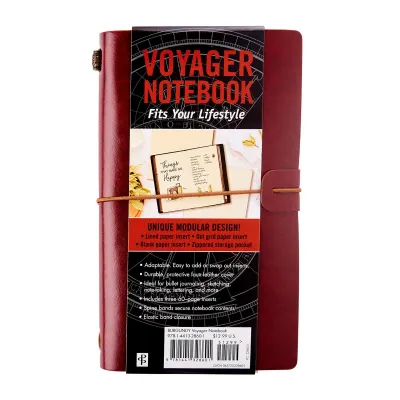
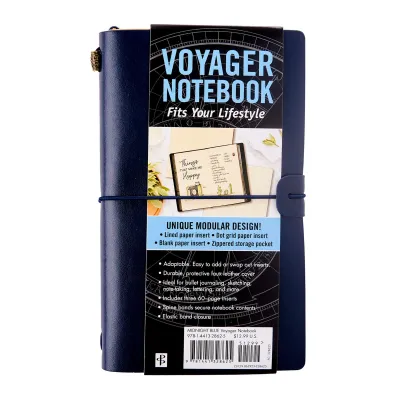
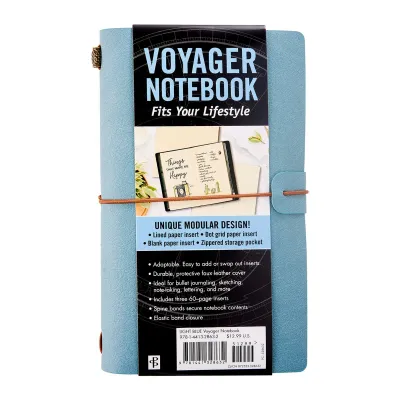
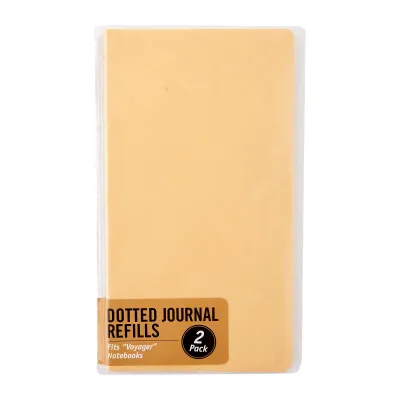
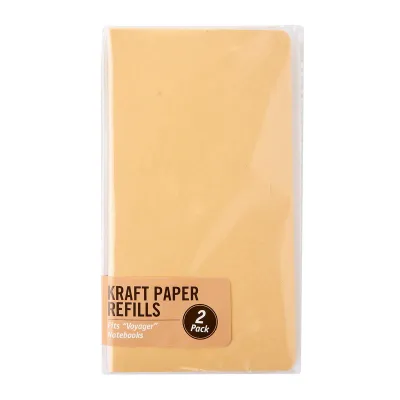
Prices are valid at publication and may change. Please refer to the product page for the latest price.

Beyond weight, surface sizing and coating play a critical role in how ink behaves on the page. Sizing refers to chemical additives applied during paper manufacturing to reduce absorbency. Highly sized or coated papers prevent wet inks from spreading, resulting in sharp lines and minimal feathering, though this often extends ink drying times. Conversely, uncoated papers absorb ink quickly, which minimizes smudging but can cause lines to look fuzzy or bleed through to the reverse side.
Paper color is another essential consideration for daily usability. Bright white paper offers high contrast, making colors pop, but it can cause visual fatigue during extended writing or studying sessions under bright overhead lights. Natural cream, ivory, or off-white tones are gentler on the eyes, making them popular for long-form journaling and professional note-taking.
Finally, ruling formats and page layouts dictate how well a notebook accommodates your handwriting. Whether you prefer standard horizontal lines, modern dot-grids, clean graph squares, or completely blank pages, the spacing and margin layouts should align with your handwriting size and organizational habits.
How Voyager and Alternative Brands Perform in Daily Use
Evaluating how Voyager and alternative notebook brands perform in daily use requires looking past marketing claims and focusing on real-world writing scenarios. The following sections analyze how standard and premium papers handle different ink types, physical wear, and binding configurations.
Paper Weight, Opacity, and Bleed-Through
When comparing standard daily notebooks like Voyager to premium alternatives, paper weight is often the first point of differentiation. Standard notebooks usually feature paper in the 70 to 80 GSM range, which is optimized for lightweight portability and everyday utility. Premium alternatives frequently step up to 90 GSM, 100 GSM, or even 120 GSM.
While heavier paper is highly effective at preventing ghosting—the faint visibility of writing on the reverse side of a page—it introduces a practical trade-off. A notebook with 120 GSM paper will be twice as thick and significantly heavier than a 70 GSM notebook with the same page count. For students and professionals commuting daily, carrying multiple heavy notebooks can become cumbersome. Therefore, unless you regularly use heavy markers or wet inks, standard-weight paper often provides the ideal balance of opacity and portability. Always verify the manufacturer’s packaging or product specifications to confirm the exact GSM before purchasing.
Surface Texture and Ink Compatibility
The interaction between your pen’s tip and the paper surface defines your writing experience. Premium notebook brands often utilize highly smooth, heavily sized papers that allow fountain pen nibs to glide effortlessly without catching. This smooth surface keeps the ink sitting on top of the paper, preserving the vibrant colors and shading of specialized inks.
However, this lack of absorbency can be a disadvantage in humid climates, such as Singapore’s tropical environment. On highly coated papers, wet gel inks and fountain pen inks can take a long time to dry, increasing the risk of accidental smudging as your hand moves across the page. Standard uncoated or lightly sized papers, like those often found in Voyager notebooks, absorb ink more rapidly. While this rapid absorption can cause very wet inks to feather slightly, it ensures that standard ballpoint pens, fine gel pens, and rollerballs dry almost instantly, making them highly practical for quick, on-the-go note-taking.
Binding, Lay-Flat Ability, and Usability
The physical construction of a notebook is just as important as the paper inside it. Thread-sewn bindings are the gold standard for daily writing because they allow the notebook to lay completely flat on a desk. This flat profile ensures you can write comfortably across the entire page, right up to the inner gutter, without having to hold the pages down with your off-hand.
In contrast, traditional glued or perfect-bound notebooks often resist staying open, forcing the pages to curve near the spine. This curve makes writing near the inner margin difficult and can lead to hand fatigue. When comparing brands, look for exposed thread bindings, stitch-bound booklets, or high-quality spiral designs that offer unrestricted access to the entire writing surface.
Decision Framework: Choosing the Right Notebook for Your Needs
To select the ideal notebook for your daily routine, consider how your writing tools, environment, and portability needs align with different paper characteristics:
- Choose Voyager if you primarily write with standard ballpoint pens, fine-point gel pens, or pencils, and you need a reliable, cost-effective notebook for daily tasks. Voyager's paper offers a traditional writing feel with just enough texture to provide satisfying tactile feedback, making it an excellent choice for rapid note-taking, lecture logging, or daily to-do lists.
- Choose premium alternative brands if your daily writing involves fountain pens, broad gel pens, calligraphy inks, or artistic sketching. These specialized papers are designed to handle wet mediums without feathering, though you should be prepared for longer drying times and a higher price point.
- Choose neither and verify first if you require specific archival properties, such as acid-free paper that resists yellowing and deterioration over decades. Always check the manufacturer's explicit product specifications for archival certifications rather than relying on brand reputation alone.
- Consider portability and size before making your final decision. If you carry your notebook in a bag throughout the day, a standard-weight notebook will keep your load light, whereas a thick, high-GSM journal is better suited for permanent desk use.
How to Test and Verify Paper Quality Before Buying
If you are shopping in a local stationery store or browsing online marketplaces, you can use several practical methods to evaluate paper quality before committing to a purchase. When physical samples are available, perform a quick swipe test. Write a single line with your preferred everyday pen and immediately swipe your finger across it to observe the drying speed and smudging potential.
Next, turn the page over and inspect the back under bright, natural light. Look closely for any signs of ghosting or actual ink bleed-through. If the ink has penetrated the fibers to the other side, the paper is likely too thin or lacks sufficient sizing for that specific pen.
When shopping online, carefully read the product descriptions for technical details. Look for explicit mentions of GSM, acid-free composition, and recommended ink types. Additionally, scan user reviews for feedback from writers who use similar pens to yours. If multiple reviews mention feathering with gel pens or fountain pens, it is a strong indicator of low surface sizing.
Frequently Asked Questions (FAQ)
Does higher GSM always mean better paper for daily writing?
Not necessarily. While a higher GSM (Grams per Square Meter) indicates thicker paper that is highly resistant to ink bleed-through and ghosting, it does not automatically guarantee a superior writing experience. Thicker paper makes the notebook heavier and bulkier, which can be inconvenient for daily carry. Furthermore, raw paper weight does not prevent ink feathering; that is controlled by the surface sizing and coating. A lightweight 80 GSM paper with high-quality sizing can handle wet inks much better than a poorly sized 100 GSM paper.
Can I use fountain pens in standard everyday notebooks?
Yes, but with some adjustments. Standard everyday notebooks, including many Voyager models, are typically optimized for ballpoints and gel pens rather than wet fountain pen inks. If you want to use a fountain pen on standard paper, opt for fine or extra-fine nibs that lay down less ink. Additionally, pairing your pen with a drier ink formulation will help minimize feathering and bleed-through, allowing you to enjoy a smooth writing experience without needing specialized, heavy-grade paper.
Community discussion
Share your experience or ask a question. Comments are reviewed before publication.