
To qualify for Singapore’s local tracked letterbox delivery, your package must physically fit within the strict dimensions of standard residential letterboxes. The maximum physical limits for these shipments are typically 324 mm in length, 229 mm in width, and 65 mm in thickness, with a maximum weight limit of 2 kg. Using a SingPost Tracked Letterbox Prepaid Label is a highly efficient way to manage small local deliveries, provided you package your items carefully to stay within these precise boundaries.
Why Letterbox Dimensions Matter for Your SingPost Tracked Letterbox Prepaid Label
The Tracked Letterbox service is designed for contactless, secure delivery directly into the recipient’s locked letterbox. This setup is particularly convenient for Singapore’s high-density residential estates, such as HDB blocks and private condominiums, where homeowners may not be present to receive doorstep deliveries. Because the postman must slide the package through a standard letterbox slot, the physical limits of the slot dictate the maximum size of your package.
While length and width are straightforward to manage, thickness is the most common point of failure for shippers. A package that is only slightly too thick cannot be pushed through the slot without risking damage to the item, the letterbox, or other mail.
Products mentioned in this guide
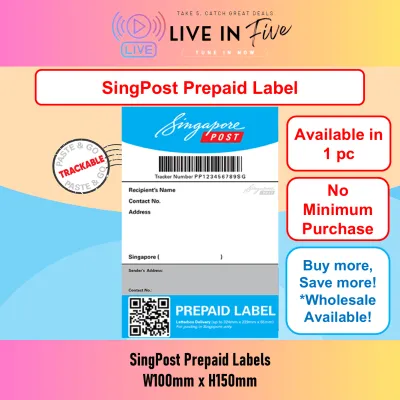
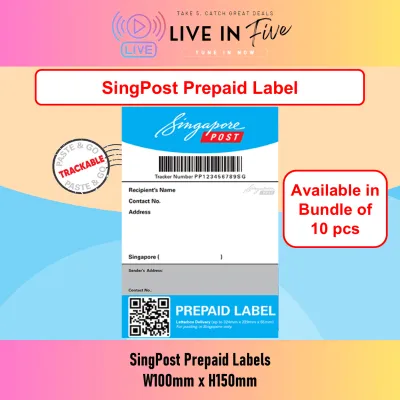
![[1/2/3/4 pcs] SingPost Prepaid Postage Label Tracked to Letterbox for Local delivery within Singapore](https://img.lazcdn.com/g/p/de7ebe2d3294ef869209b212ec59a91e.jpg_400x400q80.jpg_.webp)
![[Normal Mail] [3 pc] SingPost Prepaid Postage Label Tracked to Letterbox for Local delivery within Singapore](https://img.lazcdn.com/g/p/6e1e42a707aa766bca561d9ff7e455f1.png_400x400q80.png_.webp)
![[SG] [FREE SHIP] 1 Piece Singpost Tracked Prepaid Postage Label Local Singapore Delivery Stamp Postal Service](https://img.lazcdn.com/g/p/a3f54e576d00741f3dff9cb87c8de2cc.jpg_400x400q80.jpg_.webp)
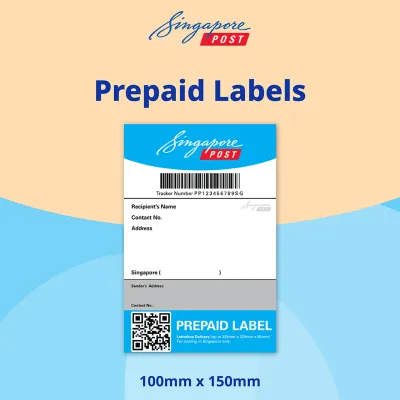
Prices are valid at publication and may change. Please refer to the product page for the latest price.
To ensure your shipment goes through without a hitch, always verify the exact, current maximum dimensions and weight limits. You can find these details on the official SingPost website or printed clearly on the back of your SingPost Tracked Letterbox Prepaid Label. Because postal guidelines can occasionally adjust to accommodate new sorting technologies, confirming these specifications directly from the primary source before packing is the best way to prevent delivery issues.
How to Measure Your Packed Item for Letterbox Compliance
A frequent mistake when preparing shipments is measuring the packaging while it is empty. A flat poly mailer or paper envelope might easily sit well within the 324 mm by 229 mm limit when lying flat on a table. However, once you insert a three-dimensional object, the sides of the bag pull inward, reducing the overall length and width while causing the center to bulge significantly.

To get an accurate measurement, always measure the package only after it has been fully packed, sealed, and prepared for shipping. Place the packed item on a flat, level surface. Hold a rigid ruler or caliper vertically next to the package and measure it at its absolute thickest point, which is typically the center. Do not rely on measurements taken at the flatter edges or corners.
You must also account for natural bulging and shifting during transit. Soft goods, such as apparel, textiles, or flexible stationery supplies, can easily shift inside a shipping bag, causing one side to become thicker than the other. If your item is compressible, apply gentle pressure to see how it behaves under compression, but do not assume the postal carrier will force a bulging package through a slot.
To guarantee a smooth delivery process, it is highly recommended to leave a small safety margin below the official limits. If the maximum allowed thickness is 65 mm, aim for a packed thickness of no more than 55 mm to 60 mm. This safety buffer ensures that your package will slide effortlessly through the physical sorting gauges at the post office and fit easily into the recipient’s letterbox.
Choosing the Right Shipping Bags to Meet Thickness Restrictions
Selecting the correct packaging materials plays a major role in keeping your shipment within the required thickness limits. Rigid cardboard boxes, while excellent for protecting fragile items, have fixed, unyielding dimensions. If a box is even a millimeter too thick, it cannot be compressed, making it highly likely to fail the letterbox slot test.
For non-fragile items like clothing, documents, books, or durable stationery, flexible shipping bags—commonly known as poly mailers—are the superior choice. These bags conform closely to the shape of the contents, eliminating the empty void space that often adds unnecessary bulk to rigid boxes.
When packing, the choice of internal cushioning is just as important as the outer bag. Bulky bubble wrap, packing peanuts, or thick crumpled paper can quickly double the thickness of your package. Instead, opt for thin, high-density foam sheets, flat corrugated cardboard inserts to prevent bending, or a single, tight layer of small-bubble wrap.
Additionally, matching the size of the shipping bag to your item is critical. Using a bag that is far too large results in excess plastic material. When you fold and tape down this extra material, it creates thick, multi-layered plastic seams that can add several millimeters of unwanted thickness to your package’s profile. Choose a form-fitting bag that matches the item’s dimensions closely to minimize excess bulk.
What Happens If Your Package Exceeds the Limits?
SingPost utilizes a strict verification process to maintain the efficiency of its letterbox delivery network. When you drop off your package at a post office counter, a POPStation, or a public posting box, it undergoes sorting where staff use physical slot gauges to test its dimensions. If a package does not slide through the gauge easily without being forced, it is flagged as non-compliant.
If your package fails this test, several inconvenient outcomes can occur. The package may be rejected immediately at the counter, requiring you to take it back and repack it. If the package is dropped into a posting box and later flagged during sorting, it may be returned to your sender address, causing significant delivery delays. Alternatively, SingPost may redirect the package to a standard doorstep tracked parcel service, requiring you to pay additional postage fees before delivery can be completed.
If you find that your packed item is borderline or slightly exceeds the thickness limit, do not attempt to squeeze it through. Take the time to repack the item into a flatter configuration, perhaps by spreading the contents side-by-side rather than stacking them. If the item’s physical shape simply cannot be altered to fit the letterbox limits, it is best to opt for a standard doorstep tracked parcel service from the beginning to avoid delivery disruptions and extra charges.
Frequently Asked Questions (FAQ)
Can I tape down excess shipping bag material to reduce thickness?
Yes, folding and securely taping down excess shipping bag material is an excellent way to keep your package compact and prevent it from snagging in sorting machines. However, you must ensure that the folded material lies completely flat against the package. Avoid bunching or wrinkling the excess plastic, as postal staff will measure the package at its thickest point, and a thick, rigid lump of taped plastic can cause the package to exceed the allowable limits.
Do weight limits affect the physical size restrictions?
Yes, weight and physical size are entirely separate, independent criteria, and your shipment must satisfy both to qualify for the service. Even if your package is extremely light, weighing well under the 2 kg limit, it will still be rejected if its thickness exceeds the maximum limit. Conversely, a perfectly flat envelope that fits the physical dimensions will be rejected if it weighs more than the allowed limit. Both parameters must be met simultaneously for successful delivery.
Community discussion
Share your experience or ask a question. Comments are reviewed before publication.