
Selecting the right plastic laminate sheet involves balancing protection, flexibility, and machine compatibility. The thickness of a laminating pouch directly determines how rigid, heavy, and durable your finished document will be. For most everyday home, school, and office projects, a 3 mil (approximately 75 to 80 microns per side) sheet offers excellent flexibility and basic spill protection. If you need a sturdier, semi-rigid finish for frequently handled items like flashcards or menus, a 5 mil (approximately 125 microns per side) sheet is the industry standard.
Before purchasing, always check whether the thickness rating on the packaging refers to a single side or the combined pouch. Matching this specification to your laminating machine’s capabilities is essential to prevent jamming and ensure a clean, professional seal.
Decoding Thickness Specs: Mil vs. Micron and Per-Side Measurements
Laminating sheets are measured in two primary units: mils and microns. A “mil” is an imperial unit equal to one-thousandth of an inch (0.001 inches), commonly used in North American packaging. A “micron” (micrometer or µm) is the metric equivalent used widely in Singapore and international markets. To convert between the two, keep in mind that 1 mil is equal to approximately 25.4 microns. For example, a standard 3 mil pouch is roughly equivalent to 75 or 80 microns, while a 5 mil pouch translates to 125 microns.
Products mentioned in this guide
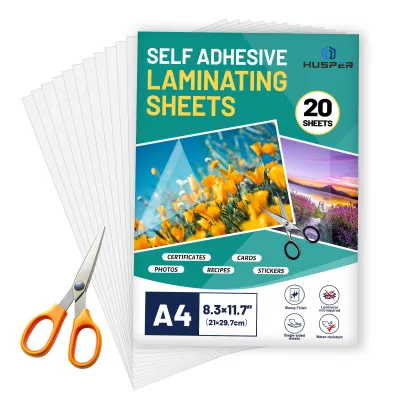
Prices are valid at publication and may change. Please refer to the product page for the latest price.
Understanding how manufacturers label these measurements is crucial to achieving the desired rigidity. Most laminating pouches are sold with a “per side” thickness rating. When you buy a 3 mil pouch, it consists of two separate 3 mil plastic sheets joined at one sealed edge. Once your document is inserted and passed through the laminator, the total plastic thickness surrounding the paper will be 6 mils (150 microns).
Always verify the exact packaging terminology before starting your project. Some budget brands or specialty online marketplace listings may advertise the “total thickness” of the pouch rather than the per-side rating. If you mistake a total thickness of 5 mils for a per-side thickness of 5 mils, you will end up with a much thinner, more flexible laminate than expected. Conversely, using a pouch that is too thick can overload your laminator’s heating element and rollers.
Common Thickness Levels and Their Best Use Cases
Different document types require varying levels of protection depending on how they are handled, stored, and displayed. Choosing the correct thickness category prevents wastage and ensures your documents remain functional.

Light Duty (1.5 to 3 mil / 40 to 80 microns per side)
Light-duty laminating sheets are designed for items that require basic protection from dust, moisture, and fingerprints but do not undergo heavy daily wear. This thickness range keeps the laminated document highly flexible, allowing it to be rolled, folded, or easily pinned to a notice board. It is the most economical choice for high-volume laminating projects in schools and offices.
Typical applications include classroom posters, large maps, temporary signs, and reference sheets that will be stored in binders. Because these sheets are thin, they add minimal bulk and weight, making them ideal for preserving multi-page documents without making them difficult to stack. They provide essential water and tear resistance while maintaining the natural feel of the underlying paper.
Medium Duty (5 mil / 125 microns per side)
Medium-duty sheets represent the ideal middle ground between flexibility and rigidity. A 5 mil laminating pouch creates a sturdy, semi-rigid plastic cover that resists bending, creasing, and corner curling. It is the go-to choice for items that are handled frequently by multiple people throughout the day.
This thickness is highly recommended for restaurant menu inserts, classroom flashcards, reusable worksheets, recipe cards, and instructional guides. In Singapore’s humid climate, 5 mil sheets provide an excellent moisture barrier that prevents paper from softening or absorbing ambient humidity over time. The finished product is stiff enough to stand upright in a display holder without sagging.
Heavy Duty (7 to 10 mil / 175 to 250 microns per side)
Heavy-duty laminating sheets provide maximum protection, encasing your document in a hard, rigid plastic shell that is nearly impossible to bend or crease. This thickness is engineered for extreme durability and long-term outdoor or industrial use.
Common applications include luggage tags, ID badges, outdoor directional signage, industrial maintenance checklists, and reusable event passes. Because these pouches are exceptionally thick, they require specialized laminating machines that can deliver higher heat and consistent roller pressure to melt the internal adhesive completely. Attempting to run a 10 mil pouch through a basic home laminator will result in an incomplete seal, cloudy patches, or a severe machine jam.
How to Choose the Right Thickness for Your Project
Selecting the perfect plastic laminate sheet requires evaluating several practical factors beyond the document’s dimensions. Consider these key variables to ensure a successful lamination process:
- Document Weight and Medium Fit: The thickness of your paper medium directly impacts your choice of laminate. If you are laminating thick cardstock, heavy photo paper, or textured brochure paper, use a thinner laminate sheet (such as 3 mil). Combining thick paper with a thick pouch creates an overly dense sandwich that standard office laminator rollers cannot pull through, leading to heat damage or jams. Conversely, thin copy paper (80gsm) pairs perfectly with 5 mil or thicker pouches to add structural strength.
- Ink and Consumable Compatibility: Standard laminating pouches rely on thermal adhesive, which requires heat to activate. Be cautious when laminating heat-sensitive materials, such as thermal paper receipts, certain laser prints, or delicate water-based inks. Excessive heat can cause these inks to bleed, fade, or turn completely black. For heat-sensitive media, look for specialized cold-seal laminating sheets that rely on pressure rather than heat.
- Laminator Compatibility and Safety: Always check your laminating machine's maximum pouch thickness rating before purchasing supplies. Standard home and compact office laminators are typically rated for a maximum of 5 mil (125 microns). Forcing a 7 or 10 mil pouch through these machines can overheat the motor or permanently damage the internal heating elements. When operating thermal laminators, keep fingers away from the hot exit tray and supervise children to prevent accidental burns.
- Handling, Storage, and Finishing: Consider how the finished item will be stored and used. If you plan to punch holes in the laminated document to place it in a ring binder, a 3 mil or 5 mil sheet is easy to punch with standard office equipment. A 10 mil sheet will require a heavy-duty industrial punch. Additionally, if you plan to write on the surface with dry-erase markers, a smoother, thicker laminate (5 mil or higher) offers better erasability and prevents marker ghosting over repeated uses. Always leave a 2mm to 3mm sealed plastic border around the paper edge when cutting to prevent moisture from seeping in and causing the layers to peel.
Frequently Asked Questions (FAQ)
Can I use a 5 mil pouch in a standard home laminator?
Many modern home and office laminators are rated to handle up to 5 mil pouches, but you must verify your specific model’s user manual before proceeding. If your machine is only rated for 3 mil, attempting to run a 5 mil pouch will result in insufficient heat transfer, leaving the finished document cloudy, bubbly, or poorly sealed.
Does a thicker laminate always mean better protection?
Not necessarily. While thicker laminates provide superior physical rigidity and impact resistance, they make documents stiff, heavy, and impossible to fold or roll. For everyday documents, maps, or items stored in standard folders, a lighter 3 mil laminate is often the more practical and user-friendly choice.
Community discussion
Share your experience or ask a question. Comments are reviewed before publication.